Meaning at a glance
Resin jewelry explained: historically 'resin' in jewelry most often refers to natural resins such as amber, documented as ornamental material by museum scholarship, while modern resin jewelry typically uses synthetic polymers; sellers must disclose treated or imitation materials under consumer rules, and buyers should verify provenance and labeling before purchase.
Short answer
Resin jewelry explained in one sentence: historically, ‘resin’ in jewelry most commonly meant natural tree resins such as amber, a material documented in museum collections and literature, while contemporary resin jewelry usually uses manufactured polymers that mimic or extend those effects; legal and ethical practice requires clear disclosure when materials are treated or are imitations, so buyers should ask sellers for provenance and labeling.
What ‘resin’ can mean in jewelry — a practical definition
In jewelry contexts the word resin can refer to two broad types of material: natural plant-derived resins that have been used and valued as gem-like substances (the best-known example being amber), and modern synthetic resins or polymers created by manufacturers to be shaped, colored, or to encase objects. The Victoria and Albert Museum’s discussions of jewellery history and of gemstones explain that materials change over time and that what counts as a gem or precious material depends on historical and social context rather than on a single universal definition. That means an identical word—resin—can point to very different materials and values depending on era and maker.
Documented history and cultural contexts
When scholars and curators catalogue historical jewelry, they distinguish clearly between naturally occurring resins and later manufactured substitutes. The Victoria and Albert Museum’s exhibitions and articles on the history of jewellery note that jewel materials and fashions shift with technology, trade and taste. Museum documentation treats amber and similar fossilized or hardened resins as established gemstone materials with archaeological and historical use in beads, amulets and mounted ornaments.
Separating historical evidence from modern interpretation
Documented historical meanings for natural resins are recorded by curators and historians, who describe how a material was used and valued in its time. Those descriptions are not the same as the contemporary personal or symbolic meanings people may attach today. For example, museum records may state that amber was used for beads and amulets in specific cultures; that is a descriptive, evidence-based statement. Modern sellers or wearers may personally ascribe healing, spiritual, or environmental symbolism to resin pieces; those are contemporary interpretations and vary by individual, not universal historical facts. The V&A emphasises that jewellery’s social meanings change across periods and places, so a single motif or material rarely carries one uncontested meaning across time.
How resin and resin-like materials appear in jewelry
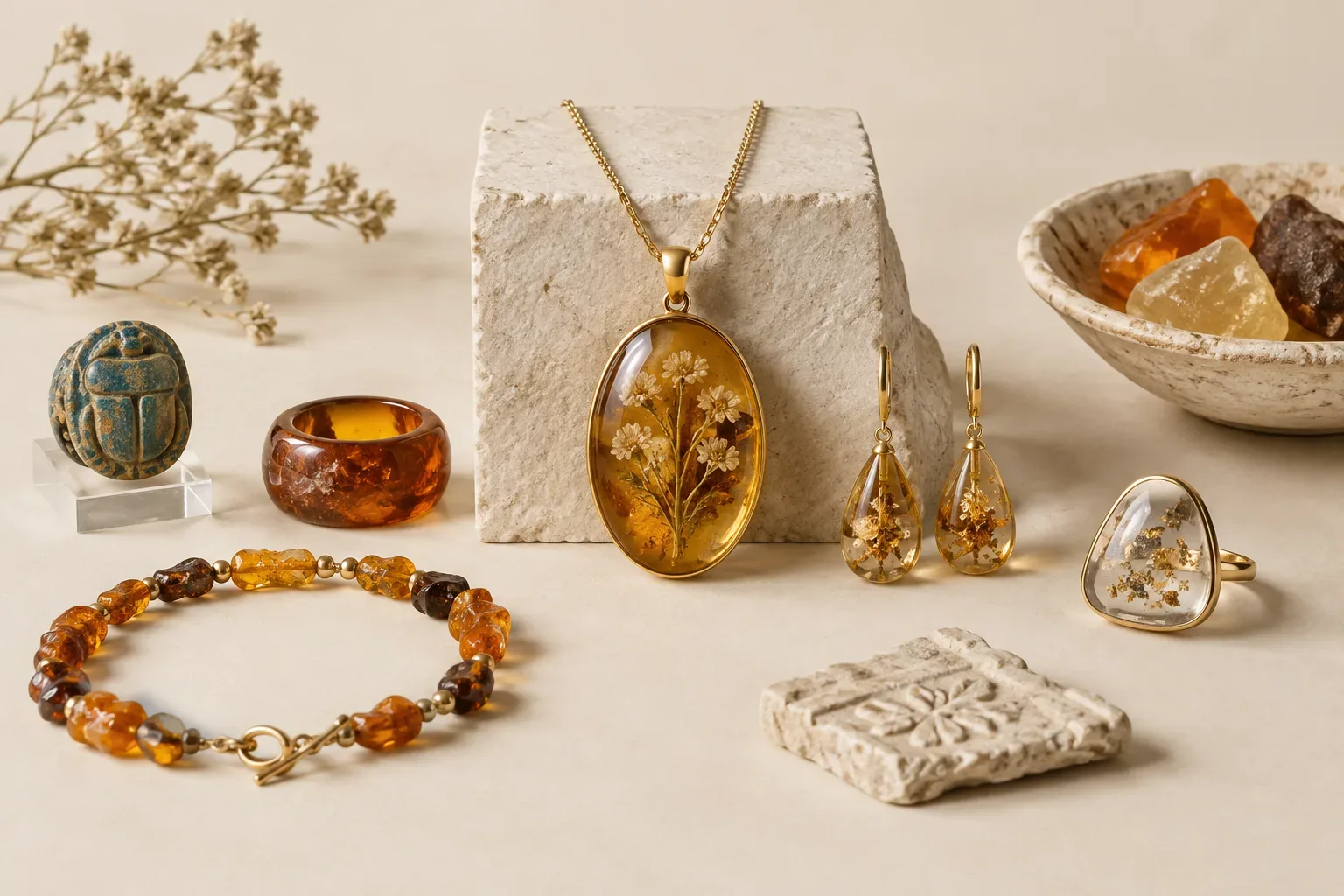
Natural resins such as amber appear in historical and ethnographic collections as beads, intaglios, carved plaques and mounted gemstones in settings. Curatorial materials from the Victoria and Albert Museum describe gemstones and organic gem materials in their collections and catalogue how they were worked and worn. In modern pieces, synthetic resins are commonly cast, layered or used as a transparent medium to encapsulate objects such as dried flowers, insects, photographs or glitter. Designers may combine resin elements with metals and other gemstones, or use resin alone for sculptural pieces. Whether a piece contains fossilized natural resin or a modern polymer affects its appearance, weight, perceived value and care needs.
Hallmarks, labels and legal disclosure — what to expect
Resin itself typically does not carry a metal-style hallmark. Metal components of a piece—clasps, settings and chains—may be stamped with standard metal hallmarks that indicate precious metal content. For the resin component, provenance and treatment should be disclosed by the seller. The Federal Trade Commission’s guidance on buying gemstones, diamonds and pearls stresses that material treatments and imitations should be clearly disclosed to consumers. Sellers should tell buyers when a material is a synthetic resin, when a piece imitates a natural gemstone such as amber, and whether any treatments or coatings are present. Buyers should ask for written description or lab reports if a seller claims a piece is natural amber rather than a resin imitation. The burden for truthful representation falls on the seller under consumer-protection norms.
Practical hallmarks and identification advice (non-technical)
Because curatorial or forensic tests are not available to every buyer, pragmatic steps can help you reduce uncertainty. Rely on reputable sellers who provide clear written descriptions, request provenance or lab documentation when a high price is claimed, and compare descriptions to visible characteristics described by trusted museums or dealers. If a piece is marketed as an archaeological or historical amber object, ask for documentation of origin and for expert verification rather than accepting unverified claims. The Victoria and Albert Museum’s public resources underline the importance of context and documentation when assessing the history and identity of jewellery objects.
Documented meanings versus modern personal or commercial narratives
When assessing the meaning of a resin piece, separate the recorded uses found in museum and archaeological records from the newer narratives common in marketing and personal practice. Museum sources document what materials were used for and sometimes why, but they do not validate modern therapeutic or metaphysical claims. Contemporary sellers and wearers may layer new symbolic meanings onto older materials—for example promoting a resin pendant as a modern 'memory locket'—and those meanings can be meaningful to individuals while remaining interpretive rather than historically documented. Respectful wear acknowledges both strands: honour documented origins where known, and recognise modern meanings as personal or cultural choices rather than as universal facts.
Selecting or gifting resin jewelry — practical and respectful guidance
Decide in advance whether you want natural fossil resin (amber) or modern synthetic resin. If you prefer historical material, expect to pay more for well-documented amber and require provenance or lab confirmation from reputable sellers. For contemporary resin pieces, prioritize makers who describe materials and methods clearly, including the resin type, any added pigments, and how inclusions were sourced or permitted. If the design references another culture’s motifs, research the symbol’s provenance and, when appropriate, choose makers from that culture or obtain explicit permission; this respects cultural heritage and avoids appropriative misrepresentation. For gifts, consider the recipient’s values: do they prefer historically authentic materials, artisanal contemporary design, or symbolic stories? Provide a short note with the gift describing the material and any documentation you received so the recipient can understand and care for the piece. Use internal resources like our guide on how to choose meaningful jewelry for additional gift guidance and our article on researching symbols when a motif is unfamiliar.
Care, longevity and resale considerations
Materials matter for care and resale. Natural resins such as amber are relatively soft compared to many gemstones and can be sensitive to solvents and heat; museum conservation practice emphasises careful handling and stable environments. Modern synthetic resins vary widely in hardness and UV resistance depending on formulation; sellers should provide care instructions. If resale potential is an important factor, documented natural materials with provenance can have different market behaviours than contemporary art-resin pieces. In all cases, keeping original receipts and any certificates increases transparency for future buyers.
Final perspective: balancing evidence, aesthetics and respect
When you need resin jewelry explained clearly, balance three priorities: rely on documented evidence for claims about historical materials and their provenances, expect transparent disclosure from sellers about synthetic versus natural materials and treatments (per FTC guidance), and treat modern symbolic meanings as personally or culturally situated rather than universally established. The Victoria and Albert Museum’s work on jewellery history and gemstones provides the documentary perspective that helps separate what is recorded from what is newly interpreted. Combining that evidence-based approach with respectful choices about cultural motifs and clear documentation makes for informed buying, gifting and wearing.
Frequently asked questions
How can I tell if a piece is natural amber or a modern resin imitation?
Non-technical buyers should ask sellers for provenance, lab reports or clear written disclosure. The Federal Trade Commission advises that treated or imitation materials be disclosed; reputable sellers will provide documentation or allow independent testing. Museums such as the Victoria and Albert Museum stress the importance of context and documentation when assessing historical objects, so require verification if a piece is presented as historical amber.
Does resin jewelry have hallmarks like gold or silver?
Resin as a material does not carry the metal hallmarks that indicate the purity of gold or silver. Metal parts of a piece—clasps, settings and chains—may still have standard hallmarks. For the resin portion, expect a written description from the seller indicating whether it is natural, synthetic, or a treated material, in line with FTC disclosure expectations.
Are modern resins less valuable than natural resins?
Value depends on market demand, rarity, craftsmanship and documentation. Museum-documented natural resins such as historically provenanced amber may command higher prices in certain markets. Contemporary resin art jewellery can be highly valued for design and maker reputation but typically has a different market profile than documented natural gemstones. Ask sellers about provenance and documentation to understand valuation.
Is it offensive to wear or gift resin jewelry with cultural motifs?
Sensitivity depends on the specific motif, its cultural significance, and how the item was made and marketed. Research the motif’s origins before gifting, consider buying from makers who belong to or have permission from the culture you reference, and use reputable resources to avoid appropriation. Our guide on researching jewelry symbols can help you learn more.
How should I care for resin jewelry?
Care needs vary by material. Historically used resins like amber are relatively soft and sensitive to solvents and heat; museum conservation practice recommends careful handling. Modern resins have varied durability; always follow care instructions from the maker. Keep receipts and documentation for future care and resale value.
Sources and further reading
- Bedazzled: A History of Jewellery — Victoria and Albert Museum
- An A-Z of Gemstones — Victoria and Albert Museum
- Buying Gemstones, Diamonds, and Pearls — Federal Trade Commission