Meaning at a glance
Pair a radiant-cut engagement ring and wedding band by prioritizing profile alignment (contour or straight), deliberate management of the gap for comfort and cleaning, and metal choice that balances color, durability, and future resizing; verify treatments and origins of gemstones with seller disclosures and a qualified jeweler or gem lab.
Quick answer
Choose a radiant cut wedding band pairing by matching the ring profiles first (contour vs. straight), deciding whether you want a visible gap for breathability and cleaning or a tight, flush fit for a seamless look, and selecting a metal that balances color matching with hardness and long-term wear. Use seller disclosures and a qualified jeweler or gemological laboratory to verify treatments, origin, and any grade-related claims; expect trade-offs among comfort, cleanability, and the ability to resize.
What “radiant cut” looks like on a ring and how it appears in jewelry
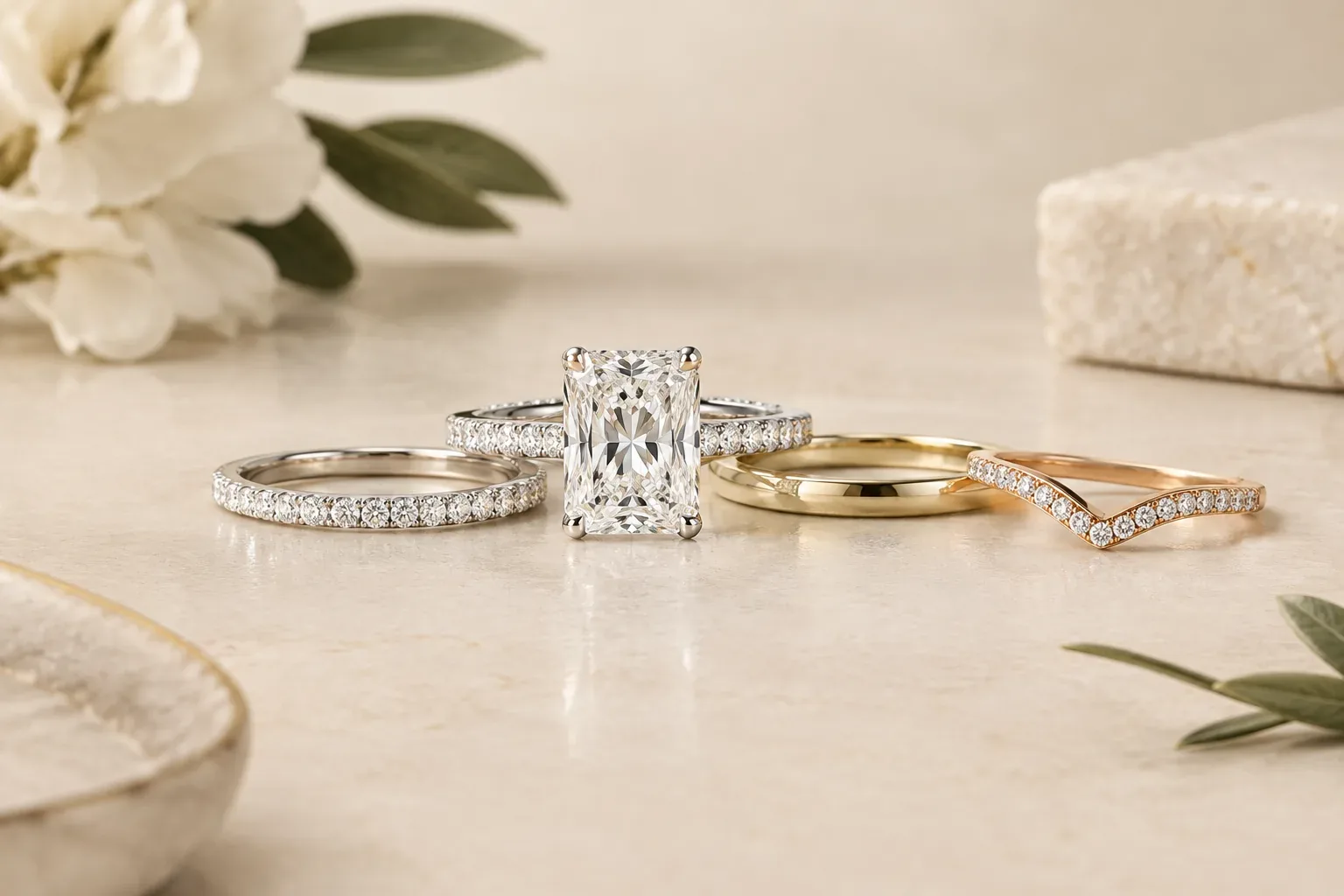
In jewelry, the radiant cut is most commonly seen as a faceted center stone with trimmed corners and a brilliant facet pattern that emphasizes sparkle. It is used in single-stone solitaires, halo settings, three-stone rings and in modern, gender-neutral designs for both engagement and dress rings. When paired with a wedding band, the stone’s rectangular or square silhouette and the setting’s height determine whether the band will sit flush, require a contoured band, or leave a deliberate gap.
Historical evidence and cultural context
None of the approved sources document a long-standing cultural or symbolic meaning that is uniquely attached to the radiant cut as a historical artifact. The sources consulted concentrate on contemporary industry trends and consumer protections rather than traceable ancient or regional symbolism for a particular modern cut. For example, market and trend reporting by Imaginaire Digital highlights current consumer demand for specific ring styles and search interest but does not assert historical symbolism tied to modern cuts, and Jewelers Mutual frames modern demand around design language such as fluid forms, stacking and gender-neutral styling rather than a historic cultural meaning.
Documented history versus modern interpretation
Documented historical meanings for specific modern diamond cuts are limited in the professional and consumer-protection literature used here. The sources show that today's symbolic readings are mostly personal or trend-driven rather than the product of a continuous cultural tradition. Modern interpretations—such as viewing a radiant cut as bold, contemporary, or blending classic and modern aesthetics—are personal or marketing-driven statements and should be treated as individual preference rather than an established cultural fact. This distinction matters when gifting: you can cite modern stylistic associations, but you should not present those associations as historical or universal.
How shape and profile affect pairing: managing gaps and fit
The primary physical challenge when pairing a wedding band with a radiant-cut engagement ring is the profile: the engagement setting’s base, the ring’s gallery, and how the band meets the shank. If the engagement ring has a raised setting, exposed prongs, or a square bezel, a straight wedding band will usually leave a visible gap. A contoured or notched band matches the curve of the engagement ring and can sit closer with minimal gap, producing a more seamless look but limiting some cleaning access.
A deliberate small gap can be a practical choice if you anticipate frequent cleaning or want some finger movement comfort. A tight, flush fit is visually continuous but tends to trap dirt and require more careful cleaning. In short, decide whether you prioritize a perfect visual line (choose a contoured or custom-fit band) or ease of wear and maintenance (accept a small gap with a straight band).
Metal choices: color match, durability, and trade-offs
When choosing metal for the wedding band, match the color for a unified appearance or deliberately contrast metals for a modern mixed-metal look. White gold and platinum are common companions to white diamonds; rose gold or yellow gold pairs intentionally when warmer contrast is desired. Consider durability: platinum is dense and wears differently from gold alloys, which are softer and can show scratches more readily. Jewelers Mutual’s trend guidance also shows growing demand for versatile, gender-neutral metals and finishes, which may inform your aesthetic choice.
Trade-offs include cost, hardness, and long-term maintenance. Platinum resists loss of metal but develops a patina that some people like and others find less desirable; higher-karat gold is softer and may require more frequent re-polishing. If you want a perfect color match to white gold or platinum, plan for future maintenance: plating (rhodium for white gold) fades and will require re-plating over time.
Gemstones, treatments, and what you must verify
If the radiant cut center or companion stones are diamonds or colored gemstones, be aware that treatments, lab-created origins, and enhancements affect appearance, durability, value and care requirements. The Gemological Institute of America (GIA) emphasizes that treatments and disclosure matter for durability and special care. The Federal Trade Commission (FTC) requires clear distinctions among natural, lab-created, treated and imitation materials and recommends written seller disclosures.
Before purchasing or gifting, ask the seller for written disclosures about whether any stones are treated, lab-grown, or imitations and request any available grading reports or laboratory certificates. Remember that visual inspection alone cannot reliably establish treatment history or origin; for those determinations you need a qualified jeweler with appropriate instruments or an independent gemological laboratory report.
Practical trade-offs and decision criteria
Prioritize how you wear jewelry daily. If you wash hands often or have a hands-on job, prefer lower-profile settings and harder metals that tolerate wear. If appearance is your primary goal and you plan occasional wear, opt for a contoured or custom band that sits tightly against the radiant setting. Think also about future resizing: simpler straight bands are easier and cheaper to resize than contoured or diamond-studded eternity styles.
Budget decisions should account not only for initial cost but for ongoing maintenance such as re-plating, re-polishing, and possible prong repairs. Consult Jewelers Mutual’s 2026 trends reporting to weigh contemporary preferences—if you’re following current style directions, stacking and versatility may matter more than achieving a perfectly flush historical look.
Safe care guidance and verification limits
Follow care guidance appropriate to the materials you select. For diamonds and most gemstones, routine gentle cleaning with warm soapy water and a soft brush is safe; however, stones that are treated or porous (such as some colored gems) can require specialized care, as the GIA explains. Avoid ultrasonic cleaners for stones with fracture-filling treatments or certain inclusions without confirmation from a qualified jeweler.
Understand what you cannot verify at the point of sale without expert help. You cannot reliably identify treatments, detect some types of enhancement, or confirm natural versus lab-grown origin by sight alone. For those questions, rely on documented laboratory reports and a qualified jeweler’s inspection. The FTC guidance further reinforces the necessity of written disclosures from sellers for consumers to make informed choices.
Selection and gifting guidance
Be explicit about preferences in a gifting situation. If you know the wearer’s daily activities and metal or finish preferences, select the metal and profile accordingly; if uncertain, a simple straight band in a durable metal and a gift receipt or alteration allowance is respectful and practical. When ordering custom contoured bands, confirm measurements and allow time for test fittings so the final pairing is comfortable and functional.
When gifting a ring set, include documentation: metal stamps, any lab reports, and written statements about treatments or lab origin. If you cannot provide those documents, be clear with the recipient about what you do and do not know. That transparency aligns with FTC expectations for consumer protection and avoids misunderstandings if the recipient later decides to verify the stone with a gem lab.
Frequently asked questions
Will a straight wedding band sit flush against a radiant-cut engagement ring?
Often a straight band will leave a visible gap against a radiant-cut engagement ring unless the engagement ring has a low-profile or specially designed shank. If you want a flush look, consider a contoured or custom-fitted band.
Is platinum better than gold for a wedding band paired with a radiant cut?
Platinum is denser and resists metal loss, showing wear as a patina; gold alloys are softer and may scratch more. Choose platinum for durability and a pale finish, or gold for color warmth—also factor in cost and maintenance preferences.
Can I identify if a radiant-cut diamond is treated or lab-grown by sight?
No. You cannot reliably identify treatments or lab-grown origin by sight alone. Ask for written disclosures and a gemological laboratory report; the GIA and FTC recommend documented verification for treatment and origin claims.
What care does a radiant-cut ring require?
Routine cleaning with warm soapy water and a soft brush is generally safe, but avoid ultrasonic cleaners when stones have unknown treatments or fracture fillings. Follow care guidance specific to any treatments or colored gemstones, as recommended by gemological authorities.
Should I choose a contoured band or a straight band for a tight fit?
Choose a contoured or notched band if you want a tight, seamless fit; choose a straight band if you prefer ease of cleaning, future resizing, or a slight gap for comfort.
How can a buyer verify the quality claims of a radiant-cut center stone?
Request a written grading report or laboratory certificate for the stone and ask the seller about any treatments, enhancements, or lab origin. For conclusive verification, use a qualified jeweler or an independent gemological laboratory.
Sources and further reading
- Imaginaire Digital — Imaginaire Digital
- Jewelers Mutual — Jewelers Mutual
- Gemological Institute of America — Gemological Institute of America
- Federal Trade Commission — Federal Trade Commission