Meaning at a glance
Explain the documented history and changing contexts of the pinecone motif, separate cultural or religious evidence from later popular interpretations, and give practical guidance for choosing and wearing the motif in modern jewelry.
What the historical record shows
Published museum research on jewelry history emphasizes that jewelers have long borrowed forms from the natural world—flowers, leaves, seeds and other botanical elements appear repeatedly as motifs across eras. The Victoria and Albert Museum describes how changing social and aesthetic contexts influenced which natural motifs were popular and how they were rendered in metal and stone, from antiquity through the modern period.
That broader V&A account is useful for understanding how a motif like the pinecone could enter jewelry design, but it does not establish a single, continuous historic meaning for pinecones across different cultures or centuries. In short, historical documentation supports the pattern that jewelers adapted natural forms to suit tastes and techniques of particular periods, but specific symbolic claims about pinecones in distinct cultures require direct primary evidence beyond the general history summarized by museums.
Separating documented history from modern interpretation
Documented history, as summarized by museum research, shows recurring use of nature-inspired motifs and shifting social meanings attached to jewelry objects. Those documented facts are about how motifs were used and how jewelry functioned in society, rather than definitive statements that a single motif always carried the same symbolic meaning.
Modern personal interpretations are widespread and diverse. Contemporary wearers and designers often ascribe meanings such as resilience, regeneration, longevity, fertility, or spiritual awakening to pinecone imagery. These contemporary readings are valid personal or creative meanings, but they should not be presented as universal historic facts. When choosing or describing a pinecone piece, distinguish whether you are following documented design history or offering a modern, personal interpretation.
How the pinecone motif appears in jewelry
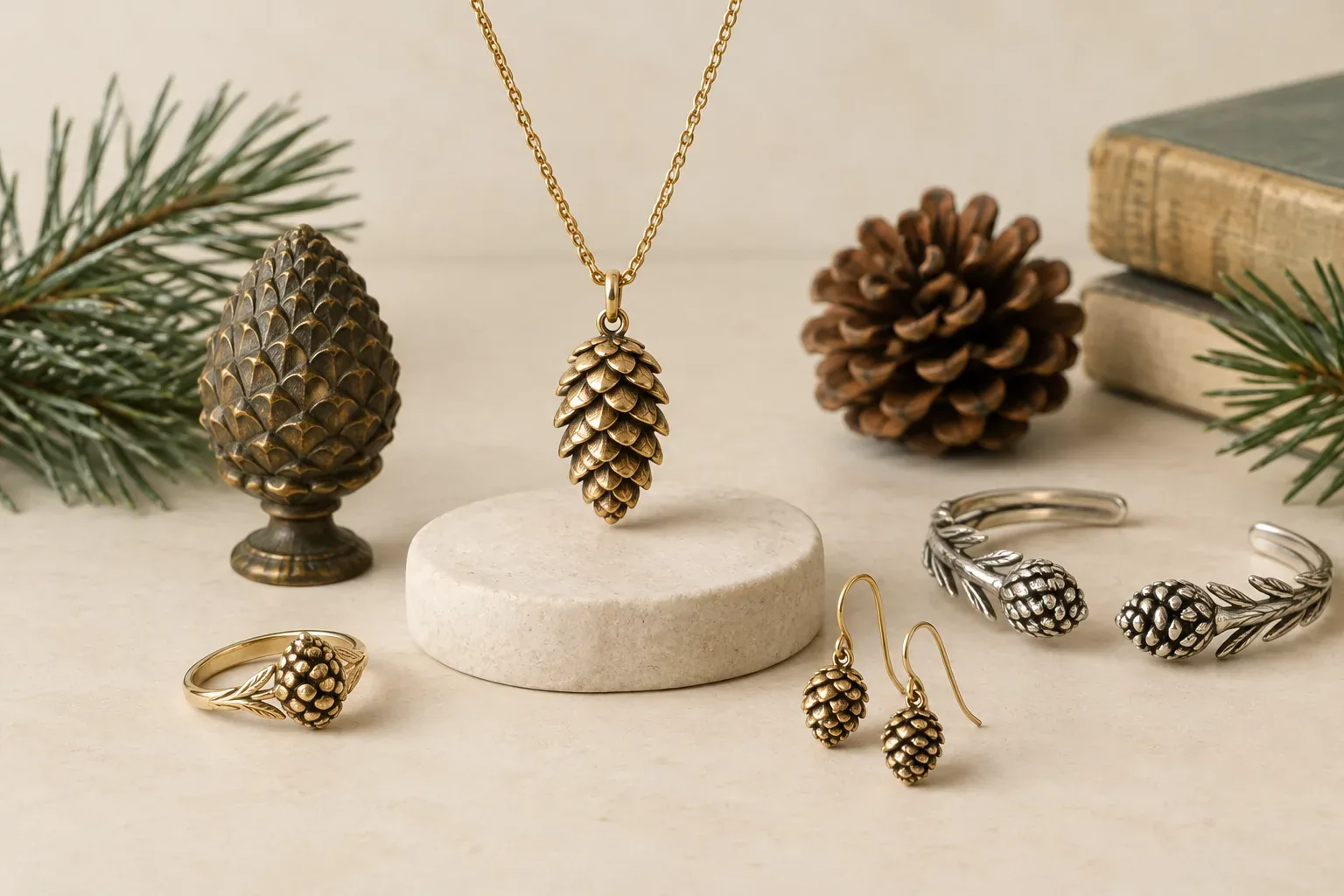
Designers and makers render pinecones in jewelry in several ways: as stylized metalwork pendants and brooches, as carved motifs in materials such as wood or hardstone, or as textural treatments that evoke the layered scales of a cone. The motif can be literal, showing a recognizably cone-like shape, or abstract, using repetitions of overlapping shapes or granulation to suggest the idea of a cone.
Gemstones and materials commonly used in nature-inspired jewelry have their own histories. Museum resources on gemstones outline how jewelers selected stones for color, translucency, and carving suitability, so a pinecone motif might be executed in carved garnet or agate, cast in gold or silver, or represented by textured metalwork that takes advantage of contemporary techniques. If a maker uses a carved stone or organic material, the piece’s method of manufacture and the material choice will affect both appearance and value.
Authenticity, materials and disclosure
When buying pinecone jewelry, or any gem-set piece, consider material authenticity and treatment disclosures. Government guidance on purchasing gemstones advises that treatments, synthetics, and imitations must be disclosed to buyers. Knowing whether a stone is natural, treated, lab-grown or an imitation affects both value and care needs.
Ask sellers about metal purity, gemstone origin, and any treatments or enhancements. For vintage or antique pinecone pieces, provenance and condition are also important. A museum-based understanding of historical techniques can help you spot well-made period pieces versus modern reproductions that simply use historical forms.
Choosing and gifting pinecone jewelry respectfully
Think first about what the motif will mean to the recipient. If the pinecone represents a specific religious or cultural idea to them, respect that usage and, when appropriate, ask about it. If you are selecting a piece for its aesthetic or a personal sentiment—growth, endurance, connection to nature—look for a maker and materials that align with the intended meaning and the recipient’s style.
Consider maker and provenance. Handcrafted pieces from independent jewelers often carry an explicit artist statement about symbolism, which can make the intended meaning clear. For family heirlooms or antique items, learn and share any documented history attached to the object rather than relying on contemporary assumptions. When giving jewelry connected to nature, avoid implying that your choice substitutes for deeper cultural or religious understanding; treat symbol-bearing gifts as invitations to conversation rather than definitive statements of belief.
Care, conservation, and practical wear
Care instructions depend on materials. Metalwork needs routine polishing appropriate to the metal; carved stones or organic materials may be sensitive to moisture or chemicals. If a pinecone motif is rendered in a porous stone or organic medium, avoid prolonged exposure to water and harsh cleaning agents.
If you are buying a vintage piece, conservation matters: museum guidance about jewelry history underscores that historic pieces were made with period techniques and may be fragile. Consider professional appraisal or conservation advice for valuable or historic items before regular wear.
Wearing the motif today
Because historic evidence for a single, consistent pinecone meaning is limited, wearing pinecone jewelry is largely a personal and stylistic choice. Some wearers adopt the motif as a personal emblem of nature connection or life cycles; others appreciate the visual texture or the way the motif echoes seasonal fashions.
If you want to make the motif’s meaning explicit, pair the piece with a short accompanying note when gifting, or choose a maker who documents an intended symbolism. If you are researching an inherited pinecone piece, consult museum resources and a qualified appraiser to separate maker marks, materials, and documented provenance from later layers of sentimental interpretation.
Further research and resources
For broader context on how natural motifs have been used in jewelry history, museum publications and catalogues are useful starting points. The Victoria and Albert Museum provides an overview of how jewelry styles and social meanings changed over time and an A–Z resource on gemstones that helps identify common materials used in botanical motifs.
For practical buying guidance on gemstone treatments and disclosure, refer to government consumer guidance, which sets out expectations for sellers to disclose treatments, synthetics, and imitations. For advice on choosing a meaningful piece or researching the symbolism of a specific object, consult curated guides on jewelry symbolism and provenance research.
Frequently asked questions
Does a pinecone always mean the same thing historically?
No. Museum research shows that jewelers used natural motifs in many periods, but direct documentation tying a single, consistent symbolic meaning to the pinecone across cultures and centuries is limited. Modern meanings are typically personal or cultural rather than universal historical facts.
Are pinecone motifs common in antique jewelry?
Nature-inspired motifs are common in many historical styles, but whether pinecones appear frequently depends on region, period, and designer. For period-specific frequency or examples, consult museum catalogues or a qualified appraiser who can examine provenance and maker marks.
What should I ask a seller when buying pinecone jewelry?
Ask about the materials, gemstone origin, any treatments or enhancements, metal purity, maker or provenance, and whether the piece is vintage or newly made. Government consumer guidance recommends disclosure of treatments and imitations for gemstones.
How can I gift pinecone jewelry respectfully?
Consider the recipient’s relationship to the motif and whether it carries cultural or spiritual meaning for them. Choose a piece whose materials and maker align with the intended sentiment, and include a note explaining your intended meaning rather than assuming a universal symbolism.
How should I care for a pinecone necklace made of carved stone or organic material?
Care depends on material. Avoid harsh chemicals and prolonged moisture for carved or organic pieces, store them separately to prevent abrasion, and seek professional conservation advice for delicate vintage items.
Sources and further reading
- Bedazzled: A History of Jewellery — Victoria and Albert Museum
- An A-Z of Gemstones — Victoria and Albert Museum
- Buying Gemstones, Diamonds, and Pearls — Federal Trade Commission