Meaning at a glance
Pair pavé wedding bands to the engagement ring by matching band profile and stone line, choosing a metal that balances color harmony with durability, deciding how much gap you want for contrast or flush fit, and accepting trade-offs between sparkle and serviceability; confirm stone treatments and grading through the seller's disclosures and, when needed, an independent lab.
What a pavé setting looks like and how the motif appears in wedding jewelry
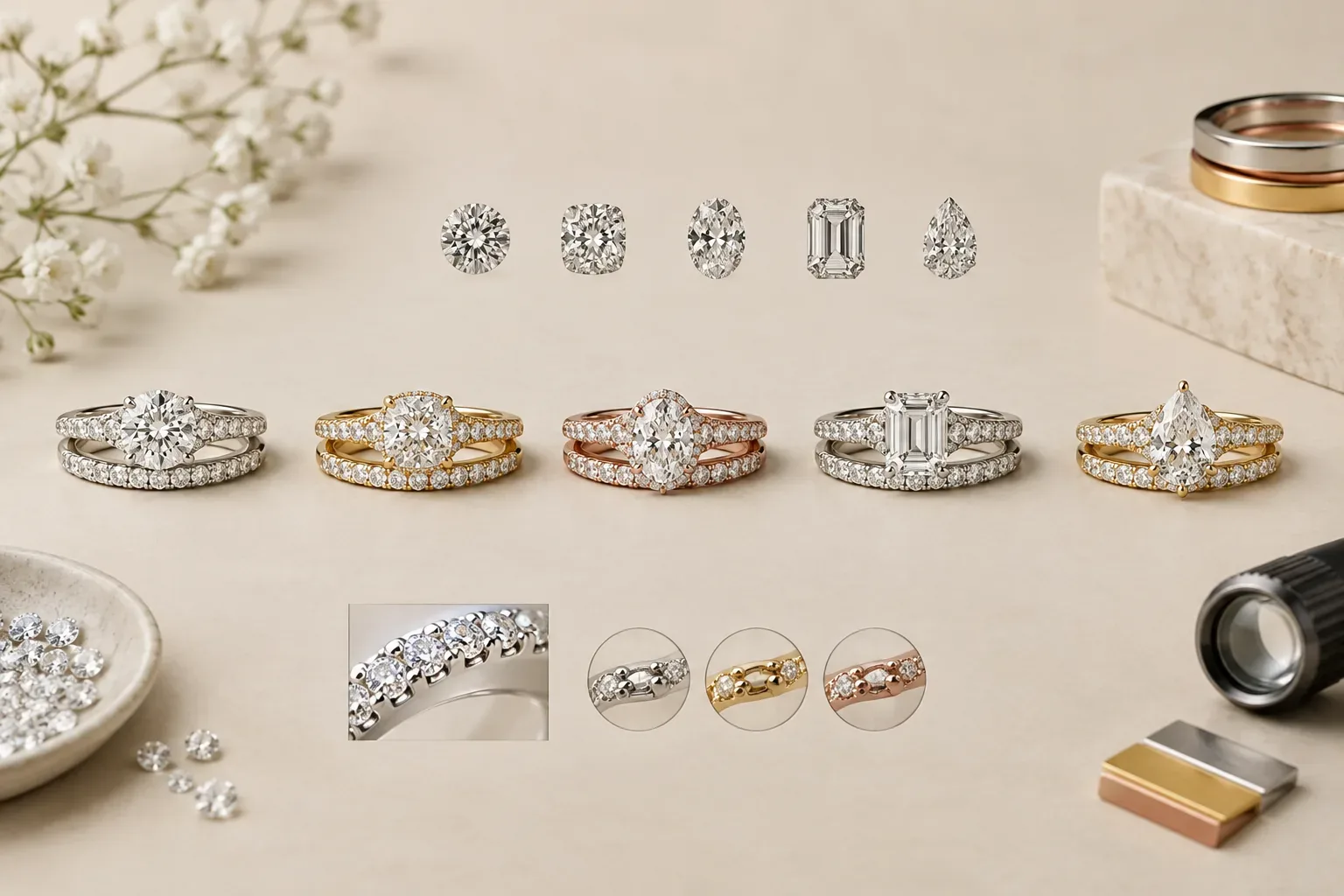
In common jewelry usage, a pavé setting is a surface covered by numerous small stones set closely together so that metal is minimized between them. In wedding and engagement contexts, pavé appears in two main ways: as a continuous line across a band, often called an eternity or half-eternity when stones circle the shank, and as accent lines that flank a central stone or run partly around the band. Designers also use pavé to create motifs such as halos, split shanks, and milgrain edges where the tiny stones contribute to a textured, sparkly surface.
Because pavé relies on many small stones, it interacts strongly with band shape: a low-profile, thin pavé band reads differently beside a high-set solitaire than a thicker, domed pavé band. The decision to pair pavé with a particular engagement ring is therefore as much about sightlines and comfort as it is about color and symbolism.
Historical evidence and what the approved sources show
The specific, documentable history of the pavé setting is not provided in the approved sources supplied for this article. Contemporary trade and consumer trends in the approved material instead focus on current demand, stylistic directions, and concerns that influence how people pair and wear pavé bands today.
Jewelers Mutual reports that 2026 consumer interest centers on fluid forms, modern stacking, colored gemstones, craftsmanship, versatility and gender-neutral styling, all of which help explain why pavé lines and stacking-ready bands remain popular choices in wedding jewelry. Imaginaire Digital’s 2026 UK search estimates likewise show strong ongoing demand for engagement rings and related categories, which supports the practical reality that pavé settings are a frequent search and purchase option for ring shoppers.
Documented historical meanings versus modern personal interpretations
Because the authoritative sources provided do not record a discrete historical symbolism specific to pavé settings, there is no documented cultural meaning for pavé to present here as a fact. When readers encounter claims that pavé represents a particular cultural or historical message, treat those claims as modern or personal interpretations rather than documented history unless a primary historical source is cited.
Modern wearers and designers often attach personal meanings to pavé—for example, seeing it as a symbol of shared facets of a relationship, continuous commitment in an eternity line, or simply a preference for enhanced sparkle. Those modern, individual meanings are valid personal interpretations but should be distinguished from verifiable historical symbolism when making gifting choices or writing provenance statements.
Shape: matching profiles and stone alignment
When pairing a pavé wedding band with an engagement ring, the leading practical criterion is profile compatibility. A flat, straight-edged pavé band will sit differently beside a curved or knife-edged engagement shank. For a visually seamless look, match the band’s width and curvature to the engagement ring’s bearing surface so that the pavé line aligns with the engagement ring’s shoulder stones or the base of the center stone.
If you prefer contrast, choose a narrower pavé band to create a visual gap or a curved pavé band to nestle against a cathedral or contoured engagement ring. Remember that highly domed bands reduce the visible length of a pavé line from the top view, while flatter profiles emphasize the row of stones.
Gap choices: flush, narrow reveal, or decorative space
A flush pairing eliminates visible metal between the rings and creates a continuous relationship of metal and stones. This offers a streamlined aesthetic but may restrict comfort if the engagement ring has a high center stone or unusual gallery.
A narrow reveal leaves a thin line of metal between the rings so each piece reads individually and can reduce stress between prongs. A more pronounced gap can show off a contrasting metal color or allow for engraving and comfort fit. Choose gap size based on how you and your partner wear rings day-to-day and whether you prefer the look of a matched set or two distinct pieces.
Metal choices and trade-offs
Select metal for both visual harmony and long-term wear. White metals such as platinum and rhodium-plated white gold visually enhance the brilliance of pavé diamonds and are often chosen to match modern white center stones. Platinum is more durable and resists wear better over time, but it is heavier and typically more expensive.
Yellow and rose gold introduce warm color contrast that some wearers prefer for heirloom coordination or to complement skin tone. Gold alloys are softer than platinum, which means pavé prongs and bead settings can wear faster. When selecting metal, accept the trade-off between color preference and how aggressively the band will show wear and require maintenance.
Gemstones, treatments, and what you can verify
Pavé bands commonly use diamonds or small colored gemstones. The Gemological Institute of America explains that treatments, disclosure, detectability, durability and special care create distinct consumer questions for gemstones. Ask the seller for written disclosure of any treatments applied to the stones and for the basis of that disclosure, because treatments can affect durability and cleaning recommendations.
What a shopper can verify without a lab is largely limited to visible qualities and seller documentation: you can confirm the setting style, the approximate size and color appearance of pavé stones under magnification, the metal stamp for karat or metal type, and review any certificates or treatment disclosures the seller provides. You cannot verify a diamond’s grading, treatment history, or origin reliably without either a qualified jeweler with appropriate instruments or an accredited gemological laboratory report.
Practical selection and gifting guidance
Measure ring sizes accurately and consider how daily wear will affect the band’s fit. If both rings will be worn together, size for the combined stack rather than each ring individually. Test the pairing with a temporary sizing ring or have the jeweler create a mockup to confirm comfort and visual alignment before final purchase.
Request written disclosures about stone treatments and any grading reports and keep those documents with the purchase records. The Federal Trade Commission advises that consumers need clear distinctions among natural, lab-created, treated, cultured and imitation materials and written seller disclosures. If the pavé contains colored stones or treated material, ask about specific care and potential effects on future maintenance.
When gifting, consider the recipient’s lifestyle. A person who works with their hands may prefer fewer exposed pavé stones, thicker settings, or metals with higher wear resistance. If the receiver values sparkle over ease of maintenance, a finer pavé with smaller stones may be appropriate, but include a plan for routine inspection and possible repairs.
Care, inspection, and limits of at-home verification
Regular care for pavé bands includes gentle cleaning, periodic inspection for loose stones, and professional maintenance to tighten settings. Avoid ultrasonic cleaners or harsh chemicals for some treated or fragile colored stones; consult the seller’s care guidance. Jewelers Mutual’s trend guidance noting emphasis on craftsmanship and versatility supports the practical expectation that consumers will seek pieces that balance finishing with long-term serviceability.
If you are concerned about authenticity, treatments, or grading, understand that these require specialist tools and training. The FTC recommends written disclosures from sellers; beyond those documents, only a qualified gemologist or gemological laboratory can verify treatments, precise grading or origin. Plan any dispute resolution, appraisal, or insurance steps around professional reports rather than visual inspection alone.
Summary
Pairing a pavé wedding band is a process of matching sightlines and comfort, choosing metal to balance color and durability, deciding how much of a gap you want for aesthetic reasons, and acknowledging practical trade-offs between sparkle and maintenance. Rely on seller disclosures for treatments and certificates, and use a qualified jeweler or lab to confirm any technical claims. With those steps you can make an informed, durable, and personally meaningful choice.
Frequently asked questions
Can a pavé wedding band be resized?
Resizing pavé bands is possible but more complex than plain bands because altering the shank can disturb the setting and stone alignment. The extent of resize that is safe depends on the band’s construction and the location of pavé stones; a qualified jeweler should assess the piece and explain risks and costs before resizing.
How often should I have a pavé band inspected?
Have a pavé band inspected by a professional jeweler at least once a year, and sooner if you notice wobble or missing stones. Regular inspections help detect worn prongs or bead settings before stones are lost.
Does the metal color affect how diamonds in pavé look?
Yes. White metals like platinum or rhodium-plated white gold tend to emphasize diamond brilliance, while yellow or rose gold add warm contrast that can alter perceived color. Choose the metal that balances the look you want with considerations of wear and maintenance.
What documents should I request when buying a pavé band?
Request written disclosures on any treatments, the exact metal type and karat, and any grading or certification documents the seller can provide. If diamonds are claimed to be certified, ask for an actual lab report number and lab name; written records are essential for insurance and future resale.
What can I verify myself and what requires a lab?
You can verify visible fit, finish, metal stamps, and ask to view any certificates or seller documentation. Verification of a diamond’s cut grade, precise color and clarity grades, treatment history, and origin typically requires a qualified gemological laboratory or accredited gemologist.
Sources and further reading
- Imaginaire Digital — Imaginaire Digital
- Jewelers Mutual — Jewelers Mutual
- Gemological Institute of America — Gemological Institute of America
- Federal Trade Commission — Federal Trade Commission