Meaning at a glance
Documented museum records show mythic and marine motifs appear in European jewellery history, while specific symbolic meanings for mermaids are more often modern or personal; choose pieces and gemstones with attention to material quality, cultural sensitivity, and clear disclosure about treatments.
What the historical evidence shows (and where it comes from)
Curatorial research collected by museums traces how jewellery has changed with fashion, technology and social meaning, and how makers have adopted mythological imagery at different times. The Victoria and Albert Museum's overview of jewellery history explains that mythic and nature-derived motifs repeatedly appear in European decorative arts from the Renaissance through the nineteenth century and into modern revival styles, reflecting changing tastes and ideas about sentiment and identity. That documentation supports a broad claim that makers incorporated sea-related figures alongside other mythic forms, but it does not establish a single, universal symbolic meaning for mermaids across eras.
For gemstones and materials associated with the sea—pearls, certain opals, aquamarine and turquoise, for example—the Victoria and Albert Museum's A–Z of Gemstones provides historical context about which materials have been prized, traded, and used in jewellery and why some gemstones carried maritime associations. These sources together describe the changing social contexts of jewellery production and use, and they show how materials and motifs carry different resonances in different periods rather than a fixed meaning for one symbol.
Documented historical meanings versus modern personal interpretations
Documented meanings: museum and curatorial records demonstrate that jewellers have used mythological imagery, including marine imagery, for decorative and symbolic purposes at different times. Those records show that meanings shifted with patronage, fashion, religious attitudes, and the commercial market. The Victoria and Albert Museum's work on jewellery history is the basis for this documented view that motifs are historically contextual and mutable.
Modern and personal interpretations: many of the associations people now attach to mermaid imagery—female independence, sensuality, transformation, a connection to intuition and mystery—are largely products of modern folklore, literature, popular culture, and personal appropriation rather than single historic definitions documented in museum catalogues. These later readings are valid as contemporary symbolic choices, but they should be distinguished from historically documented uses and meanings.
How the mermaid motif and sea-associated gemstones appear in jewellery
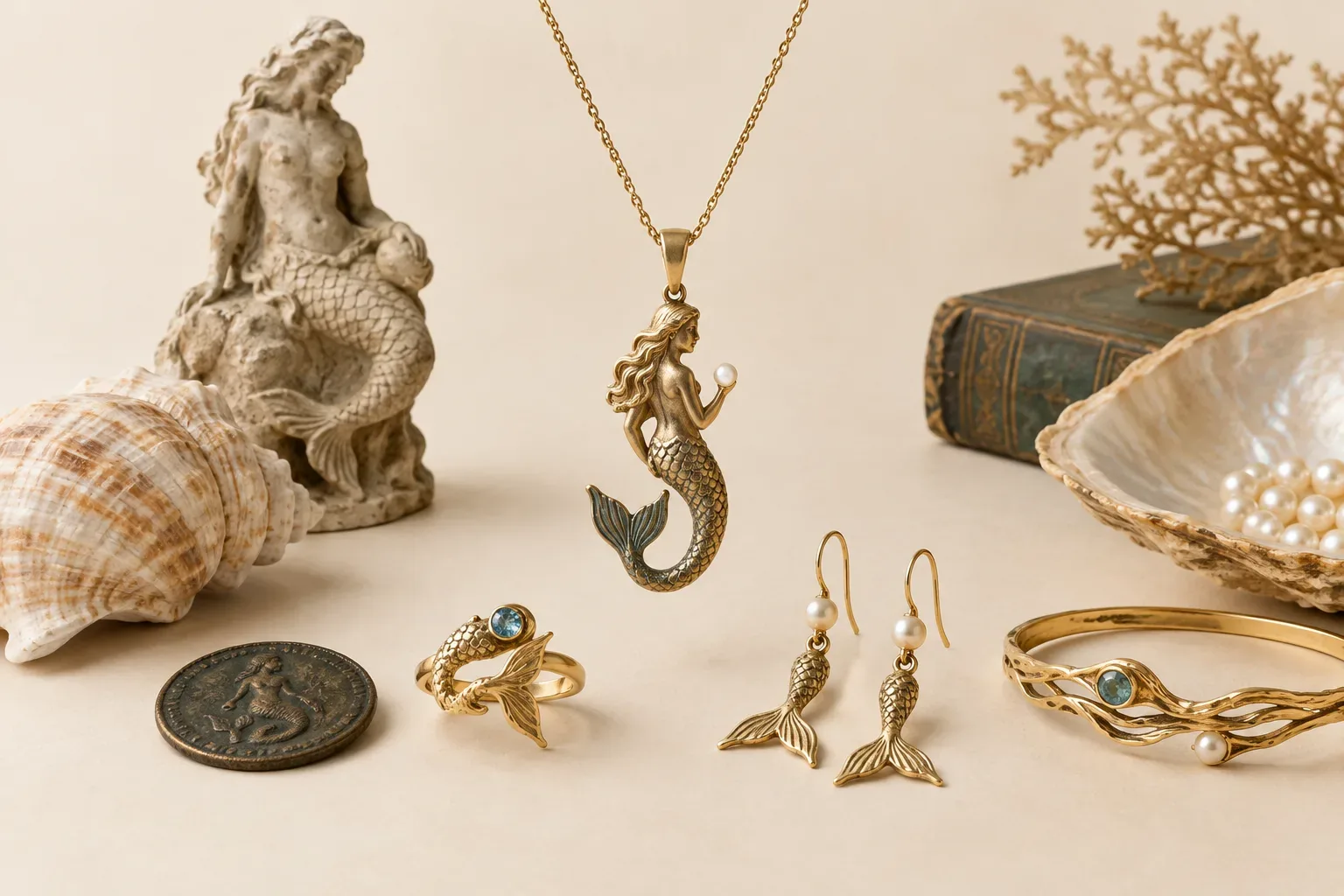
The mermaid motif is realized in jewellery through a variety of techniques and forms. Makers use engraved or cast figurative charms and pendants, sculptural brooches, enamelled cameos, and filigree to suggest flowing hair or a fishtail. Designers sometimes pair the figurative motif with sea-referent elements such as shells, waves and starfish to reinforce a maritime theme. These methods are consistent with long-standing decorative practices documented in museum collections where motifs are adapted to the technical possibilities of metalwork and gem-setting.
Gemstones associated with the sea often appear alongside or within mermaid designs. Pearls historically link directly to the ocean by origin and have been used as focal stones for centuries; aquamarine and blue-green gemstones evoke seawater tones; moonstone and opal provide soft, iridescent surfaces that suggest wetness or reflected light. The Victoria and Albert Museum's A–Z of Gemstones discusses the historical use and perceived qualities of many such stones, which helps explain why contemporary makers combine them with mermaid imagery.
Practical and respectful guidance for selecting or gifting mermaid jewellery
Start with intention: decide whether you are emphasizing cultural history, literary or pop-culture associations, a personal sentiment, or purely aesthetic qualities. If you intend the piece to carry a particular symbolic meaning for the recipient, explain that meaning when you give the gift so the connection is explicit and respectful.
Check materials and disclosures: follow consumer-protection best practice and ask sellers about metal hallmarks, gemstone treatments and any imitations. The Federal Trade Commission advises buyers to expect clear disclosure about treatments, synthetics and enhancements when purchasing gemstones and pearls. Request certification or a written statement for higher-value gemstones and look for standard stamps such as 925 for sterling silver or karat marks for gold.
Consider cultural and religious sensitivities: not every sea motif carries the same meaning everywhere. Avoid assuming universal symbolism; instead, ask if you are unsure whether mermaid imagery would be respectful or welcome for someone from a particular cultural or spiritual background. When in doubt, choose a more neutral marine element—a shell, wave or pearl—or personalize the gift with a note explaining your respectful intent.
Match scale and style to the wearer: mermaid motifs range from whimsical small charms to bold, sculptural statement pieces. For everyday wear choose durable metals and secure settings, and for delicate stones such as pearls or opal choose protective settings or pieces designed for occasional wear. If the recipient has metal sensitivities, select nickel-free metals and verify plating or alloy composition.
Personalization and provenance: consider adding an engraving, choosing birthstone-adjacent gems, or selecting a maker whose practices you trust. Provenance matters for both quality and ethical concerns; if sustainability or artisanal production is important, ask the seller about manufacturing methods and sourcing. For similar purchasing guidance see our related article How to Choose Meaningful Jewelry: A Practical Gift Guide.
Final note
Mermaid jewellery meaning is best understood as a layered conversation between documented decorative practice and later cultural interpretation. Museums document the ways motifs and materials have been used and transformed, while contemporary wearers supply personal, literary or pop-cultural meanings. Treat both strands—historical context and personal symbolism—as valid but distinct when choosing, wearing or gifting a mermaid piece.
Frequently asked questions
What does mermaid jewelry traditionally mean?
There is no single traditional meaning universally documented for mermaid motifs; museum research shows mythic and marine imagery appear at different times and carry changing meanings, while many of the associations people use today are modern or personal interpretations.
Which gemstones are commonly paired with mermaid designs?
Gemstones often paired with mermaid themes include pearls, aquamarine, turquoise, moonstone and opal; the Victoria and Albert Museum's A–Z of Gemstones explains how some of these stones have historical maritime associations.
How can I verify gemstone quality or disclosure when buying mermaid jewelry?
Ask the seller for written disclosure about treatments and synthetics; for higher-value gems request lab reports and check metal hallmarks. The Federal Trade Commission advises clear disclosure of enhancements and imitations.
Is mermaid jewelry appropriate as a gift for someone from a different culture?
Treat it respectfully: avoid assuming universal meanings, ask about cultural or spiritual sensitivities if unsure, and consider choosing a more neutral marine motif if the recipient’s background suggests potential concerns.
How should I care for mermaid jewelry that uses pearls or opal?
Delicate gems like pearls and opal should be protected from prolonged moisture, harsh chemicals and abrasion. Choose protective settings for everyday wear and follow any maker-provided care instructions.
Can mermaid jewellery represent personal transformation?
Yes—many people adopt mermaid imagery as a contemporary symbol of personal transformation, intuition or freedom, but this is a modern interpretation rather than a single historical meaning documented by museum records.
Sources and further reading
- Bedazzled: A History of Jewellery — Victoria and Albert Museum
- An A-Z of Gemstones — Victoria and Albert Museum
- Buying Gemstones, Diamonds, and Pearls — Federal Trade Commission