Meaning at a glance
Aquamarine and bloodstone are two distinct March birthstone traditions: aquamarine is a beryl prized for clear blue color and strong durability for everyday jewelry, while bloodstone is a green chalcedony (heliotrope) known for its red flecks and a long history of symbolic use; choose and care for each according to gem identity, setting, and seller disclosures.
Gem identity and durability
GIA describes aquamarine as a member of the beryl family, chemically and structurally distinct from chalcedony and jasper. Aquamarine typically shows a range of blue to blue-green colors and is known for its clarity and vitreous luster. According to GIA, its physical properties make it generally suitable for everyday jewelry when set appropriately.
GIA identifies bloodstone as a green form of chalcedony historically called heliotrope; its most characteristic feature is the contrast between the dark green ground and red or brownish red spots or streaks. While chalcedony is a durable silica mineral commonly used in beads and cabochons, its properties and typical cutting style mean bloodstone is often seen in pendants, signet rings, or statement pieces rather than in very exposed settings.
In short, aquamarine and bloodstone are not interchangeable. Their different mineralogy affects how each will wear over time and which settings are safest for daily use. Rely on the gem identity, not just the name, when planning a piece intended for constant wear.
Documented historical meanings and sources
The idea of assigning specific gems to calendar months has changed over centuries and across cultures. The Gemological Institute of America (GIA) documents how lists of birthstones evolved and how different stones gained prominence in different eras. GIA’s museum materials and birthstone guides trace shifting traditions rather than a single, unbroken meaning for any stone.
Historically, names and associations varied with region and period. GIA’s overview of birthstone history shows that some lists emphasized color symbolism, others emphasized trade or availability, and later commercial lists standardized certain associations that persist today. Use GIA’s historical framing to understand that any single “ancient” meaning often belongs to a particular culture or era rather than being universal.
Modern symbolic meanings vs documented history
Modern personal meanings attached to aquamarine and bloodstone are common and meaningful on an individual level, but they are not historical certainties. For example, many modern writers and gift-givers describe aquamarine as symbolizing clarity, calm, and clear communication; bloodstone is often associated with courage, grounding, or vitality because of its dramatic red flecks against a dark green field. These modern associations are contemporary interpretations and popular symbolism rather than universally documented historical facts.
GIA’s work on birthstone tradition makes clear that today’s common list of month stones is the result of evolving practice rather than immutable ancient prescriptions. When you read or hear symbolic claims, consider whether the author is describing a modern personal or commercial meaning or citing a particular historical or cultural source. Treat modern symbolism as a meaningful layer you can adopt for personal reasons, not as objective fact about the stone itself.
How aquamarine and bloodstone appear in jewelry
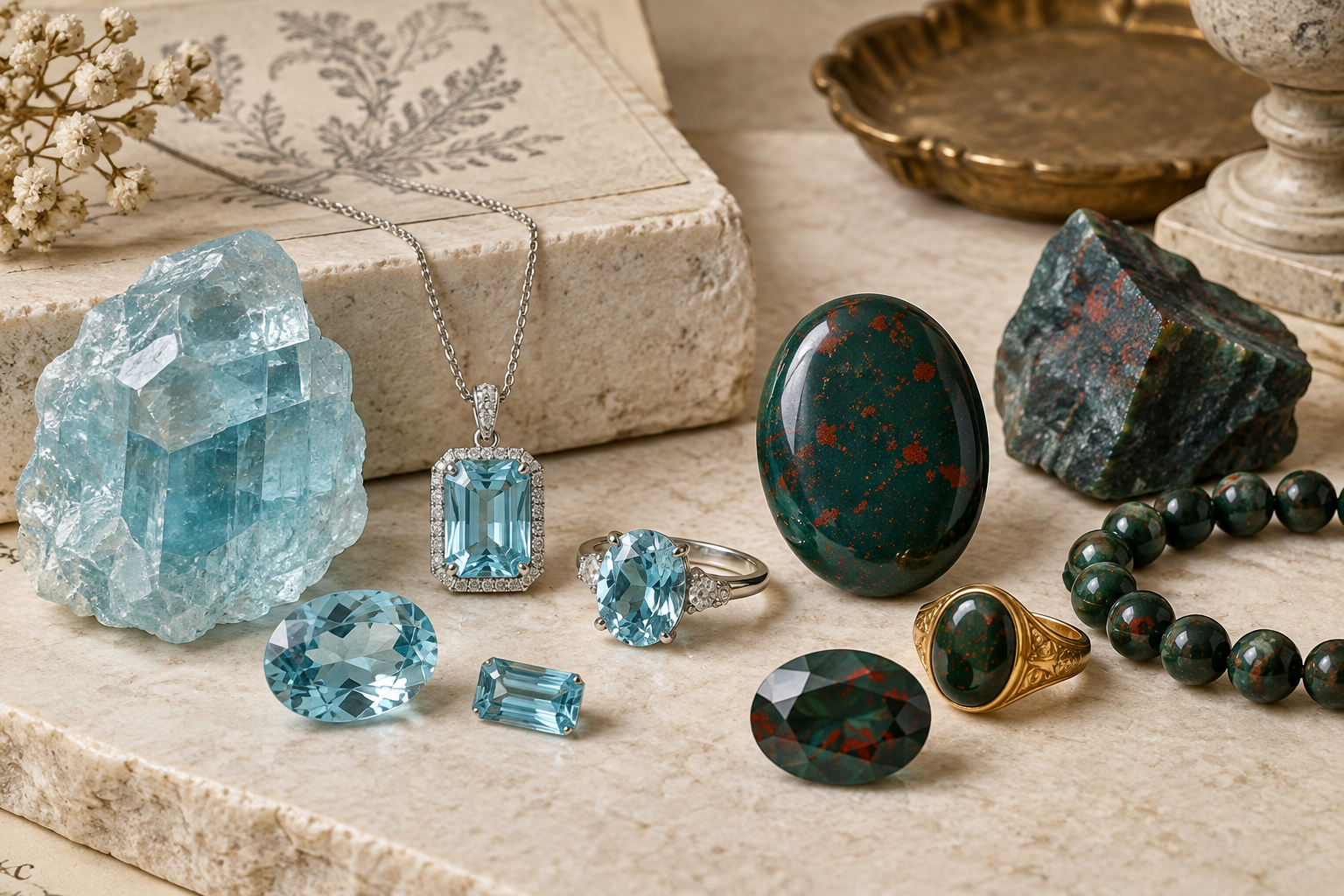
Aquamarine is commonly faceted to showcase its clarity and blue color, and it appears widely in rings, pendants, earrings, and bracelets. Faceting maximizes sparkle and color saturation, and larger clean aquamarine stones are often cut as emerald or oval shapes. GIA’s information on birthstones and gem quality emphasizes color and clarity as primary quality factors for aquamarine, which helps explain why faceted aquamarine dominates fine jewelry.
Bloodstone is most often cut en cabochon or used as beads and carved pieces. The polished, rounded surface of a cabochon displays the green ground and red inclusions clearly, giving bloodstone its characteristic visual appeal. Historic and contemporary signet rings, intaglios, and devotional or talismanic pieces frequently use bloodstone because its contrast and opacity read well in larger, sculpted surfaces.
Designers also combine these stones with different metals and accents to suit their aesthetics. Aquamarine pairs naturally with cool metals such as white gold, platinum, or sterling silver to emphasize its blue tones, while bloodstone is often set in yellow gold or warm-toned metals that contrast with its darker green and red palette. Practical design choices—protective bezel settings for bloodstone cabochons or secure prongs and protective gallery work for faceted aquamarine—reflect each stone’s use and costume.
Shopping, disclosure, and treatment considerations
When buying either stone, follow standard consumer guidance. The Federal Trade Commission (FTC) advises that sellers must disclose treatments, whether a stone is laboratory-grown, and whether an item is a simulant rather than the natural gem. Ask the seller directly about any heat treatments, clarity-enhancing processes, dyeing, or stabilization used on the stone you’re considering, and request written confirmation when possible.
GIA’s guidance about birthstones, quality, durability, and care helps you prioritize what matters: for aquamarine, look at color saturation and clarity; for bloodstone, examine the richness of the green and the distinctiveness of the red spots. Both stones can be treated or dyed in some markets, so written disclosure from a reputable seller or a gemological report where appropriate is valuable for higher-value purchases.
For pieces of significant value, ask for a gemological report from a recognized laboratory. Even for modest purchases, buy from sellers with clear return policies and transparent statements about treatments and origin. If you shop online, check for detailed photos and independent verification when available.
Care and longevity
GIA’s discussion of durability and care emphasizes that understanding a gem’s identity guides how you care for it. Aquamarine, as a beryl, generally tolerates daily wear well but can fracture under sharp blows, so protective settings and common-sense precautions—removing rings for heavy work and avoiding prolonged exposure to household chemicals—are sensible.
Bloodstone, as a form of chalcedony, is a hard silica but is usually seen in cabochon form and can be damaged by sharp impact or by exposure to strong acids or alkaline cleaners. Both stones benefit from gentle cleaning with warm water, mild soap, and a soft brush, and you should avoid steam-cleaning or ultrasonic machines unless you have confirmation from the seller that the specific stone and setting will tolerate those methods.
Store both stones separately where they cannot knock against harder gemstones or metal hardware. Regular inspection of prongs, bezels, and settings will help prevent accidental loss.
Practical and respectful selection and gifting guidance
When selecting a March birthstone as a gift, ask what meaning matters to the recipient. Some people appreciate historically documented associations and provenance, while others value contemporary symbolic meanings or simple color preference. Respect the recipient’s beliefs and tastes: if they prefer subtle, everyday wear, choose a durable setting and a stone cut that conceals inclusions; if they prefer statement pieces, a large bloodstone cabochon or a striking aquamarine pendant may be more appropriate.
Consider lifestyle when choosing a setting. For an active wearer who will use their hands, favor lower-profile or bezel settings and avoid fragile mountings. For heirloom or investment-level purchases, request written information about treatments and consider a lab report. If you are unsure about authenticity or value, purchase from a jeweler with good references, a clear return policy, and documented disclosures as advised by the FTC.
If you want to include symbolic meaning with a gift, present it as a personal sentiment rather than a definitive claim about the stone’s powers. A short note that explains your intention or why you chose the stone for the recipient makes the gift both thoughtful and respectful of diverse beliefs.
Quick comparison recap
Aquamarine: a blue beryl often faceted, prized for clarity and cool color, generally suitable for daily-wear settings when properly mounted. GIA’s birthstone materials explain aquamarine’s place in modern March lists and its gemological context.
Bloodstone: a green chalcedony (heliotrope) notable for red inclusions, commonly cut as cabochons and used in beads and carved pieces. GIA’s historical review shows how stones like bloodstone appear in changing birthstone traditions.
Shopping and care: rely on seller disclosures and FTC guidance about treatments and imitations, choose settings that protect the stone, and follow GIA’s durability and care recommendations to keep the jewelry looking its best.
Frequently asked questions
What are the official March birthstones?
Modern lists recognize both aquamarine and bloodstone as March birthstones; GIA’s guides explain that both appear in March lists used today, reflecting evolving traditions rather than a single historical prescription.
Are aquamarine and bloodstone the same mineral?
No. Aquamarine is a blue to blue-green beryl, while bloodstone is a green variety of chalcedony historically known as heliotrope; their different mineral makeup affects appearance, cutting style, and durability.
Which stone is better for an everyday ring?
Aquamarine is generally more suitable for everyday rings because beryl’s properties support faceted cuts and regular wear when set securely; bloodstone can be used in rings but is most commonly seen in cabochons or less-exposed settings. Consider the wearer’s lifestyle and choose protective settings if the piece will be worn daily.
How should I clean and care for these stones?
GIA recommends gentle cleaning for both stones using warm water, mild soap, and a soft brush. Avoid strong chemicals, and do not assume ultrasonic or steam cleaning is always safe; check seller guidance for the specific stone and setting before using those methods.
Are treatments or imitations common for these gems?
Treatments and imitations exist in the gem market. The FTC advises buyers to request disclosure about heat treatments, dyeing, stabilization, laboratory-grown stones, or simulants. Buy from reputable sellers who provide clear written information about any treatments or enhancements.
How can I choose between aquamarine and bloodstone as a gift?
Choose based on the recipient’s personal taste, lifestyle, and the kind of meaning you want to convey. If you prioritize durable, wearable everyday jewelry and cool blue tones, aquamarine is a strong choice. If you want a bold, earthy piece with distinctive contrast and a cabochon aesthetic, bloodstone can be a meaningful option. Include a short note explaining your intent to make the gift personal and respectful.
Sources and further reading
- March Birthstone Guide — Gemological Institute of America
- Birthstones — Gemological Institute of America
- Birthstones: Gems Through the Ages — Gemological Institute of America
- Buying Gemstones, Diamonds, and Pearls — Federal Trade Commission