Meaning at a glance
February's modern birthstone is amethyst, a purple variety of quartz; this article covers its gemological identity, documented history across cultures, how it is used in jewelry, practical buying guidance and care recommendations.
What amethyst is: quartz identity, color, and common treatments
Amethyst is the purple variety of quartz, the mineral composed primarily of silicon dioxide (SiO2). The purple color ranges from pale lilac to deep violet and comes from trace iron and structural features within the quartz crystal. The Gemological Institute of America (GIA) treats amethyst as part of the quartz group and discusses its color range and gemological properties in its birthstone materials.
Color is the primary value factor for amethyst: richer, more saturated purples generally command higher prices than pale stones. Many amethysts are heat-treated in controlled ways to alter or improve color; in some cases heat treatment is used to change amethyst into yellow-to-orange citrine. The Federal Trade Commission (FTC) and the GIA provide guidance that treatments, lab-grown material, and imitations should be disclosed to buyers, and disclosure is an important part of ethical trade.
Documented historical record (by culture and period)
Historical associations and uses of amethyst are documented in museum and gemological records. The GIA's museum and historical materials record that amethyst has been valued and used in jewelry across many cultures and periods, including in the classical Mediterranean and in medieval and later European jewelry.
In classical antiquity some Greek and Roman sources mentioned purple stones; GIA's historical overview places amethyst among the gems that circulated in those regions, where color and rarity affected use in rings, intaglios and personal ornaments. During medieval and Renaissance Europe, amethyst appeared in ecclesiastical and secular jewelry, and GIA's exhibit notes connect such uses to changing fashions and access to gemstone sources.
GIA's survey of birthstone history explains that the concept of assigning gems to months developed over time and was not fixed in a single ancient origin. The modern list that names amethyst as February's birthstone is the product of evolving month lists, popular practices in jewelry manufacture and formalizing bodies in the 19th and 20th centuries, as documented by GIA.
Documented meanings versus modern personal interpretations
When writing about historical meanings, it is important to distinguish documented records from later or personal interpretations. GIA's historical records describe how amethyst was used and valued in various periods; those records show what people wore and owned, and how the gem fit into artistic and social contexts. Those documented practices do not in themselves prove any physical or supernatural effects.
In the present day many people assign personal or spiritual meanings to amethyst—ideas such as calm, clarity, or protection are commonly expressed in contemporary culture. These modern interpretations are personal, cultural, or symbolic choices and are not physical properties of the mineral. Presenting them as individual beliefs rather than universal facts keeps historical documentation distinct from current personal use and symbolism.
How amethyst appears in jewelry
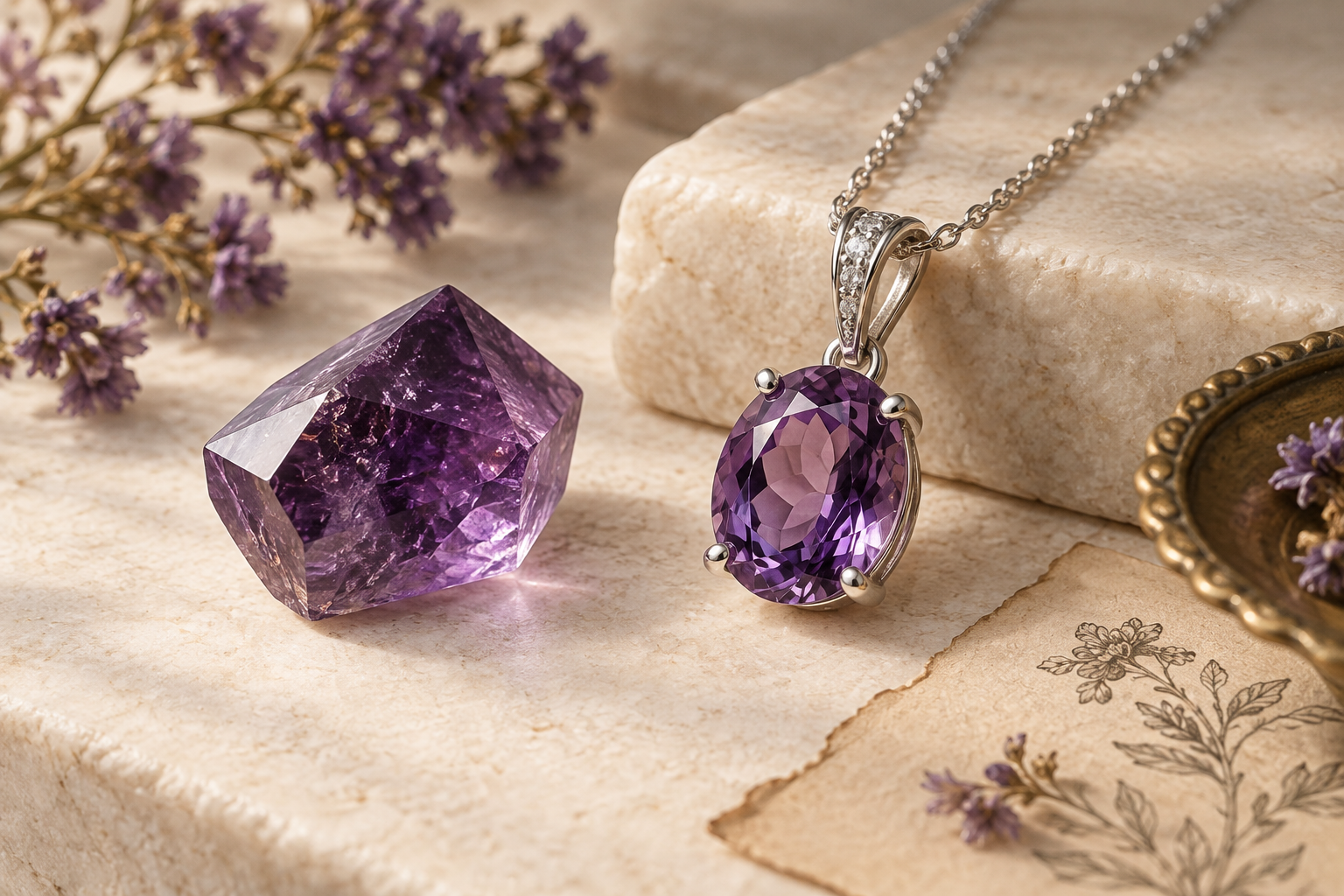
Amethyst is used across a wide range of jewelry types, from simple bezel-set pendants and earrings to multistone bracelets and large cabochon or faceted statement rings. Jewelry designers value the range of purple hues and the stone’s workability; amethyst is commonly cut into standard brilliant and step cuts as well as cabochons for larger, patterned specimens.
Traditional motifs that incorporate amethyst have varied by time and place. In European ecclesiastical and ceremonial jewelry of past centuries, amethyst was often set in rings and crosses. In contemporary jewelry, amethyst appears in both classic and fashion-forward designs, including halo settings, vintage-inspired settings that echo Victorian and Art Deco periods, and minimalist modern styles that showcase color and cut.
Because amethyst is relatively affordable compared with ruby, sapphire and emerald of similar size and color quality, it is widely used in both fine and fashion jewelry. Jewelers may pair amethyst with white metals such as silver, white gold or platinum to emphasize purple tones, or with warm metals like yellow gold to create contrast.
Buying guidance: quality factors, treatments, and ethical disclosure
When buying amethyst, consider the standard gem-quality factors: color, clarity, cut and carat weight. Color saturation and hue are primary determinants of value; a medium to deep saturated purple with even color distribution is generally most desirable. Clarity is important because large visible inclusions will affect appearance. A well-proportioned cut maximizes color and brilliance and reduces the appearance of zoning or pale areas.
Ask about treatments and origin. The Federal Trade Commission (FTC) provides guidance that sellers should disclose significant treatments, whether stones are lab-grown, and whether they are imitations. The GIA's buying guide for February birthstones also discusses typical durability and common treatments. Heat treatment to alter color or convert amethyst to citrine is a known practice, and disclosure of such treatment is standard in reputable trade.
Price expectations vary with size, color, and clarity. Because amethyst is more abundant than many colored gems, you can find attractive, well-cut stones across a wide price range. For a meaningful gift, prioritize color and cut over maximum carat weight; a smaller, richly colored and well-cut amethyst will often be more visually pleasing than a large, washed-out stone.
If you are buying for someone with cultural or personal preferences, ask discreet, respectful questions about style, metal preference and size. If you are uncertain about authenticity or disclosure, request a written description from the seller and, for higher-value pieces, consider an independent gemological report from a recognized laboratory.
Practical and respectful gifting guidance
Gifting amethyst as a February birthstone can be personally meaningful without making universal claims. Consider the recipient's jewelry habits—do they prefer subtle pieces or bold statements? Measure typical ring size, or choose adjustable or easy-return designs if unsure. Match the metal color and setting style to the recipient's existing jewelry when possible.
Respect cultural meanings and personal beliefs by asking about any preferences or sensitivities beforehand. If the gem’s symbolic meaning is important to the recipient, discuss whether they prefer a historical or contemporary interpretation and avoid presenting personal symbolism as an objective fact. A thoughtful note explaining why you chose the piece—its color, craftsmanship, or connection to February—adds personal context.
Care and durability
Amethyst is a durable gem for many types of jewelry, with a Mohs hardness of about 7, which makes it suitable for rings, necklaces, earrings and bracelets. The GIA notes general durability guidance in its birthstone materials and advises reasonable care to preserve color and finish.
For routine cleaning, warm soapy water and a soft brush are safe and effective for most amethyst jewelry. Rinse thoroughly and dry with a soft cloth. Avoid prolonged exposure to strong sunlight or high heat, as these can fade or alter some amethyst colors or, in certain cases, change amethyst into other colors when heat is intense. Ultrasonic and steam cleaners are generally unnecessary and can be risky if a stone has fractures or if the setting contains fractures or enhancements; consult a jeweler when in doubt.
Avoid harsh household chemicals, ultrasonic cleaners for fragile settings, and abrupt temperature changes. Store amethyst jewelry separately from harder gems such as diamond to prevent scratching, and keep pieces wrapped in soft cloth or in individual compartments.
Conclusion
Amethyst is February's modern birthstone and a purple variety of quartz valued for its color, availability, and versatility in jewelry. The Gemological Institute of America documents its historical use and current status on modern month lists, while the Federal Trade Commission provides guidance on disclosure of treatments and lab-grown or imitation materials.
When buying or gifting amethyst, prioritize color and cut, ask sellers about treatments and origin, and care for the gem with gentle cleaning and sensible storage. Distinguish documented historical uses from personal symbolic interpretations, and frame any modern meanings as individual or cultural choices rather than physical effects.
Frequently asked questions
Is amethyst the official February birthstone?
Yes. Amethyst is the modern birthstone most commonly associated with February on contemporary lists used by jewelers and gemological organizations.
What is amethyst made of?
Amethyst is a purple variety of quartz, composed of silicon dioxide (SiO2). Its color comes from trace iron and structural factors within the crystal.
Do amethysts need special care?
Amethyst has moderate durability (about Mohs 7). Clean with warm soapy water and a soft brush, avoid prolonged strong sunlight and high heat, and store separately from harder gems to prevent scratching.
Are amethysts commonly treated or synthetic?
Some amethysts are heat-treated to modify color and some may be converted to citrine; lab-grown quartz and imitations exist. The FTC advises sellers to disclose significant treatments, lab-grown status, and imitations.
How should I choose an amethyst as a gift?
Prioritize a well-saturated, evenly colored stone and a good cut over simply choosing the largest carat weight. Consider the recipient’s preferred metal and style, request treatment disclosure from the seller, and include a personal note explaining the choice.
Can amethyst fade over time?
Some amethyst colors can fade with prolonged exposure to strong sunlight or intense heat. Reasonable care—avoiding extended sun exposure and sudden temperature changes—helps preserve color.
Sources and further reading
- February Birthstone Guide — Gemological Institute of America
- Birthstones — Gemological Institute of America
- Birthstones: Gems Through the Ages — Gemological Institute of America
- Buying Gemstones, Diamonds, and Pearls — Federal Trade Commission