Meaning at a glance
This guide defines low-profile setting engagement ring styling, explains contemporary trend evidence, separates limited historical documentation from modern personal meanings, describes how low-profile motifs and gemstones appear in jewelry, and gives practical selection, gifting, care and verification guidance grounded in professional sources.
Short answer
Low-profile setting engagement ring styling means choosing cuts, metals and mounting types that sit close to the finger and make mindful trade-offs among comfort, durability, visible finger coverage and visual proportion; this article gives evidence-led definitions, decision criteria, styling trade-offs, safe care steps, and clear limits on what a buyer can verify only with a qualified jeweler or gemological laboratory, as requested in the thesis.
What ‘low-profile setting’ means in practice
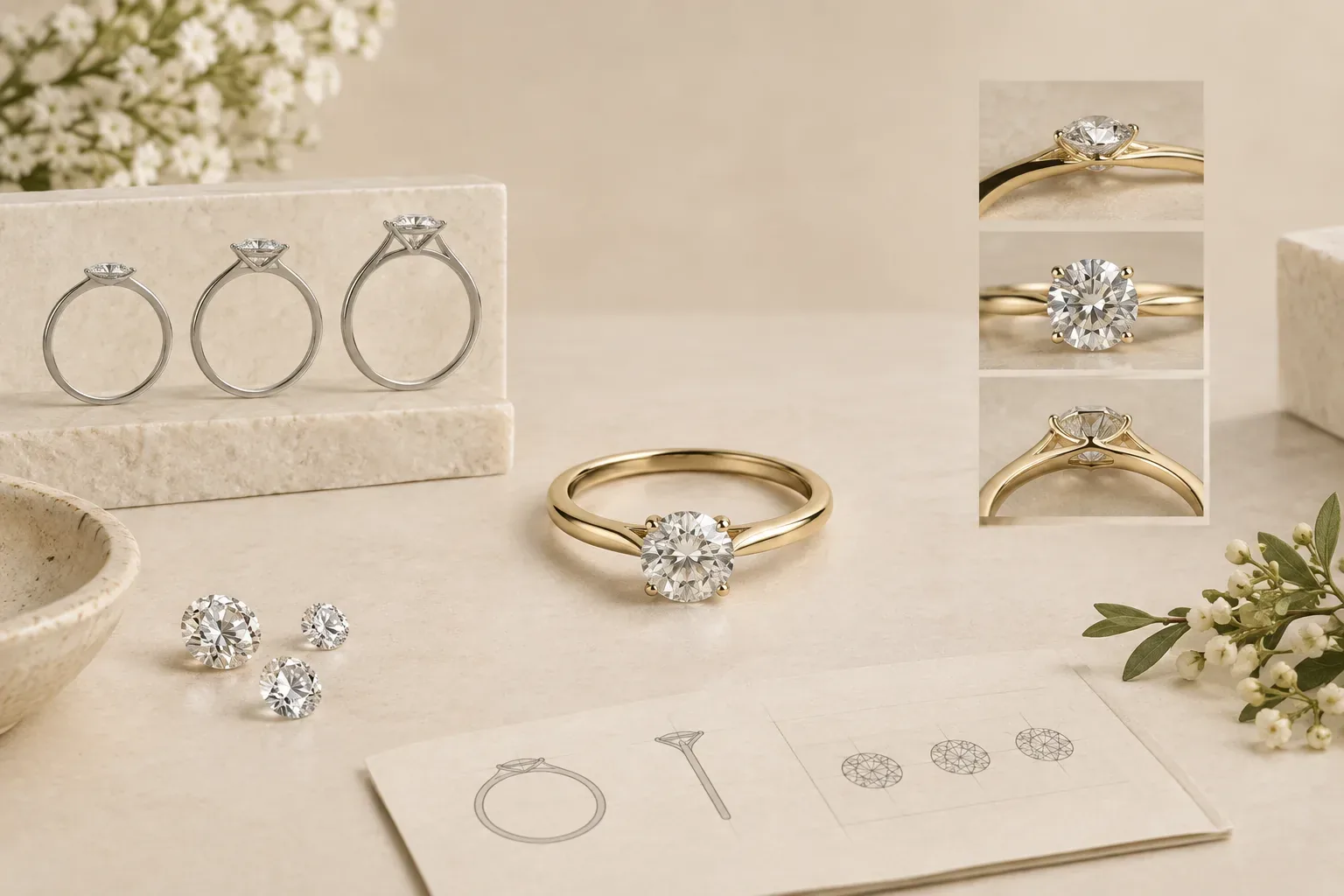
In plain terms, a low-profile setting keeps the gemstone and its supporting metalwork close to the plane of the finger instead of raising it on tall prongs or a gallery. Designers achieve this by using bezel or rub-over edges, shallow prongs, channel or flush settings, and compact head designs that reduce lift. The visible effect is a flatter silhouette against the finger, which changes how much of the finger the ring 'covers' and how the stone’s proportions read at a glance.
Historical evidence and cultural notes (what the approved sources document)
The materials provided for this article do not present detailed, culture-by-culture histories of the low-profile setting as a named stylistic category. Contemporary industry and consumer research emphasize current demand and design tendencies rather than tracing specific historic origins. For example, 2026 market and search data identify strong consumer interest in several ring styles and shapes, but do not provide an archaeological or ethnographic timeline for low-profile mountings (Imaginaire Digital).
Professional bodies tracking retail and design trends report that buyers in 2026 are prioritizing comfortable, versatile forms, modern stacking compatibility, colored gemstones and craftsmanship—factors that encourage low-profile choices for everyday wear (Jewelers Mutual). Those trend reports are useful for understanding why low-profile settings are popular today, but they are not a substitute for primary historical documentation tied to a specific culture or period.
Documented meanings versus modern personal interpretation
Where documented meanings exist, they usually derive from explicit cultural or archival records. The approved sources for this guide focus on contemporary consumer needs, design trends and disclosure practices and do not attribute a single historic symbolic meaning to low-profile settings. Any symbolic or sentimental meaning assigned to a low-profile engagement ring is, therefore, modern and personal unless the giver or recipient links it explicitly to a documented tradition.
For shoppers and gifters this means: treat symbolic statements about low-profile rings as intentional, personal choices rather than universal cultural facts. If a particular motif, cut, or setting is historically significant to a culture, that significance should be documented with specialist historical sources before being presented as an objective fact; the sources used here do not provide those historic claims.
How low-profile motifs and gemstones appear in jewelry
Low-profile styling appears across mounting motifs and gemstone choices. Common head types that create a low profile include full bezels and partial bezels that hug the girdle, flush or gypsy settings where the stone sits inside a band, and low-cup prong settings with shorter prongs and minimal gallery. Designers will also use cabochon cuts or step cuts, which often look visually flatter than tall brilliant cuts, to reinforce a low-profile aesthetic.
Gemstone treatments, durability and care influence whether a particular gem is suitable for a low-profile everyday ring. The Gemological Institute of America emphasizes that treatments, disclosure and durability are key consumer considerations, because some treatments affect how a stone should be worn and cleaned (GIA). The Federal Trade Commission likewise requires clear disclosure of natural, lab-created and treated materials in sales, so how a gemstone appears and is described in low-profile jewelry must be disclosed by the seller (FTC).
Styling by finger coverage and proportion
Finger coverage and perceived proportion depend on the ring’s band width, the stone’s face-up diameter, the setting height and the wearer’s finger proportions. A low-profile ring reduces vertical projection but does not necessarily minimize horizontal coverage. A wide band with a flush-set stone can cover a significant portion of a finger’s surface even while sitting low; conversely, a thin band with a small bezel can read delicate while still being low-profile.
For proportion on short fingers, a low-profile mount paired with a narrower band and smaller face-up diameter tends to be visually elongating because it reduces bulk and vertical interruption. For longer or slimmer fingers, a low-profile ring with a wider band or larger face-up stone can balance proportions without adding lift. The key decision is the relationship between the stone’s diameter and the band width: aim for balance rather than strict rules. Try the ring on both hands and view it at rest and in motion to see how coverage reads in real wear.
Decision criteria and practical trade-offs
Comfort and daily wearability are the most common reasons buyers choose low-profile settings. Low-profile rings are less likely to snag on clothing, easier to layer with wedding bands or stack with other rings, and generally more comfortable for active hands. However, lowering the stone closer to the band can change light entry and therefore perceived brilliance, particularly for brilliant-cut diamonds or gems that rely on crown height for sparkle.
Durability trade-offs are real: some low-profile techniques such as full bezels or flush settings offer excellent protection for the stone’s edges, while very shallow settings can put a stone at risk if the girdle is exposed or if the metal is thin. The choice of metal—harder alloys like platinum or palladium versus softer gold alloys—also affects long-term durability. Jewelry trade publications and industry bodies note a 2026 consumer interest in craftsmanship and versatility, reinforcing that well-made low-profile rings rely on quality fabrication and appropriate metal choice (Jewelers Mutual).
Safe care guidance and verification limits
Safe cleaning and care depend on the gemstone and the setting. The GIA emphasizes that treatments, detectability and special-care needs vary by material, so buyers should follow manufacturer and seller care instructions for each specific gemstone and setting (GIA). Many low-profile rings are suitable for gentle at-home cleaning, but some gems and treatments require professional cleaning or avoidance of ultrasonic machines.
Some facts cannot be reliably verified by sight or by a retailer’s standard product page. The Federal Trade Commission advises consumers that distinctions among natural, lab-created, treated, cultured and imitation materials require written seller disclosure and, in some cases, laboratory analysis (FTC). Only a qualified jeweler with appropriate tools or a gemological laboratory can reliably verify treatments, origin claims, durability specifics and internal clarity features that affect value and care recommendations. If those verifications matter to you, request written documentation and, where applicable, an independent lab report before purchase.
Practical selection and respectful gifting guidance
When selecting or gifting a low-profile engagement ring, start with the wearer’s lifestyle and comfort preferences. Choose low-profile designs for active hands, professions where snag risk is high, or when the ring must pair with an existing wedding band or stacked rings. Discuss metal choices and expected wear patterns with the seller so you can choose a durable alloy and a mounting that protects the stone.
Respectful gifting also means transparent communication about materials, disclosures and aftercare. Ask the seller for written disclosure of whether a gemstone is natural, lab-grown or treated, and request care instructions that match the gem’s needs (FTC; GIA). If provenance, grading or treatment status matters to you, state that upfront and seek a ring accompanied by third-party documentation. Finally, prioritize skilled fabrication: a well-executed low-profile setting requires precise tolerances so the stone sits securely even with less vertical metal support.
Design examples and how to test fit before buying
Common low-profile design examples you will encounter include bezel-set solitaires, flush-set diamonds in a plain band, low-cup four-prong heads, and pavé or channel-set bands designed to sit flush with a wedding band. Each design modifies the ring’s silhouette and coverage in different ways. Bezel and flush settings reduce exposed stone edges and can make a ring ergonomically flatter, while thin pave bands keep vertical profile low but increase horizontal sparkle.
When possible, try rings on in person with any wedding band you plan to pair. Test how the ring feels while performing daily tasks to assess comfort and snag potential. If you must buy online, request multiple photos from several angles and ask for exact measurements for face-up diameter, crown height and band width. Also confirm the seller’s return policy and any conditions for resizing, since altering a low-profile design can change its proportion and finger coverage.
Frequently asked questions
Is a low-profile engagement ring less valuable because it sits closer to the finger?
Not inherently. Value depends on the gemstone quality, metal, craftsmanship and market factors, not simply profile. A well-made low-profile ring can be as valuable as a higher-set example, but some cuts may show less brilliance if crown height is reduced. If precise grading or treatment status matters, obtain written disclosures or a lab report.
Can a low-profile setting protect a gemstone as well as a taller setting?
Certain low-profile settings, such as full bezels or flush settings, provide excellent edge protection because they enclose the stone. Other shallow mounts that expose the girdle may be more vulnerable. The protection level depends on the specific setting geometry and the metal’s strength.
Will a low-profile ring stack well with a wedding band?
Yes; one of the advantages of low-profile rings is easier stacking and compatibility with wedding bands. For best results, test the pair together or confirm exact measurements so the bands sit flush and maintain proportion.
How should I clean a low-profile engagement ring?
Follow the seller’s guidance for that specific gemstone and setting. Many low-profile metal settings are suitable for gentle at-home cleaning with mild soap and a soft brush, but some treatments and gem materials require professional cleaning. Consult GIA guidance for treatment-related care questions and avoid ultrasonic machines if you are unsure of treatment status.
How can I verify if the gemstone is natural, lab-grown or treated?
Written disclosure from the seller is required under FTC guidance, but definitive verification of treatments or origin often requires analysis by a qualified jeweler or an independent gemological laboratory. Request a lab report if treatment status or origin affects your purchase decision.
Will a low-profile setting reduce how much the diamond sparkles?
It can, depending on the cut and how much crown height is visible. Brilliant cuts often rely on crown angles for light return; lowering the crown or covering it with a bezel can alter perceived sparkle. Skilled design balances protection and optical performance to preserve brilliance.
Sources and further reading
- Imaginaire Digital — Imaginaire Digital
- Jewelers Mutual — Jewelers Mutual
- Gemological Institute of America — Gemological Institute of America
- Federal Trade Commission — Federal Trade Commission