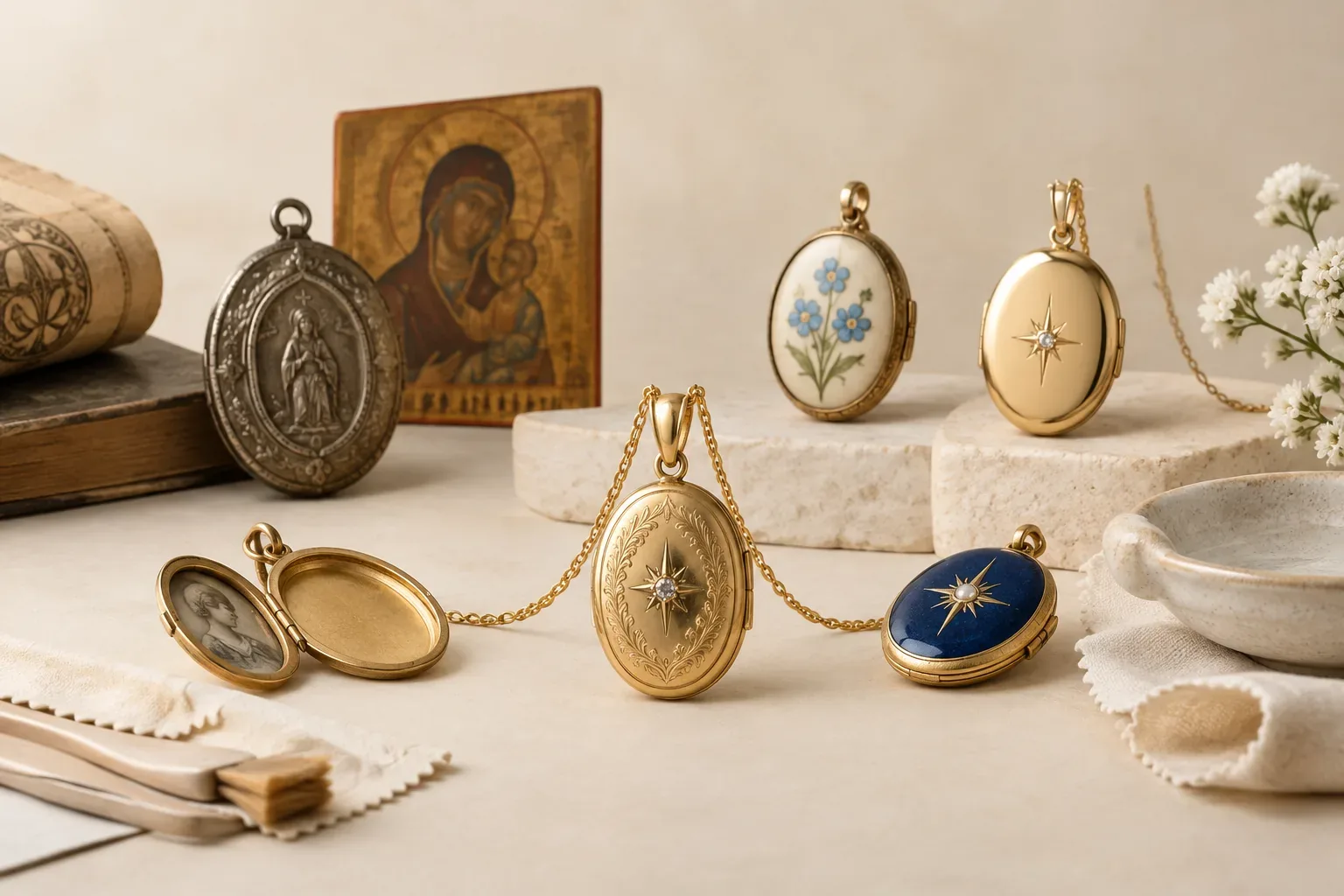
Meaning at a glance
Start by recognizing a locket’s materials and construction, remove any contents, and use only gentle, material-appropriate cleaning and separate, low-humidity storage; historical meanings affect respectful handling but do not change safe care steps.
Quick answer
Treat a locket as a small, mixed-material object: identify the metal, gemstones, and whether any photos, hairwork, or adhesives are present; remove the contents before any cleaning; clean gently with a soft cloth and mild, soapy water only when the metal and stones are known to tolerate moisture; avoid abrasive compounds, household bleach or ammonia, and ultrasonic or steam cleaners where adhesives or porous stones may be present; store lockets separately in soft pouches or lined boxes at stable, moderate humidity and temperature.
Why the history and context matter for care
Lockets carry layered meanings that affect how owners treat them. Museums such as the Victoria and Albert Museum document that lockets appear widely in the history of personal jewellery and that their social roles have changed across periods and cultures. The V&A places emphasis on how jewellery’s materials and social uses shift over time, which matters because an object made as a sentimental Georgian or Victorian keepsake may use materials or techniques (for example, hairwork or painted miniature portraits) that require very different care from modern mass-produced lockets.
When you handle an old or historically significant locket, you are also handling a cultural object. The V&A’s collections and exhibitions illustrate that many lockets were created as mourning or sentimental jewelry in Georgian and Victorian Britain, but that similar small reliquary and amulet containers appear in other cultures and periods with different meanings. That documented provenance should guide conservation-style caution: if a locket might be an antique or gallery object, professional conservation advice is preferable to at-home cleaning.
Documented historical meanings versus modern personal interpretation
Documented historical meanings come from material culture studies and museum cataloguing. As noted by the Victoria and Albert Museum, lockets in European collections are often recorded as portrait or mourning jewels, designed to hold miniature paintings, hair, or other keepsakes and to signal memory and social ties. These are museum-documented functions and contexts rather than universal meanings.
Modern personal interpretations vary widely and are not the same as those documented historically. Today people may choose lockets for purely aesthetic reasons, to hold digital-age mementos (small USB drives, tiny prints), or as romantic gifts without intending any historical reference. Both documented meanings and personal interpretations are valid, but they should be kept distinct: documented history tells you about original use and likely materials, which matters for care; personal meaning guides how you wear and gift the piece.
How the locket motif, gemstones, and traditions appear in jewelry
The locket motif appears as a hinged container set into a pendant, brooch, or ring that opens to hold a small item. Historically these containers included painted miniature portraits, locks of hair, or miniature reliquaries and were often designed to be private and intimate. The Victoria and Albert Museum’s resources on jewellery history describe these social roles and how designs changed with fashion and technology.
Gemstones may appear as decorative elements on a locket’s exterior or as components within its mechanism. The V&A’s A–Z of Gemstones explains how different stones have distinct physical properties and historical uses. Harder stones (for example, many varieties of corundum or quartz family gems) tolerate handling and some ultrasonic cleaning better than softer or porous materials such as pearls, opal, or certain organic elements. Many traditional mourning lockets also used materials associated with grief fashions of their time, such as blackened metals or jet; knowing the stone types helps you choose safe care methods.
Safe cleaning methods
Step 1: Identify construction and materials before cleaning. Open the locket gently to check whether it contains paper, hairwork, glued-in stones, or a painted miniature. If you suspect the locket is antique, contains delicate media, or has value beyond sentimental use, stop and seek professional conservation advice, in part because the Victoria and Albert Museum documents many period techniques that require specialist care.
Step 2: Remove any contents. Never immerse photographs, painted miniatures, textiles, or hairwork in water. Slide photos out carefully and store them in acid-free paper before you clean the metal exterior.
Step 3: Use the gentlest effective method. For many base metals and solid precious metals that are not known to contain porous stones, a soft lint-free cloth dampened with warm water and a drop of mild, pH-neutral dish soap will safely remove surface grime. Rub gently and dry thoroughly with a separate soft cloth.
Step 4: Be cautious with gemstones and settings. If the locket has stones, check their identity or hardness using reputable references such as the Victoria and Albert Museum’s gemstone guide; porous or treated stones like pearls, opals, and some dyed materials should not be soaked. If a stone looks glued in, avoid ultrasonic cleaners and steam. The Federal Trade Commission recommends that buyers be informed about gemstone treatments and imitations; that same principle implies you should check whether stones have been stabilized or treated before using aggressive cleaning methods.
Step 5: Avoid common chemical traps. Do not use household bleach, acetone, chlorine, or strong ammonia solutions on lockets. Avoid abrasive pastes and metal polishes on aged or plated surfaces because they can remove thin layers or finish. Silver dips can remove tarnish quickly but can also strip patina or plate and damage porous stones or adhesives.
Safe storage methods
Store each locket separately in a soft pouch or a locket-sized compartment to prevent scratches and tangling. Keep lockets with soft interiors closed if they contain photos or hair, and place the content in acid-free sleeves when possible.
Aim for stable temperature and moderate, controlled humidity. Avoid high humidity that encourages corrosion and very dry conditions that can make organic materials brittle. A small packet of silica gel can help control humidity in a jewelry box, but do not place desiccant packets directly against delicate materials.
Limit light exposure for lockets that hold photographs or painted miniatures; long-term sunlight or strong artificial light can fade dyes and inks. For long-term archival storage of historical contents, museum practice reserves dark, climate-controlled conditions; for everyday wear, remove the locket when bathing or exercising to minimize moisture and sweat exposure.
Common mistakes to avoid
Do not assume all lockets are solid metal. Many modern lockets are plated or assembled from mixed materials; aggressive polishing removes plating and can expose base metal beneath. Do not dip such pieces in strong chemical cleaners.
Do not wet or steam lockets that contain paper, photographs, hair, or painted miniatures. These materials are sensitive to moisture and should be handled separately and gently.
Do not use ultrasonic or steam cleaners without verifying stones and adhesives. If gems are glued, ultrasonic cleaning and steam can dissolve adhesives and loosen stones.
Do not store lockets in direct contact with other jewelry. Contact can cause scratches, metal transfer, and wear to finishes.
Selecting and gifting a locket respectfully
When choosing a locket as a gift, consider both material durability and the recipient’s personal meaning. If the wearer plans to use the locket daily, choose durable metals (solid gold, platinum, or well-finished stainless alternatives) and securely set stones. If the piece will hold photographs or a keepsake, ensure the compartment is large enough and has a reliable closure.
Check for treatments and construction: ask sellers about gemstone treatments, plating, and how stones are set. The Federal Trade Commission advises buyers that material treatments and imitations should be disclosed; use this right to know whether a stone is stabilized, dyed, or glued, because that affects cleaning and longevity.
Respect sentiment and cultural associations. If a locket references mourning traditions, religious imagery, or cultural symbols, consider the wearer’s relationship to that tradition and whether the locket’s symbolism is appropriate. When gifting an heirloom, verbal consent and openness about the locket’s provenance are respectful practices.
A short care checklist to keep handy
Identify metal and stones before cleaning. Remove contents. Use a soft cloth and mild soap for metal that tolerates water. Avoid harsh chemicals, ultrasonic, and steam cleaners if stones or adhesives are present. Store separately in soft-lined compartments and protect photos or miniatures in acid-free sleeves. Seek professional conservation for antiques or when in doubt.
Frequently asked questions
How often should I clean a locket?
Clean a locket only when it shows visible dirt or tarnish. Frequent gentle wiping with a soft cloth after wear reduces the need for deeper cleaning. If the locket contains photos or delicate contents, remove and protect those before any cleaning.
Is it safe to use ultrasonic or steam cleaners on my locket?
Not unless you are certain the locket contains no glued components, treated or porous stones, or delicate interior materials. Ultrasonic and steam cleaners can dissolve adhesives and damage some gems. If you do not know the construction or treatments, avoid these methods.
Can I soak my locket in soapy water?
Soak only if the locket is solid metal with securely set, non-porous stones and no internal contents. Never soak a locket that contains paper, painted miniatures, hairwork, or porous gems such as pearls and opal.
How should I store a locket that holds a photograph?
Remove the photograph and place it in an acid-free sleeve for storage. Keep the locket closed and store both the locket and the photograph in a low-light, stable-humidity environment away from direct sunlight to prevent fading and moisture damage.
Are silver dips safe for antique lockets?
Silver dips can remove tarnish quickly but may strip patina or remove thin plating from antique pieces. For antiques or pieces with historic finishes, consult a professional conservator or use only the gentlest mechanical cleaning with a soft cloth.
What should I ask a seller before buying a locket?
Ask about the metal type, whether any plating is present, gemstone identities and treatments, how stones are set (glued or prong-set), and whether the compartment is intended for photos or textiles. The Federal Trade Commission advises that material treatments and imitations should be disclosed to buyers.
Sources and further reading
- Bedazzled: A History of Jewellery — Victoria and Albert Museum
- An A-Z of Gemstones — Victoria and Albert Museum
- Buying Gemstones, Diamonds, and Pearls — Federal Trade Commission