Meaning at a glance
This guide explains the documented history and changing contexts of chain necklaces and gives clear, practical advice on warning signs, cleaning, and when to seek professional repair.
What the historical record shows
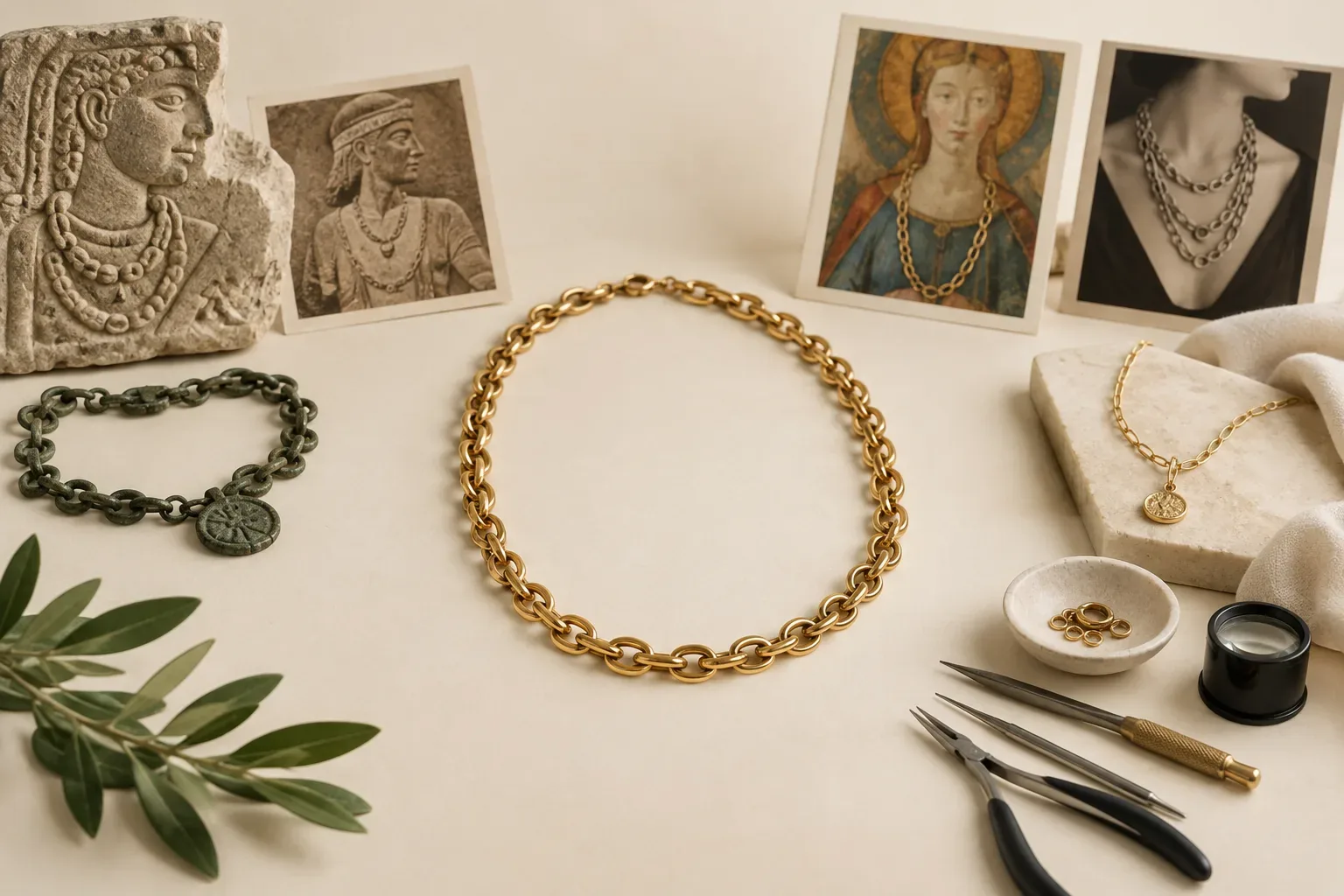
Museums and curators record that chains and necklaces are among the oldest forms of personal ornament, appearing in many different cultures and periods. The Victoria and Albert Museum (V&A) frames jewellery history as a series of changing social contexts in which materials, technique and use evolve across time and place, including ancient societies, classical antiquity, medieval Europe, and the modern era. The V&A exhibition and related material highlight how craftsmen adapted chainmaking techniques and clasps to the materials and fashions of each period rather than treating a single meaning as universal.
Because the V&A documents jewellery through objects and social history, the evidence for chains is primarily material and contextual: museum collections show variations in metalwork, link styles and attachments that reflect technology, trade and fashion. These physical traces allow historians and conservators to say how and when chains were used, manufactured and worn in particular cultures, but those same traces seldom carry a single, stable symbolic meaning across time.
Documented meanings versus modern interpretations
Documented historical meanings typically come from how objects are used, who owned them, and written records about dress and status. The V&A emphasizes social context: certain chains indicated status, displayed imported materials, or were used to secure a pendant or amulet. Museums base these interpretations on provenance, contemporaneous texts and the objects themselves.
Modern personal interpretations—such as reading a simple chain as a strictly spiritual talisman, a sign of a particular political stance, or a universal symbol of commitment—are valid for the wearer but are not the same as documented historical meanings. Contemporary symbolism is often layered onto historical forms; for example, a family might now give a repaired chain as a sign of continuity, whereas historically the same object could have primarily signalled wealth or trade connections. Distinguish cultural or period-specific evidence in museum records from present-day sentimental uses when you research or speak about meaning.
How chain motifs and materials appear in jewellery
Chains appear in jewellery in a few consistent ways: as the full necklace made from linked metal, as the suspension for a pendant or locket, and as decorative elements incorporated into broader designs. Chains vary by link type—cable, curb, rope, box and more—and by metal (gold, silver, platinum, and base metals). The V&A’s resources on jewellery history and on gemstones describe how makers pair chains with settings and stones appropriate to both fashion and function.
Gemstones most often appear suspended from chains as set pendants, bezel-set medallions, or as link-mounted stones integrated into the chain itself. The Victoria and Albert Museum’s “An A–Z of Gemstones” explains how particular gems have been selected for their visual properties and cultural associations in different eras, and how setting choices affect a necklace’s durability and care needs. The material and setting directly affect how a chain should be repaired and maintained: a thin plated chain carrying a heavy, stone-set pendant requires different treatment than a solid gold chain carrying a lightweight charm.
Common warning signs that a chain needs repair
Visible breaks or gaps in links, especially after catching on clothing, are the clearest sign a chain needs repair. Kinks or sharp bends in wire links weaken the metal at that point and often precede a break. A clasp that no longer closes securely or that suddenly opens under light tension should be addressed promptly to avoid loss of a pendant or the whole necklace.
Discoloration, flaking or worn plating can indicate accelerated wear; while cosmetic, these problems can reveal the underlying base metal and suggest a repair or strengthening is needed. If a chain passes through a pendant bail and you see wear at the contact point, that abrasion will eventually thin the metal and can lead to failure. Any time stones are set into links or into a pendant on the chain, loosened settings or wobbling stones are a sign to seek professional repair because resetting often requires specialized tools.
Safe at-home maintenance you can do
Routine cleaning keeps grime and chemicals from accelerating wear. For most solid precious metals, a soft cloth wipe after wearing and an occasional gentle wash in warm water with a mild, non-abrasive soap is sufficient. Dry the chain thoroughly before storing. Avoid ultrasonic cleaners or harsh chemical dips for chains that carry gemstones, pearls, glued components or fragile finishes unless you know the piece is safe for those methods.
Store chains flat or on soft pouches to reduce tangling and abrasion. When you remove a chain, fasten its clasp to itself to prevent knots. Keep plated pieces away from perfumes, lotions and salt water, which accelerate plating loss. For any cleaning method that risks the stones or delicate settings, consult a professional jeweler.
When to seek professional repair
A professional jeweler should handle soldering, resizing, replacing broken links, resetting gemstones and repairing clasps. Repairs that require reflowing solder, re-tipping prongs or re-linking very fine work need a bench jeweler’s tools and skill to preserve strength and appearance. If the chain is an antique or an heirloom, consult a conservator or a jeweler experienced with historical pieces: museum-standard care sometimes favors minimal intervention to preserve original materials and patina.
Choose a repair professional who documents the work, explains materials used, and, where relevant, provides a written estimate. If a gemstone is involved, ask whether the jeweler will inspect and test the stone and whether any work could affect stone setting, treatment disclosures, or future resale. In the U.S., the Federal Trade Commission offers guidance about disclosure of treatments and imitations for gems and pearls; make sure any purchaser or repairer provides clear information about material condition and treatments.
Selecting and gifting chains responsibly
Match the chain’s construction to how it will be worn. A heavy pendant needs a stronger, thicker link; a delicate chain suits a lighter charm. Consider the wearer’s lifestyle—daily wearers benefit from sturdier links and secure clasps; occasional-wear fashion chains can be more delicate. When gifting, include care instructions and, if the chain contains treated stones or plated metal, a note about how those treatments affect cleaning and longevity.
Respect cultural and personal meanings. If you give a chain with a specific motif or stone, research its cultural history rather than assuming a single interpretation. The V&A’s accounts of jewellery show that motifs and materials can carry different meanings in different times and places; explain to the recipient whether your gift reflects your personal meaning or a recognized historical usage. If you’re choosing an heirloom or a repaired piece as a gift, be transparent about its condition and any repairs performed.
Finding a qualified jeweler or conservator
Ask for references, examples of similar past work, and whether the jeweler carries insurance for repairs. A reputable shop will examine the piece and explain repair options rather than offering a one-size-fits-all fix. For antiques, seek a conservator or a jeweler with documented experience in historical pieces; museums like the V&A base treatments on preserving an object’s historical integrity, and professionals who work with institutions will follow similar cautious principles.
Before leaving your necklace, get a written agreement outlining work to be done, the estimated cost, and whether original materials will be preserved. For gemstones and pearls, ask how the repairer tests for treatments or imitations and whether any intervention might affect future value or display.
Practical checklist before a repair
Document the necklace with clear photographs, note any hallmarks or maker’s marks, and record provenance if known. Photograph any damage from multiple angles. Keep receipts and a written estimate of the work to be done. If the chain has sentimental or historic value, ask whether minimally invasive conservation is an option and whether replacing a worn clasp or re-tipping a prong can be done without replacing large amounts of original material.
Final note on meaning and maintenance
Chains are simultaneously technical objects and carriers of personal meaning. The V&A’s work reminds us to read jewellery as the product of materials, technique and social use rather than as a single fixed symbol. Care and repair decisions should balance keeping the chain strong and functional with preserving any historical or sentimental features the wearer values. When in doubt about a repair’s impact on meaning or material integrity, seek a jeweler experienced with careful conservation.
Frequently asked questions
What are the first signs a chain needs professional repair?
Visible breaks, kinks that won’t smooth out, a clasp that no longer locks securely, wobbling or loose stones in pendants, or abrasion where the chain rubs a bail are all signs to consult a professional jeweler.
Can I solder a broken chain at home?
Soldering requires skill, the right torch, flux and solder, and it risks damaging nearby gemstones or finishes; for anything beyond a simple, inexpensive chain you should have a trained jeweler perform the soldering.
How should I clean a plated chain?
Gently wipe plated chains with a soft cloth and avoid soaking them, as chemicals and abrasion remove plating. Keep plated pieces away from perfumes and salt water and consult a jeweler before any stronger cleaning.
Will repairing a chain change its value?
Repairs can affect value depending on the extent and how they’re performed. Conserving original material is important for antiques; a documented, professional repair that preserves as much original metal as possible is preferable when value matters.
What questions should I ask a jeweler before repairs?
Ask for a written estimate, whether original materials will be preserved, how gemstones will be protected or tested, whether the work is insured, and for examples of similar repairs the jeweler has done.
Do gemstone treatments affect repair or cleaning options?
Yes. Some gemstones are treated or stabilized and can be damaged by heat, chemicals or ultrasonic cleaning. The FTC recommends disclosure of treatments for gems and pearls, so confirm treatment status before aggressive cleaning or repairs.
Sources and further reading
- Bedazzled: A History of Jewellery — Victoria and Albert Museum
- An A-Z of Gemstones — Victoria and Albert Museum
- Buying Gemstones, Diamonds, and Pearls — Federal Trade Commission