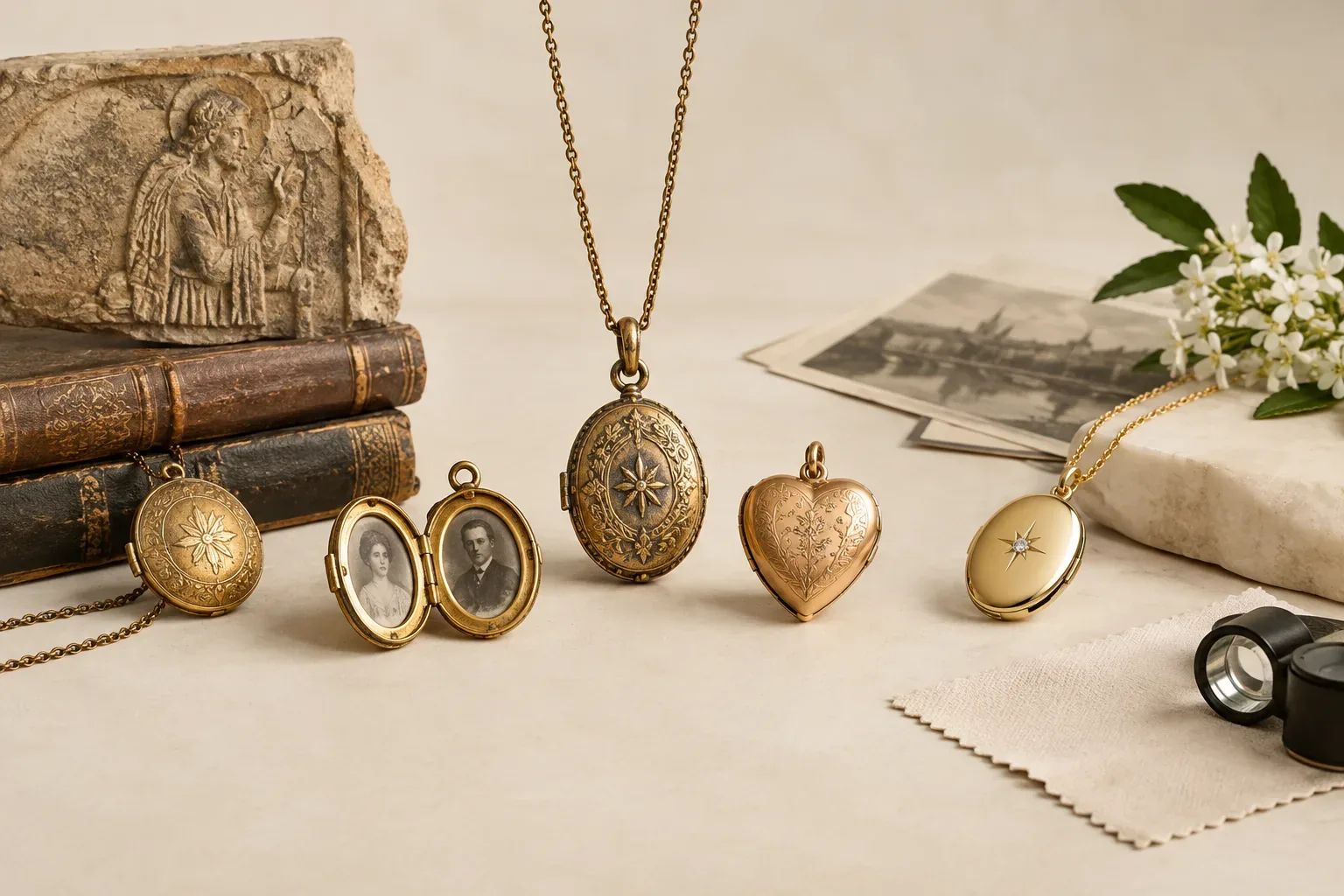
Meaning at a glance
Lockets repair and maintenance requires understanding the object’s construction and history: clean and inspect gently, look for loose hinges, worn solder, loose stones or warped bezels, and seek a trained jeweller for structural work or a conservator for valuable antiques. Separate historically documented uses—from portrait and hair reliquaries in Victorian Britain—to later popular sentimental meanings, and factor gemstone treatments and provenance into repair and gifting choices.
Documented history and cultural contexts
Lockets are small, wearable containers that have appeared in many forms across cultures. The Victoria and Albert Museum presents the development of jewellery as a social and material history and places lockets within that broader story of portraiture, personal ornament and memory. Museum collections and exhibitions trace the wearable miniature or container form back through early modern European practices and into the highly sentimental uses of the 18th and 19th centuries.
In 19th‑century Britain (the Victorian period), lockets commonly held miniature portraits, a lock of hair, or other personal mementos and were closely associated with mourning and remembrance. The association with mourning and intimate memory is well documented in museum collections and literature, which show specific forms, materials and inscriptions used for that purpose. The V&A frames these uses as part of changing social contexts for jewellery, not as a single universal meaning.
Earlier periods produced pendant containers and reliquaries as well, and similar small containers appear in different cultures for devotional or practical reasons. The V&A’s historical accounts distinguish those documented functions—portraiture, reliquary use, and social signaling—from later, more varied personal meanings. When considering a locket today, it is useful to recognise which of those historically documented contexts applies to that specific piece.
Historical meanings versus modern personal interpretations
Historical meanings are those that are supported by surviving objects, contemporary records, and museum interpretation. For example, Victorian mourning lockets that contain hair or inscriptions are historically documented as expressions of grief and remembrance. The Victoria and Albert Museum describes how changing social customs shaped jewellery’s functions, including lockets used for intimate portraiture and mourning.
Modern interpretations are personal and diverse. Many people wear a locket today as a symbol of love, family connection, identity, or simply as a fashionable accessory. These personal meanings are valid, but they are different from the narrowly documented historical meanings. It’s important not to conflate a museum‑documented function for a particular period and culture with a present‑day wearer’s private meaning.
How the motif, gemstones, and traditions appear in jewellery
The locket motif appears as hinged pendants, double-sided frames, portrait cases, and small sealed containers. Materials and techniques vary: gold and silver for structural work, enamel for surface decoration, engraved or painted miniatures, and inset stones or seed pearls used as accents. The V&A’s historical overview stresses changes in style and materials across periods and regions, showing how form follows social use.
Gemstones and organic materials appear in lockets in different ways. Gemstones may serve as decorative accents, as a central focal point in a glazed compartment, or as a protective cover. The Victoria and Albert Museum’s A–Z of Gemstones explains how specific gems and treatments have historical contexts and physical properties that affect how they are used in jewellery. When assessing a locket, note whether stones are genuine, treated, or assembled, because that affects cleaning and repair choices.
Warning signs that a locket needs repair
Hinges that do not open or close smoothly, or a clasp that fails to hold, are the most common signs that a locket needs attention. A sticky or stiff hinge can often be a sign of debris, corrosion, or a worn pin; a loose hinge pin suggests mechanical repair is required rather than simple cleaning.
Visible separation at solder joints, cracks in the metal, or a warped case indicate structural problems that should not be ignored because continued wear can cause irreversible damage. Watch for a rattling sound inside the case, which may mean a detached miniature, a loose backing, or a dislodged stone.
Loose stones, prongs that have bent away from a setting, or missing accents need prompt attention; walking around with a loose stone increases the chance of loss. For lockets that hold organic materials—hair, textiles, paper keepsakes—fading, staining, mold, or a musty odor indicate a need for conservation rather than ordinary repair.
When to seek professional help (and who to call)
If the locket is an antique, historically significant, contains delicate materials, or has sentimental items inside (miniatures, hair, textiles), contact a conservator or a museum-affiliated conservator for advice before proceeding with repair. Conservators specialise in stabilising fragile components and advising on safe cleaning, and museums such as the Victoria and Albert Museum document the difference between conservation and commercial repair in their collections work.
For modern lockets with mechanical issues—broken hinges, failed clasps, snapped chains, or resetting stones—a qualified jeweller can normally do the repair. Choose a jeweller who has experience with hinged work and ornate settings, ask for references or examples of similar repairs, and confirm whether they solder with appropriate alloys for the piece.
If gemstones or pearls are involved, ask the repairer about their experience with those materials and whether they will test for treatments or imitations. The Federal Trade Commission advises consumers to expect disclosure of treatments, enhancements, and imitations when purchasing gemstones and to be aware of how treatment affects cleaning and care. If the piece is expensive, request a written estimate and a conservative approach to any irreversible work.
Basic cleaning and routine maintenance
Routine maintenance begins with gentle cleaning and inspection. Wipe metal surfaces with a soft, lint‑free cloth after wearing, and open the locket periodically to ensure no moisture or debris is trapped inside. Avoid immersing lockets that contain fragile miniatures, textiles, or adhesives in liquid cleaners.
Avoid aggressive home treatments on gemstones and pearls. Some porous stones, assembled gems, or certain treated materials can be damaged by ultrasonic cleaners, steam, or strong chemicals. When you are unsure about the stone or treatment, follow a conservative cleaning method—soft cloth wiping or professional ultrasonic use only after a jeweller confirms it is safe.
Store lockets flat and separated from other jewellery to prevent scratching and to reduce pressure on hinges. For pieces that contain organic materials, store them in a stable, low‑humidity environment and check them periodically for signs of deterioration.
Practical selection and gifting guidance
When choosing a locket as a gift, consider what you know about the recipient’s preferences and the piece’s cultural or historical resonances. If you select an antique or historically styled locket, include information about its provenance and any special care it requires. For personal sentimental use, a modern locket with a secure closure and removable insert can avoid some conservation concerns.
Respect cultural contexts when gifting. Because lockets have documented roles in mourning and remembrance in particular historical contexts—most notably in 19th‑century Britain—consider whether such associations are meaningful or potentially sensitive for the recipient. If the locket incorporates religious iconography or material associated with a particular tradition, match the gift to the recipient’s beliefs or discuss the symbolism first.
Factor repairs and future care into your selection. If the piece uses fragile enamel, fragile settings, or unstable materials, budget for professional maintenance and explain that to the recipient so they know how to care for it. If provenance, treatment disclosure or gemstone authenticity matter to you, request written details from the seller, following the guidance on treatments and disclosure from the Federal Trade Commission.
Summary and further reading
Understanding both the historical contexts and the practical realities of locket repair and maintenance protects the object and the feelings attached to it. Research the piece’s background if it is antique, keep cleaning conservative, and choose a conservator for historically valuable items and a trusted jeweller for modern mechanical repairs.
For readers who want to learn more about the social and material histories of lockets and gemstones, the Victoria and Albert Museum’s resources on jewellery history and gemstones provide well‑documented context, and the Federal Trade Commission explains consumer protections around gemstone treatments and disclosure.
Frequently asked questions
How often should I have my locket inspected?
Inspect your locket visually every few months and after any incident (a drop or snag). For routine professional inspection, once a year is a reasonable frequency for everyday wear. If the locket is antique, contains organic materials, or shows any signs of deterioration, consult a conservator or jeweller immediately.
Can all locket hinges be repaired?
Most mechanical hinge problems can be repaired, but the method depends on construction and age. Modern lockets are often repaired by a jeweller who can replace hinge pins or solder a joint. Antique or fragile lockets may require conservation techniques that avoid invasive soldering; consult a conservator when in doubt.
Is it safe to clean a locket with a toothbrush and soap?
A soft toothbrush and mild soap can work for robust metal lockets without glued components, delicate enamels, or porous stones. Avoid soaking pieces that hold paper, hair, textiles, or vulnerable miniatures. When gemstones, treatments, or antiquity are uncertain, use a soft cloth and seek professional advice.
Should I remove sentimental inserts before repair?
Remove loose, fragile, or valuable inserts (photographs, hair, textiles) before repair if it is safe to do so. If an insert is glued or sealed as part of the original construction—common in antiques—ask a conservator, since removing it could cause damage.
How can I find a trustworthy repairer for a valuable locket?
Look for a jeweller with documented experience in hinged repairs and stone-setting, or a conservator for antiques. Ask for references, before-and-after examples, and a written estimate. For gemstones, request clarity about testing for treatments and any replacement materials the repairer plans to use.
Sources and further reading
- Bedazzled: A History of Jewellery — Victoria and Albert Museum
- An A-Z of Gemstones — Victoria and Albert Museum
- Buying Gemstones, Diamonds, and Pearls — Federal Trade Commission