Meaning at a glance
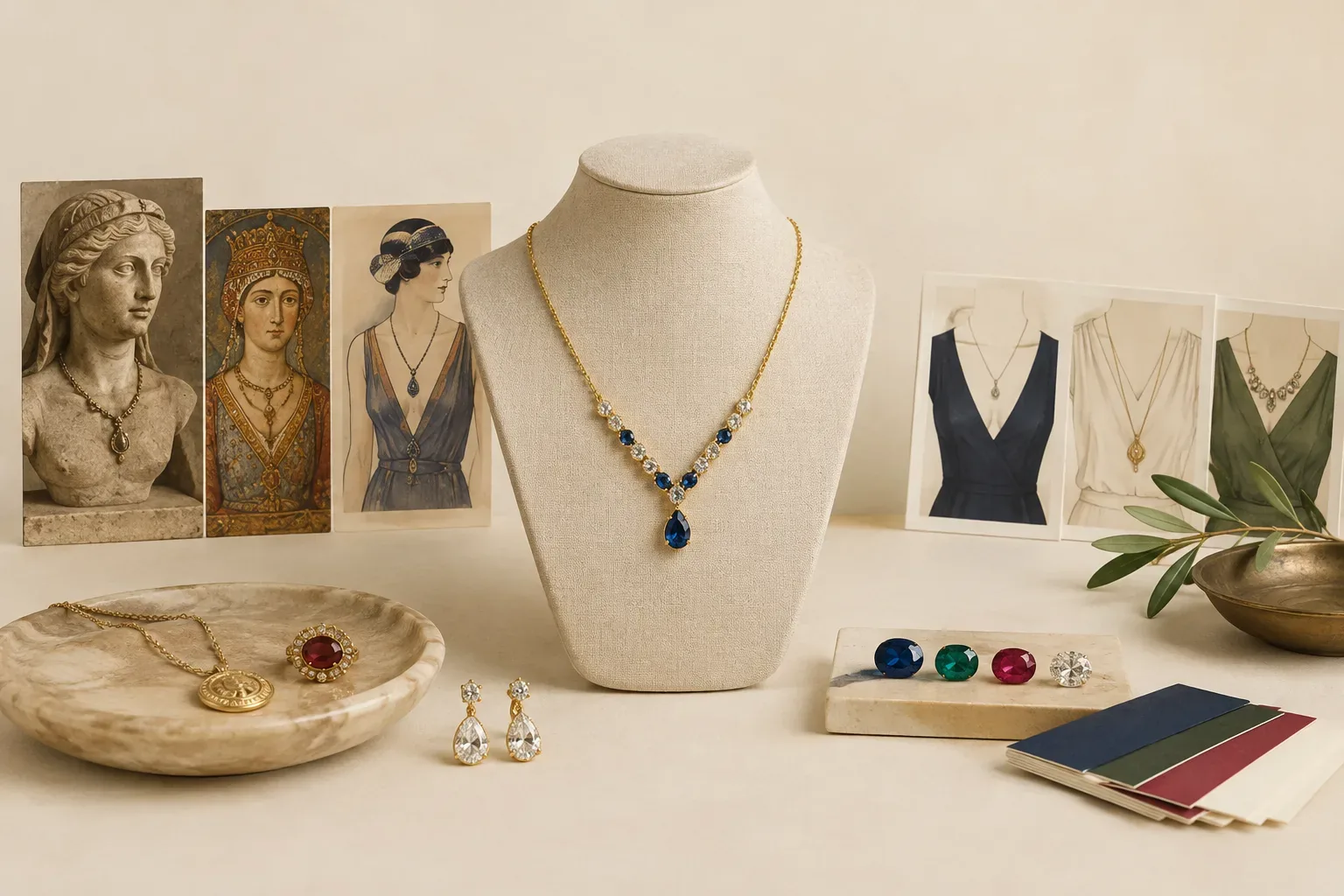
Choose necklaces and accents for V-necks by matching necklace length and focal point to the neckline, using color and metal to complement or create contrast, and selecting motifs thoughtfully; historical evidence from museum sources shows how jewelry form and meaning have shifted over time and modern symbolism is often personal rather than universal.
Historical evidence and how it matters
Museum research shows that jewelry’s forms, materials, and social meanings change across periods and cultures rather than being fixed. The Victoria and Albert Museum presents jewelry as a material practice shaped by fashion, technology, and social context; its exhibits and commentary link changes in shape and display to different historical eras and social uses. That evidence is useful when thinking about what kinds of neckpieces are traditional for certain fashions (for example, short collars and chokers vs long pendant chains) and why some pieces emphasize a central drop or medallion while others favor rows or collars.
When interpreting historical meanings it is essential to identify the culture and period. Across history, European fashions of the Georgian and Victorian eras often favored lockets, portrait miniatures, and short decorative collars that sat high on the chest, while 19th- and 20th-century trends introduced longer chains and pendant styles. The V&A materials and their historical surveys place these shifts in the context of clothing silhouettes, technology (such as advances in gemstone cutting), and changing social signals. These are museum-documented observations about form and context rather than universal symbolic assignments.
Documented historical meanings versus modern personal interpretation
Documented historical meanings recorded by museums like the Victoria and Albert Museum tend to link jewelry to social function—status, mourning practices, commemoration, and changing fashions—rather than fixed, universal symbolism. For example, lockets and mourning jewellery have clear documented functions in 18th–19th-century European contexts because museums and archives preserve examples and records that explain their uses.
Modern wearers and designers often attach personal or popular symbolic meanings to motifs, gemstones, and shapes that are not documented historically. Contemporary interpretations—such as reading a V-shaped pendant as a symbol of victory, or assigning a gemstone color a specific emotional meaning—are largely modern and subjective. These personal meanings can be meaningful to the wearer, but they should be presented as individual or cultural interpretation rather than documented historical fact.
How motifs, gemstones, and traditions appear in necklace design
Motifs that complement a V-neck typically appear as single drops, pendant points, or graduated chains designed to echo a vertical line. Designers create this effect with pear, marquise, or teardrop shapes and with Y-neck or lariat constructions that form a central falling line. These are design choices that produce visual harmony with a V neckline.
Gemstones appear in these forms both as single focal stones and as sequences. The Victoria and Albert Museum’s resources on gemstones describe how different cuts and settings have been used historically and how gem materials were chosen for color, hardness, and availability. In modern jewelry for V-neck styling, colored stones are often used to create a focal contrast against fabric: for example, a deep blue sapphire or green emerald pendant can sit as an accent at the V point, while lighter or monochrome stones may create a subtler effect.
Traditional practices such as wearing a locket or amulet at chest level continue in contemporary forms. Historically documented traditions—like portrait miniatures or mourning pieces—were made and worn for explicit social reasons; contemporary lockets reproduce the form but often serve personal memory or fashion functions rather than the same social role.
Practical guidance on proportion: length, scale, and layers
Consider the depth and width of the V. A shallow, narrow V usually pairs best with a shorter drop that ends near the hollow of the throat so the pendant sits inside the open shape. A deep or wide V can accommodate a longer pendant or Y-necklace that extends toward the sternum, but avoid a focal point that falls too low and disconnects from the neckline.
Match scale to body proportion and garment detail. Fine chains and small pendants suit delicate fabrics and smaller necklines; chunkier chains and larger pendants work with structured or roomy V-necklines. If the garment has prominent lapels, embroidery, or busy patterns near the chest, choose a simpler necklace so the overall look remains balanced.
When layering, use descending lengths with distinct focal points so each necklace reads clearly. Start with a short chain that sits above the V or follows its top edge, add a mid-length pendant that echoes the V, and finish with a longer piece only if it does not compete with the shape of the neckline. Avoid too many pieces that crowd the chest; the V’s natural leading line works best when given one or two well-placed focal elements.
Color and metal: harmony, contrast, and skin tone
Use gemstone color to harmonize with or to contrast the garment. A complementary color (for instance, a warm gemstone against a cool-toned fabric) will make the stone stand out, while a matching color creates a subtler, coordinated look. Consider the intensity of the fabric color: pale pastels work well with delicate, light-toned gems while strong jewel tones can carry bolder stones.
Metal choice affects perceived temperature and formality. Yellow gold reads warm and traditional; white gold, platinum, and silver feel cooler and often more modern. Mix metal intentionally when layering, but keep the primary piece’s metal consistent with other visible hardware (buttons, belt buckles) when aiming for a cohesive look.
Also consider the gemstone’s optical properties. The Victoria and Albert Museum’s overview of gemstones explains the historical importance of cut, color, and durability in selecting stones. Harder stones such as sapphires and diamonds endure daily wear better than softer gems; if the necklace will be worn frequently with everyday V-neck tops, choose materials with appropriate durability.
Material disclosure and ethical considerations
When selecting gemstones, ask about treatments, imitations, or enhancements. The Federal Trade Commission provides consumer guidance encouraging transparent disclosure about treatments, synthetics, and imitations. Request written information about a stone’s treatment and the metal’s karat or plating, and verify returns or certification policies before purchase.
If ethical sourcing matters to the wearer, enquire about origin, lab-grown alternatives, or certified supply chains. These are modern purchasing preferences informed by contemporary values rather than historical usage, so treat them as consumer criteria when shopping or gifting.
Respectful selection and gifting guidance
Be mindful of personal, cultural, and religious meanings. Some symbols and motifs carry specific religious or cultural significance in particular communities; if you are unsure whether a motif is appropriate as a gift, ask the recipient or choose a neutral design. Gifting a delicate pendant or locket is usually safe for personal sentiment, but avoid symbols with known religious meaning unless you are confident they are welcome.
Match the giver’s intention to the piece. For an intimate personal gift, choose a locket, small pendant, or engraved piece that sits near the V for private significance. For a fashion-focused present, select a statement necklace sized to the recipient’s typical wardrobe and lifestyle. If you are uncertain about length, choose an adjustable chain or include a professional resizing option, and retain the receipt and any certification.
When giving vintage or historically styled pieces, offer context if the recipient might value it. A piece described as a Victorian-style pendant will carry a different set of expectations than an explicitly antique mourning locket documented by a museum. Use the Victoria and Albert Museum’s historical framing to explain social uses when relevant, but frame any symbolic claims as historically situated rather than universal.
Care, maintenance, and everyday wear
Select durable settings and chain types for frequent wear to avoid breakage at the V point. Simple bezels and secure bails reduce snagging, and box or curb chains are less likely to kink than fragile link chains for daily use. Ask about recommended care for specific gemstones and metals when purchasing.
For cleaning and treatment disclosure, follow the seller’s guidance and request documentation for professional cleaning and any known treatments. The FTC’s consumer guidance advises transparency from sellers about treatments that affect care and value.
Putting it together: quick decision steps
Start with the V’s depth and the garment’s detail. Choose a focal point that sits comfortably within or just below the V. Match the necklace scale to the wearer’s proportions and the outfit’s formality. Decide whether you want harmony or contrast in color and metal, and confirm material disclosure if durability or ethical sourcing matters. If gifting, verify cultural appropriateness and include adjustable options when unsure about length.
Frequently asked questions
What necklace length works best with a V-neck?
There is no single rule, but a good starting point is to choose a pendant or chain that ends near the hollow of the throat for a shallow V and a longer pendant for a deeper V so the focal point follows the neckline. Adjustable chains help if you are unsure of the exact length.
Can I layer necklaces with a V-neck?
Yes. Use distinct lengths with clear focal points and let the V guide the eye. A short collar or choker that sits above the V paired with a mid-length pendant that echoes the V is a reliable approach; avoid too many pieces that crowd the chest.
Which gemstones are best for everyday necklaces for V-necks?
Choose harder stones for everyday wear—such as sapphires or diamonds—or durable settings that protect softer gems. The Victoria and Albert Museum’s gemstone guidance highlights the importance of cut and durability. Also confirm any treatments or imitations with the seller as the FTC advises.
How should I handle religious or cultural symbols when gifting?
Be cautious. Some symbols carry specific religious or cultural meanings. Ask the recipient or select a neutral design unless you are confident the symbol is appropriate. Offer an adjustable or returnable option to avoid causing unintended offense.
What should I ask a seller about a gemstone before buying?
Ask whether the stone has undergone treatments, whether it is natural or lab-grown, and whether documentation or certification is available. The Federal Trade Commission recommends transparent disclosure about treatments and imitations so buyers can make informed decisions.
Sources and further reading
- Bedazzled: A History of Jewellery — Victoria and Albert Museum
- An A-Z of Gemstones — Victoria and Albert Museum
- Buying Gemstones, Diamonds, and Pearls — Federal Trade Commission