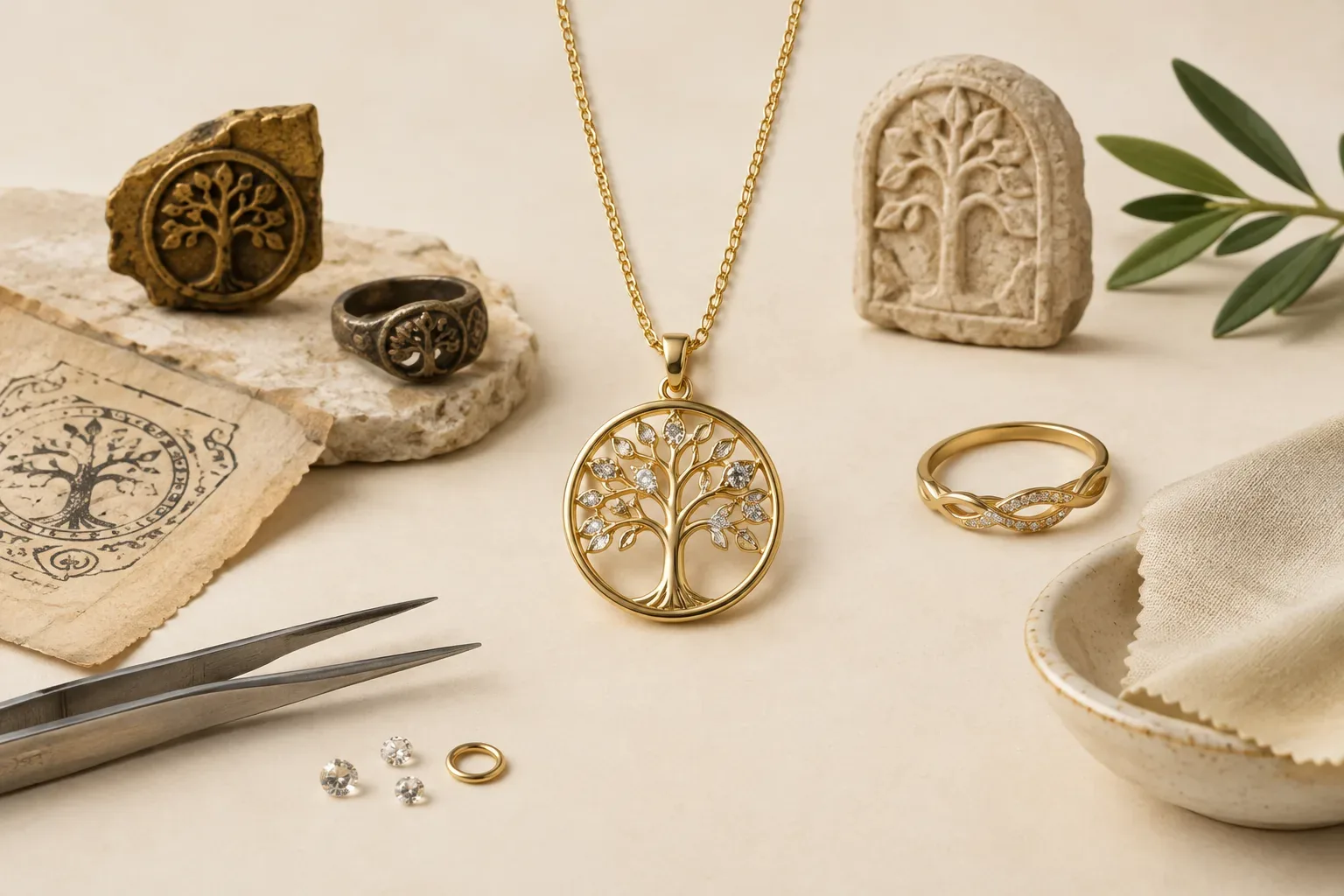
Meaning at a glance
Explain the documented history and changing contexts of the personalized jewelry repair and maintenance motif, separate cultural or religious evidence from later popular interpretations, and give practical guidance for choosing and wearing the motif in modern jewelry.
What the historical record shows (and who records it)
The archaeological and museum record shows that people have personalized and repaired jewelry for millennia, and that the social meaning of personalized pieces has shifted over time. The Victoria and Albert Museum frames these shifts as part of a long history in which dress and ornament reflect changing social roles, technologies, and tastes. The V&A’s surveys note examples from ancient to modern contexts where jewelry functioned as identity, status, commemoration, or devotion, and where artisans repeatedly intervened to reshape and repair pieces as they moved between owners and eras.
That broad outline means that when you care for a personalized piece today you are working with a material object that may carry documentary layers: manufacture, wear, alteration, and repair. Museums like the V&A emphasize that the same technical features — settings, solder joins, hallmarks, stone cuts — can be read as evidence of date, origin, and previous interventions. Use museum documentation as a reminder that observable construction details are the best starting point for any conservation or repair decision.
Separating documented historical meanings from modern personal interpretation
Documented historical meanings come from written records, maker marks, contemporary inventories, and museum research. For example, museum catalogs and exhibitions describe how lockets, mourning rings, signet rings, and devotional pendants served specific social functions in given periods, such as keeping a portrait close or signalling affiliation, and they attribute those functions to the culture and era in which the items were used. Those are the documented meanings historians and curators report.
By contrast, modern personal interpretations — for example, viewing a family signet ring as a talisman of protection or reading a gemstone solely as a conduit of wellbeing — are valid personal layers of meaning but are not the same as documented historical evidence. When conserving or altering a piece, treat documented historical information as distinct from the owner’s sentimental narrative. Both matter, but for different reasons: recorded history guides technical and ethical choices, while personal meaning guides decisions about whether to change or restore an item.
How motifs, gemstones, and traditions appear in personalized jewelry
Motifs such as initials, religious symbols, heraldic devices, and engraved messages often appear as the primary personalization on a piece’s surface. These may be hand-engraved on signet rings or stamped on the reverse of pendants and bracelets. The motif itself can be integral to the piece’s structure, as with intaglios set into rings or enamel scenes on lockets, or applied as a later addition such as an engraved dedication inside a band.
Gemstones are documented and contextualized in museum resources that describe both their material properties and their historical uses. The Victoria and Albert Museum’s A–Z of Gemstones explains varieties, typical settings, and historical popularity of certain stones. In practice, personalized jewelry often combines a motif with a gemstone — for instance, a birthstone set beside an engraved initial in a ring, or a pressed-flower locket held beneath a garnet in a Victorian mourning brooch. Recognize gemstones by cut, mounting style, and wear; these clues help a jeweler decide whether a stone is natural, treated, or an imitation.
Common warning signs that a personalized piece needs professional repair
Handle a piece gently and inspect it regularly. If you see cracks in enamel, loose or missing stones, thinning shanks on rings, distorted prongs, broken clasps, or cracked solder joints, seek professional help rather than attempting extensive DIY fixes. Visible corrosion, verdigris on base metals, or discoloration where gemstones meet settings can indicate chemical reactions that require an expert assessment.
Also be alert to signs of previous poor repairs: mismatched solder color, uneven engraving, or replaced stones that do not match the style or era of the piece. These can reduce value and structural integrity. Finally, if a piece contains fragile materials — mother-of-pearl, shell, lacquer, antique enamel, or historically fragile stones — any further handling risks irreversible damage; stop using the item and consult a conservator or experienced jeweler.
How to choose the right professional and what to expect
Start by documenting the piece: take clear photos from several angles, note hallmarks or inscriptions, and write down the owner’s history of the piece if known. Look for a jeweler or conservator with experience in the specific materials and period style of the item. Museums and reputable trade bodies reduce risk by describing technical standards; if the piece has museum-level importance consider a conservator with object-care credentials rather than a general bench jeweler.
Ask questions about the repair approach before work begins: will the repair be reversible; what materials and solders will be used; can the jeweler match patina or will they polish to a bright finish; will historic marks or engravings be left untouched? The Federal Trade Commission emphasizes disclosure about treatments and imitations when buying gemstones, and a similar principle applies to repair: you should receive clear information about any treatments, replacements, or alterations performed.
Practical maintenance routines for personalized jewelry
Routine care extends the life of personalized pieces. Clean gentle jewelry in warm soapy water with a soft brush keeping soap away from fragile materials like porous gemstones or antique enamel. For everyday pieces, inspect prongs and clasps monthly and have a jeweler check settings annually. Store items separately to avoid abrasion and keep them out of direct sunlight and extreme humidity when materials such as shell or lacquer are present.
Avoid exposure to household chemicals, chlorinated water, and perfumes when wearing personalized jewelry — these can accelerate metal corrosion and damage surface decorations. If a piece is to be worn daily, consider having a trusted jeweler replace weaker clasps or reinforce shanks proactively to prevent sudden failures that might cause loss. Document any changes with dated photos and receipts for future reference.
Making selection and gifting choices respectfully
When choosing or gifting personalized jewelry, respect both historical context and the recipient’s perspective. If selecting a piece that draws on a specific cultural motif, research its documented meaning using museum resources and avoid assuming universal significance; the Victoria and Albert Museum’s work on jewelry history can be a starting point to understand social contexts. If a motif holds religious or cultural significance for the recipient, consider whether an authentic artisan source or community-sourced piece is more appropriate than a mass-produced version.
Practical considerations matter too: choose materials suited to the recipient’s lifestyle and allergies, and include care guidance with the gift. If the piece is antique or has been repurposed, disclose that history honestly. Personalization can deepen meaning but also requires responsibility: a thoughtful gift includes information about care, any known repairs, and a recommendation for where to obtain qualified maintenance.
When to conserve rather than restore
Conservation aims to stabilize and preserve, while restoration often involves returning an item to a former appearance. If a personalized object has historic or family significance, ask whether conservation would be preferable to aggressive restoration. Museums prioritize preserving original material and documented evidence; follow that principle when an object’s age or provenance matters to the owner.
A conservator will usually opt for reversible interventions and minimal treatment to retain historical information. If an owner prefers a cosmetically refreshed look for daily wear, document the decision and retain removed fragments or replaced parts where possible. Clear communication between owner and professional protects both sentimental value and the item’s material history.
Final considerations
Personalized jewelry sits at the intersection of personal meaning and material history. Use museum scholarship to inform technical decisions and separate documented cultural evidence from modern personal narratives when planning repairs or alterations. Treat routine maintenance as a way to preserve both the object and the stories it carries, and engage qualified professionals for anything beyond basic cleaning and tightening.
Frequently asked questions
How often should I have my personalized jewelry inspected?
Have everyday-wear pieces inspected by a jeweler at least once a year, and check clasps and prongs monthly yourself. Antique or delicate pieces benefit from more frequent professional assessments, because older materials can fail without obvious signs.
Can I clean engraved or gemstone jewelry at home?
You can gently clean many pieces in warm soapy water with a soft brush, but avoid this for porous or treated gemstones, antique enamel, lacquer, or fragile inlays. When in doubt, consult a jeweler who knows the material.
Will repairing a family heirloom reduce its historical value?
It depends on the repair. Conservation that stabilizes and is reversible is less likely to reduce historical value than invasive restoration or replacement of original components. Discuss goals with a conservator or experienced jeweler first.
How can I tell if a gemstone has been treated or is an imitation?
Visual inspection alone is unreliable. A trained gemologist can test for common treatments and imitations. The Federal Trade Commission advises sellers to disclose known treatments; request written information when buying or repairing.
What questions should I ask a jeweler before repair work begins?
Ask whether the repair will be reversible, which materials and solders will be used, whether original marks or engravings will be preserved, how the jeweler documents interventions, and for an estimate of time and cost.
Is it better to conserve or restore a sentimental piece intended for daily wear?
If you want daily wear and the piece is fragile, a careful restoration for durability may be appropriate, but document the change and, if possible, retain removed original parts. For historically important items, conservation is usually recommended.
Sources and further reading
- Bedazzled: A History of Jewellery — Victoria and Albert Museum
- An A-Z of Gemstones — Victoria and Albert Museum
- Buying Gemstones, Diamonds, and Pearls — Federal Trade Commission