Meaning at a glance
Layer V-necklines by choosing necklace lengths that echo the neckline’s angle, combine varied textures and focal points for balance, and use practical tactics to minimize tangles; the guide explains documented historical contexts from museum research and separates those facts from later personal or popular meanings.
Direct answer — what to do and why
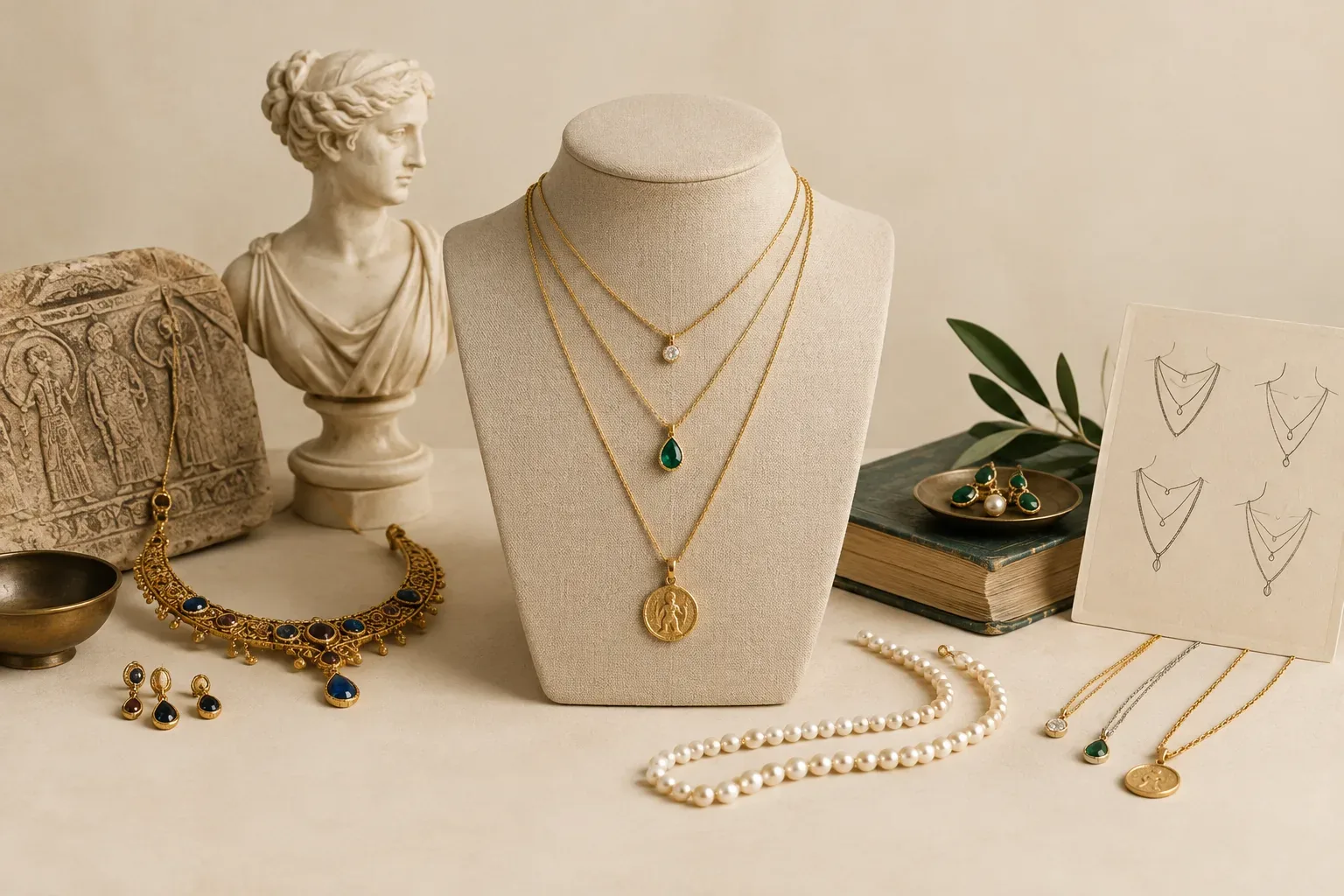
For V-neck outfits, start with a necklace that follows the V’s point (a short pendant or princess-length chain) and add one or two longer pieces that fall lower on the chest to create vertical emphasis; vary chain weights and focal points to maintain balance, and use spacing tactics such as different clasp directions, chain thicknesses, or a short connector to reduce tangling. This approach emphasizes the neckline without covering it and works with most V depth and body types.
Historical evidence and changing contexts
The way people layer and wear necklaces has shifted over centuries and across cultures. The Victoria and Albert Museum (V&A) documents jewelry’s changing social meanings, showing that jewelry has been used to signal status, identity, allegiance, and fashion rather than holding a single universal meaning. The V&A’s overview of jewellery history highlights that trends such as multiple chains, pendants, and the use of focal motifs appear at different times for different reasons, from courtly display to modern personal style.
Specific cultures and periods adopted layered necklaces for varied motives. In many pre-modern European contexts, for example, layered pieces could display wealth and access to materials; in other regions, multiple necklaces could indicate marital status, age cohort, or ritual affiliation. The V&A places these practices within their material and social contexts rather than reducing them to single symbolic claims.
Documented historical meanings versus modern personal interpretations
When assessing what a necklace means, separate what is documented by historians and museum collections from modern or popular interpretations. Museums such as the Victoria and Albert Museum report how objects functioned in their original contexts — for instance, which materials denoted rank or where a particular style was fashionable — based on provenance and scholarship. Those documented functions are specific to time, place, and social group.
Modern wearers often add personal or broadly popular meanings that are not the same as historical uses. A pendant that historically signaled a household or trade affiliation may be chosen today for its aesthetic appeal or as a personal talisman. These contemporary meanings are valid for the individual but should not be presented as the historical or cultural meaning without supporting evidence.
How motifs, gemstones, and traditions appear in jewelry
Motifs and gemstones recur in jewelry through techniques of making and stylistic choices. According to the V&A’s A–Z of Gemstones, gem use has been shaped by availability, cutting and setting technologies, and taste. Gemstones appear in jewellery as set stones in pendants and chains, as beaded strings, and as focal points on layered pieces.
Traditional motifs — whether religious symbols, floral forms, or geometric shapes — survive as design elements in modern necklaces and are often combined in layered looks. The physical presence of a motif or gem in a layered necklace functions visually: it creates a focal point, adds color or texture, and helps establish hierarchy between pieces when you layer.
Length, balance, and tangling — practical layering guidance for V-necks
Choose lengths that relate to the depth of the V. A shallow V pairs well with a shorter pendant or a choker and a slightly longer chain so the shortest necklace sits just above or at the collarbone and the next falls along the V. Deeper V-necks benefit from a pendant that drops toward the V point plus one or two longer chains that fall lower on the chest to maintain vertical lines.
Create visual balance by varying chain thickness, texture, and focal points. If one necklace has a strong pendant, let the others be simpler chains or small charms so the eye has a clear place to rest. If you prefer symmetry, select pieces with matching metal tones and complementary lengths to keep the layered look cohesive.
Prevent tangling by staggering chain weights and using different clasp directions. Thicker chains are less likely to knot with thin ones. Fastening the shortest chain with its clasp at the back and the next chain’s clasp offset can reduce overlaps. A small connector or slider that holds multiple chains at a fixed spacing is useful when you want a deliberate, evenly spaced layer.
When combining gemstones or motifs, think about scale and color. Small stones or delicate motifs work well near the throat, while larger pendants or colored gems can be placed lower to act as the visual anchor.
Material choices, authenticity, and respectful selection
If a piece features a gemstone or a culturally specific motif, know what you are buying and why. The Federal Trade Commission advises buyers to ask about treatments, enhancements, and whether a stone is natural, synthetic, or simulated. Ask for written disclosure when a seller makes claims about material or origin.
Be respectful around culturally specific motifs. Some symbols are tied to religion or communal identity; wearing them as fashion without understanding their significance can feel disrespectful to others. If you are choosing a motif as a gift, research its context before presenting it, and consider asking the recipient whether such a motif is appropriate for them or their beliefs.
Gifting guidance and ethical considerations
When gifting layered necklaces or a single piece intended to be layered, consider the recipient’s typical clothing, the depth of their preferred V-necks, and their metal and stone preferences. Practical gifts such as a necklace spacer, a fine chain cleaner, or a care card describing materials and cleaning instructions are useful additions.
For higher-value items, ask for material disclosure and certificates where appropriate. The FTC’s consumer guidance warns that treatments, heat enhancements, or simulants should be disclosed so the recipient understands value and care needs. If the piece carries cultural meaning, choose with respect and, when in doubt, prioritize neutral, high-quality classics the wearer can combine with other pieces.
Putting it together — simple combinations to try
For a conservative, everyday layered look with a V-neck, pair a short, delicate pendant that follows the V with a plain chain one to two inches longer. Keep metals consistent and use differing chain textures to add interest without clutter.
For evening or statement styling, start with a small choker or close collar chain, add a mid-length pendant that points into the V, and finish with an opera-length chain or beaded strand that hangs below the bust for drama while preserving the V’s vertical line. Use spacing techniques described earlier to avoid tangles.
Conclusion — combining evidence and personal style
Layering necklaces for V-neck outfits is both a practical styling problem and an opportunity for personal expression. Use the historical perspective supplied by museum research to understand how jewelry’s social roles have changed, and follow practical, material-aware steps when choosing or gifting jewelry. Respect cultural specificity, verify material claims where value or authenticity matters, and favor clear visual hierarchy and spacing to keep layered necklaces flattering and tangle-free.
Frequently asked questions
What necklace lengths work best with V-necklines?
Aim for at least two distinct lengths: one that follows the V (a choker or princess-length piece) and one that falls lower to create vertical emphasis. Shorter V-necks pair well with shorter pendants while deeper V-necks benefit from a longer focal pendant plus one or two longer chains.
How can I prevent necklaces from tangling when layered?
Stagger chain thicknesses and textures, offset clasps, or use a multi-chain connector or slider. Thicker chains are less prone to knotting, and keeping one clear focal pendant reduces overlapping elements that catch on each other.
Are there cultural rules about wearing motifs or religious symbols?
Yes. Some motifs and symbols are culturally or religiously significant. Museums such as the Victoria and Albert Museum document when motifs functioned as communal or ritual markers. Today, wearing such symbols as fashion items can be sensitive; research a symbol’s context before wearing or gifting it and prioritize respectful use.
How should I verify a gemstone’s authenticity or treatment before buying?
Ask the seller for written disclosure of treatments, enhancements, and whether the stone is natural, synthetic, or simulated. The Federal Trade Commission advises consumers to request clear information about material treatments and to seek receipts or certificates for higher-value purchases.
What should I consider when gifting layered necklaces?
Consider the recipient’s usual neckline depths, metal preferences, and cultural or religious background. Practical additions like a spacer, care instructions, or a certificate of authenticity (for expensive stones) make the gift more thoughtful and useful.
Sources and further reading
- Bedazzled: A History of Jewellery — Victoria and Albert Museum
- An A-Z of Gemstones — Victoria and Albert Museum
- Buying Gemstones, Diamonds, and Pearls — Federal Trade Commission