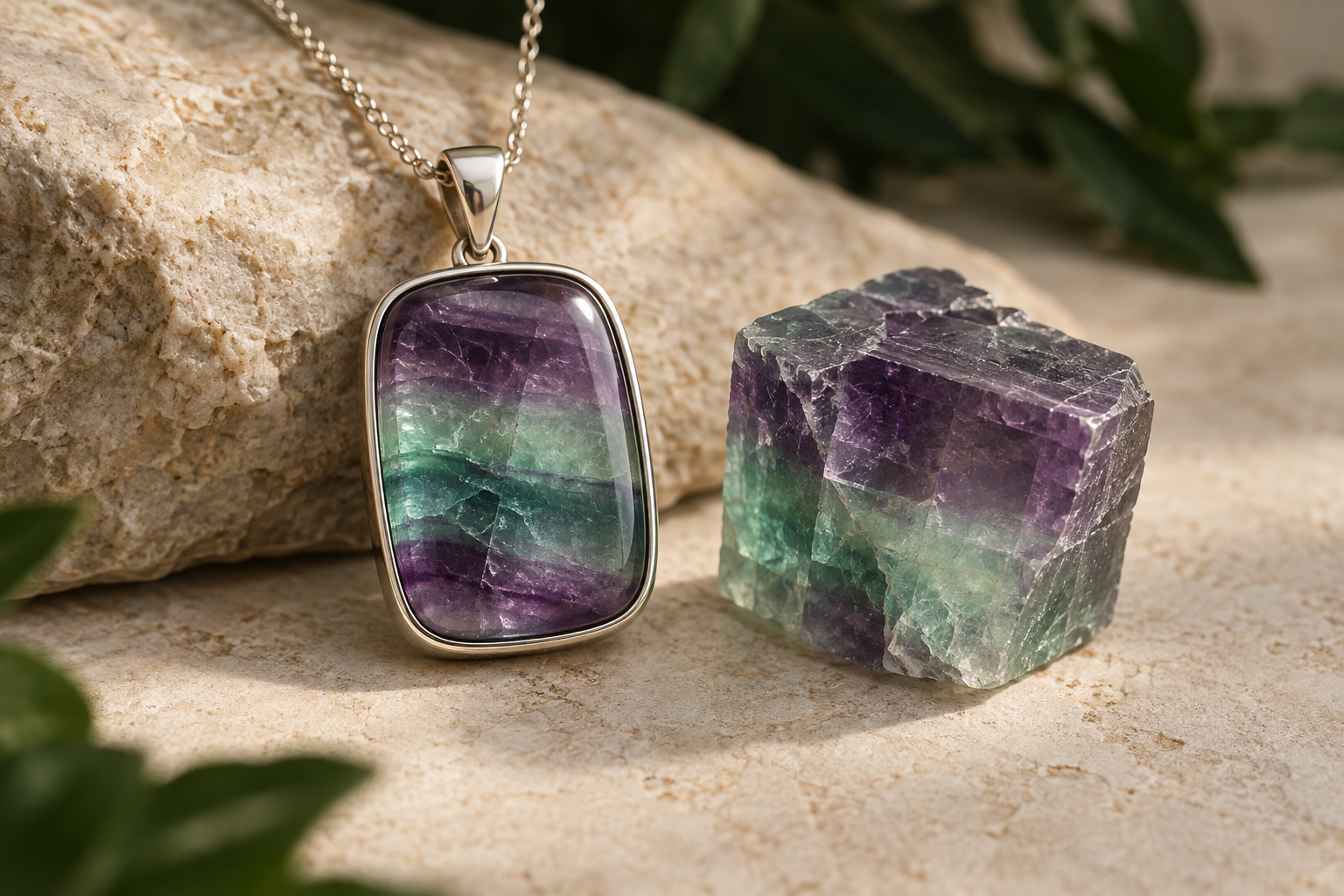
Meaning at a glance
Fluorite is prized for striking colors and patterns but is a soft, brittle mineral (Mohs ~4 with perfect cleavage) so it is best for gentle jewelry and collectors; associations with focus or mental clarity are modern interpretations, while historical sources do not record a single consistent cultural symbolism.
Colors and physical properties
Fluorite is notable for a wide color range that includes purple, green, blue, yellow, and colorless material; it also may show strong color zoning or banding within a single crystal. The Gemological Institute of America (GIA) describes fluorite’s optical and physical properties, including its relatively low hardness (around 4 on the Mohs scale), variable refractive indices, and perfect octahedral cleavage. Those physical characteristics explain why fluorite takes attractive polish and bright color but can chip, cleave, or fracture when struck or set without protection.
Historical evidence and cultural use (what the sources say)
The reviewed professional and museum sources emphasize fluorite’s interest as a mineral specimen and ornamental material rather than presenting a long, documented tradition of symbolic use tied to a single culture. The Smithsonian National Museum of Natural History places fluorite in the broader context of gems and minerals used for beauty and craft, noting the educational and historical value of gem materials but not attributing a uniform symbolic meaning to fluorite across specific historical periods or peoples. The GIA gemological report focuses on identification, physical properties, and occurrences of fluorite and does not present a sustained record of cultural symbolism tied to particular civilizations. In short, the sources supplied do not document a consistent, named cultural symbolism for fluorite in antiquity or a particular historical era; instead, they record its use as an ornamental, carved, and specimen material.
Documented history versus modern personal interpretation
Because the cited museum and gemological literature emphasize material properties and uses, it is important to separate documented history from contemporary meanings. Documented history in these sources shows fluorite as a favored mineral for collectors, small carvings, and ornamental objects owing to its attractive colors and crystal forms. Modern personal interpretations—often found in contemporary crystal-healing, metaphysical, and lifestyle communities—attribute properties such as improved concentration, emotional balance, or enhanced intuition to fluorite. Those modern meanings are cultural and personal, not proven effects; they should be presented as symbolism adopted in recent decades rather than as historical facts supported by the Smithsonian or GIA.
How fluorite appears in jewelry
Fluorite appears in jewelry primarily as polished cabochons, beads, small faceted stones for low-wear pieces, and as carved inlays or pendants. Jewelry designers and lapidaries value attractive color zoning and patterns, and they often use bezel settings, protective metal surrounds, or pendant styles to shelter softer stones from knocks. Because of fluorite’s cleavage and modest toughness, it is less common in rings intended for everyday wear, especially in prong settings that expose edges, and is more often chosen for earrings, pendants, brooches, and collectors’ pieces. The way fluorite is cut—cabochon versus faceted—reflects both aesthetic goals (showing color bands) and practical concerns (minimizing the exposure of cleavage planes).
Buying fluorite: practical questions and what to ask
When buying fluorite, ask the seller to describe the stone’s origin, whether it has been treated, and how it has been stabilized or set. The Gemological Institute of America’s guidance on gem treatment and disclosure underscores the importance of clear information about any enhancements. Although many fluorite pieces are sold untreated, disclosure practices are still essential. Look for clean transparent zones with attractive color, avoid stones with visible cleavage fractures near the surface, and prefer protective settings such as bezels or closed-back mounts for jewelry you intend to wear. If you are purchasing a faceted fluorite for a ring, consider a design with a protective bezel or a setting that minimizes contact; if you want everyday durability, choose harder gem alternatives.
Care and longevity
Because fluorite is soft and has perfect cleavage, it requires gentle handling and conservative cleaning methods. Avoid ultrasonic cleaners and steam cleaning; those methods can worsen existing fractures or cause cleavage to run. Clean fluorite with a soft cloth and warm, soapy water, rinse carefully, and dry thoroughly. Remove fluorite jewelry before sports, gardening, cooking, or tasks that risk impact. Store fluorite pieces separately or wrapped to protect them from harder gems and metal abrasion. Regular inspection by a jeweler can catch loose settings or chips before damage spreads.
Selection and gifting guidance
Choose fluorite for someone who appreciates color, collectors’ pieces, or jewelry intended for occasional wear. When selecting a gift, consider the recipient’s lifestyle: people who work with their hands or wear rings daily may prefer more durable stones, while someone who enjoys changing jewelry or collecting mineral specimens may love a vibrant fluorite pendant or display-quality specimen. If gifting fluorite with an attributed symbolic meaning (for example, as a focus or calming stone), be explicit that this is a modern, personal interpretation rather than a historical fact. Include care instructions and suggest protective setting styles if the recipient plans to wear the piece. For high-value purchases, request documented disclosure on treatments and provenance when available.
Conclusion
Fluorite’s appeal in jewelry lies in color variety and striking patterns, but its gemological profile—moderate softness and perfect cleavage—means it performs best in carefully considered designs and as an occasional-wear stone. The professional and museum sources reviewed emphasize the material’s physical properties and ornamental uses; contemporary claims about mental focus or spiritual clarity are modern symbolic attributions and not documented historical meanings in those sources. Buy fluorite with clear disclosure, ask about protective settings, and plan for gentle care so the stone’s color and polish remain beautiful for years.
Frequently asked questions
Is fluorite suitable for everyday wear?
Generally no for high-contact daily wear. Fluorite ranks around 4 on the Mohs scale and has perfect cleavage, making it vulnerable to scratches, chips, and cleavage breaks. If you want fluorite in a ring or another frequently worn piece, choose a protective setting such as a bezel and be prepared to treat it as an occasional-wear item.
How should I clean fluorite jewelry?
Clean fluorite gently with warm soapy water and a soft cloth, then rinse and dry. Avoid ultrasonic and steam cleaners because those methods can worsen fractures or cause cleavage to run. Regularly inspect settings to ensure the stone remains secure.
Are fluorite gemstones commonly treated or enhanced?
Treatments are less commonly reported for fluorite than for some other gems, but the general principles in the Gemological Institute of America’s guidance on gem treatment apply: ask sellers for full disclosure of any enhancements or stabilizing procedures and request documentation when practical.
How can I tell real fluorite from imitations?
Accurate identification relies on physical and optical properties such as refractive index, cleavage, and fluorescence; professional testing by a gemological laboratory will confirm identity. If buying a high-quality piece, request a lab report or buy from a reputable dealer who provides identification or guarantees.
Can fluorite be used for engagement rings?
Fluorite is not recommended for traditional engagement rings intended for daily wear because of its softness and perfect cleavage. If chosen, use an extremely protective setting and accept that the piece will require special care and limited wear.
What should I include when gifting fluorite?
Include clear care instructions and, if you or the recipient value symbolic meanings, note that associations such as enhanced focus are modern interpretations rather than historical facts documented by museum or gemological sources. Consider a protective setting, and select a piece that matches the recipient’s lifestyle—pendants and earrings are safer than rings for everyday activity.
Sources and further reading
- Fluorite Gemological Report — Gemological Institute of America
- Gem Treatment — Gemological Institute of America
- Gems and Minerals: Beauties and Building Blocks — Smithsonian National Museum of Natural History