Meaning at a glance
Apatite can show attractive blue-green color but has modest hardness and brittle wear; appetite or manifestation stories are wordplay and modern symbolism, not science.
Quick answer
Apatite can show attractive blue-green color but has modest hardness and brittle wear; appetite or manifestation stories are wordplay and modern symbolism, not science. As a gem material apatite is valued for its color and occasional optical effects, but it requires protective settings and careful handling compared with harder gemstones.
Colors and visual characteristics
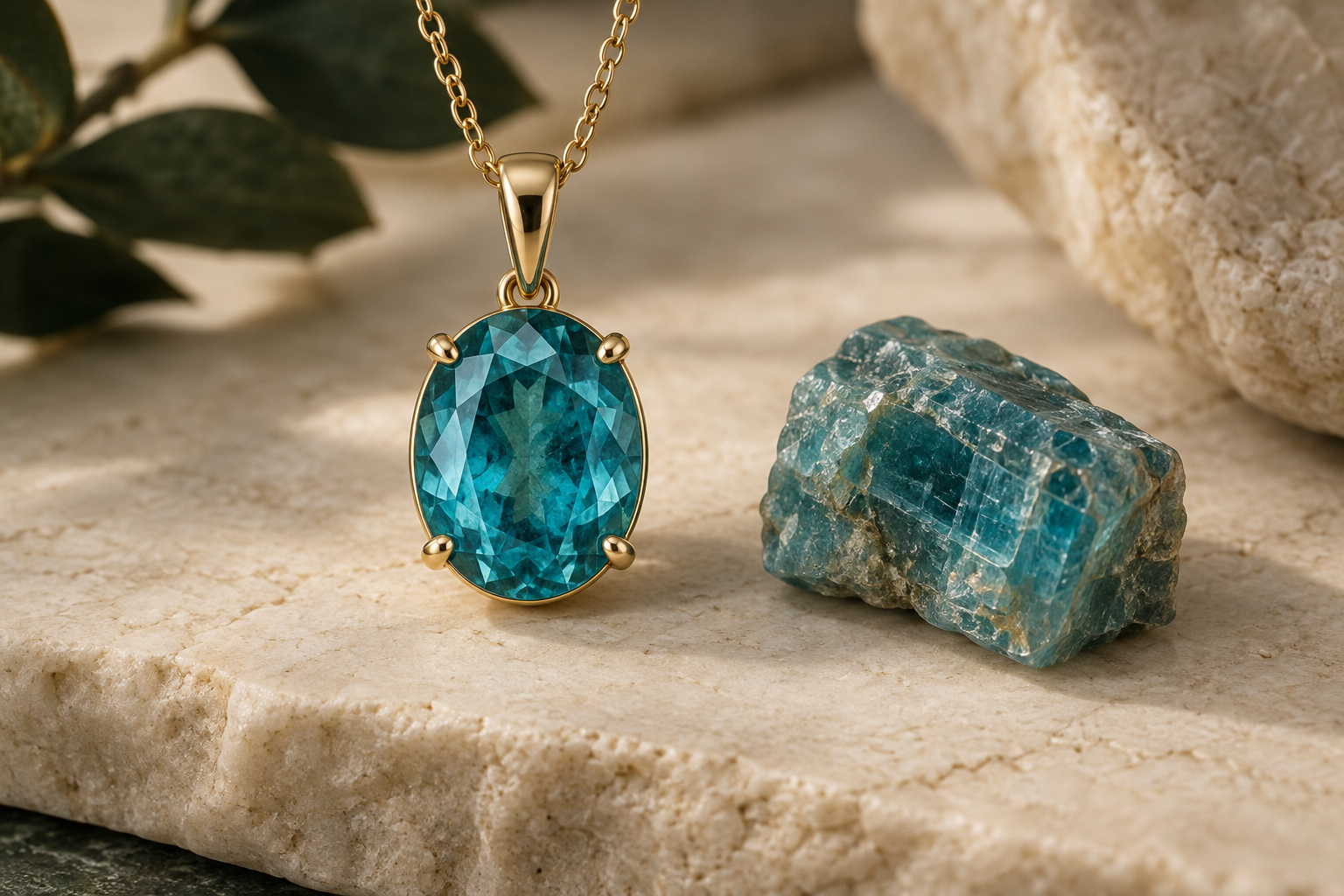
Apatite is a group name for phosphate minerals that can produce lively colors ranging from blue and blue-green through yellow, green, and violet. The most commercially visible hues are blue and teal tones, which are often compared to aquamarine or turquoise in appearance. Some rare specimens display chatoyancy — a cat’s-eye effect — that can add value for collectors and designers. The Gemological Institute of America has specifically documented blue cat’s-eye apatite and other color phenomena, so these visual characteristics are part of the mineral’s recognized gemological profile.
Documented history and cultural evidence
There is limited published historical evidence for apatite as a culturally significant gem in the way that emeralds, rubies, or lapis lazuli are documented in ancient texts and art. Major museums and gemological institutions emphasize apatite primarily as a mineral and gem material rather than as an established symbol with long historical traditions. For context about gems and minerals generally, the Smithsonian National Museum of Natural History describes how different minerals became important for tools, ornament, and trade, but it does not present a sustained historical tradition linking apatite to specific cultural meanings.
Similarly, professional gemological bodies document apatite’s physical and optical properties and its modern use in jewelry. The Gemological Institute of America’s resources focus on identification, color, and notable occurrences such as the blue cat’s-eye phenomenon rather than historical symbolism. Because authoritative institutional publications do not establish a long-standing symbolic role for apatite across named cultures or periods, any claims of ancient rituals or universally recognized meanings should be treated with caution.
Separating documented historical meanings from modern interpretations
Documented historical meanings: Institutional and museum literature that focuses on mineralogy and gem trade provides the reliable record for apatite. These sources identify apatite as a phosphate mineral used increasingly in modern jewelry because its colors appeal to designers and buyers. They do not supply evidence that apatite carried a specific, widely shared meaning in named historical cultures.
Modern personal interpretations: Contemporary descriptions that link apatite to themes such as appetite, manifestation, or specific spiritual powers are modern, interpretive, or mnemonic constructs rather than historical facts. The language that ties the word “apatite” to “appetite” is a modern wordplay and should be understood as symbolic or personal meaning created by modern sellers, designers, or individuals. These contemporary associations are legitimate as personal or decorative symbolism but should not be conflated with documented cultural history or scientific properties.
How apatite appears in jewelry
Designers and makers use apatite for rings, pendants, earrings, and beaded pieces where its color is the primary attraction. Because the gem often shows transparent to translucent bodycolor, faceting is a common way to intensify brilliance and color. Cabochon cuts are used for chatoyant specimens that display a cat’s-eye stripe. The Gemological Institute of America notes both the attractive coloration and optical phenomena that can occur in apatite, and these traits influence how the stone is cut and set.
Because apatite is softer and has distinct cleavage, jewelers frequently recommend protective settings. Bezel settings, halo designs that keep the stone lower and guarded, and pendants or earrings that avoid direct impact are common choices. Designers sometimes pair apatite with stronger stones or supportive metalwork to showcase color while mitigating the risk of knocks or abrasion.
Durability and care
Apatite’s durability is modest compared with common jewelry gems. Gemological descriptions list apatite at about 5 on the Mohs hardness scale and note its perfect cleavage and relative brittleness. That combination means apatite can scratch more easily than quartz or corundum and can chip or cleave if struck. The structural and wear characteristics are why institutions such as the Gemological Institute of America emphasize careful handling for jewelry use.
For everyday care, avoid wearing apatite jewelry during vigorous activities or when the piece may receive knocks. Clean apatite with warm water, a mild soap, and a soft cloth or soft brush; rinse thoroughly and dry gently. Do not use steam or ultrasonic cleaners for stones that show fractures, cleavage, or possible treatments, and when in doubt consult a professional. Store apatite pieces separately from harder gems to prevent abrasion and consider padded storage to reduce the risk of impact damage.
Buying and gifting guidance
When selecting apatite, prioritize color and condition while keeping durability in mind. Vivid, evenly saturated blue-green stones typically command higher interest, but clarity and the presence of surface-reaching fractures affect both appearance and longevity. Ask the seller about any treatments, the stone’s country of origin if known, and the presence of fractures or filling. The Gemological Institute of America’s identification resources recommend full disclosure of gem properties and any enhancements.
For rings or items intended for daily wear, choose settings that protect the stone, such as bezels, protective halos, or low-profile mounts. If the recipient prefers rings but leads an active lifestyle, consider advising them that apatite rings are better for occasional wear and that a stronger stone may be preferable for daily rings. For gifts where symbolism is important, be explicit about whether the meaning is documented historically or a modern personal interpretation. Presenting apatite as a colorful, contemporary choice with potentially personal symbolism is respectful; asserting ancient or universal spiritual properties is not supported by the institutional literature.
Consider the care requirements when gifting: include cleaning instructions, recommend removing the piece during tasks that risk impact, and suggest professional checkups for prongs or mountings. If the piece is valuable or sentimentally important, discuss insurance or appraisal options, particularly for larger specimens or custom settings.
Where apatite sits among other gems
Apatite offers color options that may visually recall aquamarine or tourmaline, but it does not share their hardness or similar wear resistance. For buyers who prioritize color at a lower price point and accept extra care, apatite is an attractive and distinctive choice. For those who need maximum durability for daily wear, harder gems such as aquamarine (beryl), garnet, or corundum are more robust choices. The Smithsonian and gemological literature place apatite within the broader educational context of gems and minerals as a valuable but physically softer material that requires informed use and care.
Final considerations
Apatite is best appreciated for its lively colors and occasional optical effects, and it performs well in jewelry designed to protect the stone. Institutional sources document its gemological identity and visual phenomena but do not establish longstanding cultural symbolism. Modern associations and personal meanings are valid as individual or contemporary choices, provided they are presented as interpretation rather than documented historical fact. If you like the color and are prepared to care for it, apatite can be a beautiful, distinctive gem for a considered and protective setting.
Frequently asked questions
Is apatite suitable for everyday rings?
Because apatite has modest hardness (around 5 on the Mohs scale) and distinct cleavage, it is not ideal for everyday rings that will receive knocks or abrasion. If you choose an apatite ring, select a protective setting such as a bezel or halo and reserve it for occasional wear.
How should I clean and store apatite jewelry?
Clean apatite with warm water, mild soap, and a soft cloth or soft brush; rinse and dry thoroughly. Avoid steam and ultrasonic cleaners when the stone has fractures or treatments. Store apatite pieces separately from harder gems and use padded compartments to reduce the risk of impact damage.
What colors does apatite come in and which are most valued?
Apatite occurs in blue, blue-green, green, yellow, and violet tones. Rich, evenly saturated blue and teal colors are generally most desirable for jewelry, and rare optical effects such as chatoyancy can increase interest among collectors.
Are historical or spiritual meanings for apatite documented?
Authoritative museum and gemological literature focuses on apatite’s mineralogy and modern gem use rather than established historical symbolism. Contemporary spiritual or manifestation meanings are modern interpretations or wordplay and should be presented as personal symbolism rather than documented historical fact.
Should I ask about treatments or origin when buying apatite?
Yes. Ask the seller for full disclosure about any treatments, the presence of fractures, and origin if known. Professional gemological resources recommend transparency about enhancements and gem properties so buyers can make informed decisions.
Sources and further reading
- Blue Cat’s-Eye Apatite — Gemological Institute of America
- GIA Gem Project: Various Gems (A) — Gemological Institute of America
- Gems and Minerals: Beauties and Building Blocks — Smithsonian National Museum of Natural History