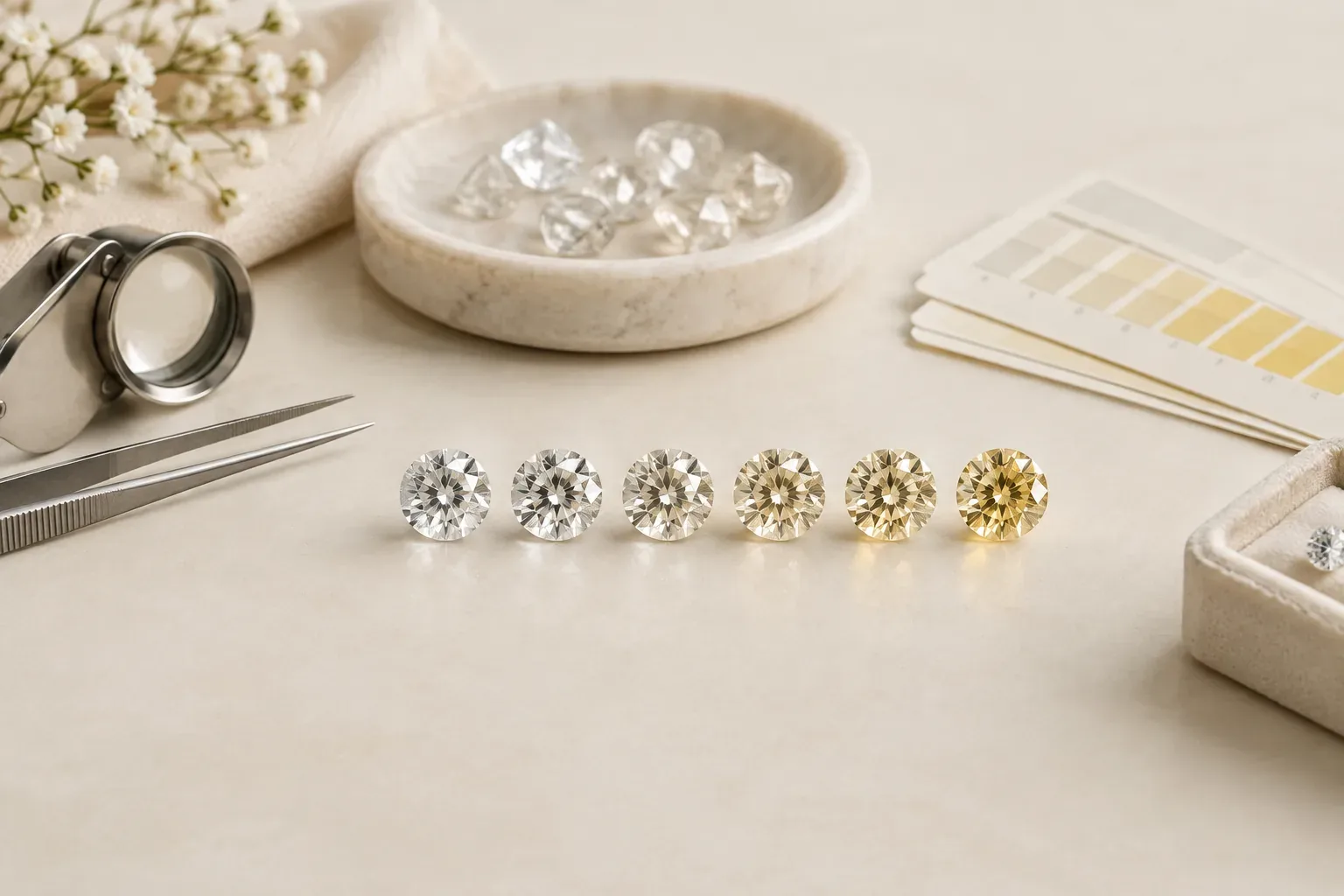
Meaning at a glance
Diamond color grade explained: it is a laboratory-assigned measure of a diamond's body color on a near-colorless-to-light scale used to inform appearance and price; buyers need a qualified lab report or trained jeweler to verify grade, should weigh trade-offs between color, cut, carat, and setting, and follow disclosure and care guidance from professional bodies.
What 'color grade' actually measures
Color grade refers to the presence and degree of body color in diamonds, most commonly seen as a subtle yellow or brown tint in what gemology treats as 'white' diamonds. The assessment is performed by trained graders in controlled conditions using reference standards. A color grade is not a measure of sparkle, cut quality, or brilliance, although those factors interact visually with color. Because grading is a comparative and instrumental process, the grade functions as a communication tool among laboratories, dealers, and consumers rather than a purely aesthetic judgment that everyone will perceive the same way.
Historical evidence and periodization
Formal, laboratory-based color grading is a modern practice rooted in the development of scientific gemology during the 20th century and is part of the modern gemological laboratory workflow. The Gemological Institute of America (GIA) and similar laboratories created standardized procedures so that dealers and consumers could rely on consistent, comparable assessments rather than informal visual descriptions. This professionalization belongs to the modern period of gemology rather than to ancient or medieval cultural traditions.
Cultural meanings attached to diamonds—such as associations with status, fidelity, or power—have long and varied histories in different societies, but those symbolic histories are distinct from the technical practice of color grading. Our approved evidence does not provide detailed primary sources for pre-modern cultural beliefs about diamond color, so this article treats symbolic history separately from the documented, laboratory-based history of grading systems.
Documented historical meanings versus modern interpretations
Documented, evidence-led history in modern gemology concerns how professionals classify and disclose qualities such as color, treatments, and origin. Institutions like the GIA study and publish methodologies for identifying treatments and ensuring accurate disclosure, and government guidance such as that from the Federal Trade Commission emphasizes clear disclosure to consumers. These are documented practices about standards and transparency rather than cultural symbolism.
Modern personal interpretations—what a buyer or recipient feels a diamond’s color means—are varied and subjective. Buyers might prefer a warmer-tinted diamond because it feels vintage or complements yellow-gold settings, or they might prioritize a whiter appearance for traditional engagement-ring aesthetics. Those personal meanings are valid for gifting and selection but should be distinguished from technical claims about grade and from legal obligations to disclose material facts about a gemstone.
How color grade appears in jewelry and affects appearance
Color interacts with cut, shape, setting metal and lighting. A well-cut brilliant diamond can hide some body color because its faceting disperses light and emphasizes sparkle, while step cuts such as emerald or asscher can make body color more apparent. The metal color of the setting changes perceived color: yellow or rose gold tends to mask warm undertones, while white gold, platinum, or palladium emphasize a whiter appearance. Similarly, smaller stones versus larger stones show color differently because surface area and facet pattern affect visual perception.
Retail and design choices also reflect color considerations. Jewelry designers and buyers choose combinations of setting and diamond color grade to achieve a desired look. For example, some vintage or antique-style pieces intentionally include warmer-colored diamonds for historical or stylistic authenticity, while contemporary engagement rings often pair higher color grades with white metals for a very white overall look.
Decision criteria: practical trade-offs to consider
When you weigh diamond color grade against other factors, the practical trade-offs are: higher color grades typically cost more and deliver a whiter appearance when combined with light-colored metals and certain cuts; lower grades can be significantly less expensive and can look visually similar if mounted in yellow gold, if the cut maximizes brilliance, or if the stone is small. Buyers should balance color with cut quality, carat weight and clarity because all these attributes influence a diamond’s overall look and value.
A shopper should consider viewing candidate diamonds in natural daylight and in the setting they intend to use, and should ask for a laboratory report and trained explanation. Because perception of color is relative, comparing two stones side by side under the same lighting is often more telling than relying on a lone image or a single number.
What you can and cannot verify without a lab report
You can check certain basics without laboratory equipment: you can compare two diamonds side by side to judge which looks warmer or whiter, you can examine how the diamond looks in its intended setting and under everyday lighting, and you can ask the seller for a clear, written disclosure about whether the diamond is natural, lab-grown, treated, or imitated. The Federal Trade Commission stresses the consumer right to clear written disclosures about origin and treatments, so sellers should provide that information.
You cannot reliably verify an exact laboratory color grade, detection of treatments, or origin (natural versus lab-grown) at home or from photos alone. Precise color grades and detection of treatments require trained graders and specialized instruments in a gemological laboratory. For consumers who require an authoritative verification, request a report from a recognized lab and, when in doubt, have the diamond examined by a qualified independent gemologist.
Safe care guidance and special considerations
Care for diamonds is generally straightforward because diamond is extremely hard, but treatments and settings change care needs. The Gemological Institute of America advises that treated or enhanced gemstones can have different vulnerabilities and may require special care or disclosure. Always follow the seller’s and the laboratory’s guidance on cleaning and avoid harsh chemicals on settings that include softer gemstones or sensitive treatments.
Routine cleaning with warm soapy water and a soft brush is usually safe for a conventional solitaire diamond in a sturdy setting, but have rings inspected regularly for loose settings and be alert to any claims the seller makes about treatments or coatings. Because treatments and lab-created origins are material facts that affect value and care, the Federal Trade Commission recommends that sellers provide clear written disclosures and that buyers retain documentation.
Practical guidance for selection and gifting
Start with priorities: decide whether you value absolute whiteness, maximum size, highest brilliance, or best value. If whiter appearance is paramount and budget allows, prioritize a higher color grade and a white metal setting. If you want the largest face-up size for budget, consider slightly lower color grades and mask warm tones with yellow gold or a halo setting. For gifts, reflect the recipient’s style rather than a presumed ideal: some people prefer the warmth of slightly tinted diamonds paired with vintage designs, while others expect a very white look for traditional engagement rings.
Always ask for a written laboratory report and disclosure of origin and treatments. If purchasing online, buy from a reputable seller who provides clear documentation and a return policy. When gifting, include the paperwork so the recipient has the information needed for insurance, resale or future resizing and care. When in doubt about trade-offs, consult a trusted independent jeweler or gemologist who can show side-by-side comparisons under controlled lighting and explain the implications for appearance and value.
Final limits and a responsible summary
Diamond color grade is a technical, comparative judgment applied by trained professionals in controlled conditions; it helps predict how white or tinted a diamond will appear and therefore influences both price and design choices. While cultural and personal meanings of diamond color vary widely, those symbolic interpretations are separate from the technical grade itself. Buyers should insist on written disclosure of origin and treatments and should seek a laboratory report or independent assessment if they require authoritative verification.
For marketplace context and consumer demand trends, industry analyses show continued strong interest in classic diamond jewelry styles such as engagement rings and studs, which underscores why clear, evidence-led guidance about grading, disclosure and care matters to both buyers and sellers. When selecting or gifting a diamond, balance objective documentation with the recipient’s aesthetic preferences and consult qualified professionals for any verification beyond basic visual comparison.
Frequently asked questions
Can I tell a diamond's exact color grade from photos?
No. Photographs vary by lighting, camera settings and post-processing, so they cannot reliably indicate a laboratory color grade. For an authoritative grade, request a report from a recognized gemological laboratory or an examination by a qualified jeweler.
Does a higher color grade always look better in a finished ring?
Not always. A higher color grade yields a whiter-looking diamond in neutral settings, but cut quality, setting metal and stone size also affect appearance. A slightly lower grade can look excellent in yellow-gold settings or with a cut that maximizes brilliance, and it is often a cost-effective choice.
Are treated or lab-created diamonds handled differently for grading and care?
Yes. Treatments and lab-grown origins are material facts that affect value and care. The Gemological Institute of America explains that treatments can change detectability and durability, and the Federal Trade Commission requires clear seller disclosures about origin and treatments. Ask for explicit information and care recommendations.
What should I ask the seller before buying?
Ask for a written laboratory report or grading document, clear disclosure of whether the diamond is natural, lab-grown or treated, the seller's return policy, and recommendations for cleaning and care. If documentation is not provided or is unclear, consider an independent appraisal or choose a different seller.
How often should I have a diamond ring inspected?
Have the setting and mountings inspected by a qualified jeweler at least once a year, or sooner if you notice looseness, damage, or after events that could impact the setting. Regular inspections protect the stone and ensure safe long-term wear.
Sources and further reading
- Imaginaire Digital — Imaginaire Digital
- Gemological Institute of America — Gemological Institute of America
- Federal Trade Commission — Federal Trade Commission