Meaning at a glance
This diamond clarity grade buying guide gives evidence-led definitions of clarity grades, shows how clarity fits into value decisions alongside cut, color and carat, explains the practical trade-offs buyers commonly make, lists what a shopper can and cannot reliably verify without a qualified jeweler or lab, and offers respectful selection and gifting guidance plus safe-care pointers.
What diamond clarity means and how grades are used
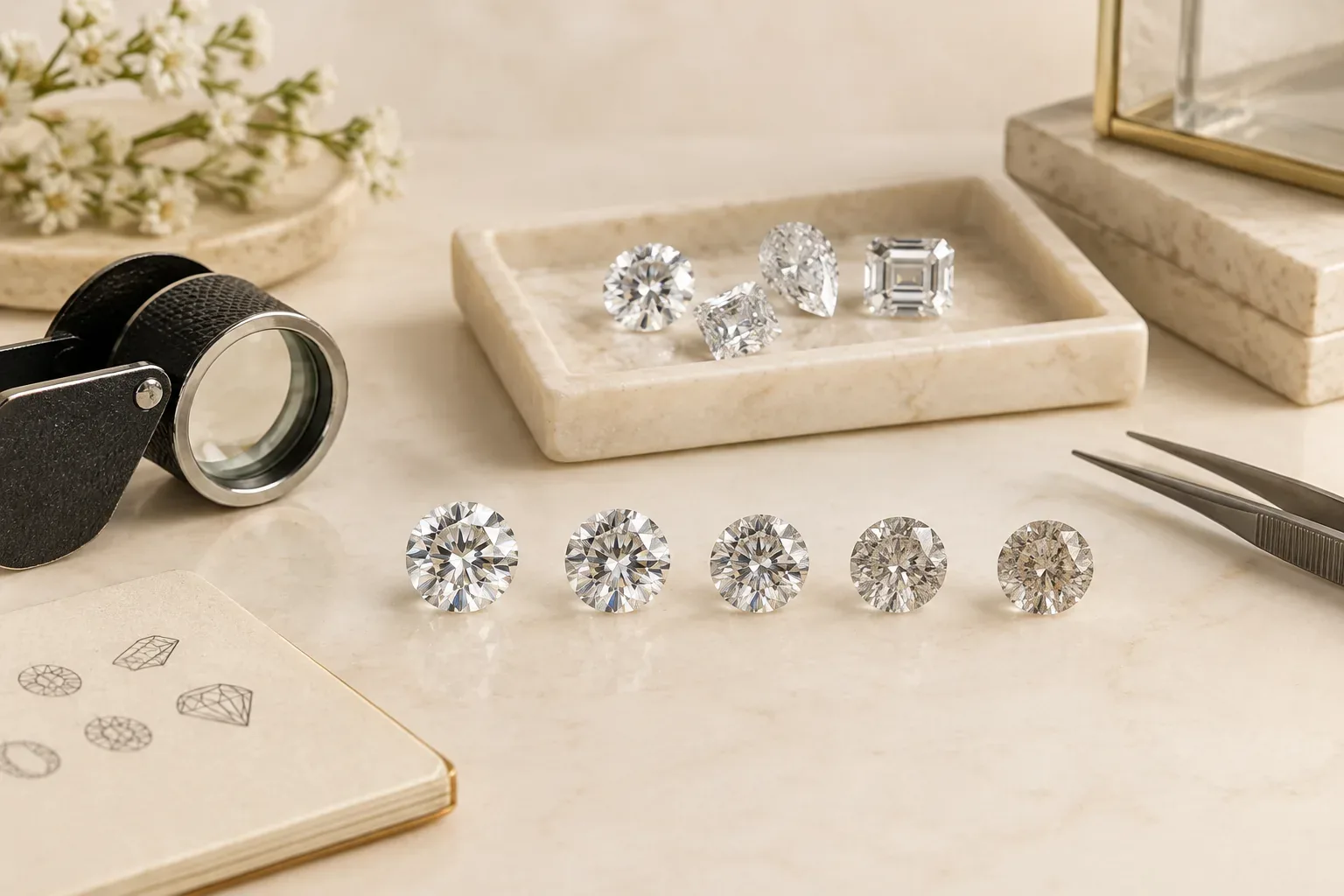
Clarity refers to internal and external characteristics within a diamond: internal inclusions and surface blemishes. Grading systems group stones by the type, size, position and visibility of those characteristics. Common grading categories you will encounter from sellers and laboratories range from Flawless (FL) and Internally Flawless (IF) through Very Very Slight (VVS1–VVS2), Very Slight (VS1–VS2), Slight (SI1–SI2), down to Included (I1–I3). Higher clarity grades typically command higher prices, but visibility to the naked eye is rarely linear with price.
Sellers and buyers use clarity grades as one of the 4Cs (cut, color, clarity, carat) to communicate quality. However, a well-cut lower-clarity diamond can appear more lively and attractive than a poorly cut higher-clarity stone, so clarity is best considered in balance with other characteristics.
Documented historical notes and modern regulatory context
The scope of historically documented meanings and uses of diamonds is broad and varies by culture and period; within the evidence provided for this guide, authoritative organizations focus on modern gemology, treatments and consumer protection rather than exhaustive cultural histories. The Gemological Institute of America (GIA) concentrates on gem treatments, detection and consumer questions about durability and care, which informs modern grading practice. The Federal Trade Commission (FTC) documents contemporary consumer protections and seller disclosure responsibilities in the United States, including distinctions between natural, lab-created, and treated gems.
In short, the available reference material for this article emphasizes modern laboratory practice, treatment disclosure and marketplace transparency. For cultural histories—how different societies historically interpreted diamonds or assigned symbolic meanings—consult specialized historical or ethnographic works because such meanings differ by region and period and are not exhaustively covered by the consumer- and laboratory-focused sources used here.
Separating documented history from modern personal interpretation
Documented history (as reflected in the authoritative sources for buying practice) concentrates on the technical and regulatory developments that affect today’s consumers: how treatments are identified and disclosed, how grading reports are issued, and how consumer protection rules apply. These are matters of record and regulation and are the areas where a buyer can demand documentation.
Modern personal interpretations—why an individual might prefer a particular clarity grade for symbolic or aesthetic reasons—are subjective and not universal. People may associate higher clarity with purity or status; others prefer to optimize sparkle and spend more on cut. Both approaches are valid personal preferences, but they are interpretations rather than standardized meanings, and they should not be presented as universal or historically uniform.
How clarity appears in jewelry and what affects visual impact
The visual impact of clarity depends on several interacting factors. The diamond’s size and setting matter: inclusions that are hard to see in a small pavé or accent stone may be obvious in a one-carat solitaire viewed closely. Cut quality strongly influences how well a diamond hides or reveals internal characteristics: better cuts produce stronger light performance that can mask minor inclusions from ordinary viewing distances.
Metal color and mounting style also play roles. Prong settings that expose more of the girdle and crown allow closer inspection, while bezel or halo settings can obscure the edges of a stone and make some inclusions less noticeable. Warm or cool metal tones don’t change clarity, but they affect perceived contrast and can influence how the eye detects imperfections.
Value trade-offs: clarity versus cut, color, and carat
For most buyers seeking the best visual return per dollar, the recommended priority order is usually cut first, then carat, then color and clarity—though personal priorities and budget vary. A well-cut diamond of slightly lower clarity often outperforms a poorly cut diamond of higher clarity because cut determines how the stone returns light to the eye.
If budget is fixed, choosing a slightly lower clarity (for example VS or SI ranges) while upgrading cut and carat often yields a stone that looks larger and more brilliant in everyday wear. Conversely, if a buyer is focused on resale or investment criteria, a higher clarity grade may be preferable because it is more standardized and can be easier to benchmark in the secondary market.
What you can verify yourself and what needs a qualified jeweler or lab
You can reasonably verify some things on your own: examine the diamond with a 10x loupe or magnifier to look for obvious inclusions; compare stones side-by-side to assess relative sparkle and visibility of imperfections from typical wearing distances; and ask for written disclosures about whether the stone is natural, lab-grown, treated, or enhanced. The Federal Trade Commission requires clear distinctions among natural, lab-created, treated, and imitation materials and written seller disclosures, so request those documents.
However, you cannot reliably produce an official clarity grade, or detect certain subtle treatments, without a qualified gemologist or a gemological laboratory report. Definitive grading may require laboratory instrumentation and sometimes examination of the loose stone. The Gemological Institute of America explains that treatments, their detectability, and durability can be complex, so written laboratory reports from reputable labs are the best way to secure an objective assessment.
Questions to ask a seller or jeweler
Ask for the stone’s clarity grade and the full grading report number and issuing laboratory. Request written disclosure stating whether the diamond is natural, lab-created, treated, or has undergone enhancements. Ask whether the grade was issued for the loose stone or for a mounted stone and whether the stone was examined under standard lighting and magnification conditions.
Also ask practical questions: can you see the inclusions with the naked eye at normal viewing distance; how will the setting affect the visibility of inclusions; what is the jeweler’s return or upgrade policy; and does the seller offer independent verification or a lifetime inspection service. Finally, inquire about care recommendations and whether the stone’s clarity or treatments change any recommended cleaning methods.
Selection and gifting guidance
When selecting or gifting, match clarity to the recipient’s priorities and the intended setting. For everyday wear solitaires where sparkle is prized, prioritize a top cut grade and choose a clarity grade where inclusions are not visible to the naked eye—many buyers find VS or SI ranges deliver strong value for typical engagement rings. For heirloom or collector pieces where maximum clarity is desired and budget allows, choose higher clarity grades and insist on an independent grading report.
When gifting on cultural or sentimental grounds, be explicit about what the grade signifies for you and the recipient; avoid assuming that a clarity grade conveys the same symbolic meaning across cultures. If the recipient cares about provenance, ask about the diamond’s origin documentation and whether the seller provides guarantees about ethical sourcing, keeping in mind that provenance and ethical claims are different from technical clarity grading.
Care and maintenance with clarity in mind
Clarity itself does not usually change with ordinary wear, but surface-reaching inclusions may be vulnerable if a stone is struck. Follow standard safe-care guidance: store diamonds separately to avoid scratching other jewelry, avoid exposing the piece to harsh chemicals or extreme heat, and have settings inspected periodically to ensure inclusions are not exposed by loose prongs or damage. The GIA’s consumer guidance on treatments, detectability and durability highlights that some treatments require special care or disclosure, so confirm whether a stone has been treated and follow any specific instructions.
For cleaning, use mild soap and water with a soft brush or a manufacturer-recommended ultrasonic or steam cleaning service, but confirm with the jeweler if the stone has been treated or set with fragile metals or accents. Regular professional inspections will help catch any setting problems that could expose internal characteristics.
Final practical checklist before purchase
Before completing a purchase, request or verify these items: a written grading report from a recognized laboratory when grade precision matters; written disclosure about natural vs lab-grown vs treated status as required by the Federal Trade Commission; clear return and upgrade terms; and professional inspection or mounting notes if the stone is already set. If you plan to resell or insure the stone, a standardized laboratory report makes valuation and underwriting easier.
Remember that clarity grade is only one element of value. Balance clarity against cut, color, carat and the emotional meaning of the piece for the recipient, and make choices that align with visual appearance, budget, and long-term intentions for the jewelry.
Frequently asked questions
Do I always need a laboratory grading report for clarity?
No—but you should request a report when precision matters or when buying at scale. A reputable laboratory report gives a standardized benchmark useful for resale and insurance. For lower-budget purchases where the visual effect to the naked eye is your primary concern, a trusted jeweler’s inspection and clear return policy may suffice.
Can I grade clarity at home with a loupe?
You can use a 10x loupe to look for obvious inclusions, but accurate grading requires standardized lighting, magnification and expertise. A loupe can help you determine whether inclusions are visible to the naked eye, which is a practical test for everyday wear.
Should I sacrifice clarity to get a larger carat or better cut?
Many buyers prioritize cut and carat over the highest clarity because a well-cut stone maximizes sparkle and a slightly lower clarity often still looks clean to the naked eye. Choose according to what you or the recipient value most in appearance and budget trade-offs.
Are treated diamonds acceptable to buy?
Treated diamonds are acceptable if the treatment is fully disclosed in writing and you understand any special care or durability issues. The Gemological Institute of America emphasizes that treatments and their detectability can affect care and disclosure requirements, and the FTC requires sellers to make these distinctions clear to consumers.
How should I care for a diamond with visible inclusions?
Handle the piece with care, avoid harsh impacts, store it separately, and have settings checked regularly. If an inclusion reaches the surface or a prong is loose, a professional inspection is important to prevent damage.
Sources and further reading
- Imaginaire Digital — Imaginaire Digital
- Gemological Institute of America — Gemological Institute of America
- Federal Trade Commission — Federal Trade Commission