Meaning at a glance
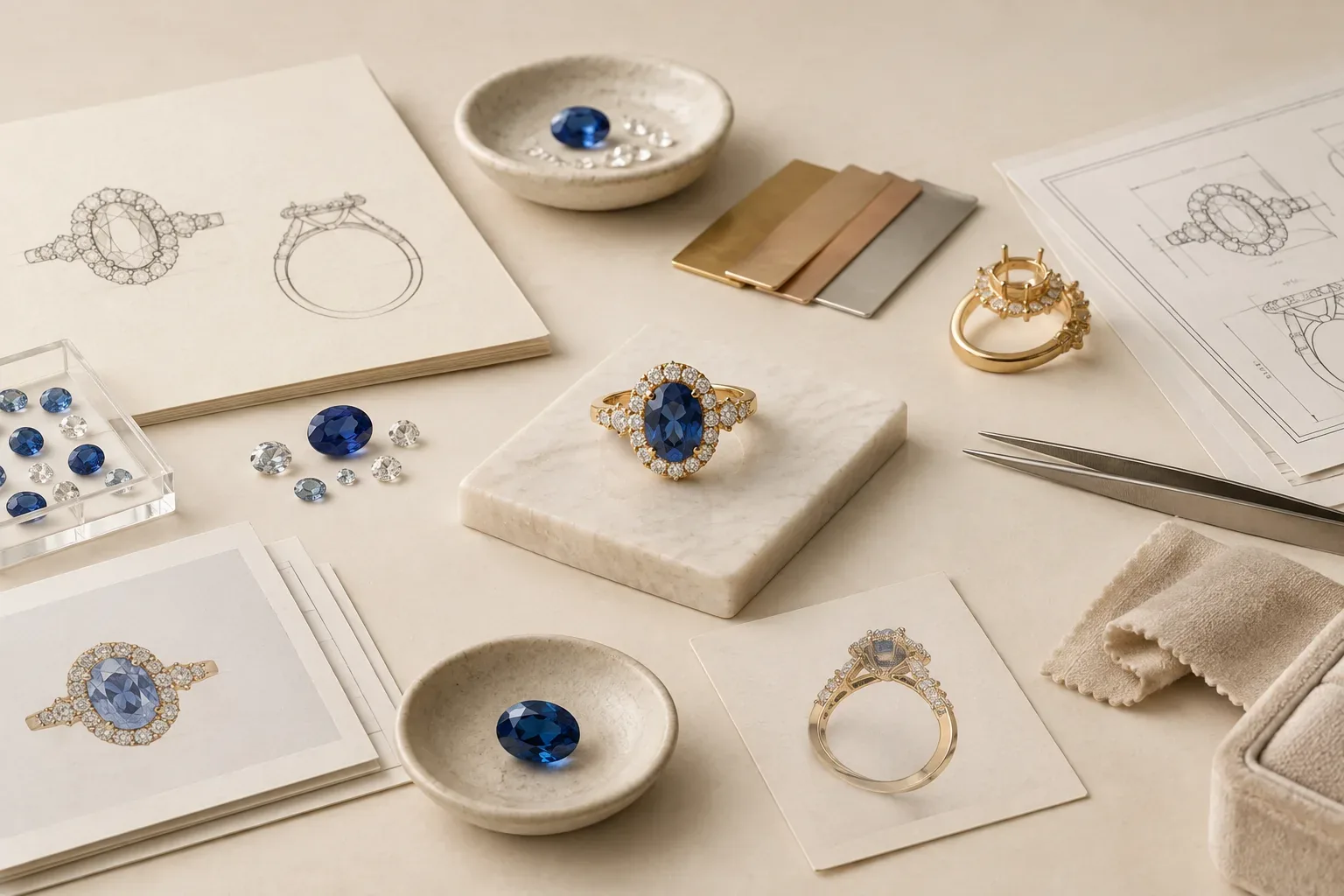
Guide a custom commission from design brief through stone identity, dimensions, metal, setting, treatment disclosure, drawings, approvals, warranty, and final inspection.
What the historical record shows and where it comes from
The modern idea of assigning gemstones to months and occasions has a layered history that jewelers and gem authorities have traced and summarized. The Gemological Institute of America (GIA) documents how contemporary birthstone lists evolved from earlier, varied practices and how those lists were standardized over the twentieth century; the GIA resource ‘Birthstones for Each Month’ presents the current, commonly referenced list and explains that the practice incorporates multiple precedents rather than a single continuous tradition.
Because the origins and uses of gemstones differ by culture and period, reliable commentary identifies specific traditions when documenting meanings. Modern jewelers and trade organizations usually treat the GIA list as a practical reference for which stone corresponds to which month in commercial and design contexts rather than ascribing a single historic meaning to every culture that used gemstones.
Documented historical meanings versus modern personal interpretations
Documented historical meanings are the associations recorded by historians, archaeologists, or professional bodies. The GIA presents documented lists and how they were adopted for commercial use; those records describe which stones have been used together with months, but they do not assert that any particular symbolic meaning was universal across places or eras.
Modern personal interpretations are the meanings buyers and wearers assign today. These contemporary meanings are subjective, vary by individual and community, and should be treated as personal or cultural expression rather than as historical fact. When commissioning a piece, decide whether you want to reflect documented lists for clarity or lean into a personal narrative that is meaningful to the recipient.
How motifs, gemstones, and traditions appear in jewelry
Birthstones appear in many jewelry formats: solitary center stones in rings and pendants, small accent stones in cluster or halo designs, birthstone stacking rings, and multi-stone family pieces. The choice of setting—bezel, prong, channel, pavé, or tension—affects the look and durability of each motif, as the Gemological Institute of America explains in its guidance on designing for gemstone durability (GIA).
Motifs such as hearts, flowers, or astrological symbols are combined with gemstones to create a narrative effect. Traditions appear both as literal use of the listed month stone and as more symbolic gestures, such as including a grandmother’s birthstone in a memorial piece. In commissioned work the motif can be rendered as metal engraving, stone arrangement, or openwork, depending on how the designer balances aesthetics with the gem's hardness and toughness.
Commissioning and approval checklist — the complete workflow
Design brief: Begin with a written brief that states purpose, budget range, preferred metals, preferred gemstone(s) and any cultural or sentimental motifs. A clear brief reduces assumptions and gives the maker a baseline to propose realistic options and prices.
Stone identity, source, and certification
Stone identity: Specify whether you want a natural stone, laboratory-grown, or a simulated/treated material and require written confirmation. The Federal Trade Commission (FTC) stresses clear disclosure of whether gemstones are natural, lab-grown, or imitations, so request that the jeweler document the stone’s identity in the contract and on any final paperwork.
Source and certification: For higher-value stones, ask for gemological reports or certificates from recognized laboratories and for the seller to confirm origin statements in writing where they are material to price or meaning. If the stone’s origin is important for sentimental or ethical reasons, require the vendor to document provenance.
Dimensions, carat/size, and acceptable tolerances
Dimensions and size: Specify exact stone dimensions, minimum acceptable carat or millimeter size, and acceptable tolerances. Ask the jeweler to supply scaled drawings or photographs with a millimeter scale and to confirm the final stone measurements before setting.
Proportions and visible size: Explain whether surface appearance or carat weight is the priority, since some stones can look larger due to cut and proportions. Require a final approval step once the chosen stone is on hand and measured.
Metal type, finish, and hallmarking
Metal: State the metal type (for example, 14k yellow gold, 18k white gold, sterling silver, or platinum) and any finish preferences such as high polish, matte, or brushed. Jewelers of America’s buying guides outline typical metal formats and what customers can expect in terms of durability and care.
Hallmarking and responsibility: Ask the maker to stamp and hallmark the metal per applicable law and to confirm alloy composition in writing. If allergies are a concern, require a nickel disclosure or select known hypoallergenic alloys.
Setting choice, durability, and wear context
Setting: Choose a setting type appropriate to the gemstone’s hardness and the intended use of the piece. The GIA’s guidance about gemstone durability emphasizes matching setting and design to wearer habits; softer stones and daily-wear rings often fare better in protective settings such as bezels or low-profile channels.
Design for use: Discuss the wearer’s lifestyle—frequent hand use, gardening, or sports merits sturdier settings or protective design decisions. Include explicit instructions in the brief about recommended settings and require the jeweler to note any design compromises required to preserve the stone.
Treatment disclosure, and lab-grown versus natural considerations
Disclosure: Require full written disclosure of any treatments, enhancements, or stabilizing procedures the stone has undergone. The FTC requires sellers to disclose treatments and the distinction between natural and lab-grown stones, and that requirement should be mirrored in your contract.
Implications: Understand how treatment affects care needs, durability, and value. If a heated or filled stone is acceptable, note this in the brief and ask the jeweler to explain care differences in writing.
Drawings, CAD models, prototypes, and approvals
Visual approvals: Request detailed CAD renders, scaled technical drawings, and, if possible, a physical prototype or model in wax or base metal. Have the designer annotate each drawing with exact dimensions, metal weights, and stone specifications so approvals are unambiguous.
Approval workflow: Specify a sequence of approvals in writing: initial design approval, final stone selection approval once the material is available, and pre‑setting confirmation. Require the maker to obtain your written sign-off at each stage before moving forward.
Contract, payment schedule, timeline, and changes
Contract and payments: Put all agreements in a written contract that lists scope, materials, deadlines, payment schedule, and the procedure for change orders. Trade guidance from Jewelers of America urges consumers to select reputable sellers who provide clear written terms and receipts.
Change orders and delays: Define how changes are handled, what additional costs are permitted, and how delays will be communicated. Require that any additional costs due to stone substitutions or design changes receive your explicit consent in writing before extra work is performed.
Warranty, returns, and insurance
Warranty and return policy: Include warranty terms covering workmanship and setting security, as well as the jeweler’s repair policy, in the contract. If the piece is a gift, clarify who has warranty rights and whether returns or redesigns are possible if the recipient prefers another stone.
Insurance: Acquire insurance coverage for the completed piece, especially for items with high intrinsic or sentimental value. Keep documentation of purchase, stone certificates, and the contract in your insurance file.
Final inspection and documentation to receive
Final inspection: Before accepting the finished piece, inspect the work with the stone in hand and with magnification if available. Verify that dimensions, stone identity, setting security, metal markings, and finish match the contract and the approved drawings.
Documentation you should receive: Obtain written confirmation of the stone’s identity and treatments, any gemological reports, the contract with noted changes, photographs showing the finished piece, and the jeweler’s warranty document. The FTC emphasizes the importance of written disclosures for buyer protection.
Practical and respectful selection or gifting guidance
Respectful gifting: When a piece draws on cultural motifs or carries claimed symbolic meaning, be explicit about sources and avoid presenting modern interpretations as historical fact. If the symbolism is central to the gift, consult a knowledgeable member of the relevant community or commission an artist from that tradition to ensure respectful and accurate use.
Personalization and communication: Ask recipients about preferences when possible, or choose versatile designs for surprises. If the birthstone list itself is meaningful, confirm the month-to-stone choice with the recipient or use a neutral design element such as a small, removable stone to allow future changes.
Summary
A clear, evidence-led custom commissioning process reduces surprises and protects both buyer and maker: document the brief, specify stone identity and treatments, define dimensions and materials, require staged approvals with drawings and prototypes, include warranty and return terms, and complete a thorough final inspection with written disclosures. Use professional resources such as the GIA for stone and durability information, the FTC for disclosure expectations, and Jewelers of America guidance for seller selection and purchasing practices.
Frequently asked questions
How can I verify a birthstone is natural or lab-grown?
Ask the seller for written disclosure and any available gemological reports. The FTC requires sellers to clearly state whether a stone is natural, laboratory-grown, or a simulant, so insist that identity and any treatments be documented before purchase.
What should a commission contract always include?
The contract should list the design brief, specified stones and their treatments, metal and finish, exact dimensions and tolerances, timeline, payment schedule, change-order rules, warranty terms, and the approval workflow for drawings and final stone selection.
When should I approve the actual stone?
Approve the specific stone after it is available and measured, but before it is permanently set. Require the jeweler to provide measurements, photographs with a millimeter scale, and any laboratory reports for final sign-off.
How do I choose a setting for a softer birthstone?
Choose protective settings such as bezels or lower-profile designs for softer stones and discuss the wearer’s habits with the jeweler. The GIA’s guidance on gemstone durability recommends matching setting and design to expected wear.
What documentation should I receive with the finished piece?
Receive the contract, a written disclosure of stone identity and treatments, any gemological reports or certificates, the jeweler’s warranty, and photographs of the finished piece. Keep these documents for insurance and future resale or repairs.
Can I change the stone after the piece is completed?
Specify change or redesign policies in the contract. For rings or pieces designed to accept interchangeable stones, require the design and mechanical features that make swaps safe and secure; otherwise, stone replacement may require additional work and cost.
Sources and further reading
- Birthstones for Each Month — Gemological Institute of America
- Buying Gemstones, Diamonds, and Pearls — Federal Trade Commission
- Jewelry Buying Guides — Jewelers of America
- Gemstone Durability: Design to Display — Gemological Institute of America