Meaning at a glance
This guide helps readers design family birthstone jewelry by using an explicit month-to-gem map, choosing layouts that respect durability differences, considering respectful substitutions, and requesting clear written confirmation from the seller about stones, treatments, and returns.
Quick answer
Help readers plan multi-stone family jewelry using an explicit month map, layout, durability compatibility, substitutions, and written seller confirmation. Follow a modern month map when you need a simple one, select a layout that fits the piece and daily wear, protect softer gems in secure settings or substitute harder alternatives for everyday pieces, and always get written confirmation from the seller listing the gemstone(s), any treatments or lab-grown status, and the return policy before you buy.
What historians and museums document
The idea of associating gems with people, times of year, or life events long predates modern “birthstone” lists. The Gemological Institute of America (GIA) documents the shifting practice of linking particular gems to months and other calendars over many centuries and across cultures, and it tracks how those lists changed as trade, available gem types, and jewelry fashions evolved. Museums and trade histories collected by the GIA show that what we now call birthstones are not a single immutable tradition but a set of associations that were standardized and commercialized in more recent times.
Distinguishing documented history from modern personal meanings
Historical records preserved and interpreted by the GIA show that associations between gems and times or attributes evolved regionally and over time. For example, commercial birthstone lists familiar to many shoppers were shaped in the 19th and 20th centuries as jewelers and national organizations published standardized lists. Those documented lists are historical and commercial artifacts. Separately, many contemporary wearers assign personal meanings to a stone — such as a mother wearing a child’s birthstone as a symbol of connection — and those modern, personal interpretations are meaningful to the wearer but are not the kind of historically documented, culture‑wide symbolism that museums and gemological bodies report. Treat modern symbolic meanings as personal or family tradition rather than universal cultural fact.
An explicit month map (modern lists and common alternatives)
When you need a single, usable month map for planning a family piece, the Gemological Institute of America provides the contemporary lists jewelers commonly use as a baseline. A practical month map for multi-stone jewelry is: January: garnet; February: amethyst; March: aquamarine (often used) or bloodstone historically; April: diamond; May: emerald; June: pearl, alexandrite, or moonstone; July: ruby; August: peridot; September: sapphire; October: opal or tourmaline; November: topaz or citrine; December: turquoise, tanzanite, or blue topaz. Use this as your map but recognize months with multiple traditional stones give you flexibility when considering color, budget, or durability.
How motifs, gems, and tradition appear in jewelry
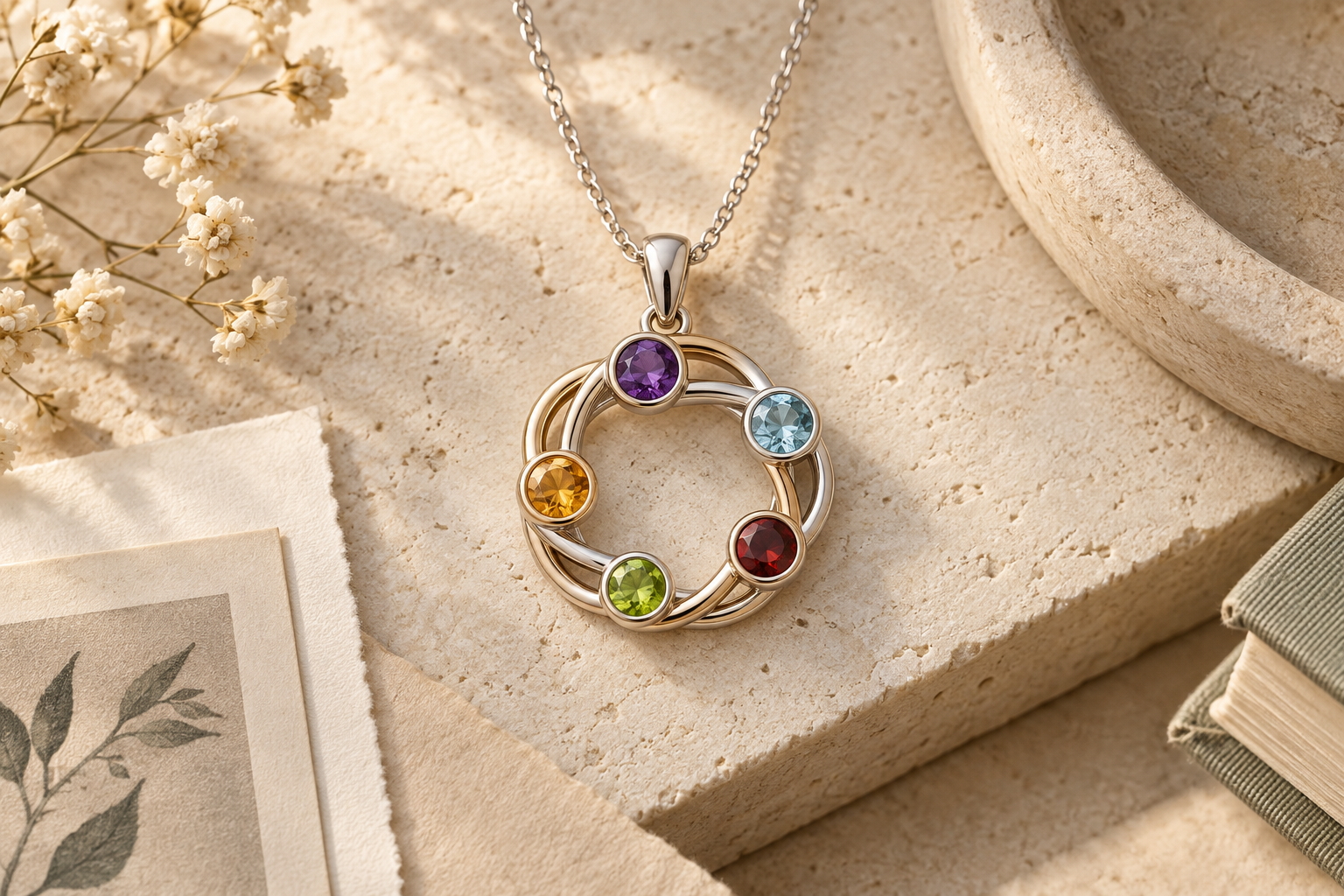
Birthstone motifs appear in many formats: clustered pendants that group stones into a single visual field, linear bars or necklaces that arrange stones left to right, charm bracelets with individual stones or charms for each person, and stacked rings where each band carries one stone. Trade guidance from Jewelers of America explains common formats and setting choices and helps you match a format to how the piece will be worn. The same gemstone can be set as a solitaire, a bezel, a prong setting, or within a cluster, and each format affects the stone’s protection and the piece’s overall look. Motifs such as family trees, initials, or engraved dates are often combined with birthstones to layer literal and symbolic meaning.
Durability, layout and compatibility considerations
Not all gemstones are equally suited for daily wear, and layout choices should reflect that reality. The GIA provides gemological context that helps you understand which gems are more abrasion- or impact-resistant and which are more delicate. When planning a piece worn daily, such as a ring or bracelet, favor harder stones or put softer stones in protective settings such as bezels or flush settings. For mixed‑wear pieces like pendants that are less exposed to knocks, you have more flexibility to include softer gemstones like pearls or opals. Arrange stones so that fragile gems are not exposed at the outer edges where they’re likelier to catch, and consider alternating softer and harder stones or grouping similarly durable stones in one band or strand to reduce uneven wear. If you are uncertain about durability for a particular setting, ask the seller to explain the protective design choices they propose and how they match the stones’ properties.
Respectful substitutions and lab-grown or treated stones
Some months offer several traditional gems, and substitutions can be a respectful and practical choice. For example, when a family wants a durable everyday ring for a September birthstone, a sapphire is a natural choice; for a December birthstone someone might choose tanzanite or blue topaz based on color preference and durability. The Federal Trade Commission advises consumers that treatments, enhancements, imitations, and lab-grown gems must be disclosed and that sellers should not misrepresent what the buyer is getting. If a natural stone is out of budget, consider a lab-grown or lower-cost certified substitute but get those details in writing. Substitutions should be discussed with the recipient if you want the stone to carry personal meaning; some families prefer strictly natural stones, others prefer the look and budget of lab-grown equivalents.
Practical selection and gifting guidance
Start by resolving who the piece is for and which months you want to represent, and then choose a format that matches daily wear and budget. If the piece is a ring, place the harder gems in positions that will take the most abuse and protect softer gems with bezels. If you are designing a necklace or charm bracelet, cluster arrangement or a bar can keep stones visually balanced while letting you repeat a motif or initial. When representing family members, ask whether every person wants a birth-month stone; some people prefer a different symbol or color. Always request written confirmation from the jeweler that spells out each stone, whether it is natural or lab-grown, any treatments, the setting and metal type, and the return policy. The Federal Trade Commission and Jewelers of America both emphasize clear disclosures about material, treatments, and representation, and asking for this confirmation is standard responsible shopping practice. Consider engraving names or dates on the reverse to add quiet personalization without altering the front design.
What to ask the seller and a final checklist before purchase
Before you finalize a custom order, get a written summary that lists the month-to-gem assignments you discussed, the exact carat size or approximate size for each stone, whether the stones are natural or lab-grown and whether they have been treated, the metal type, the setting style, the timeline for completion, the warranty or service plan, and the return or cancellation terms. Confirm that the seller will provide any gem identification reports or invoices that document what was delivered. If any substitution was agreed (for durability, color, or budget), record that in writing so there is no confusion on delivery. With that checklist in hand you can confidently commission a piece that balances meaningful symbolism with a design that lasts.
Frequently asked questions
Can I mix soft gems like pearls or opals with diamonds in one family piece?
Yes, but plan the layout and setting accordingly. Pearls and opals are more delicate than stones like diamonds or sapphire, so place them in protective settings such as bezels or in pendants that are less exposed to knocks. If the piece is intended for daily wear, consider substituting a more durable alternative for the most exposed positions and ask the seller to describe protective design choices in writing.
What should I ask the jeweler to confirm in writing?
Ask for a written order summary that lists each month and its assigned gemstone, whether each stone is natural or lab-grown and any known treatments, the metal and setting type, estimated sizes, the production timeline, the warranty or service plan, and the return or cancellation policy. The Federal Trade Commission recommends getting clear disclosures about treatments, lab-grown status, and any imitations.
Are lab-grown stones an acceptable substitute for family birthstones?
Lab-grown stones are acceptable when the giver and recipient agree on that meaning. They often offer lower cost and comparable durability or appearance, but must be disclosed by the seller. If natural origin matters to the recipient, choose natural stones and request appropriate documentation. The FTC provides guidance on truthful disclosure of lab-grown and treated gems.
How do I plan layout when more than one person shares a birth month or when you want to include non-birth-months?
Use a format that scales: a bar or clustered pendant can add or remove stones without changing the whole design; stacked bands allow adding more rings over time. If months repeat, consider splitting a shared month across matching stones or using initials or engraved dates alongside stones to clarify who each stone represents. Discuss long-term plans with the recipient so the design remains meaningful as family changes.
What are safe choices for an everyday family ring?
For everyday rings favor harder, more durable stones or protect softer ones using secure settings. Choose metals and settings that resist wear for daily use and discuss maintenance and polishing options with your jeweler. Jewelers of America offers guidance on formats and settings that help match the design to intended wear.
Sources and further reading
- Birthstones — Gemological Institute of America
- Birthstones: Gems Through the Ages — Gemological Institute of America
- Buying Gemstones, Diamonds, and Pearls — Federal Trade Commission
- Jewelry Guides — Federal Trade Commission
- Jewelry Buying Guides — Jewelers of America