Meaning at a glance
Clinohumite jewelry meaning is grounded more in gemology than in documented cultural symbolism: clinohumite is a rare humite-group gemstone, usually yellow to orange, whose identification, origin, inclusions, setting, and care should guide buying and gifting decisions more than modern creative symbolism.
What clinohumite is: scientific identity and color
Clinohumite belongs to the humite group of minerals and is recognized by professional gemological bodies as a distinct gem material. As a humite-group mineral, it is chemically and structurally separate from the more familiar gemstones but is valued when transparent and well colored. The typical range of attractive colors runs from pale yellow through richer golden and orange tones; more saturated pieces are the most sought after by collectors and designers.
When considering clinohumite for jewelry, the stone’s gemological identity—its optical properties, inclusions, and whether any treatments or enhancements are present—matters for both valuation and care. Gemological reference work emphasizes laboratory identification and comparison with reference specimens when assessing rare gems.
Historical evidence and cultural references
Unlike many mainstream gem minerals that have long, traceable histories of use in particular cultures, clinohumite does not have a well-documented record of symbolic use in ancient or classical societies. Major institutional overviews that catalogue gems and minerals for museums and education focus on clinohumite as a mineralogical and gemological subject rather than as a bearer of long-standing cultural meaning. The Smithsonian National Museum of Natural History treats gems and minerals primarily in terms of their geology, rarity, and suitability for jewelry, and its educational resources emphasize scientific identity over cultural legend.
Professional gemological projects and references likewise approach clinohumite through material science. The Gemological Institute of America’s gem studies include clinohumite within humite-group discussions and focus on identification, reference specimens, and gem properties rather than recorded traditional symbolism. In short, the published, evidence-based literature used by museums and gemological laboratories documents clinohumite’s mineral character and rarity but does not record a distinct, historically continuous cultural symbolism attached to it.
Documented history versus modern interpretations
Documented history: Institutional and scientific sources document clinohumite as a rare mineral and occasional gem, noting its place in the humite group and its gemological characteristics. These sources do not attach widely recognized cultural or religious meanings to clinohumite in the way that they do for some other gems. When assessing the stone’s “meaning,” the evidence-based record therefore emphasizes mineralogy, origin, and rarity.
Modern personal and market-driven interpretations: In today’s gemstone market and among individual wearers, clinohumite acquires symbolic significance much like many other rare or unusual gems. Designers, sellers, and buyers may create personal associations—such as relating the warm golden hues to joy, creativity, or personal transformation—but these are contemporary, subjective attributions rather than historically documented cultural meanings. If you want to gift clinohumite for its symbolism, be clear that the intended meaning is a modern, personal choice rather than an ancient or widely recognized tradition.
How clinohumite appears in jewelry
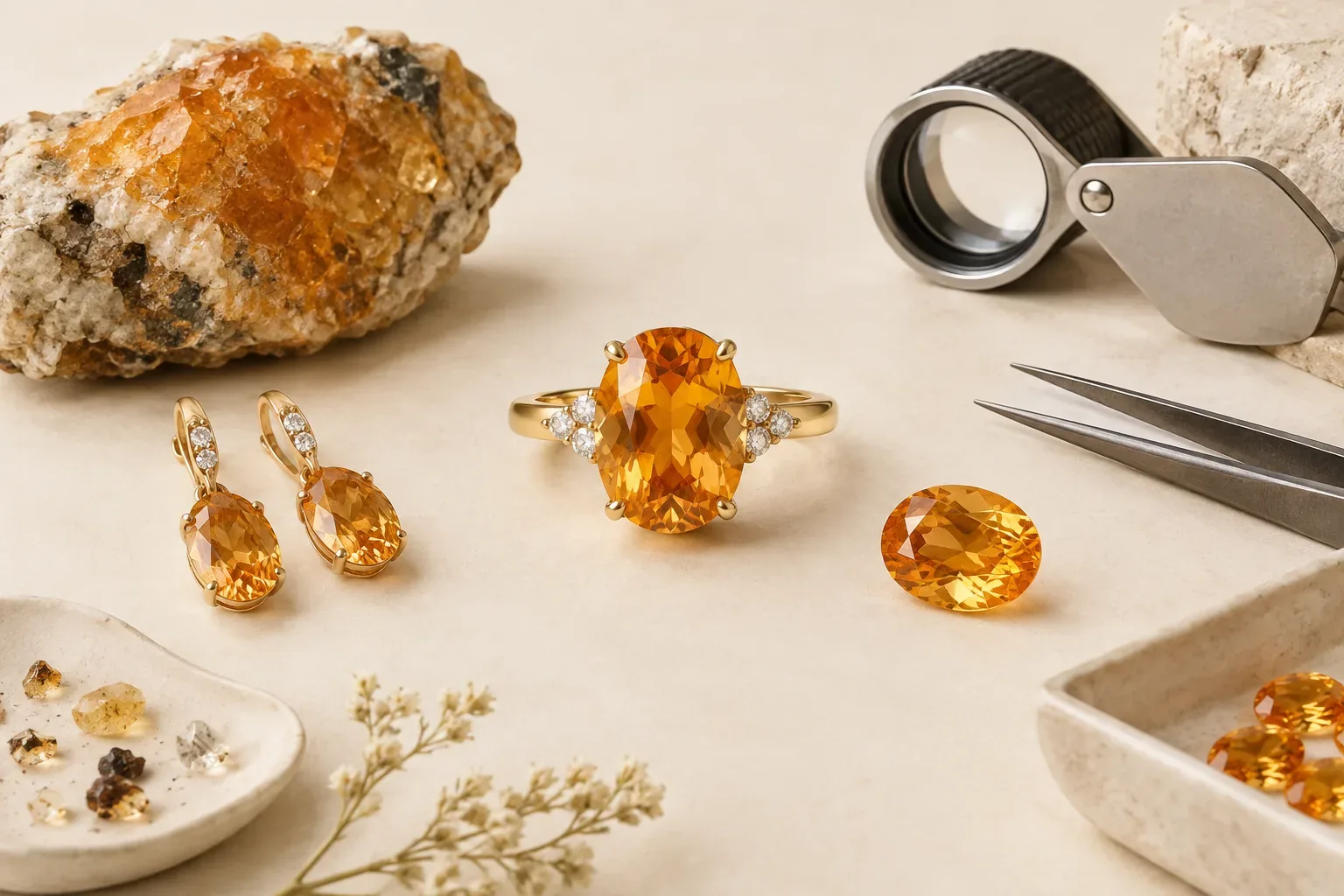
Clinohumite most often appears in jewelry as faceted gems and, less commonly, as polished cabochons. Faceting brings out color and clarity and is the usual choice for collectible specimens intended for display in rings, pendants, and earrings. Because the gemstone is rare, many pieces are made as single-stone statement items rather than mass-produced settings.
Jewelry designers and collectors usually treat clinohumite as a specialty gem. Typical presentations place emphasis on color and clarity: stones with vivid, even color and good transparency are preferred for central stones in pendants and rings. Given its rarity, clinohumite is also frequently seen in bespoke and small-batch jewelry, where the setting is chosen both to highlight the stone and to protect it from knocks or abrasion.
Origin, inclusions, and setting considerations
Origin reporting and laboratory identification matter for clinohumite. Because it is uncommon, factors such as confirmed natural origin, disclosure of any treatments, and an identification report from a reputable laboratory add to buyer confidence. Gemological institutions emphasize the use of reference specimens and laboratory methods when identifying rarer gem materials.
Inclusions are an important practical factor. Like many collector gems, clinohumite often contains internal features that can affect both appearance and durability. When inclusions or fissures are present, protective settings—such as bezels or settings that do not leave the girdle exposed to frequent impact—are prudent choices. Sellers and gemologists can advise on the best mounting type for an individual stone.
Buying guidance: authenticity, disclosure, and selection
If you are considering clinohumite as a purchase or gift, prioritize laboratory identification and full disclosure. The U.S. Federal Trade Commission’s guidance on buying gemstones underscores the importance of clear disclosure regarding whether a stone is natural, lab-grown, treated, or an imitation. For a rare gem like clinohumite, ask the seller for any available gemological reports and for details about treatments, origin, and the stone’s known history.
Work with reputable dealers who specialize in collector gems or who provide third-party reports. Because clinohumite is uncommon, pricing can vary widely; a certificate from an established laboratory and an honest description of any inclusions or treatments will help you evaluate value and suitability. Consider the intended use: if the recipient wants a ring for everyday wear, choose a stone and setting appropriate for frequent use; if the piece is intended mainly for occasional wear or as a collector item, priorities shift toward visual appeal and documentation.
Care and maintenance
Care for clinohumite should begin with a seller or gemologist’s recommendation tailored to the specific stone. In general, common-sense precautions that apply to many rare and inclusion-bearing gems are advisable. Store clinohumite pieces separately to prevent scratches from harder gems, and avoid exposure to harsh chemicals and sudden temperature changes that can stress the stone or its setting.
For cleaning, many jewelers recommend gentle cleaning with a soft brush and lukewarm, soapy water. Because clinohumite specimens may contain inclusions, ask a qualified gemologist before using ultrasonic or steam cleaners; stones with internal fractures or fluid inclusions can be damaged by aggressive cleaning methods. Regularly inspect settings to ensure prongs and bezels are secure, and consult a professional jeweler for any re-setting or repair.
Selection and gifting guidance: respectful, practical choices
When selecting clinohumite as a gift, match the stone to the recipient’s lifestyle and preferences and make documentation part of the gift. If you intend to present symbolic meaning alongside the gem, frame that meaning as a modern, personal choice rather than an ancient cultural fact. Provide any laboratory reports or seller disclosures to the recipient so they have the information needed for insurance and future care.
Respectful gifting also includes consideration of provenance and vendor practices. Ask the seller about the stone’s origin details and ensure honest disclosure about treatments or enhancements. If you are unsure about how a stone will wear, consider mounting it in a way that reduces risk—such as a protective bezel—or present it as a pendant or brooch intended for occasional wear.
When to seek professional advice
Because clinohumite is rare and considered a collector material as well as a gem, seek professional gemological advice for valuation, identification, and care decisions. A gemologist can test for authenticity, identify treatments, and recommend appropriate settings and cleaning methods. For insurance or resale, a laboratory report from an established gemological institute adds important documentation and credibility.
Final perspective
Clinohumite jewelry meaning is best approached through the lens of gemology and practical jewelry care rather than ascribing universal symbolic weight. Institutional and professional sources treat clinohumite as a rare humite-group gem valued for its color and collectibility. If you love the warm yellow-to-orange hues and wish to own or gift clinohumite, prioritize verified identification, ethical buying practices, thoughtful setting choices, and careful maintenance so the stone can be enjoyed for years to come.
Frequently asked questions
What is clinohumite and what color is it?
Clinohumite is a rare member of the humite mineral group most often found in yellow to orange hues. Professional gemological references discuss it primarily as a mineralogical and collector gem rather than as a historically symbolic stone.
Is there an established historical or cultural meaning for clinohumite?
No widely recognized historical or cultural symbolism for clinohumite is recorded in the major institutional resources. The Smithsonian and professional gemological projects treat clinohumite as a mineralogical subject; modern symbolic meanings are personal or market-driven.
How should I test or verify a clinohumite purchase?
Ask for laboratory identification and full disclosure of treatments and origin. The Federal Trade Commission advises buyers to obtain honest disclosures about whether a gem is natural, treated, lab-grown, or an imitation and to use reputable dealers and third-party reports for rare gems.
Can I wear clinohumite every day?
Whether clinohumite is suitable for daily wear depends on the specific stone’s condition, inclusions, and the chosen setting. Because clinohumite can contain inclusions, protective settings are often recommended, and you should consult a gemologist or the seller about durability for frequent wear.
How do I clean and care for clinohumite jewelry?
General care includes storing pieces separately, avoiding harsh chemicals and sudden temperature changes, and cleaning gently with a soft brush and mild soapy water. Do not use ultrasonic or steam cleaners without guidance from a qualified gemologist, especially if the stone has inclusions or fractures.
Sources and further reading
- Gübelin Gem Project: Danburite–Humite — Gemological Institute of America
- Gems and Minerals: Beauties and Building Blocks — Smithsonian National Museum of Natural History
- Buying Gemstones, Diamonds, and Pearls — Federal Trade Commission