Meaning at a glance
Sinhalite is a rare borate gem often yellowish to brownish and historically confused with other stones. Identification, locality claims, cutting, and care should precede modern grounding symbolism.
Quick answer
Sinhalite is a rare borate gemstone that most commonly shows yellowish to brownish hues and has historically been misidentified or confused with other similarly colored stones. Before assigning symbolic meaning, modern owners and givers should first confirm identification, ask about locality and treatment, consider how the stone is cut and set, and learn appropriate care.
What the historical evidence shows
Professional gemological and museum literature focuses on sinhalite's mineral identity, geological occurrence, and the practical challenges of recovery and identification rather than a long, well-documented tradition of cultural symbolism. For example, the Gemological Institute of America (GIA) discusses how many colored stones are recovered from sedimentary environments and how similar-looking gems can be confused in commerce, which helps explain why sinhalite has often been misidentified in the gem trade.
Similarly, the Smithsonian National Museum of Natural History presents the scientific perspective that distinguishes minerals and gems by their chemistry and crystal structure and emphasizes rarity and suitability for jewelry. Those resources make clear that the reliable historical record for sinhalite lies in geology and gemology, not in a widely documented body of cultural or religious meaning published in the professional sources reviewed for this article.
Documented historical meanings versus modern personal interpretations
In the professional sources consulted there is little evidence of an established, long-standing cultural symbolism unique to sinhalite. Where documentation is thin, it is important to avoid treating an absence of evidence as proof of particular traditional meanings. The GIA and the Smithsonian emphasize factual identity, locality, and physical properties rather than historical belief systems for this specific gem.
Modern meanings attached to sinhalite tend to be personal, commercial, or contemporary aesthetic interpretations rather than historically documented cultural symbols. People choose sinhalite today for its color, rarity, and the intimate meaning they attach to a unique stone, but those meanings are contemporary and individual rather than universal or historically proven.
Color and rarity: what to expect
Sinhalite most often appears in yellowish to brownish tones. Because it is a relatively rare borate mineral, well-formed, transparent crystals suitable for faceting are uncommon in the marketplace, and specimens can command attention for scarcity alone. The Smithsonian’s guidance on gems and minerals highlights how rarity and appearance combine to determine a stone’s desirability for jewelry.
Because similar colors occur in many different minerals and gem varieties, sellers and buyers sometimes confuse sinhalite with other yellow-brown gems. That is why objective identification—ideally by a recognized gemological laboratory—is a valuable step when rarity is part of the purchase rationale. The GIA’s work on gem recovery and identification underscores how context, testing, and careful description matter for rarer stones.
How sinhalite appears in jewelry: cuts, settings, and styles
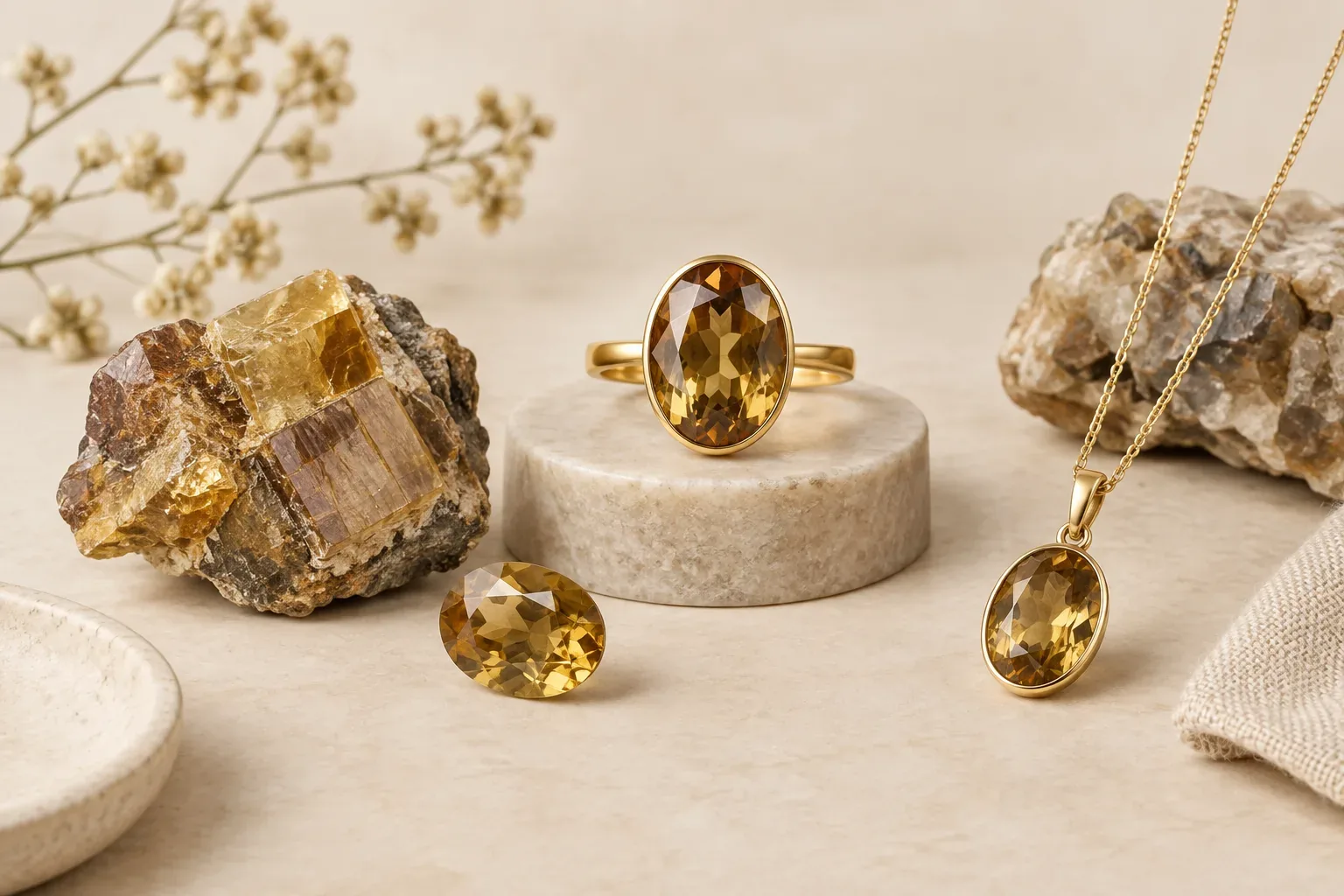
When used in jewelry, sinhalite is typically cut to emphasize color and clarity. Faceted round, oval, cushion, and emerald cuts are common ways to maximize a transparent stone’s brilliance and color saturation without wasting weight on poorly transparent rough. Because transparent sinhalite suitable for faceting is uncommon, cut stones are often modest in size but can be striking for their color depth.
Settings that protect the stone—such as bezels or prongs with secure galleries—are commonly recommended. Designers often pair sinhalite with metals and accents that complement warm yellow-brown tones, such as yellow gold or contrasting white metals with small accent stones. The Smithsonian’s guidance on gems and minerals emphasizes choosing settings that balance beauty with protection for less-common gems used in everyday jewelry.
Buying and selection guidance
Confirm identity with paperwork from a reputable laboratory when possible. Because sinhalite has historically been confused with other stones, a gemological report that states the stone’s identity and any treatments is ideal. The Gemological Institute of America’s discussions of gem occurrence and identification show why laboratory verification matters for rarer or visually similar gems.
Ask the seller to disclose treatments, enhancements, or whether the stone is natural, lab-grown, or an imitation. The U.S. Federal Trade Commission (FTC) makes clear that sellers should disclose whether a gemstone has been treated or is synthetic or simulated, and buyers should request written confirmation. If a purported locality is part of the stone’s value claim, ask for documentation; claims about origin can affect value but also require independent verification.
Inspect cut, clarity, and setting: because transparent, well-cut sinhalite is uncommon, visual quality will strongly affect price and personal appeal. Check return policies and guarantees, and consider purchasing from sellers who provide a consistent grading or description standard.
Care and long-term preservation
Treat sinhalite as you would other precious colored stones that are not commonly tested in commerce: protect it from hard knocks, avoid prolonged exposure to harsh chemicals, and clean gently with mild soap and water and a soft brush. The Smithsonian’s resources on gems and mineral care emphasize gentle cleaning and protective storage for valuable or rare stones.
Ask the seller or your jeweler about cleaning methods they recommend for that particular stone and its mounting. Because the FTC reminds consumers that treatments or enhancements should be disclosed, confirm whether any treatment affects recommended cleaning methods. Regularly inspect prongs and settings and have a jeweler check the mounting if you intend to wear the piece often.
Practical and respectful selection and gifting guidance
If you plan to gift sinhalite, present the piece with clear information: documentation of identity or testing when available, a short note about how the giver thinks of the stone, and care instructions. Given the limited historical symbolism in professional sources, avoid asserting that sinhalite carries a particular ancient cultural meaning unless you can point to authenticated historical documentation.
Focus on the recipient’s tastes and how the color and rarity of the gem fit their style. For many people, the most meaningful aspect of a rare gem is the relationship it represents or the story you tell at the moment of giving, not a fixed traditional meaning. If rarity and collector interest matter to the recipient, a lab report or a recognized seller’s provenance will add confidence and respectfulness to the gift.
Final notes
Sinhalite’s interest to collectors and wearers comes from its uncommon color range and scarcity in the facetable market. Professional sources emphasize verification, treatment disclosure, and appropriate care over assigning historical symbolism. Buyers and gifters who wish to ground a sinhalite piece in meaning should begin with objective information—identity, treatment history, and locality claims—then add personal context to create a contemporary, respectful symbolism tailored to the owner.
Frequently asked questions
What does sinhalite symbolize?
There is little documented historical symbolism for sinhalite in the professional sources reviewed. Modern symbolic meanings are typically personal or market-driven rather than historically attested, so any symbolism you attach is contemporary and subjective.
Is sinhalite rare and valuable?
Sinhalite is relatively rare in the facetable gem market; transparent, well-colored material suitable for jewelry is uncommon. Rarity affects value, but price depends on color, clarity, cut, and documentation of identity.
How can I be sure a sinhalite is genuine?
Ask for a report from a reputable gemological laboratory and for full disclosure of any treatments. Because similar-looking gems can be confused in commerce, laboratory identification and clear seller disclosure are the most reliable safeguards.
Are treatments common for sinhalite?
Professional guidance emphasizes asking sellers for disclosure of any treatments. The U.S. Federal Trade Commission advises buyers to request written information about whether a gemstone has been treated or is synthetic, lab-grown, or simulated.
How should I care for sinhalite jewelry?
Clean gently with mild soap and water and a soft brush, avoid harsh chemicals and rough knocks, store pieces separately, and have settings checked periodically. When in doubt, follow care recommendations provided by the seller or a professional jeweler.
Is it appropriate to give sinhalite as a meaningful gift?
Yes—provided you present clear information about the stone and its care. Because historical symbolism is limited in professional sources, attach contemporary, personal meaning rather than asserting an unverified traditional significance.
Sources and further reading
- Gems Recovered from Sedimentary Rocks — Gemological Institute of America
- Gems and Minerals: Beauties and Building Blocks — Smithsonian National Museum of Natural History
- Buying Gemstones, Diamonds, and Pearls — Federal Trade Commission