Meaning at a glance
A good brooch balances sound construction, wearer comfort, and long-term durability; this article explains historically documented uses of brooches, separates recorded meanings from modern personal interpretations, shows how motifs and gemstones appear in brooches, and gives a practical checklist and gifting guidance backed by museum and consumer-protection sources.
What historical evidence tells us about brooches
The form and social role of brooches have changed across cultures and periods, and museum collections provide the best documentary evidence. The Victoria and Albert Museum describes brooches within a broad history of jewellery, showing how fastenings and decorative styles reflect technological and social change. For example, pins and fibulae used as functional fastenings in ancient and medieval garments evolved into more decorative and symbolic brooches in later centuries, with changes in metalworking and gemstone use visible in surviving pieces.
When you assess a brooch, consider whether its construction matches the period it claims to represent. The V&A’s historical surveys show that certain hinge-and-catch designs, soldering techniques and stone settings correspond to particular eras and workshops. Knowing these material markers helps separate original pieces from later repairs or modern reproductions.
Separating documented meanings from modern interpretations
Documents and museum records can show what a brooch meant to people in a particular time and place, while modern wearers often attach personal or popular symbolic meanings that are not historically documented. The V&A’s historical work records funerary, status, religious and fashion uses of brooches in specific cultures. Those are documented cultural contexts, not universal symbolic rules.
Modern meanings—sentimental, political or fashion-based—are valid personal uses but should not be presented as historical fact unless supported by contemporary sources. When gifting or describing a brooch, be explicit about whether you are referring to a documented historical meaning or a modern personal interpretation.
How motifs, gemstones and traditions appear in brooches
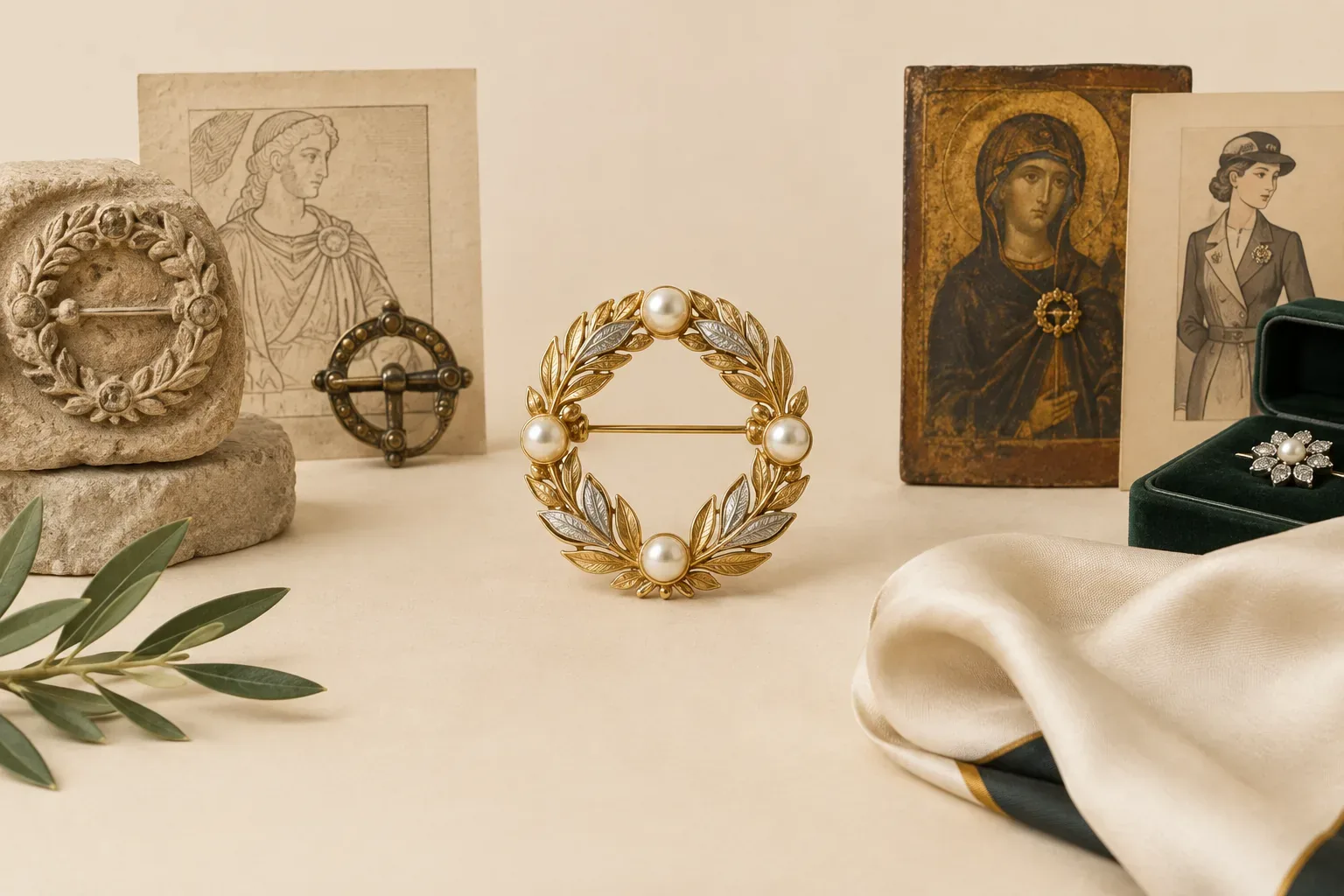
Brooches have long used recognizable motifs—floral sprays, laurel wreaths, Celtic knots, mourning symbols and portrait miniatures—each appearing in different materials and techniques across periods. The Victoria and Albert Museum’s collections and interpretative materials document how these motifs shift in frequency and style over time, reflecting tastes, sentiment and available techniques.
Gemstones appear in brooches as cabochons, faceted stones, inlay or as part of pavé settings. The V&A’s A–Z of Gemstones explains identification and historical context for many stones, which can help you evaluate whether a gemstone’s cut, setting and wear match the claimed age and quality of a brooch. Be aware that modern treatments and imitations are common; the Federal Trade Commission advises consumers to ask about treatments, enhancements, and whether materials are natural, synthetic or simulants.
Construction checklist: what to inspect
Start by examining the pin assembly. A good brooch has a hinge that moves smoothly without wobble, a straight pin (not bent or overly corroded), and a catch that holds the pin securely without excessive play. For safety and longevity, look for solid solder joints where the hinge and catch attach to the body of the brooch rather than crude glue or loose rivets.
Inspect stone settings and mountings. Stones should sit evenly and securely within their bezels or prongs. Loose stones, asymmetric settings or visible modern glue indicate repairs or lower-quality work. For stones of potential value, check for consistency with historical cutting styles described by the V&A: settings and cuts that contradict the claimed period may indicate later alteration.
Assess the metalwork. Look for hallmarks or maker’s marks where present, but also evaluate the quality of chasing, engraving, or casting. Thin or uneven metal, poor soldering, and visible seams often mean either wear beyond repair or poor initial construction. If the brooch is plated, expect eventual edgewear; thicker, even plating is preferable to thin, uneven coatings.
Comfort checklist: how it will feel to wear
Consider weight and balance. A brooch that is back-heavy or excessively heavy for the fabric will pull or sag. Try fastening it on the garment type you intend to wear it with to see how it sits. A low-profile back and a rounded or chamfered pin edge reduce snagging and skin irritation.
Check the pin length and needle point. The pin should be long enough to secure through the intended thickness of fabric without protruding dangerously on the inside. Sharp or burr-ed pin points should be smoothed by a professional jeweller to avoid damage to clothing or skin. Also test how the catch operates: a tight but user-friendly catch is preferable to one that risks opening in normal movement.
Durability checklist and maintenance considerations
Investigate metal durability and treatments. Solid precious metals such as gold and silver have predictable long-term performance; plated base metals will show wear first, especially at edges and high points. When gemstones are present, consult trusted identification guides like the V&A A–Z of Gemstones to understand how particular stones age and what treatments they commonly receive. The Federal Trade Commission recommends asking sellers to disclose treatments, enhancements, and whether stones are natural, synthetic, or simulants.
Look for signs of previous repairs and evaluate their quality. High-quality past repairs preserve original structure and use appropriate materials and techniques; crude repairs may compromise durability. Ask for documentation about any restorations if provenance or age is important. Finally, plan for regular maintenance: pins and catches can be serviced, settings tightened, and plating reapplied by qualified jewellers to extend a brooch’s usable life.
Practical selection and respectful gifting guidance
Match construction and expected use to the recipient. If the brooch is intended for frequent wear, prioritize sturdy construction, secure settings and a comfortable profile that works with everyday fabrics. For occasional, ceremonial or collector use, you may accept delicate construction if the piece is historically or sentimentally significant.
Respect cultural context when selecting motifs. Use the documented history provided by museum sources like the V&A to understand a motif’s traditional meaning and cultural origin, and avoid assuming or appropriating sacred or ceremonial symbols. If a brooch carries a documented cultural or historical significance, mention that provenance when gifting so the recipient can appreciate its context.
When buying gemstones or older pieces, ask sellers about hallmarks, documented provenance, and any treatments. The Federal Trade Commission recommends clear disclosure about gemstone treatments and synthetic materials; insist on transparency so the recipient knows what they are receiving. Finally, include care instructions and, where appropriate, recommend a conservation-friendly jeweller for maintenance.
Final notes: balancing knowledge and personal meaning
A careful brooch quality checklist helps you assess construction, comfort and durability with reference to documented history and material evidence. Use museum resources such as the Victoria and Albert Museum’s historical surveys and gemstone guides to ground your evaluation in documented practice, and rely on consumer-protection guidance from the Federal Trade Commission when it comes to treatments and disclosure.
At the same time, allow room for modern personal meanings when gifting or wearing brooches. Distinguish clearly between what historical records document and what contemporary wearers intend. That clarity respects both the object’s provenance and the wearer’s personal expression.
Frequently asked questions
What are the key construction features to check on a brooch?
Inspect the hinge and catch for smooth, secure operation; ensure the pin is straight and properly attached by solid solder joints; check stone settings for security and evenness; and evaluate soldering quality and metal thickness to judge overall structural integrity.
How can I tell if a gemstone in a brooch is treated or a simulant?
Ask the seller for disclosure about treatments and whether the gem is natural, synthetic, or a simulant. Use identification references such as the Victoria and Albert Museum’s A–Z of Gemstones to compare cuts and settings, and request a professional lab report for high-value stones. The Federal Trade Commission advises sellers to disclose common treatments and enhancements.
Is a plated brooch a poor choice?
Plating is acceptable for fashion or costume brooches intended for occasional wear, but expect visible wear at edges over time. For everyday wear or heirloom intent, choose solid precious metals or thicker plating and be prepared for replating as part of maintenance.
How should I assess a brooch’s comfort before buying?
Fasten the brooch to the type of fabric you plan to wear it on to test balance and sagging, check that the pin length and point suit the fabric thickness, and note any sharp edges on the back that could irritate skin or damage garments.
How do I respect cultural meanings when gifting a brooch?
Research the motif’s documented history using museum resources like the V&A, avoid assuming universal meanings, disclose known provenance to the recipient, and avoid using symbols that are sacred or culturally restricted without permission or clear contextual understanding.
When should I seek professional conservation for a brooch?
If a brooch is an antique or of significant personal or monetary value, if it shows structural instability, loose stones, or fragile soldered joints, or if you plan regular wear, consult a qualified conservator or jeweller experienced in historical pieces before attempting repairs.
Sources and further reading
- Bedazzled: A History of Jewellery — Victoria and Albert Museum
- An A-Z of Gemstones — Victoria and Albert Museum
- Buying Gemstones, Diamonds, and Pearls — Federal Trade Commission