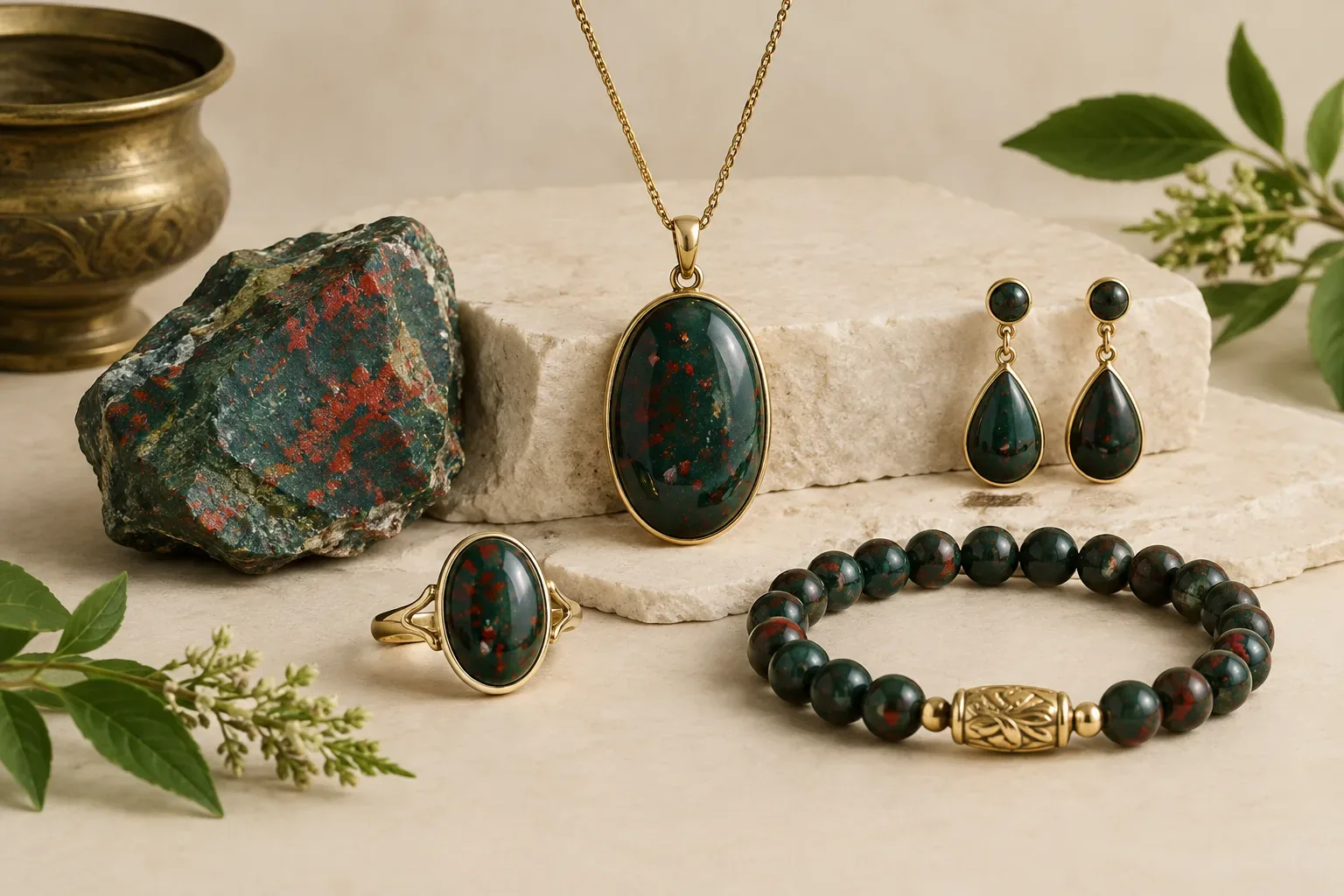
Meaning at a glance
Bloodstone is traditionally dark green chalcedony with red iron-oxide spots and is recognized by gemological authorities as a traditional March birthstone; its historical uses as seals and amulets are documented, while modern claims about vitality or protection are contemporary personal interpretations rather than established historical fact.
Quick, direct answer
Bloodstone jewelry meaning: bloodstone is traditionally a dark green chalcedony bearing red iron-oxide spots, and authorities such as the Gemological Institute of America identify it as one of the traditional birthstones for March. Its long use in seals, carvings, and personal ornaments is documented, but modern claims that it imparts health, vitality, or protection are contemporary personal or spiritual interpretations rather than historical certainties.
What bloodstone is and how gemological authorities describe it
The Gemological Institute of America (GIA) describes bloodstone in the context of birthstones and gem identification as a dark green variety of chalcedony with distinct red spots caused by iron-oxide inclusions. That definition—focused on appearance and identity—is the reliable baseline to use when discussing the stone in jewelry and in historical references.
Because the identifying traits are visual and material (green chalcedony with red spots), correctly describing and identifying bloodstone matters for both buyers and historians. Contemporary sources that treat bloodstone as a March birthstone consolidate a modern designation around a clearly defined material identity rather than a single symbolic meaning.
Historical evidence and where it comes from
Documented historical references to bloodstone appear across antiquity and into the medieval period and later. The GIA notes these historical uses when discussing the stone’s lore and the role it has played in personal ornamentation and carved gems. Historical records and lapidary references commonly associate the material with carved seals and amulets, which is the type of use that has left physical examples in collections and museums.
When historians and gemologists summarize bloodstone’s history, they typically refer to uses in the ancient world and the Middle Ages without treating a single symbolic meaning as universal. The presence of carved bloodstone seals, beads, and decorative objects is a material fact; attributions of specific protective or curative powers in any historical period are often recorded as beliefs or traditions rather than demonstrable, uniform facts.
Documented historical meanings versus modern interpretations
Documented historical meanings are those that can be traced in historical sources or physical objects—such as the use of bloodstone for seals, signets, carved intaglios, and personal ornamentation—which the GIA identifies when recounting the stone’s past. Where historical sources attribute symbolic value, they do so in context: an amulet or seal may have had personal or civic significance for its owner in a given time and place, but that does not translate into a single, universal meaning.
Modern claims that bloodstone confers vitality, healing, or protection are common in contemporary spiritual and wellness circles, but those are best treated as personal or cultural interpretations rather than historical fact. Make a clear distinction between documented uses (physical artifacts, written references) and personal beliefs formed in modern contexts. The former is evidence-based history; the latter is meaningful to many people but not a documented historical constant.
How bloodstone appears in jewelry and motifs
Historically and today, bloodstone most often appears in carved or polished forms that highlight its green ground and red spots. The material has been used for small carved seals and intaglios, for cabochon settings, and for beads and pendants. These forms showcase the contrast between the dark green surface and red inclusions rather than faceting the stone to emphasize sparkle.
In contemporary jewelry, designers commonly set bloodstone as cabochons in rings and pendants, create beaded necklaces or bracelets, or use small carved elements in signet-style or botanical motifs that echo the stone’s natural appearance. Because it is typically appreciated for its color and patterning, settings that keep the surface visible are the most frequent choices.
Practical, respectful guidance for selecting or gifting bloodstone
If you are buying bloodstone as a gift or personal purchase, begin by confirming the stone’s identity and understanding what you want the gift to convey. If the recipient values birthstones, know that the GIA lists bloodstone among traditional choices for March; selecting bloodstone as a March gift carries that contemporary conventional meaning. When the symbolic meaning matters to the recipient, ask about their preferences: some people value historical associations, others prefer modern spiritual meanings, and some simply like the color.
Check for clear disclosure about whether a stone is natural, treated, lab-grown, or an imitation. The Federal Trade Commission’s guidance to consumers emphasizes the importance of accurate disclosure from sellers about a gemstone’s origin and treatments, so ask sellers for written or verbal confirmation. Evaluate the stone visually for an even green background and well-defined red spots if that look appeals, and consider how the setting will protect the stone’s surface while showing its pattern.
Be mindful of cultural sensitivity: if you are gifting a stone because of a spiritual or healing claim, ensure the recipient welcomes that framing. If you want to give a historically informed gift, consider pairing bloodstone with an explanation of its documented uses (for example, as a traditional material for carved seals and personal ornaments) rather than attributing universal powers.
How to care for bloodstone jewelry
Follow established jewelry-care practices to keep bloodstone pieces in good condition. The GIA’s care guidance for jewelry applies to bloodstone in that you should avoid harsh chemicals, prolonged exposure to heat and light that could affect some settings, and mechanical knocks that can chip the stone. Routine care such as removing jewelry before physical work, cleaning with mild soap and a soft brush, and drying thoroughly will help preserve appearance.
Store bloodstone pieces separately or wrapped to prevent abrasion against harder gems or metals. Have settings and mountings inspected periodically by a jeweler to ensure stones remain secure. If you are unsure whether a cleaning method is safe for a particular piece, seek professional advice; GIA recommends professional cleaning or inspection when there is concern about treatments or delicate settings.
Final takeaway
Treat bloodstone as a clearly identifiable material—dark green chalcedony with red iron-oxide spots—whose documented history includes carved seals and personal ornamentation and whose modern cultural role includes being a traditional March birthstone. Respect the difference between what is documented by gemological and historical records and the many contemporary personal meanings people attach to the stone, and use buyer protections, careful selection, and routine care when acquiring bloodstone jewelry.
Frequently asked questions
What exactly is a bloodstone?
Bloodstone is traditionally described as a dark green variety of chalcedony with red iron-oxide spots; this definition is the basis for its identification and for references that treat it as a material distinct from other green gems.
Is bloodstone the birthstone for March?
Yes—authorities such as the Gemological Institute of America list bloodstone among the traditional choices associated with March, which is a modern designation tied to the stone’s historical use and identity.
Are historical claims that bloodstone protected or healed people true?
Historical sources record beliefs about bloodstone’s powers in certain places and times, but those are context-specific traditions. Modern claims that the stone confers universal protection or healing are personal or spiritual interpretations rather than established historical facts.
How should I verify a bloodstone purchase?
Ask the seller for clear disclosure about whether the stone is natural, treated, lab-grown, or an imitation, and request documentation if available; the Federal Trade Commission advises consumers to seek accurate information about gemstone origin and treatments.
Is bloodstone suitable for everyday jewelry?
Bloodstone is commonly used in rings, pendants, and beads; follow general jewelry-care advice such as avoiding harsh chemicals, removing pieces during physical tasks, and storing them to prevent abrasion, and consult a jeweler if you have concerns about a particular setting.
How should I gift bloodstone respectfully?
If you gift bloodstone for its birthstone association, note the GIA convention linking it to March. If gifting for spiritual reasons, ensure the recipient welcomes that meaning; consider including a short note that explains whether your choice is based on documented history, birthstone tradition, or a personal belief.
Sources and further reading
- March Birthstones: Aquamarine and Bloodstone — Gemological Institute of America
- Buying Gemstones, Diamonds, and Pearls — Federal Trade Commission
- Tips on Caring for Jewelry — Gemological Institute of America