Meaning at a glance
This guide gives concise, practical cleaning steps for black opal, explains why special care and seller disclosures matter, lists what to avoid, and tells shoppers which authenticity or treatment questions require a qualified jeweler or gemological laboratory.
Quick answer
For everyday cleaning of a black opal in finished jewelry, use a soft cloth and a short lukewarm water rinse with a drop of mild dish soap, gently pat dry, and avoid heat, strong chemicals, ultrasonic cleaners and steam. Ask the seller for written disclosure about whether the stone is natural, treated, or assembled, and consult a qualified jeweler or a gemological laboratory to verify treatments or authenticity before paying for a certificate or grading report.
Why black opal needs its own cleaning guide
Black opal is a valued variety of opal noted for a dark body tone and the play of color that makes each stone visually distinctive. Because gemstones differ in how they react to heat, solvents and mechanical stress, authoritative guidance for consumers emphasises that gemstones often require special care and distinct cleaning approaches. The Gemological Institute of America (GIA) highlights that treatments, detectability, durability and special care create distinct consumer questions for gemstones, so a conservative, low-impact cleaning routine is the safest starting point for black opal.
What historical evidence says (and what it does not)
The specific, documented cultural histories or symbolic meanings of black opal are not addressed in the evidence set used for this guide. Trade and industry reporting included here focuses on consumer interest and gem-care issues rather than providing primary historical accounts of symbolism. Where historical or cultural claims are important to you, look for specialist histories, museum catalogues or peer-reviewed scholarship in addition to seller descriptions.
Documented historical meanings versus modern personal interpretations
Because the approved industry and regulatory sources used for this piece do not supply recorded cultural meanings for black opal, this article separates two types of claims. Documented historical meanings are assertions supported by primary historical records, museum documentation or academic work; modern personal interpretations are contemporary or individual beliefs about what a gem symbolizes and are not universal. If a seller or friend offers a cultural story about black opal, treat that as a modern interpretation unless the seller cites a verifiable historical source.
How black opal commonly appears in jewelry today
Contemporary jewellery coverage and search trend studies show a growing interest in opal and other gemstone rings, sculptural settings and birthstone pieces. Professional Jeweller and industry trend research list opal and gemstone rings among styles defining recent jewellery trends, and Imaginaire Digital reports sustained consumer search demand for rings, necklaces and other popular categories. In practice, black opals appear in rings, pendants and bespoke pieces where the dark body tone is used for contrast against metal or accent stones, and settings vary from protective bezels to pronged mounts depending on style and the jeweler’s approach.
Safe cleaning methods, step by step
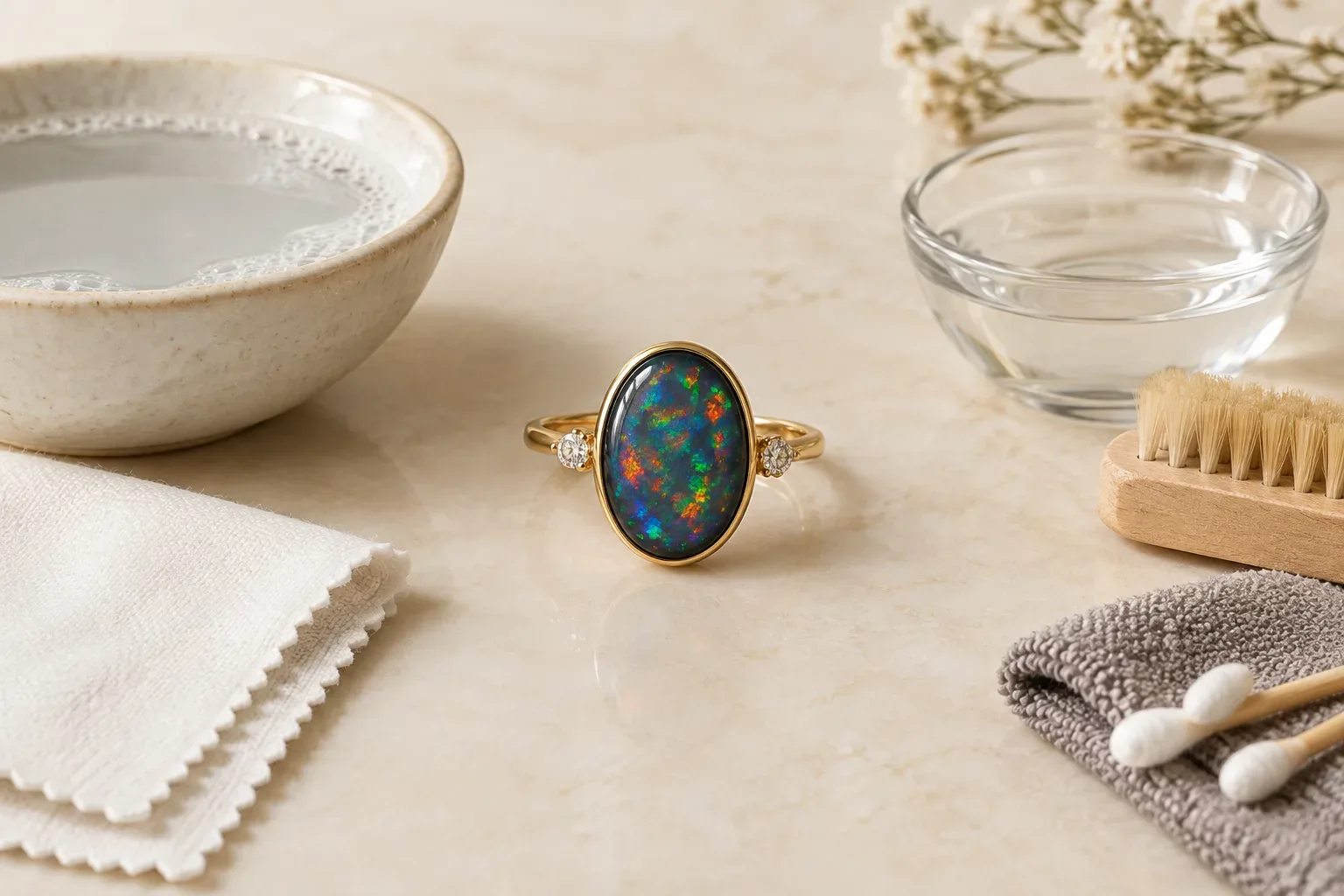
Perform a gentle surface clean rather than aggressive or mechanical methods. Prepare lukewarm water with a single drop of mild, neutral dish soap. Dip a very soft, lint-free cloth into the soapy water and wipe the stone and setting carefully. Rinse briefly in lukewarm water to remove soap residue and immediately pat dry with a second soft cloth. Allow the piece to air-dry fully on a soft surface before storing or wearing it again.
Do cleaning sessions infrequently and only when needed; frequent scrubbing is unnecessary. If the stone is set in a fine or fragile mounting, consider removing the item from everyday use rather than cleaning it aggressively.
What to avoid
Avoid ultrasonic and steam cleaners, strong solvents (such as acetone or household bleach), and high or sudden heat. These are standard cautions for gems that require special handling, and many jewelers recommend steering clear of mechanical or thermal shock for delicate stones. Do not use abrasive brushes or rough cloths that can scratch the surface or the surrounding metal. Avoid prolonged soaking in any chemical solution and do not attempt to repair fractures or chips yourself; have a qualified jeweler assess the piece.
Selection and gifting guidance
When buying or gifting a black opal, request written disclosures that identify whether the piece contains a solid natural stone, a doublet or triplet assembly, or a treated or laboratory-created material. The Federal Trade Commission underscores that consumers should receive clear distinctions among natural, lab-created, treated and imitation materials and written seller disclosures. Ask the seller for documented care instructions specific to the item and, if the setting is intended for frequent wear, select a protective mounting such as a bezel or a setting with secure prongs to reduce direct knocks.
If gifting without an opportunity to check disclosures first, choose settings and styles that minimise the likelihood of damage in everyday life—for example, pendants or bezel-set rings for active wearers—and accompany the gift with a note advising the recipient to have the stone examined by a jeweler for care and verification.
What a shopper can and cannot verify at home
You can reasonably inspect a piece visually for obvious signs: whether the stone sits as a single solid mass or appears layered (which can indicate doublets or triplets), whether glue lines are visible, and whether the mounting is secure. However, detection of treatments, precise identification of natural versus lab-created material, and verification of whether a stone has been stabilized or impregnated generally cannot be done reliably at home. The GIA explains that treatment disclosure, detectability and laboratory testing are distinct issues for gemstones; for conclusive answers you should consult a qualified jeweler or submit the stone to a gemological laboratory.
When to consult a jeweler or a gemological laboratory
Consult a qualified jeweler for any damage, loose settings, or to obtain specific, safe polishing or repair options. If you need authoritative confirmation of origin, natural versus synthetic status, or undisclosed treatments, use a recognized gemological laboratory and insist on written reports. The FTC emphasises that buyers should expect clear disclosure from sellers, and where disclosure is missing or unclear a laboratory report is the reliable route to resolving questions about treatment and authenticity.
Practical trade-offs and final considerations
A conservative cleaning approach preserves the appearance and reduces the risk of damage, but it is slower than aggressive methods and may not remove very deep or adhered contaminants. If a piece appears heavily soiled, or if the setting is complex, a professional cleaning by a jeweler who understands the specific needs of opals is the safer choice. Balance aesthetics and preservation by choosing occasional professional servicing for cherished pieces and reserving home cleaning for light, routine maintenance.
Conclusion
Treat black opal gently: soft cloth, mild soap, lukewarm water, and immediate drying are the prudent home-care steps. Avoid ultrasonic and steam cleaning, strong chemicals and abrupt temperature changes. For questions about authenticity, treatments or serious damage, rely on written seller disclosures, a qualified jeweler’s inspection, and laboratory testing when needed. Clear written disclosure and lab verification are the appropriate safeguards for buyers and gifters alike.
Frequently asked questions
Can I clean a black opal with an ultrasonic cleaner?
No. Ultrasonic cleaners apply mechanical energy and can cause damage to many gemstones that require special handling. For black opal, a conservative, manual cleaning method is recommended and professional cleaning is safer for heavily soiled or valuable pieces.
Will soaking a black opal in water restore its color?
Do not rely on long soaks to restore color. Short, controlled rinses as part of gentle cleaning are appropriate; prolonged soaking or extreme temperature changes may risk altering the stone or setting. If you believe a stone has dried or changed, consult a qualified jeweler.
How can I tell if my black opal is solid or assembled (doublet/triplet)?
A visual inspection at home may reveal layered construction or glue lines, but many treatments and assemblies are not obvious to the naked eye. For conclusive identification, request seller disclosure and, if necessary, a gemological laboratory report.
Should I wear black opal jewelry every day?
Consider the setting and your daily activities. Protective settings like bezels reduce risk for active wearers. For pieces you plan to wear daily, discuss durability and mounting with your jeweler and follow a cautious cleaning routine.
What documentation should I ask for when buying a black opal?
Ask for written disclosure about whether the stone is natural, treated, lab-created, or assembled, and for any care instructions specific to that piece. If you need certainty about treatments or origin, request a gemological laboratory report.
Sources and further reading
- Imaginaire Digital — Imaginaire Digital
- Professional Jeweller / PRYA Jewellery Search Insights — Professional Jeweller / PRYA Jewellery Search Insights
- Gemological Institute of America — Gemological Institute of America
- Federal Trade Commission — Federal Trade Commission