Meaning at a glance
This guide explains birthstone locket designs and practical buying checks: how stones are placed and set, where to allow photo or keepsake space, hinge and clasp inspection, engraving considerations, legal disclosure about metals and gems, chain balance, and care recommendations.
Quick answer
A well-chosen birthstone locket combines an appropriately durable setting for the gem, a properly sized interior or bezel for a photo or keepsake, secure hinges and clasps, and balanced chain weight; always ask the seller to disclose gem origin and treatments in writing, inspect hinge and clasp function before purchase, plan engraving for the available metal area, and follow gemstone-specific care guidelines. This article explains those design and buying details in full.
What the historical evidence shows
The idea of connecting gemstones with time periods and personal identity has a long and varied past. The Gemological Institute of America (GIA) explains that associating particular gems with months or people appears across several historical sources and that today’s consumer-oriented birthstone lists are the product of long development and 20th-century standardization. The GIA resource provides the modern month-by-month list used widely in retail and explains the gemological context for those stones. Because much of the early material blends folk usage, religious text references, and later commercial lists, the primary historical evidence for specific symbolic meanings varies by period and culture; for a purchasing and design guide, we rely on the documented modern lists and on gemological data about each stone’s properties rather than on universal historical claims.
Documented historical meanings versus modern personal interpretation
Documented historical evidence about birthstones tends to be limited to lists and occasional cultural references; where the Gemological Institute of America cites historical associations, those are descriptions of sources rather than statements that meanings were universal across a culture. By contrast, modern personal and commercial meanings—such as assigning a specific personality trait to a month’s stone—are contemporary interpretations used for gifting and marketing. Treat any specific symbolic claim as an interpretation rather than an objective fact, and if symbolism matters to the recipient, prefer asking or choosing based on their known preferences.
How birthstone locket motifs and gemstones appear in jewelry
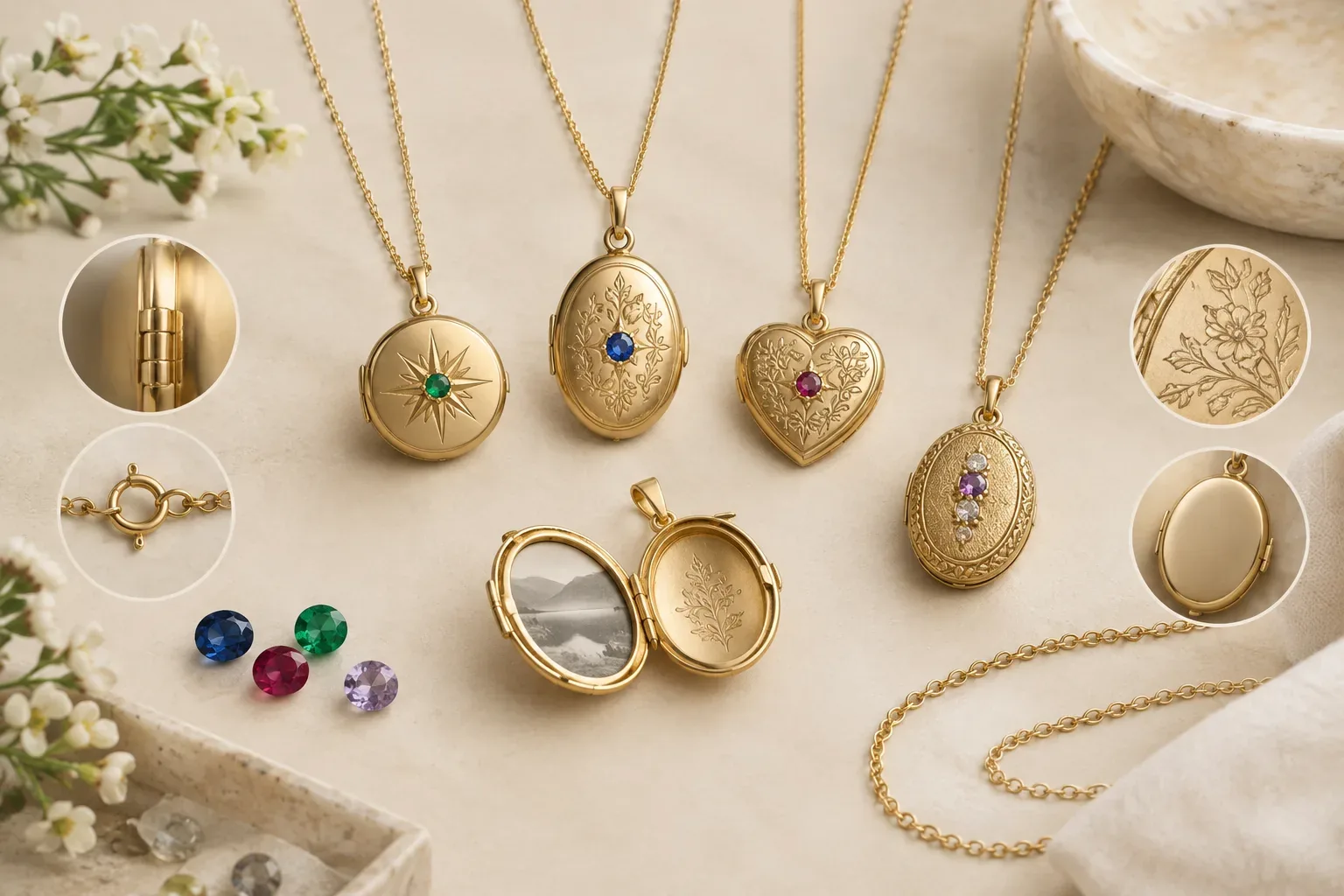
Lockets combine a small hinged case with ornamental surfaces that can carry gems, engraving, or enamel. Common motifs include a single bezel-set stone centered on the locket face, clusters of small accent gems around a photo aperture, and openwork frames that let the stone and the interior be visible. The Gemological Institute of America’s design guidance about gemstone durability and setting choice is useful here: settings that protect a softer gemstone (for example, cabochon bezels that hide the girdle) are preferred for wearables, while prong or open settings are acceptable for harder stones that are less likely to chip.
A locket can present the birthstone on the exterior as a focal element, secure the stone inside as a hidden keepsake, or combine both with matching stones on opposite sides. Photographs and small keepsakes typically sit in a glazed or recessed area sized to common photo prints or custom-cut shapes; some lockets place the gem in a small bezel that overlaps the interior space, which affects how large a photo can be without removal.
Stone placement and setting choices
Stone placement should reflect both aesthetics and protection. Bezel settings encircle the gem with metal and offer the most protection for table and facet edges; they are a good choice for softer or more brittle gems and for pieces intended for everyday wear. Prong settings raise a stone for more light and sparkle but expose the crown and girdle to impact; they are more common on harder gems that handle exposure better. Flush or channel settings are low-profile and protect stones in busy environments.
When multiple birthstones are combined—family lockets, for instance—place the harder stones where they will get more exposure if you want extra sparkle, and keep softer stones in more protected bezels. Consult gemstone durability data such as that provided by the GIA when choosing which stones to expose and which to shelter.
Hinge, clasp, and chain balance: what to inspect before you buy
Inspect hinge movement and alignment. Hinges should operate smoothly without wobble; the lid should close flush with the body and stay closed without forcing a clasp. Check the clasp for secure engagement and try opening and closing it several times to feel for consistent tension.
Assess how the locket sits on a chain. A heavy, ornate locket needs a proportionally sturdy chain and a strong clasp; a thin chain on a heavy locket will kink and wear prematurely. Ask to see the locket on the chain length you intend to wear, and move so the seller can demonstrate how it rests against clothing and skin. Jewelers of America’s buying guidance emphasizes choosing a format and chain that suits both the pendant’s weight and the wearer’s lifestyle.
Photo space and internal layout
Decide what you want the interior to hold before purchase. Some lockets offer a shallow recess intended for a modern microprint or a tiny lock of hair; others are deeper, intended to hold a small charm or a folded note. If you plan to include a photograph, measure the interior aperture and bring a sample photo or request a template. Remember that interior gem settings or separate compartments might reduce usable photo space; ask if a bezel overlaps the photo area or if inserts are removable.
Engraving and personalization considerations
Engraving adds meaning but requires planning. Discuss font size, depth, and placement with the engraver so text remains legible on the chosen metal and locket thickness. Fine cursive that looks elegant at preview size can become unreadable if the metal is thin or the surface is highly curved. For precious metals, engraving deep enough to last normal wear is usually better than a shallow surface etching. If the locket will be plated rather than solid metal, ask whether engraving will expose base metal over time.
Also consider whether the recipient prefers visible personalization on the exterior or hidden inscriptions inside; a hidden inscription preserves privacy but is only visible when the locket is opened.
Metal, gemstone disclosure, and buyer protections
The Federal Trade Commission (FTC) requires sellers to disclose whether gems are natural, lab-grown, treated, or imitation, and to be clear about metal content and plating. Before purchasing, request written confirmation of the stone’s origin, any treatments, and the metal’s karat or plating details. If a gem has been heat-treated, fracture-filled, irradiated, or otherwise enhanced to change color or clarity, the FTC considers disclosure essential to avoid misleading the buyer. Similarly, confirm whether a gold item is solid karat gold or gold plated so you understand long-term wear and care.
Use written receipts and ask about return policies. Jewelers of America recommends choosing a reputable seller who provides documentation and a clear after-sales policy. For higher-value stones, an independent gemological report or certificate can be an appropriate additional safeguard.
Care and durability: routine maintenance and cleaning
Gemstone durability varies. The Gemological Institute of America’s guidance on gemstone durability notes that hardness, toughness, and stability to chemicals all affect how a stone should be worn and cleaned. Hard stones like sapphires and diamonds tolerate daily wear and more vigorous cleaning, while softer stones such as opal or pearls need gentler handling and should not be exposed to ultrasonic cleaners or harsh chemicals.
General locket care: remove lockets before strenuous activity, avoid exposing plated metals to perfumes and chlorinated water, and clean gently with a soft cloth. For pieces combining multiple gem types, follow care practices appropriate for the most delicate stone in the design. Have hinges and clasps checked periodically by a jeweler to prevent loss.
Selection and gifting guidance: practical and respectful tips
Match the design to the wearer’s lifestyle. For someone who wears jewelry daily, prioritize secure bezels, harder stones, and a robust chain and clasp. For occasional wearers, decorative open settings and softer stones may be acceptable. If you are unsure of a recipient’s age, activity level, or metal sensitivities, choose a durable metal such as solid 14k or 18k gold or platinum and request hypoallergenic options.
Consider personalization thoughtfully. If you plan to engrave a sentimental message, verify the available surface area and avoid including medical details or private information that could be visible unintentionally. When giving a family birthstone locket, be precise about stone placement to prevent confusion—label interiors if multiple generations’ stones are combined. Finally, always request written disclosure about gem origin and treatments and confirm return or resizing policies before finalizing the purchase, following the FTC and Jewelers of America buying guidance.
Bringing it together
A successful birthstone locket balances beauty and practicality: a thoughtful setting that protects the stone, clear space for photos or keepsakes, a hinge and clasp that function reliably, accurate disclosure about gems and metals, and care instructions that match the chosen stones. Use the GIA’s gem listings and durability notes and follow FTC guidance on disclosure when selecting and buying. If you prioritize durability and daily wear, opt for protective settings and harder stones; if you prioritize aesthetic detail, plan engraving and interior layout carefully. A well-made locket becomes a durable, meaningful piece when these elements are considered together.
Frequently asked questions
How can I tell whether a birthstone is natural, lab-grown, or treated?
Ask the seller for written disclosure. The Federal Trade Commission requires sellers to state if a gem is natural, lab-grown, treated, or an imitation. For significant purchases, request a certifying report from an independent lab or a written statement describing treatments and origin.
Which birthstones are safe for everyday wear in a locket?
Use gemstone durability as your guide. Harder stones such as sapphires and diamonds tolerate daily wear better; softer stones like opal, pearl, and some emeralds need protected settings such as bezels and gentler care. Consult the Gemological Institute of America’s durability guidance for specific stones.
What should I look for in a locket hinge and clasp?
Ensure the hinge opens and closes smoothly and that the lid sits flush. Test the clasp repeatedly to confirm consistent tension and secure engagement. If the locket is heavy, choose a proportionally sturdy chain and clasp rated for the pendant’s weight.
Can I engrave a plated metal locket?
You can, but engraving a plated surface may expose the base metal over time. Discuss depth and placement with the engraver and consider a solid precious metal if you want long-lasting engraving without revealing base metal.
How should I clean a birthstone locket?
Follow care appropriate to the most delicate element in the piece. Clean hard stones and robust metals with warm soapy water and a soft brush if safe for the stone; avoid ultrasonic cleaners and harsh chemicals for delicate or treated gems. When in doubt, get professional cleaning advice from a jeweler.
Sources and further reading
- Birthstones for Each Month — Gemological Institute of America
- Buying Gemstones, Diamonds, and Pearls — Federal Trade Commission
- Jewelry Buying Guides — Jewelers of America
- Gemstone Durability: Design to Display — Gemological Institute of America