Meaning at a glance
There is no single “best” metal—choose by how a metal’s color complements the birthstone, how it wears and can be repaired, whether it needs plating, and any sensitivity or budget constraints. Compare yellow, white, and rose gold (different alloys and plating), sterling silver and vermeil, and platinum/palladium for tradeoffs in appearance, longevity, and maintenance, and match your choice to the gem’s durability and the wearer’s lifestyle.
Quick answer
Choose the metal that best balances color with the birthstone, the expected wear and repairability, whether plating or alloy disclosure is acceptable, and any allergy concerns. Yellow or rose gold warms most red and warm-toned stones; white metals (white gold, platinum, palladium) let cool stones and diamonds appear brighter; sterling silver and vermeil are budget-friendly but need more maintenance; platinum and palladium cost more but offer long-term durability and low maintenance. Factor in plating, alloy content, and the stone’s own durability when deciding.
Historical evidence and origins
The idea of wearing a ‘birthstone’ or a gemstone tied to a time period has a long and varied history. The Gemological Institute of America (GIA) traces modern birthstone lists to evolving traditions and twentieth-century standardizations; historical attributions and practices vary by culture and era and are not universal. Use the GIA’s compilation as a modern, widely used reference for month-by-month stones and their gemological context.
When discussing metals and settings, jewelry traditions differ by region and period. The GIA and other trade histories document that metals and mounting styles have long been chosen to protect a stone, to display its color, and to reflect social or economic status. These documented practices inform today’s technical choices about mounting, protective settings, and the use of alloys.
Documented history versus modern personal meaning
Documented history covers how lists of birthstones were formed and how jewelers traditionally set and protected gems; for example, modern lists and standard continental practices are recorded by institutions such as the GIA. These are factual, archival, and industry-based records rather than universal cultural truths.
Modern personal meanings—what a birthstone symbolizes to an individual or family—are contemporary and subjective. They draw from cultural stories, family traditions, or marketing narratives. Distinguish between what professional bodies document about stones and settings, and the private, personal significance that people attach to a birthstone gift today.
How birthstone motifs, gems, and traditions appear in jewelry
Birthstone jewelry takes many forms: single-stone rings or pendants, multi-month family pieces, charm bracelets, and stackable rings are common formats. Jewelers design settings to either emphasize a gem’s color or to protect vulnerable stones, and choice of metal is part of that design decision.
GIA guidance on gemstone durability emphasizes matching the setting to the gem’s hardness, toughness, and cleavage. Hard, durable stones like sapphires and rubies tolerate exposed prong settings and everyday wear well, while softer or brittle gems often need protected bezels or raised frames to reduce the risk of chips and breakage. The metal you choose affects both the visual outcome and the practical protection the setting can provide.
Comparing common metals: color interaction and aesthetic choices
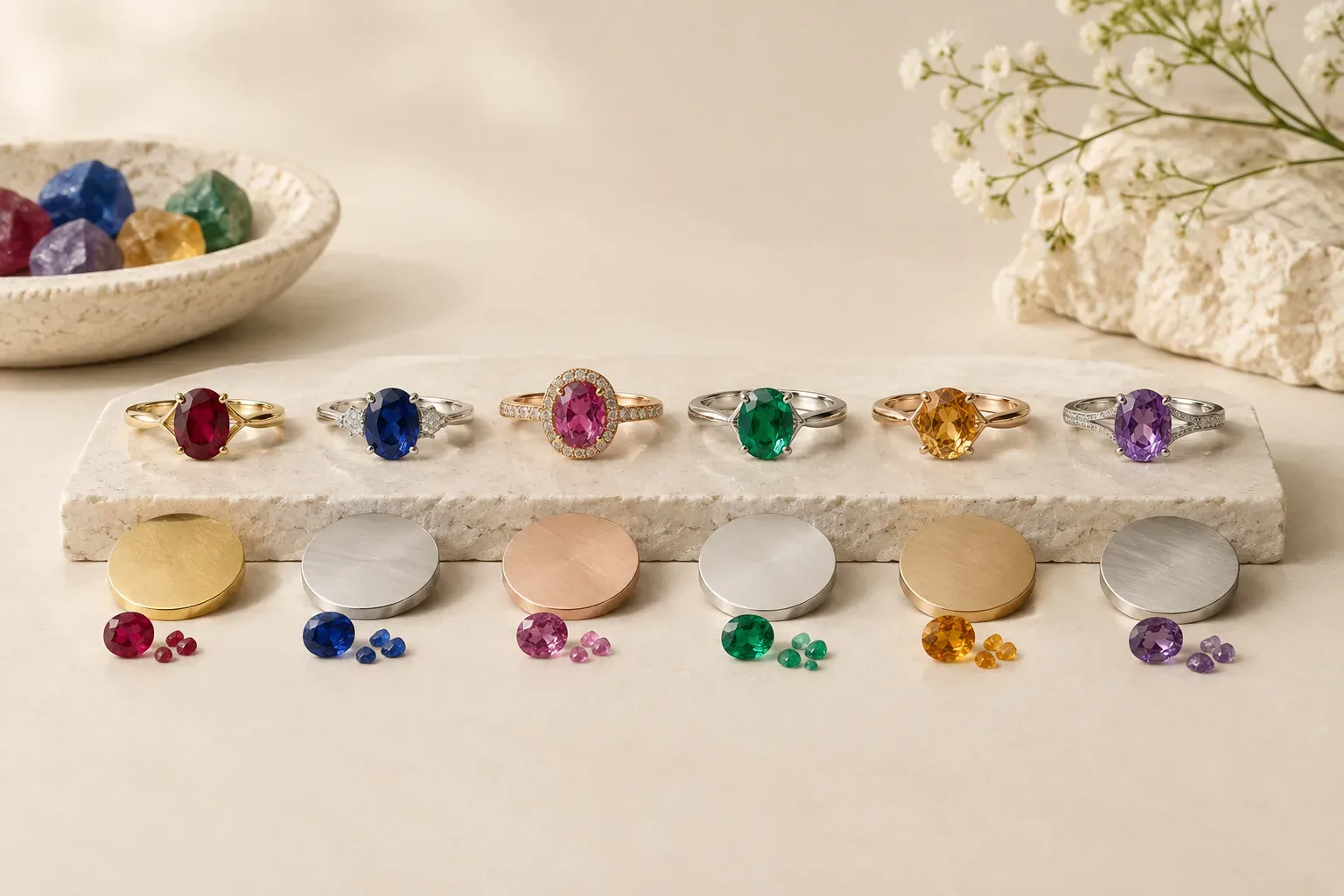
Yellow gold: Warm in tone, yellow gold enhances reds, oranges, and warm greens. It reads as traditional and pairs naturally with classic birthstones such as garnet and citrine. Because yellow gold is itself a colored metal, it can subtly shift how a stone’s undertone is perceived.
Rose gold: With a pinkish cast, rose gold deepens warm and pink stones and can add a vintage or romantic look to gems like morganite or pink tourmaline. Its warm hue can mute the coolness of blue and green stones unless that contrast is intended.
White metals (white gold, platinum, palladium): Cool-white metals make colorless gems and cool-toned stones, such as aquamarine and blue sapphire, appear brighter and cleaner. White gold is commonly finished with a rhodium plating to enhance whiteness; platinum and palladium are naturally white and resist frequent re-plating.
Alloy disclosure, plating, and wear
Alloys change both color and performance. Gold is alloyed to reach 14k or 18k standards; higher gold content warms the tone but can be softer. White gold is often plated with rhodium to achieve a very white finish; that plating will wear over time and typically needs reapplication. The U.S. Federal Trade Commission requires accurate disclosure of treatments, plating, and imitation or lab-grown status when selling gemstones and jewelry, so ask the seller for written information about any plating or treatments before purchase.
Sterling silver is an economical bright-white choice but tarnishes with exposure and is softer than many gold alloys, so it shows wear sooner. Vermeil (gold-plated sterling) and gold-filled pieces offer the look of gold at lower cost, but the plated layer can wear away depending on thickness and use. Jewelers of America recommends asking sellers about the construction and finish so you know how a piece will age and what maintenance is needed.
Wear, repairability, and long-term maintenance
Platinum and palladium are dense, wear differently from gold alloys, and are prized for long-term durability in frequently worn pieces. Platinum, in particular, can be polished and reshaped repeatedly and tends to hold settings securely over decades when properly maintained. Gold alloys are easier to resize and repair in many cases, and many jewelers work routinely with 14k and 18k gold.
Metals with thin surface plating (rhodium, vermeil) will need periodic refurbishment. Sterling silver requires routine cleaning to manage tarnish. For fragile or treated gemstones, GIA guidance on gemstone durability should inform whether a metal that allows protective bezel settings or thicker prongs is preferable. If a ring will be worn daily, prioritize a metal that balances scratch resistance with the ability to be serviced and repaired.
Sensitivity, allergies, and ethical or budget considerations
Some alloys contain nickel or other metals that can cause skin sensitivity in a minority of wearers; jewelers commonly disclose alloy content on request. If you know the recipient has metal sensitivity, choose metals marketed as hypoallergenic or that are less likely to contain common sensitizers, and ask sellers to confirm alloy content in writing as recommended by consumer protection guidance.
Budget and ethical preferences also influence choices. Platinum and palladium typically command higher prices; sterling silver and gold-filled or vermeil options give a similar aesthetic at lower cost. Jewelers of America recommends balancing budget, intended wear frequency, and the recipient’s lifestyle when selecting a metal for a meaningful gift.
Matching metals to specific birthstone settings
Match the metal to both the gem’s color and its durability. Hard, durable stones like ruby, sapphire, and many trade-designated birthstones handle prong settings in either white or yellow metals. Softer or brittle gems benefit from protective bezels or halo settings and from metals that can be worked into thicker protective profiles.
For fragile stones or those with known treatments, consult GIA guidance about durability and treatment stability. That guidance helps decide whether a low-profile bezel in a tough metal is better than exposed prongs in a softer alloy, and whether periodic maintenance will be practical for the wearer’s lifestyle.
Practical selection and gifting guidance
Consider the recipient’s existing jewelry and lifestyle. If they already wear a lot of white-metal jewelry, a white gold or platinum piece is more likely to be worn daily. If they prefer classic or vintage looks, yellow or rose gold might suit. Think about the recipient’s hands-on activities: a more durable metal and a protective setting are better for someone who uses their hands at work or in sports.
Ask the seller for written disclosure about alloys, plating, and gemstone treatments before purchase. The FTC advises that sellers disclose whether a gem is natural, lab-grown, or treated, and Jewelers of America suggests requesting construction and maintenance advice. For heirloom intent, prioritize repair-friendly metals like gold and platinum and keep documentation to pass with the piece.
Care and routine maintenance
Maintenance varies by metal and finish. Platinum and palladium generally need infrequent polishing but should be inspected periodically for loose settings. Rhodium-plated white gold requires re-plating when the surface wears. Sterling silver needs routine cleaning for tarnish. For specific stone care—including what cleaners and exposures to avoid—consult GIA’s gem durability guidance and our Birthstone Jewelry Care Guide for month-by-month cleaning recommendations.
Keep service records and any treatment or disclosure documents from the seller. Regular inspection by a qualified jeweler will catch loose stones and worn prongs before a loss occurs. When in doubt about a repair, seek a jeweler who is experienced with the metal and the type of setting you own, since techniques and acceptable practices differ between metals.
Final considerations
There is no universal best metal for birthstone jewelry; the right choice balances color preference, the birthstone’s durability, wearer sensitivity, expected frequency of wear, and budget. Use GIA guidance to match setting choices to the gem’s durability, follow FTC recommendations to secure written disclosure on treatments and plating, and consult Jewelers of America guidance for buying and gifting best practices.
When selecting or gifting birthstone jewelry, prioritize clarity from the seller, an appropriate setting for the stone, and a metal that suits the recipient’s lifestyle and tastes. That combination yields a piece that looks beautiful, lasts, and carries the intended personal meaning.
Frequently asked questions
Which metal is best for soft birthstones like opal or pearl?
For softer or brittle gems, prioritize a protective setting (bezel or halo) and a metal that allows thicker protective profiles. Consult GIA guidance on gemstone durability to choose a setting that minimizes exposure; also select a metal you are comfortable having serviced, since frequent inspection and occasional repairs may be needed.
Is white gold better than platinum for a birthstone engagement-style ring?
White metals make colorless and cool-toned stones appear brighter. Platinum is denser and typically more durable over decades, while white gold is often rhodium-plated and may require periodic re-plating. Your decision should weigh long-term maintenance, budget, and whether the wearer prefers a naturally white metal or a plated finish; ask the seller for disclosure on plating and alloys.
How can I avoid allergic reactions to metal alloys?
If you or the recipient has sensitivity, ask the jeweler in writing about alloy content and choose metals marketed as hypoallergenic or alternatives less likely to contain common sensitizers. The FTC recommends written disclosure about materials when selling jewelry, so request that information before purchase.
Does plating reduce the resale or heirloom value of birthstone jewelry?
Plating itself does not inherently reduce sentimental value, but thin or worn plating requires refurbishment and may affect appearance and perceived quality. For heirloom pieces, durable metals like solid gold or platinum are often preferred because they can be serviced and repaired over generations.
What documentation should I request when buying birthstone jewelry?
Request written disclosure about whether the gem is natural, lab-grown, or treated, and ask for details about any plating or alloys used. The Federal Trade Commission advises buyers to obtain clear information about treatments and origin, and trade organizations recommend keeping seller documentation for maintenance and resale.
Sources and further reading
- Birthstones for Each Month — Gemological Institute of America
- Buying Gemstones, Diamonds, and Pearls — Federal Trade Commission
- Jewelry Buying Guides — Jewelers of America
- An Introduction to Gem Treatments — Gemological Institute of America
- Gemstone Durability: Design to Display — Gemological Institute of America