Meaning at a glance
This guide provides a concise, practical checklist for documenting birthstone jewelry, explains the role of appraisals, outlines the key insurer questions about coverage and replacement, and recommends how to keep records current.
Direct answer — what to do first
Start by documenting the piece thoroughly, obtaining a qualified appraisal that states purpose and replacement value, and asking your insurer whether they will replace, repair, or reimburse and under what conditions; then keep that documentation and the appraisal current. This is a practical, non-legal checklist to help you prepare for purchase, gifting, repair, and potential claims.
Historical evidence and where the birthstone idea comes from
The modern list of birthstones and their assignment to months has roots in older traditions but was standardized relatively recently. The Gemological Institute of America (GIA) provides the contemporary list and context for how birthstones are used today and notes the long cultural history behind the idea that specific gems are linked to times of the year and identity. Use the GIA’s birthstone resource to confirm which stones are recognized for each month and for basic gemological context when documenting or valuing a piece.
Documented historical meanings versus modern personal interpretation
Documented meanings that appear in institutional or trade sources are generally limited to the assignment of particular gems to months and their gemological descriptions, as summarized by the GIA. Deeper cultural attributions—such as specific folkloric powers, protective uses, or religious symbolism—vary widely by culture and period and are not consistent across sources. Modern personal interpretations are precisely that: individual, family, or community meanings that people assign to a stone for sentimental or aesthetic reasons. When insuring or appraising jewelry, treat documented trade and gemological facts (stone identity, treatments, weight, metal, maker) separately from sentimental value; both matter, but they are documented and used differently in valuation and claims.
How birthstones and related motifs appear in jewelry
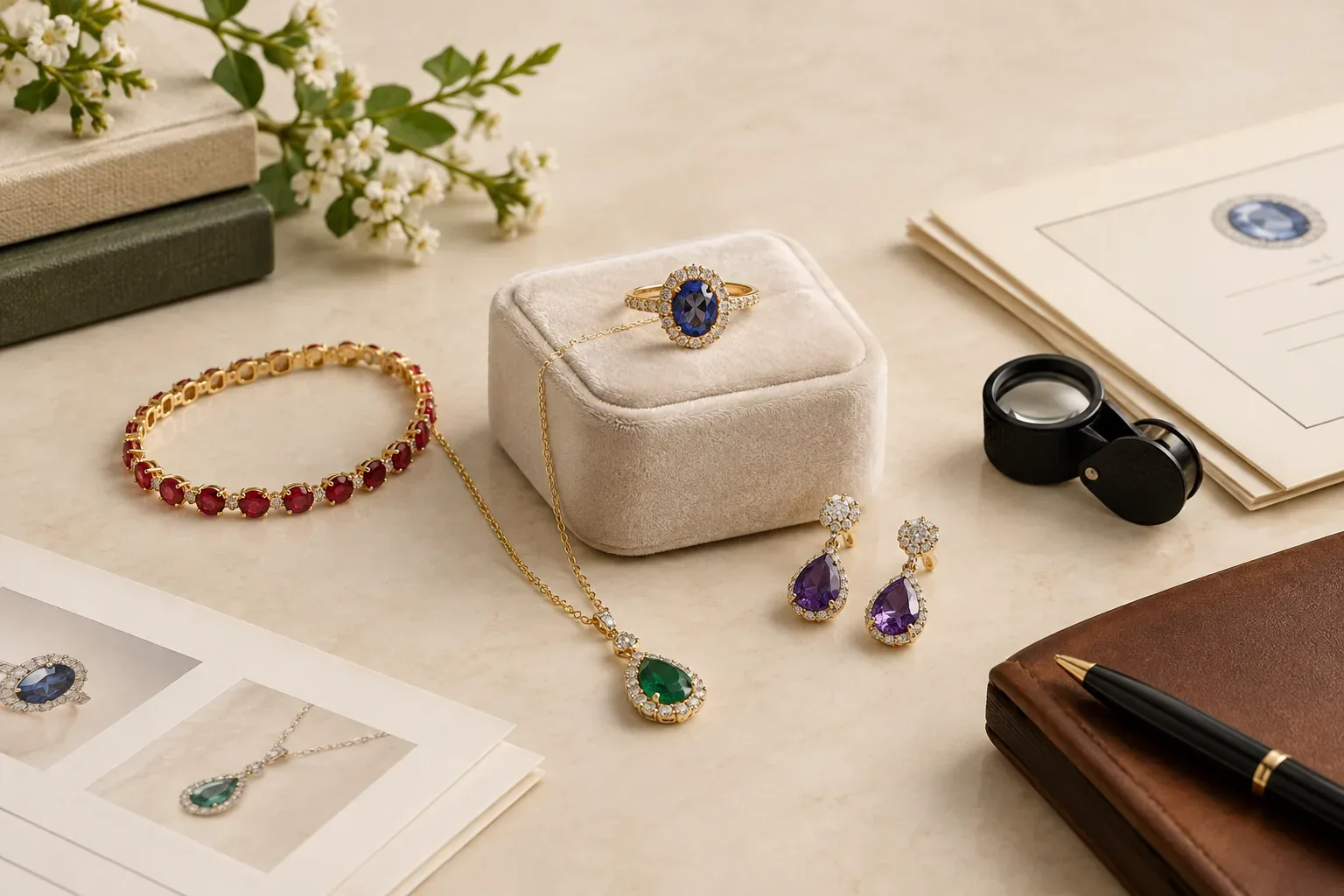
Birthstones appear across formats and styles: rings, pendants, earrings, bracelets, and custom keepsake pieces. The Jewelers of America’s buying guides note that choice of setting, metal, and mounting affects durability and repairability as well as market value. Common motifs include initial or name settings that combine a birthstone with engraved letters, month-themed designs that pair a single gemstone with decorative elements, and cluster pieces that use multiple stones. When documenting a piece, describe format and setting clearly, and photograph the gemstone and setting from multiple angles so that both the gem and the construction of the jewelry are captured.
Documentation checklist (non-legal, practical)
Photograph the piece from multiple angles, including close-ups of any hallmarks, maker’s marks, and clasps. Keep original purchase receipts and any seller disclosures about the stone’s origin, treatments, or whether it is natural, lab-grown, or an imitation; the Federal Trade Commission requires relevant disclosures from sellers about origin and treatments, and having this in writing helps clarify value and claims. Obtain any gem certificates or grading reports that accompanied the purchase and file them with photographs and receipts. Note provenance details such as date of purchase, seller, gift inscription, or family history; provenance can affect replacement decisions and personal value even if it does not change market value. Store copies—both physical and encrypted digital backups—in separate locations.
Understanding appraisals: purpose, credentials, and what to ask
An appraisal is a professional statement of value prepared for a specific purpose, whether replacement cost, insurance, estate valuation, or resale. The Jewelers of America’s appraisal guidance emphasizes that you should understand why you are getting an appraisal and confirm the appraiser’s credentials and insurance. Ask the appraiser to state the purpose (for example, insurance replacement), the basis of valuation (retail replacement, fair market, or liquidation), and to provide a detailed description of the item including metal, gemstone identity and treatments, weight, measurements, and clear photographs. Ask whether the appraiser is independent of the seller and whether the value stated is a replacement cost or a retail value; these different bases can lead to different numbers and affect premiums and claims.
Questions to ask insurers about coverage and replacement
When you contact an insurer, use your documentation and appraisal as the starting point. Ask whether your policy provides scheduled coverage (where the item is listed and insured for a stated amount) or unscheduled coverage (a blanket limit for personal property). Ask whether the policy replaces with a new equivalent item, repairs the original, or reimburses actual cash value which accounts for depreciation. Confirm what types of loss are covered, whether there are sub-limits for jewelry, and whether there is an agreed-value or appraisal requirement for higher-value stones. If the stone is lab-grown, treated, or an imitation, present the seller’s disclosure and any lab report and ask how that affects valuation and coverage; the Federal Trade Commission’s guidance on disclosures helps you know what to request from a seller. Also ask about claim documentation requirements, deductible amounts specific to jewelry claims, and any recommended appraiser lists the insurer accepts.
Keeping records current: repair, resale, and value changes
Keep your appraisal and documentation current. Jewelry undergoes market, fashion, and material-cost changes that can affect replacement values. The Jewelers of America recommends periodic review of appraisals and inspection of settings, mounts, and clasps to confirm security; routine repair or resizing should include updated documentation and photographs taken after the work is done. When a repair or modification is performed, obtain an itemized invoice that describes the work, parts replaced, and any changes to the stone or setting so your insurer and appraiser can account for those changes. If you sell, inherit, or otherwise transfer the item, update records and notify the insurer as appropriate.
Selection and gifting guidance that respects meaning and value
When selecting or gifting birthstone jewelry, balance sentimental meaning with practical considerations. Use the GIA’s birthstone resource to confirm the recognized stone for a month and to learn basic gem durability and care so the design you choose suits the recipient’s lifestyle. The Jewelers of America’s buying guides recommend choosing secure settings for active wearers and considering metal hardness, stone toughness, and mounting quality to reduce repair risk. When gifting, include any available documentation and a clear statement of provenance or retailer disclosures; if you intend the gift to be insured, the recipient will appreciate the paperwork that supports future appraisal and claims. Respect cultural differences and personal preferences: documented trade lists provide the recognized stones, but many people prefer stones with familial, cultural, or personal associations that differ from the standard list.
Practical next steps
If you own or plan to buy birthstone jewelry now, compile photographs, receipts, any lab or grading reports, and a purchase description. Schedule an appraisal that states its purpose and valuation basis and ask your insurer the specific questions above. Keep digital and paper copies in separate secure locations and set a calendar reminder to reassess appraisals and documentation after major market changes, repairs, or every few years as the situation requires. These steps will make an insurance conversation and any future claim clearer and quicker to resolve.
Frequently asked questions
How often should I update an appraisal for a birthstone piece?
Appraisals should be updated whenever market conditions change, after significant repairs or modifications, or when you intend to insure the piece; the Jewelers of America recommends periodic review and that you confirm with your appraiser how often to update based on the item and purpose of the appraisal.
Will insurers accept lab reports instead of an appraisal?
Some insurers accept gemological reports for proof of identity and treatments, but policies vary; present both the lab report and an appraisal that states replacement cost or agreed value and ask the insurer which documents they require for schedule coverage or higher limits. The Federal Trade Commission advises buyers to obtain seller disclosures about origin and treatments.
What documentation do I need to file a jewelry claim?
Collect photographs, purchase receipts, seller disclosures, any grading or lab reports, the latest appraisal, and repair invoices. Insurers will have specific claim forms; asking them in advance what paperwork they require speeds processing and reduces ambiguity.
Does a home insurance policy usually cover birthstone jewelry?
Coverage depends on your specific policy: some home policies provide unscheduled personal property coverage with limits or require scheduling individual high-value pieces. Ask your insurer whether jewelry has a separate sub-limit and whether scheduling the item with an appraisal is necessary for adequate coverage.
If a stone is repaired or replaced, do I need a new appraisal?
Yes. Repairs or replacements can change the value or the nature of the piece; obtain an itemized repair invoice and a follow-up appraisal or updated documentation so your insurer and records reflect the change.
How does treatment, lab-grown status, or imitation status affect insurance?
Treatment, lab-grown origin, and imitation status affect market value and how an item is described in an appraisal. The FTC recommends written disclosure of such characteristics at sale; present those disclosures to insurers and appraisers so valuation and coverage reflect the true nature of the stone.
Sources and further reading
- Birthstones for Each Month — Gemological Institute of America
- Buying Gemstones, Diamonds, and Pearls — Federal Trade Commission
- Jewelry Buying Guides — Jewelers of America
- Guide to Jewelry Appraisals — Jewelers of America
- Jewelry Repair — Jewelers of America