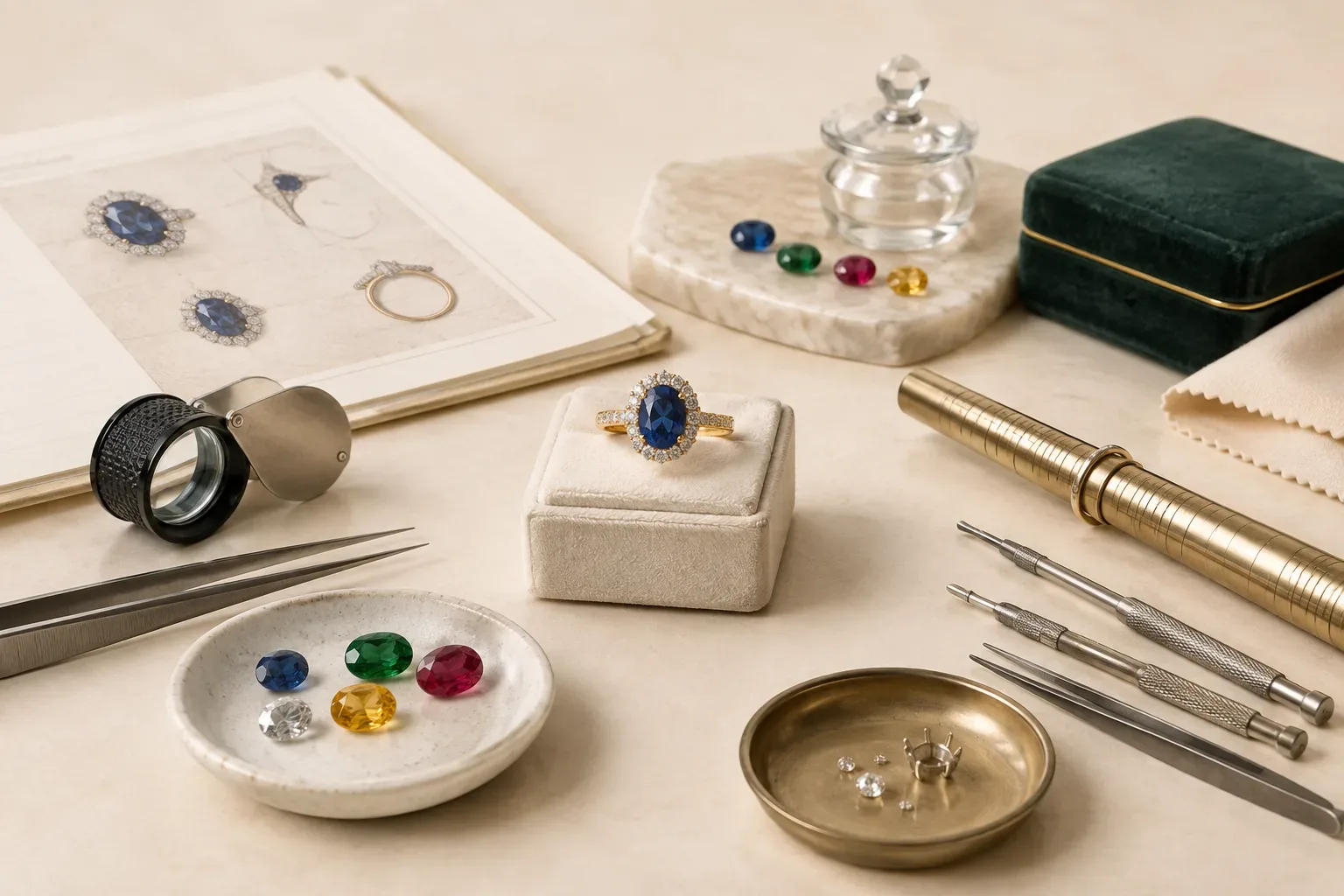
Meaning at a glance
Before repair, document the piece and disclose known treatments; choose a qualified jeweler who will inspect settings and provide a written estimate and authorization; understand which stones and treatments are heat- or chemical-sensitive; discuss resizing limits and alternatives; and perform post-repair checks including stone security and care instructions.
Quick answer
Before any work, photograph and document the birthstone piece and tell the jeweler about any known treatments; use a qualified, insured jeweler who will inspect settings, disclose risks, provide a written estimate and authorization for any stone removal or replacement, respect treatment sensitivities, set realistic resizing limits based on metal and setting, and complete post-repair security and care checks.
Documenting the piece before repair
Good pre-repair documentation protects both owner and jeweler and speeds resolution if something changes during service. Take clear photographs from multiple angles, keep any original receipts, appraisals, or lab reports, and note the month and any personal significance of the piece. If the stone has a lab report or a certificate, bring it when you drop off the jewelry.
The Federal Trade Commission (FTC) advises consumers to keep records and to expect written disclosure about gemstones, treatments, and any replacement materials. Jewelers of America also recommends that customers and jewelers agree on the work to be performed in writing before repairs begin. Sharing what you know about the stone—natural versus lab-grown, known treatments, previous repairs—helps the jeweler plan safe work.
Choosing a qualified jeweler
Ask about the jeweler’s training, certifications, insurance, and references. Trade associations such as Jewelers of America encourage customers to confirm that the repair shop carries insurance, offers a written estimate, and has experience with the relevant gemstone types and settings.
A qualified jeweler will explain whether work will be done in-house or sent to a specialist, how they protect fragile stones, whether they will remove a stone for soldering or repair in place, and how they document the piece before and after work. If the piece has a lab report or complex treatments, a shop that routinely works with certified gemological reports is a safer choice.
Gemstone and treatment sensitivity
Different birthstones have very different sensitivities to heat, chemicals, ultrasonic cleaning, and mechanical shock. The Gemological Institute of America (GIA) provides guidance on how treatments and natural properties affect a gem’s durability and the precautions required during repair.
For example, porous or hydrated materials such as opal or some pearls are more vulnerable to heat and steam, while stones treated with fracture-filling or dye may be damaged by strong solvents or high heat. The FTC requires disclosure of treatments and the difference between natural, lab-grown, and imitation materials, and those disclosures should inform any repair plan.
What a jeweler inspects during a repair intake
On intake the jeweler should examine the setting, prongs, bezels, gallery, shank, and any solder joints, and test the stone’s security. Jewelers of America lists these as standard inspection points for a repair evaluation.
The jeweler should check for wear that makes future loss more likely, such as thin prongs, stretched shanks, worn pavé beads, or bent bezels. They should note whether stones are mounted in a way that will limit resizing or heat exposure and whether any prior repairs affect durability.
Authorization, estimates, and written agreements
Obtain a written estimate that describes the work, the materials to be used, whether stones will be removed, the projected timeline, and any warranties. Jewelers of America recommends written estimates and that customers authorize any additional work beyond the quoted scope before it is performed.
Include in the agreement how the shop will handle discovery of additional issues (for example, finding a fractured stone or hidden solder repair). If a replacement stone is needed, clarify whether the jeweler may source a visually matching substitute and what approval you must give before purchase.
Resizing limits and alternatives
Resizing possibilities depend on the metal, the presence of gemstones, and the setting style. A plain gold or platinum ring is easier to size than a band with channel-set stones, full-eternity settings, tension mounts, or low-profile bezels. Jewelers of America outlines these format considerations under common repair guidance.
When full resizing is risky or not possible, a jeweler can offer alternatives such as sizing beads, spring inserts, ring guards, or remounting the stone into a new shank. Discuss practical goals (comfort versus permanent resize) and accept that some solutions are reversible while others are not.
Stone safety during repair work
A careful jeweler decides whether to remove the stone before a solder or torch operation. Heat-sensitive gems or stones with filler treatments are often removed to avoid damage; gems that are mechanically fragile may also be removed to reduce risk of chipping. GIA’s treatment guidance explains how common treatments influence durability and appropriate handling.
Ultrasonic cleaning and steam can be dangerous for some gems or for stones with fracture-filling or surface coatings. If the gem is treated or fragile, request that the jeweler avoid aggressive cleaning and use gentler methods. Ask the jeweler to document whether the stone will be left in place or removed and how they will protect it.
Post-repair checks and care
When you pick up the piece, inspect it in good light and compare it against your pre-repair photos. Confirm that stones are seated evenly, prongs are uniform, any new solder blends cleanly, and the finish meets the written agreement. Ask the jeweler for a post-repair checklist and care recommendations tailored to the gem and setting.
Get a receipt and any warranty or service agreement in writing. Jewelers of America advises customers to ask for documentation of work and for instructions about safe cleaning and how quickly to return if a stone feels loose after wear.
Historical evidence and cultural context
The concept of assigning gems to months and occasions evolved over time and across cultures rather than arising as a single universal practice. According to the Gemological Institute of America (GIA), modern birthstone lists draw on historical traditions that included religious and folk sources, and later commercial and association-led standardization.
GIA notes links between older traditions—such as the breastplate tradition described in some Hebrew texts—and later European lists of gems associated with months or zodiac signs, followed by further changes in the 19th and 20th centuries as jewelers and trade groups formalized month-by-month lists. These shifts reflect cultural, religious, and commercial influences that varied by region and period.
Documented historical meanings versus modern personal interpretation
Documented historical meanings are those that appear in primary sources or that scholar-led organizations have traced and published; for example, GIA and other professional bodies describe how historical lists changed. Such documented meanings are specific to a culture and period and should not be assumed to apply outside their original context.
Modern personal interpretations of a birthstone—such as wearing a stone for luck, memory, or aesthetic reasons—are contemporary, individual, and often unrelated to historical claims. Treat historical associations as cultural background and respect that recipients may ascribe their own meaning or none at all.
How birthstones and motifs appear in jewelry
Birthstones appear in many formats: single-stone solitaires, cluster rings, bezel pendants, charm bracelets, and signet or personalized pieces. Jewelers of America’s buying guides describe common formats and how format choice affects durability and suitability for everyday wear.
Design motifs may combine a month’s gem with engraving, birth-date numerals, initials, or symbolic shapes. Because different settings offer differing protection, choose a bezel or closed-back setting for fragile stones and prongs or open settings when brilliance is a priority and the wearer is careful with daily wear.
Practical and respectful selection and gifting guidance
When selecting or gifting birthstone jewelry, ask whether the recipient prefers the traditional month stone or a personal favorite. Consider lifestyle: active wearers may prefer low-profile bezels or pendants rather than high-set rings. Jewelers of America recommends matching format and metal to the intended use and the recipient’s sensitivities (for example, nickel allergies).
Respect cultural or personal meanings by asking quietly if a birthstone has significance to the recipient before gifting in contexts where that matters. If you are unsure about authenticity, treatments, or lab-grown status, request written disclosure and consider including the piece’s documentation with the gift so the recipient can make informed decisions about future care and repair.
Frequently asked questions
What should I document before a birthstone repair?
Take clear photos from multiple angles, gather receipts, appraisals, or lab reports, and write down any known treatments or previous repairs. Bring all documentation when you drop off the piece.
How do I know if my birthstone needs to be removed before repair?
Ask the jeweler to explain the planned work. Stones that are heat-sensitive, fracture-filled, porous, or mechanically fragile are often removed to protect them. A qualified jeweler will recommend removal when appropriate.
Are there limits to how much a ring can be resized?
Yes. Limits depend on the metal, the setting, and how many stones are set into the band. Full-eternity bands, channel-set stones, and tension settings often limit resizing or make it impossible; alternatives include sizing beads or remounting.
How can I verify a jeweler’s qualifications?
Ask about certifications, insurance, references, experience with your gem type, and whether work is done in-house or by specialists. Trade associations such as Jewelers of America recommend confirming these details and getting a written estimate.
What should I check when I pick up repaired jewelry?
Compare the piece to your pre-repair photos, check stone seating and security, inspect prongs and solder joints, confirm the agreed finish, and obtain the written receipt, warranty, and care instructions.
Can treatments make a stone more vulnerable during repair?
Yes. Treatments such as fracture-filling, dye, or coating can be affected by heat, solvents, or ultrasonic cleaning. The Gemological Institute of America advises that treatment disclosure should guide repair precautions.
Sources and further reading
- Birthstones for Each Month — Gemological Institute of America
- Buying Gemstones, Diamonds, and Pearls — Federal Trade Commission
- Jewelry Buying Guides — Jewelers of America
- An Introduction to Gem Treatments — Gemological Institute of America
- Jewelry Repair — Jewelers of America