Meaning at a glance
Distinguish an appraisal’s purpose and value opinion from a laboratory grading report; understand report content, appraiser credentials, documentation, condition factors, and why periodic updates matter.
What appraisals and laboratory reports do (and don’t) do
Appraisals and laboratory grading reports serve different professional purposes. Jewelers of America explains that an appraisal’s primary purpose is to state value for insurance, estate, or resale, and to describe the piece’s important features and condition. An appraisal is an expert opinion about worth, often expressed as a replacement value or fair market value, and it should identify the scope and intended use of the report.
A laboratory grading report is a technical document produced by a gemological laboratory that identifies the gemstone, lists objective measurements and characteristics, and reports on treatments or whether the stone is natural, lab-grown, or an imitation. The Gemological Institute of America (GIA) outlines typical gemological documentation and provides context for birthstones and their gemological properties. The Federal Trade Commission requires sellers and professionals to disclose whether gems are natural, lab-grown, treated, or imitations and to use clear written disclosures in sales and product descriptions.
What you’ll find in each document
An appraisal normally contains an itemized description of the jewelry format and materials, a description of the gemstone (type and weight), measurements, the apparent condition of settings and mounting, photographs, the appraiser’s opinion of value with a stated purpose (such as insurance replacement), and the appraiser’s credentials and signature. Jewelers of America recommends that appraisals make clear any assumptions and limitations, such as whether a laboratory report was used as a basis for gem identification.
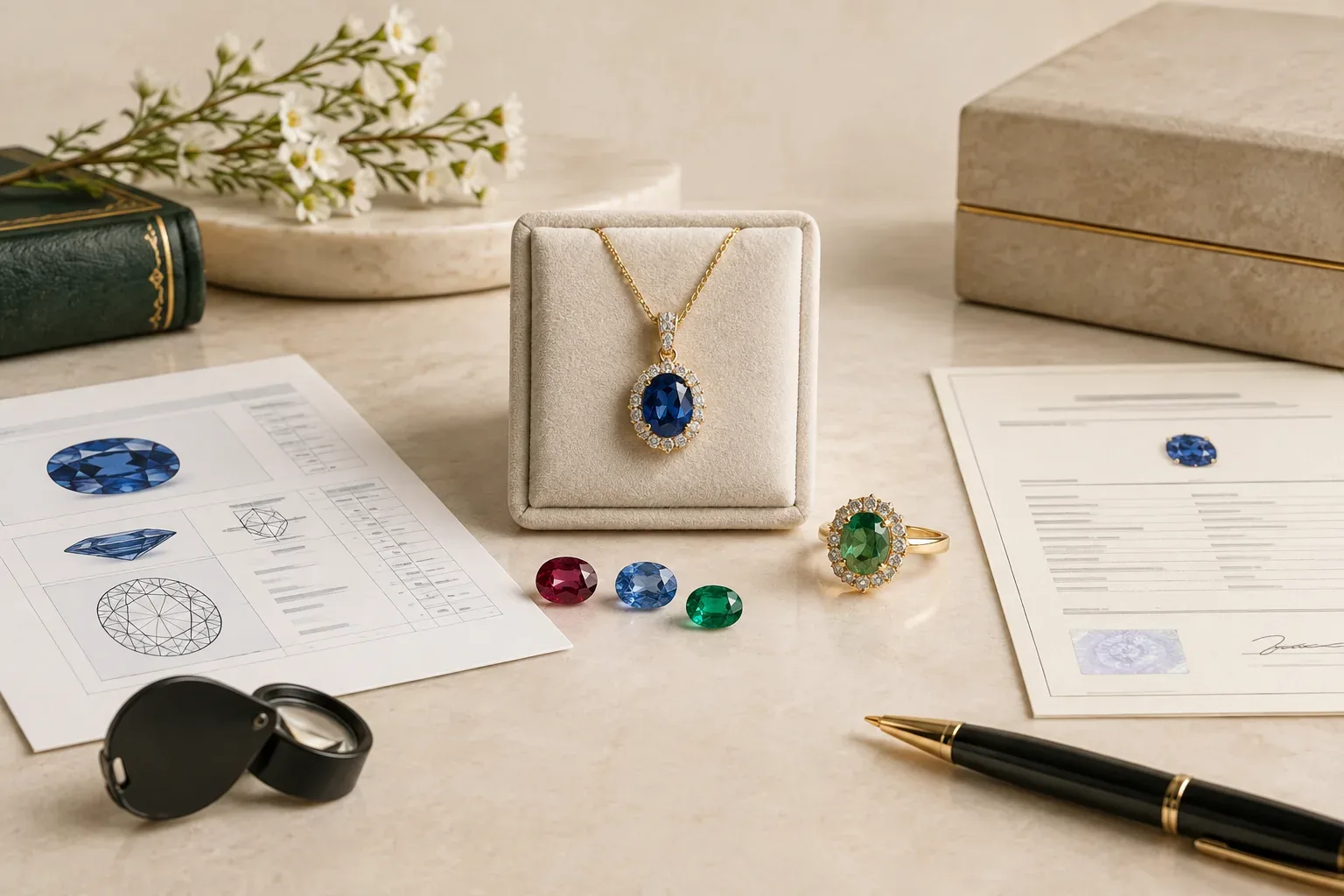
A laboratory grading report will emphasize objective gemological data: identification (e.g., ruby, sapphire, garnet), carat or metric weight, dimensions, clarity and color grades where appropriate, and detection of treatments or synthetics. Laboratories may also include diagrams and photographs. Because lab reports focus on identification and grading, they do not provide a market value or replacement price.
Credentials, professional standards, and choosing an appraiser
Credentials and affiliations matter because appraisals are expert opinions. Jewelers of America advises clients to seek appraisers with recognized training, professional affiliations, and clear written documentation practices. Common credentials include graduate gemological diplomas, professional appraiser certifications, and membership in recognized trade or appraisal organizations. Ask whether the appraiser follows a published standard of practice and whether they provide a signed report with their contact information.
Also ask whether the appraiser relied on a laboratory report for gemstone identification. If a laboratory report was not obtained, the appraisal should state that gemstone identification was done by visual inspection only. For questions about whether a gem is natural, lab-grown, treated, or an imitation, rely on a respected gemological laboratory report in addition to the appraisal. The Federal Trade Commission underscores the need for clear, written disclosure about origin and treatments in any transaction.
Documenting condition, repair history, and why updates matter
Condition affects both value and safety. A competent appraisal will note visible wear, loose settings, previous repairs, soldering, or changes that affect security and replacement cost. Jewelers of America includes repair inspection and care as part of responsible jewelry stewardship and recommends addressing repair needs promptly to avoid loss or further damage.
Market values and replacement costs change over time because of shifts in demand, metal prices, and gemstone markets. An appraisal is a snapshot tied to a date and stated assumptions. For insurance and estate planning, Jewelers of America recommends updating appraisals periodically and after significant events such as a major repair, resizing, or market change so that the documented value reflects current replacement costs. If a lab report is used, check whether it includes a date and whether its conclusions would still be reliable given advances in detection techniques or new treatment disclosures.
How birthstones and motifs appear in jewelry
Birthstones appear across jewelry types including rings, pendants, studs, and charm bracelets. Settings vary by intended use: bezel and channel settings offer more protection for softer stones and everyday wear, while prong settings maximize light for faceted gems chosen for sparkle. Jewelers of America’s buying guides discuss formats and setting choices that suit different stones and lifestyles.
Motifs tied to birth months—flowers, zodiac symbols, and personalized engravings—are applied in many styles and metals. The choice of metal, setting, and protective design should reflect the gemstone’s durability and the wearer’s activities. When a laboratory report accompanies a significant birthstone, the report will document the stone’s identity and any treatments that can influence both appearance and necessary care.
Historical notes and cultural sources
Historical lists and the idea of monthly birthstones have evolved over time and across cultures. The Gemological Institute of America documents how modern birthstone lists were standardized relatively recently and notes earlier associations that appear in ancient and medieval sources. These historic associations are part of the origin story of many contemporary birthstone traditions but should be treated as cultural history rather than universal meaning.
Different cultures and periods adapted gemstone lists for symbolic, religious, or medicinal reasons. GIA’s overview shows that what we now call birthstones has roots in multiple historic lists, and that those lists have been modified by gem trade organizations and cultural practices over centuries. These documented historical meanings are distinct from the personal symbolism individuals assign today.
Distinguishing documented history from personal meaning
Documented historical meanings come from records, trade lists, and scholarly or institutional accounts of how certain stones were used or valued in a given culture or period. The GIA’s resource on birthstones identifies historic lists and changes in recommendations over time. Modern personal interpretations—why someone chooses a particular birthstone ring or what a stone means to an individual—are subjective and vary widely. Neither an appraisal nor a lab report can measure personal significance, though appraisals may record inscriptions or provenance that contribute to sentimental value.
Practical guidance for selecting and gifting birthstone jewelry
Decide how the recipient will wear the piece and choose a stone and setting that match its intended use. For daily wear, prefer durable settings and protective designs, and ask whether the stone has known treatments that affect care. Jewelers of America’s buying guides recommend selecting styles and metals that match a recipient’s lifestyle and provide comfort with maintenance and repair practices in mind.
Obtain appropriate documentation at purchase. If the gemstone is a significant part of the value, request a laboratory report for identification and treatment disclosure, and ask for a written sales receipt that discloses whether the gem is natural, lab-grown, treated, or an imitation in line with FTC guidance. Consider obtaining an appraisal for insurance or estate-planning purposes and keep both appraisal and any lab reports with the jewelry’s records.
When gifting, include the documentation and explain what each document means. A lab report verifies what the stone is; an appraisal clarifies replacement value and helps with insurance. If the gift will likely be insured, tell the recipient that appraisals should be updated periodically and after repairs.
When to get an appraisal and what to expect during the process
Get an appraisal when you need a written value for insurance, estate division, donation, or resale. Jewelers of America explains that appraisals should state their purpose and assumptions and include photographs and a clear description. Expect the appraiser to inspect the piece, note condition and any repairs, and ask for any existing laboratory reports or receipts.
If a lab report is required for verification, obtain it from a reputable gemological laboratory before or alongside the appraisal. Provide the appraiser with any sales receipts, previous appraisals, or lab reports, and ask the appraiser to record those documents and whether they formed the basis of identification or value conclusions.
Summary: combining appraisal and lab reports for birthstone jewelry
Use a laboratory grading report to establish and document the gemological identity and treatment status of a birthstone. Use an appraisal to state replacement or market value, describe condition and mounting, and document provenance and intended use. Verify the appraiser’s credentials and the lab’s reputation, request clear written disclosures consistent with FTC guidance, and update appraisal documentation periodically or after repairs so the written value remains current.
Frequently asked questions
What is the difference between an appraisal and a laboratory grading report?
An appraisal is an expert opinion about a piece’s market or replacement value and includes description, condition notes, and a stated purpose. A laboratory grading report is a technical identification and grading document that records objective gemological characteristics and any detected treatments or whether the stone is lab-grown or an imitation.
Do I need a lab report for every birthstone purchase?
Not for every modest purchase, but for higher-value stones or pieces where identity or treatment affects value, request a reputable laboratory report. The FTC requires clear disclosure about whether a gem is natural, lab-grown, treated, or an imitation, and a lab report provides authoritative documentation for those claims.
How do I choose an appraiser for birthstone jewelry?
Choose an appraiser with recognized training, professional affiliations, and a written report practice. Ask whether they follow a published standard of practice, whether they relied on a laboratory report for identification, and request copies of the signed appraisal and any supporting lab reports.
How often should an appraisal be updated?
Because appraisals state values tied to a date and market conditions, update them periodically and after significant events such as repairs, resizing, or notable market changes so the document reflects current replacement cost and condition.
Can an appraisal substitute for provenance or sentimental value?
No. An appraisal records monetary value and documented characteristics but does not quantify sentimental or historical provenance in the same way; provenance can be noted in an appraisal if documented, but personal significance is subjective and separate from appraised value.
Will an appraisal tell me if a gem is lab-grown or treated?
An appraisal should state whether identification was based on a laboratory report or a visual inspection. For definitive identification of lab-grown stones or treatments, obtain a laboratory grading report from a reputable gemological lab and provide that to the appraiser.
Sources and further reading
- Birthstones for Each Month — Gemological Institute of America
- Buying Gemstones, Diamonds, and Pearls — Federal Trade Commission
- Jewelry Buying Guides — Jewelers of America
- Guide to Jewelry Appraisals — Jewelers of America
- Jewelry Repair — Jewelers of America