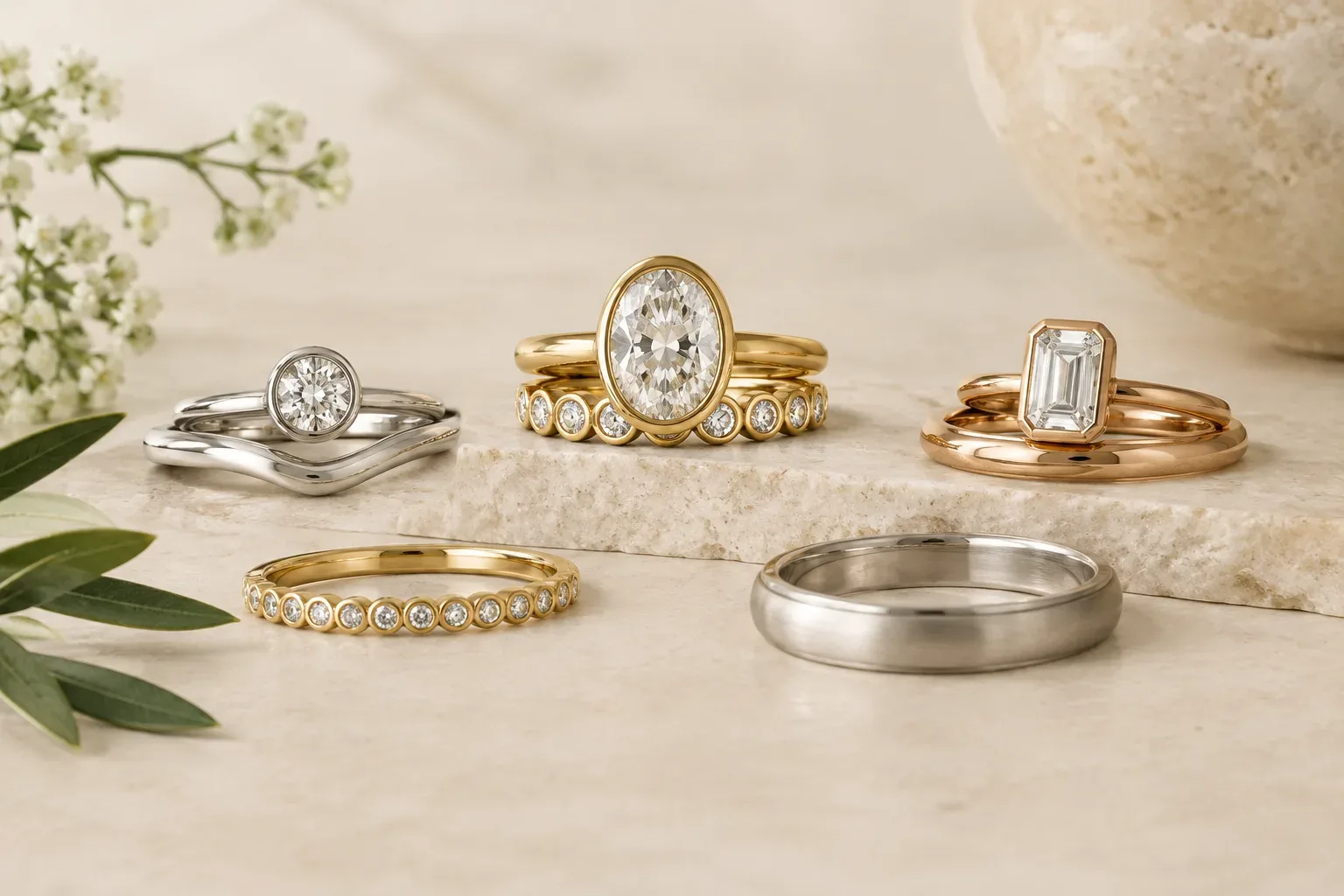
Meaning at a glance
Pair a bezel-set engagement ring with a wedding band by matching or complementing profile and metal, planning for a small engineered gap or flush contour for comfort, and choosing metals for durability and maintenance; verify any gemstone treatment or origin with a qualified jeweler or a gemological laboratory.
What a bezel setting is and how it appears in jewelry
A bezel setting encircles a gemstone with a metal rim. In modern practice the rim can be full (covering the stone’s girdle completely) or partial (a low cup, often called a collet). Bezels present a smooth profile and protect the stone’s edges, which makes them common for active or daily-wear pieces. In design the bezel may be broad and low for contemporary minimalism, tall and scalloped for vintage styles, or integrated into a wider ring shank to form a seamless band.
Historical evidence and what is documented
Documentary and museum records show bezel or rim-like mountings have been used in multiple cultures because the construction protects fragile stones and secures cabochons. Specialist gemological organizations discuss bezel forms as long-standing technical solutions, and collectors’ literature commonly attributes bezel use to practical protection in earlier periods. For a buyer this article treats historical use as documented functional practice rather than a single universal symbolic meaning.
Distinguishing documented history from modern interpretation
Documented history focuses on how bezel mountings functioned and their physical presence in artifacts; modern interpretation overlays personal, aesthetic, and cultural meanings that vary by wearer. Contemporary trend reports from trade and professional bodies show current demand for fluidforms, modern stacking, and gender-neutral styling, and those trends shape how people read bezel-set rings today. The Gemological Institute of America, the Federal Trade Commission, and trade bodies emphasize technical facts like treatments, disclosure, and durability; personal symbolism—what a bezel means to a couple—remains subjective and should be treated as an individual choice.
How shape affects pairing
Stone shape largely determines how a wedding band can sit against a bezel-set engagement ring. Round bezels are the most forgiving and allow either a straight slim band with a small engineered gap or a shallow contoured band that mirrors the bezel curve. Oval and marquise bezels may need a wider contoured band to follow the longer silhouette if you want a no-gap look, or the engagement ring can be paired with a straight band and an intentional gap to protect prongs or bezels from contact. Step cuts such as emeralds or asschers typically sit within rectangular or angular bezels; matching with a slim straight band may look elegant but will leave visible side gaps unless a custom contour is made. When the bezel is tall or extends onto the shank, a fitted or notched wedding band is often the only way to achieve a flush seam.
Planning the gap: flush, slight, or engineered
You can plan three practical relationships between the rings: a flush/contoured fit where the wedding band matches the bezel outline exactly; a slight gap that leaves a small visible channel; or an engineered spacer solution where the wedding band is designed to sit close without metal-to-metal stress. A flush fit provides the smooth continuous profile many buyers prefer but requires precise sizing, potential soldering, and sometimes future adjustments if rings are resized. A slight gap avoids contact, which extends the life of both rings and gemstones, and simplifies resizing. An engineered spacer or “false gap” can be designed to look flush but is built with micro-clearances to prevent abrasion. Discuss these options with a jeweler so the chosen approach fits your lifestyle and resizing needs.
Metal choices: durability, color, and wear
When choosing metals consider hardness, hypoallergenic properties, and how visible wear will age the pair. Platinum is durable, resists loss of metal, and keeps a white appearance longer, so it is commonly recommended for secure bezels where long-term wear is expected. Yellow and rose gold are softer and will develop patina; they are excellent for warm color palettes and can be soldered for seamless pairing, but they show scratches more readily. Palladium and modern alloys offer lighter-weight alternatives with good wear properties. Sterling silver is prone to faster wear and is less often recommended for bezel settings intended for daily wear. Jewelers’ trend and trade analysis from professional bodies notes a rise in gender-neutral styling and colored gemstones, which affects metal choices and finishes in contemporary pairings.
Trade-offs to consider
Choosing a flush contoured wedding band may require a custom-made wedder, add cost, and complicate future resizing. Choosing a gap reduces rubbing and simplifies later adjustment, but the visual join will be visible and may collect dirt. Matching metals and finishes create a cohesive look but if one metal is softer it may show disproportionate wear over time; contrasting metals make each ring read as a separate piece and can reduce visible wear by differentiating patina. Consider daily activities, profession, and whether you or your partner prefer regular maintenance or a low-maintenance ring.
Care guidance and safe handling
Because bezels cover the girdle and sometimes the pavilion, cleaning and inspection should ensure no debris is trapped beneath the rim. The Gemological Institute of America notes that different gemstones and treatments require distinct care, and regulated disclosure is important when buying treated or unusual stones. For routine cleaning, warm soapy water and a soft brush are appropriate for many metals and stones, but avoid ultrasonic cleaners or steam for stones known to be treated or fragile. Inspect bezel edges periodically for thinning or dents; any loose bezel should be repaired by a professional jeweler.
Verification limits: what you can check and when you need a pro
You can visually check a bezel’s fit, overall finish, metal hallmarks, and whether bands sit flush or have a gap. You can also ask retailers for written disclosure about whether a gemstone is natural, lab-created, or treated; the Federal Trade Commission requires clear distinctions and written disclosures for certain materials. However, you cannot reliably verify treatments, origin, or whether a stone is lab-grown versus natural by sight alone. The Gemological Institute of America explains that some treatments are detectable only with specialized testing, and the FTC advises consumers to request written proof. For definitive answers about diamonds or colored gemstones, obtain an independent report from a recognized gemological laboratory or a qualified jeweler with scope and testing capability.
Practical selection and gifting guidance
Decide first whether you want a matched set or two intentionally different rings. If you prioritize a seamless stack, budget for a contoured or custom wedding band and confirm resizing policy. If you prefer future flexibility, choose a slim straight band with a modest gap and pick a metal that balances durability and personal preference. For gifting, prioritize accurate sizing and keep documentation about metal and gemstone disclosure so the recipient can verify treatments if desired. When buying online, request detailed photos of how the band sits on the engagement ring and ask about return or customization windows.
Where modern trends fit in
Contemporary market analysis shows appetite for versatile, stackable, and gender-neutral designs, and this influences bezel pairings. Trade reporting from professional bodies highlights interest in fluid forms and craftsmanship, which supports the use of smooth bezel profiles in modern bespoke and ready-to-wear rings. If you want a current look, select simple low bezels with slim bands; for a vintage feel, choose higher or decorated bezels with milgrain or engraved bands. Remember that trends change: choose what suits your daily life and the meaning you want the rings to hold.
Summary and next steps
To pair a wedding band with a bezel-set engagement ring, first identify the bezel profile and stone shape, then decide whether you want a flush contoured look or a gap for durability and resizing ease, and finally choose a metal based on wear, color preference, and maintenance willingness. For questions about treatments, origin, or gem identification, ask for written disclosures and, when needed, a laboratory report. If you plan custom work, work with a jeweler who documents metal composition and can provide resizing and repair options.
Frequently asked questions
Can a bezel-set ring be resized after pairing with a wedding band?
Yes, but resizing can change how two rings sit together. A slight gap pairing is easiest to resize without modification. For a flush contoured pair, resizing often requires a jeweler to cut and re-solder one or both rings to maintain the fit. Discuss future resizing plans with your jeweler before committing to a custom contoured band.
Is a flush contoured wedding band better than a small gap?
Neither is objectively better; it depends on priorities. A flush contoured band gives a continuous, streamlined appearance but can complicate resizing and increase wear at the join. A small gap reduces abrasion and simplifies later adjustments but leaves the seam visible and can trap debris. Consider lifestyle, maintenance willingness, and budget.
Which metals are best for daily wear with a bezel setting?
Platinum is a strong choice for daily wear because of its durability and stable white color. Harder gold alloys and palladium are also good options. Sterling silver wears faster and is less recommended for bezel-set rings intended for everyday use. Choose metal based on color preference, allergy considerations, and how much polishing or maintenance you expect to do.
How can I verify whether a gemstone is treated or lab-grown?
Request written disclosure from the seller, and for definitive verification obtain a report from a recognized gemological laboratory. The Federal Trade Commission requires clear distinctions between natural, lab-created, treated, and imitation materials, but many treatments need specialized testing described by the Gemological Institute of America to be detected.
Can a straight wedding band look good with a bezel-set engagement ring?
Yes. A slim straight band paired with a bezel-set engagement ring and a small gap creates a clean, modern look and simplifies resizing. For a flush look with no gap, a custom contoured band is usually required.
Sources and further reading
- Imaginaire Digital — Imaginaire Digital
- Jewelers Mutual — Jewelers Mutual
- Gemological Institute of America — Gemological Institute of America
- Federal Trade Commission — Federal Trade Commission