Meaning at a glance
Chrome diopside is chromium-colored green diopside whose striking color defines its appeal; historically it has limited recorded cultural symbolism, but modern wearers assign personal meanings. When buying, prioritize clear disclosure about natural vs treated material and origin; when wearing, protect it from knocks and avoid aggressive cleaning.
Short answer
Chrome diopside is chromium-colored green diopside; its vivid color, cleavage, modest toughness, origin claims, and buying disclosures matter more than unverified abundance or healing claims.
What the record shows: geology and historical evidence
Most museum and geological resources describe chrome diopside primarily as a gem-quality variety of the mineral diopside whose green color comes from chromium. The Smithsonian National Museum of Natural History presents diopside in the broader context of gems and minerals, focusing on mineral identity, formation, and gemological properties rather than extensive cultural symbolism or long-running historical traditions tied specifically to chrome diopside.
Because the published geological and museum literature emphasizes mineralogy and occurrence, there is limited documented evidence that chrome diopside carried distinct symbolic meanings in named historical cultures or ancient periods. In other words, surviving museum and science-focused records do not establish a continuous, well-documented cultural symbolism for chrome diopside in the way some older gemstones—such as lapis lazuli or jade in particular cultures—have documented histories.
Documented meanings versus modern personal interpretations
Documented meanings: available scientific and museum sources identify chrome diopside by its chemistry and physical properties and place it within the broader study of gems and minerals. Those sources are useful when assessing durability, cleavage, and how the stone behaves when cut or set, but they do not offer a body of historical symbolism attached to chrome diopside itself.
Modern interpretations: contemporary jewelers, marketers, and wearers frequently ascribe symbolic meanings to chrome diopside drawn from its vivid green color. Common modern associations include renewal, growth, nature, and balance because green commonly suggests those ideas in many modern Western contexts. These are personal and cultural interpretations that have grown alongside the stone’s presence in modern jewelry markets, not historic universals. Treat such associations as optional, contemporary meanings rather than established cultural facts.
How chrome diopside appears in jewelry
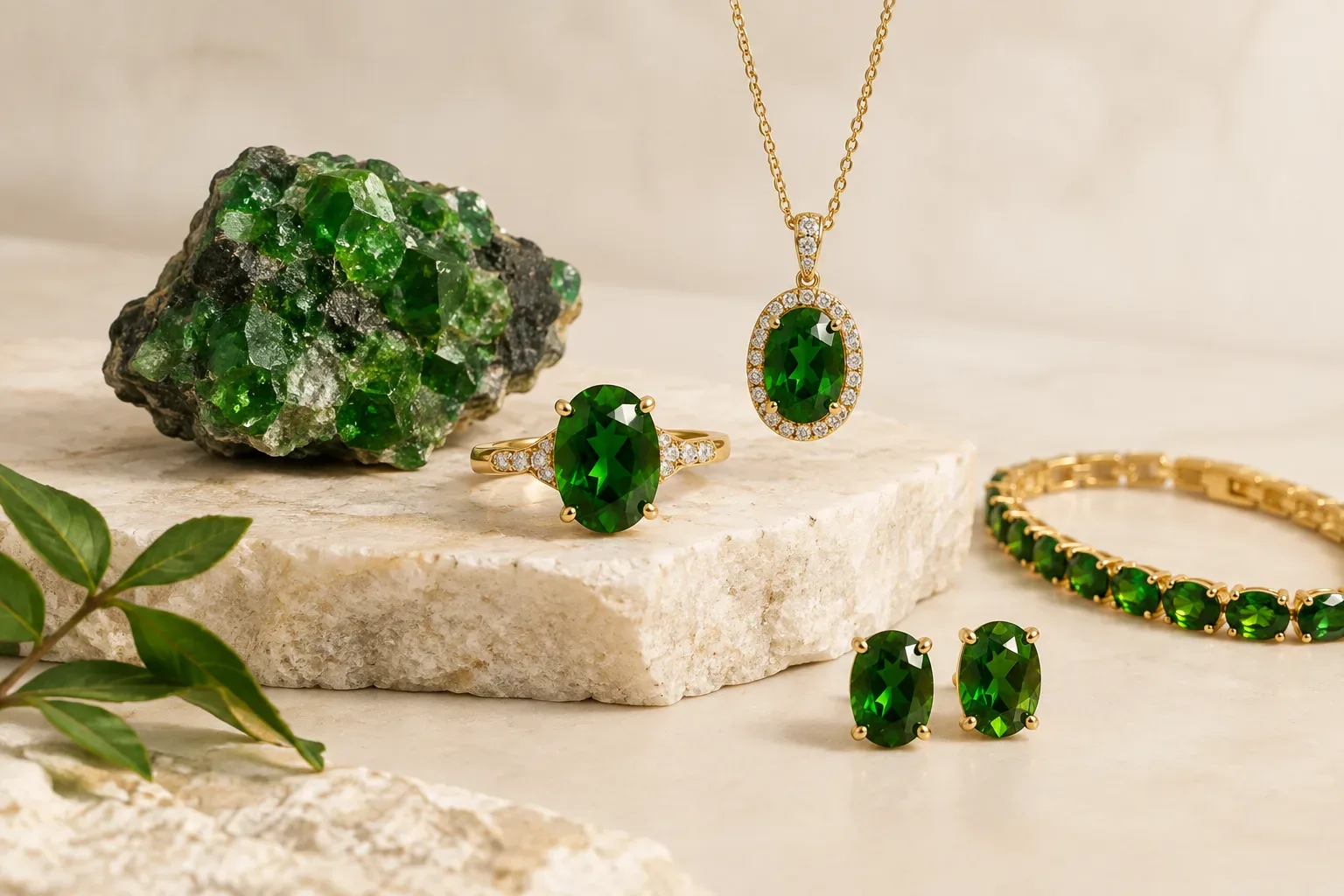
Chrome diopside is used as a faceted gemstone and sometimes as cabochons; designers set it as a focal center stone in rings and pendants and as colorful accents in earrings and bracelets. Its strong green color and relatively affordable price point compared with some emeralds make it attractive for jewelry that emphasizes color.
Because chrome diopside has notable cleavage and modest toughness, jewelers often select protective settings—such as bezel or halo designs—to help shield the stone from side knocks. Cuts that emphasize color and minimize inclusion visibility are common, and pieces intended for infrequent or careful wear take better advantage of the stone’s vivid hue.
Buying guidance: what matters more than marketing
Prioritize clear disclosure. The Federal Trade Commission advises consumers that sellers should disclose whether a gemstone is natural, treated, lab-grown, or an imitation. Ask for written confirmation of the stone’s status before purchase and for any treatments that were applied. The Gemological Institute of America provides guidance on the types of treatments commonly used in the trade and underscores that disclosure matters to value and care.
Evaluate color and stability rather than unverified claims about abundance or miraculous properties. For chrome diopside, vivid, saturated green is the primary driver of visual appeal. Because the stone has cleavage and modest toughness, understand that durability informs how and how often you should wear the item; a visually pleasing stone that is not suitable for everyday high-wear situations may be more appropriate as a pendant or occasional wear ring.
Ask about origin and documentation. Origin claims can influence price and sentiment, but provenance statements should be supported by seller documentation or independent gemological reports if origin is a factor in your decision. Sellers should be able to explain whether the gem is untreated, stabilized, or otherwise modified, and what that means for wear and value.
Shop from reputable sellers and request return policies and documentation. Use the FTC’s consumer guidance as a baseline: request clear language about what you are buying, any treatments, whether the gem is natural or laboratory-grown, and how the seller handles returns or disputes. If a price or claim seems inconsistent with the gem’s quality or with comparable offerings, ask for more information or a second opinion.
Caring for chrome diopside jewelry
Handle with care. Because chrome diopside has pronounced cleavage and modest toughness, avoid hard knocks and rough wear. Rings intended for daily, high-impact activity are riskier choices than pendants or earrings for this gemstone.
Choose protective settings and cautious cleaning methods. Protective settings such as bezels and halos help reduce the risk of side impacts. For routine cleaning, use a mild soap and soft brush with lukewarm water and dry the piece with a soft cloth. Avoid harsh blows and consider removing chrome diopside jewelry before heavy housework, sports, or gardening.
Avoid aggressive cleaning and unverified restoration methods. The Gemological Institute of America explains that certain treatments require care and disclosure; similarly, aggressive cleaning methods such as steam or ultrasonic cleaners can damage gems with cleavage or treatment-related sensitivities. If in doubt about a particular piece’s treatment history or stability, consult a qualified jeweler or gemologist before using mechanical or high-heat cleaning.
Selection and gifting advice
Match the piece to the recipient’s lifestyle. If you are gifting chrome diopside, consider how the recipient wears jewelry. For someone with an active daily routine, choose designs that protect the stone and reduce exposure to knocks. For someone who favors colorful, occasional-wear jewelry, a larger, well-cut chrome diopside center can make a striking gift.
Be explicit about meaning if it matters. If you intend the gem to carry a symbolic message—such as renewal, growth, or connection to nature—say so. Those modern symbolic meanings are personal and can add emotional value, but they are not documented historical facts and should be presented as thoughtful interpretations rather than universal truths.
Request documentation and a fair return policy as part of the gift purchase. Presenting a gift with clear documentation of natural or treated status, any gemological reports, and a reasonable return window protects both buyer and recipient and reflects responsible buying practices. For more guidance on choosing meaningful jewelry, consider our practical gift guide on choosing meaningful jewelry.
Frequently asked questions
Is chrome diopside suitable for everyday rings?
Because chrome diopside has pronounced cleavage and modest toughness, it can be damaged by hard knocks and rough wear; choose protective settings or select it for pendants and occasional-wear rings rather than a daily, high-impact ring.
How can I be sure the chrome diopside I'm buying is natural and untreated?
Ask the seller for written disclosure about whether the stone is natural, treated, lab-grown, or an imitation, and request any available gemological reports. The Federal Trade Commission advises consumers to demand clear disclosure; professional gemological labs or reputable dealers can provide documentation.
What cleaning methods are safe for chrome diopside?
Routine cleaning with a mild soap, lukewarm water, and a soft brush is generally safe. Avoid steam and ultrasonic cleaners if the piece’s treatment history or structural integrity is uncertain, and consult a qualified jeweler if you are unsure.
Does chrome diopside have historical symbolic meanings?
There is limited documented historical symbolism for chrome diopside in museum and geological literature. Modern symbolic meanings—such as associations with renewal or growth—are contemporary personal or marketing interpretations, not established historical facts.
What should I ask a seller before buying chrome diopside?
Request disclosure about natural versus treated status, any known treatments, origin documentation if relevant, return policy, and any gemological reports. Verify the seller’s reputation and compare offerings to ensure the price matches the stated quality and disclosures.
Sources and further reading
- Gems and Minerals: Beauties and Building Blocks — Smithsonian National Museum of Natural History
- An Introduction to Gem Treatments — Gemological Institute of America
- Buying Gemstones, Diamonds, and Pearls — Federal Trade Commission