Meaning at a glance
This article explains the documented history and changing contexts of acrylic jewelry, separates historical evidence from later popular interpretations, and gives practical guidance for choosing, identifying, and disclosing acrylic pieces in modern jewelry.
What "acrylic" means in jewelry and how pieces are made
In jewellery contexts, "acrylic" generally refers to a family of modern synthetic plastics used to make beads, cabochons, inlays, and large statement shapes. Because the term covers manufactured polymer materials rather than naturally occurring minerals, acrylic has been used since the 20th century to produce brightly coloured, lightweight components that can be moulded, cast, or cut into precise shapes.
Museum surveys of jewellery history note that 20th-century innovations in materials and mass manufacture expanded the palette of available components and styles, and plastic media such as acrylic became common tools for designers in Europe and North America who wanted bold colour and scale at lower cost than traditional gemstones or hand-carved materials (Victoria and Albert Museum).
Hallmarks and markings: what to expect with acrylic pieces
Traditional hallmarks are legal stamps applied to precious metals to certify metal content and origin; such hallmark systems apply to silver, gold, and platinum rather than plastics. As a result, solid acrylic components themselves will not carry hallmarks that certify metal purity. If a piece combines acrylic with metal fittings, clasps, or settings made from a hallmarked metal, those metal parts may be hallmarked or stamped.
Because acrylic is a manufactured plastic rather than a regulated precious material, buyers should rely on seller disclosure, maker marks, or written descriptions instead of expecting a government hallmark. The Federal Trade Commission advises full disclosure when materials are treated, imitated, or sold under names that might mislead consumers, so reputable sellers will describe whether a component is acrylic, resin, glass, or a natural gemstone substitute (Federal Trade Commission).
Historical evidence and precise cultural or period attributions
Documentary and museum evidence places the rise of plastics in jewellery clearly within the modern period. Curatorial overviews from the Victoria and Albert Museum identify the 20th century—particularly the interwar and post‑war decades—as the era when new industrial materials and mass production changed the look and social reach of jewellery, enabling inexpensive fashion jewellery to circulate widely in Europe and North America. Those surveys treat plastics as part of a broader story about changing materials and social context rather than as objects with long pre‑modern symbolism (Victoria and Albert Museum).
Because acrylic is a modern manufactured material, there are no pre‑industrial cultures that used it, and therefore no pre‑modern ritual or religious meanings attached to acrylic itself. When you see claims that acrylic carried an ancient symbolic meaning, that is a modern reinterpretation, not a documented historical tradition. Where meanings exist for items that look similar—such as carved shell, bone, or coloured glass—those meanings belong to the original material and cultural context, not automatically to modern acrylic substitutes.
Documented historical meanings versus modern personal interpretations
Historical meanings recorded by curators and historians are tied to materials, techniques, and social function: the V&A frames changes in materials as part of changing fashions, technology, and markets rather than fixed symbolic systems. For acrylic, the historical evidence relates to its role in democratizing bold fashion and enabling playful, large‑scale design choices in the 20th century, rather than to preexisting spiritual or cultural symbolism (Victoria and Albert Museum).
By contrast, modern wearers and designers often attach new, personal meanings to acrylic pieces—associations such as youthfulness, modernity, sustainability, or nostalgia for mid‑century style. These contemporary meanings are valid personal or cultural responses, but they are interpretations created after the material’s adoption. When discussing meaning with others, be clear whether you are reporting historical documentation or offering a modern, personal interpretation.
How motifs, gemstones, and traditions appear alongside acrylic
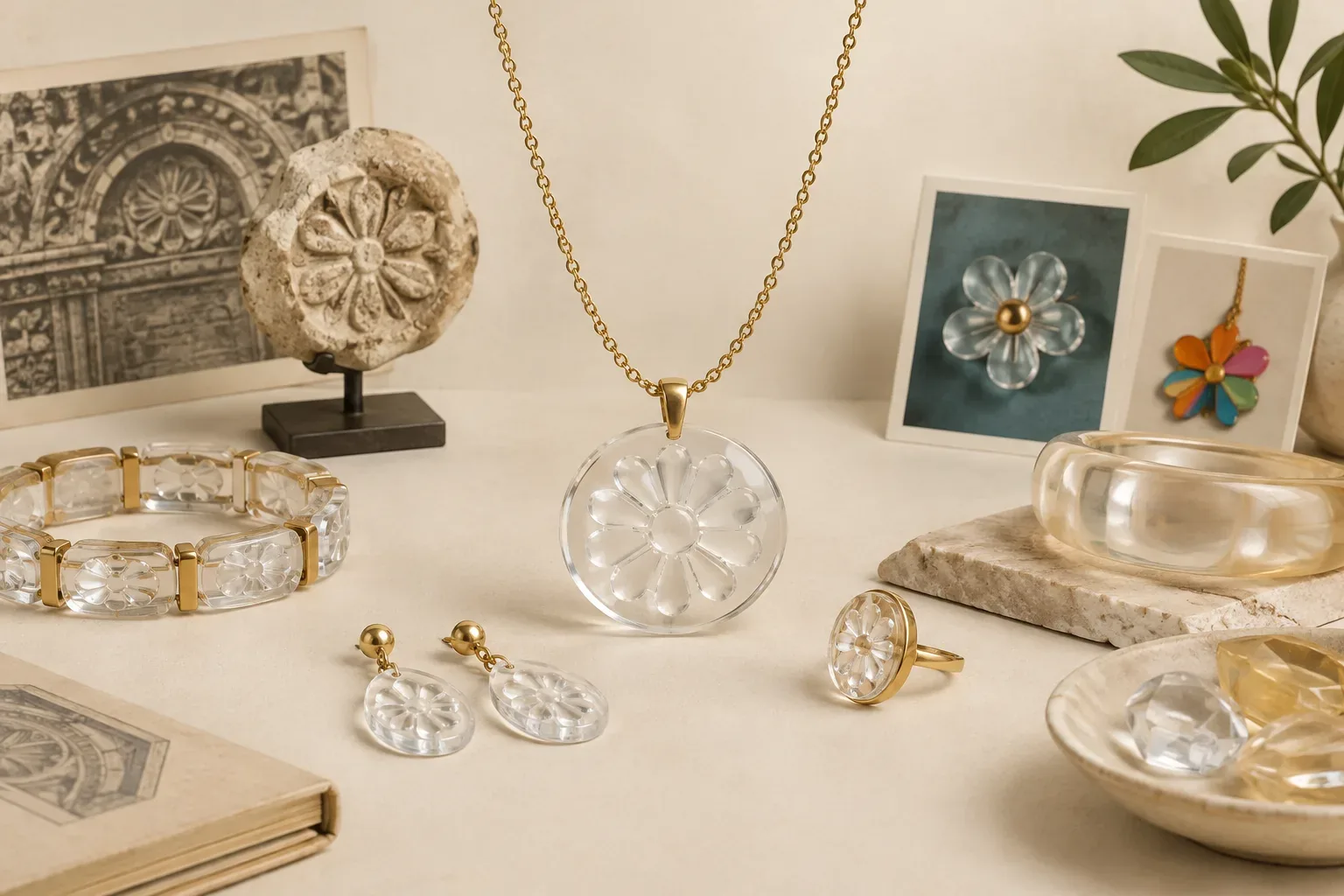
Acrylic is commonly used in forms that echo older jewellery traditions or reproduce the look of particular motifs and gemstones. Makers cut acrylic into beads, cameos, floral shapes, and geometric pendants, and sometimes set acrylic cabochons in metal mounts that mimic traditional settings for stones. Museum resources about gemstones emphasise that the visual language of jewellery—shapes, settings, and motifs—travels across materials, so a motif historically shown in carved shell or a specific gemstone may later be made in acrylic for aesthetic or economic reasons (Victoria and Albert Museum, An A‑Z of Gemstones).
The Federal Trade Commission’s guidance becomes especially important when acrylic is used to imitate natural gemstones or treated materials. If a seller presents an acrylic component as a substitute, imitation, or synthetic version of a gemstone, that fact must be clear to the buyer; conversely, if the item is intended as an inexpensive decorative object, clear labelling avoids misleading consumers about value or treatment (Federal Trade Commission).
Practical guidance for choosing, buying, and gifting acrylic jewellery
When choosing or gifting acrylic jewellery, start with clear questions: ask the seller to describe the component materials, to state whether any coloured pieces imitate a specific gemstone, and to point out which parts (if any) are metal and what those metals are. Look for photographs showing the piece from several angles so you can assess finish, joins, and the quality of fittings.
Consider the construction rather than just the colour. Well made acrylic pieces will have smooth cut edges, secure glue joints or mechanical fastenings, and quality metal findings where appropriate. If durability is important to the recipient—because they will wear the piece daily, for example—prefer jewellery that uses stronger metal findings or is designed for easy repair.
Respect the recipient’s preferences and any practical concerns. Acrylic is lightweight and comes in large, dramatic shapes, which suits certain styles but may be unsuitable for someone who prefers subtle or heirloom‑grade metal jewellery. Check for allergies to nickel or other metals in findings, and if the recipient cares about sustainability, ask about the maker’s materials sourcing and end‑of‑life options—some acrylics are recyclable through specific programs, while others are not easily composted or remade.
Finally, treat statements about value realistically. Acrylic is a design choice and a cost-effective material, not a substitute for precious stone value. If you are buying a piece that imitates a gemstone, make sure the seller explicitly discloses that the material is acrylic or an imitation to avoid misunderstandings at resale or appraisal.
Caring for acrylic pieces and note on conservation
Acrylic is generally lighter and less brittle than glass but can scratch more easily than many gemstones. Use soft cloths for cleaning, avoid strong solvents or abrasive cleaners, and store pieces separately to prevent surface scratches. If your piece combines acrylic with valuable metal elements, maintain the metal according to its required care and check that settings remain secure.
For important or antique pieces that incorporate early plastics, seek advice from a conservation professional. Museum conservators distinguish between modern, mass‑produced fashion jewellery and historic objects that may need specialised care; if a piece has documented historic value, follow museum or conservator guidance rather than generic home cleaning tips.
Frequently asked questions
Does acrylic jewelry have a hallmark?
No. Traditional hallmarks certify precious metals and do not apply to acrylic. If a piece includes metal findings, those metal parts may be stamped or hallmarked, but the acrylic parts themselves will not carry hallmarks; rely on seller disclosure for material identification.
Can acrylic be sold as a gemstone?
Acrylic may be used to imitate the look of gemstones, but sellers are required to disclose when a material is an imitation or substitute. The Federal Trade Commission advises that consumers must be informed if a component is a synthetic or imitation material rather than a natural gemstone.
Is acrylic durable enough for everyday wear?
Acrylic is lightweight and resistant to breakage compared with glass, but it can scratch. For daily wear choose pieces with secure metal findings and consider whether the style and finish will withstand daily handling; good construction is more important than material alone.
Are there historical or cultural meanings attached to acrylic?
No documented pre‑modern cultural meanings are attached to acrylic because it is a 20th‑century manufactured material. Museums record its role in modern design and fashion, while contemporary wearers may assign personal or nostalgic meanings that are modern interpretations.
How should I care for acrylic jewellery?
Clean acrylic with a soft, dry or slightly damp cloth and avoid abrasive cleaners or solvents that might dull or damage the surface. Store pieces separately to prevent scratching and check metal fittings periodically for wear.
Sources and further reading
- Bedazzled: A History of Jewellery — Victoria and Albert Museum
- An A-Z of Gemstones — Victoria and Albert Museum
- Buying Gemstones, Diamonds, and Pearls — Federal Trade Commission