Meaning at a glance
Acrylic is a modern material used widely in costume and fashion jewelry; museums document its rise within 20th-century jewellery fashions, and regulators require clear labeling when materials imitate gemstones. This article separates documented historical context from later personal meanings, explains how acrylic appears in pieces, and offers practical selection and care advice to keep acrylic jewelry looking its best.
Documented historical evidence and changing contexts
The use of synthetic and non‑precious materials in jewellery is a clearly documented development in the modern era. The Victoria and Albert Museum frames 20th‑century jewellery as a period when new materials and mass production broadened who could wear ornament and what materials were acceptable in fashion jewellery. The museum's public programmes and collections discuss how costume jewellery and novel materials shifted social expectations and design language in the 1900s and later.
That documented museum record situates acrylic among many newer materials adopted by designers and manufacturers in the last century. It is therefore historically accurate to say that plastics and other synthetics became important in modern and contemporary jewellery design; the Victoria and Albert Museum collection and interpretation supports reading these changes as a social as well as a technical phenomenon.
Separating documented history from modern interpretation
Documented history — as recorded by institutions such as the Victoria and Albert Museum — focuses on when and how new materials entered fashion and what those changes meant for production, style, and access. Those are verifiable, contextual claims about jewellery history and changing social context.
Modern personal or symbolic interpretations — for example, saying that acrylic jewelry represents youth, environmental indifference, or permanence — are contemporary meanings people attach to the material. Those interpretations can be valid on a personal or cultural level, but they are not the same as the museum record. When you encounter statements that assign a single, universal symbolic meaning to acrylic, treat them as modern, subjective readings rather than documented historical fact.
How acrylic and similar materials appear in jewellery
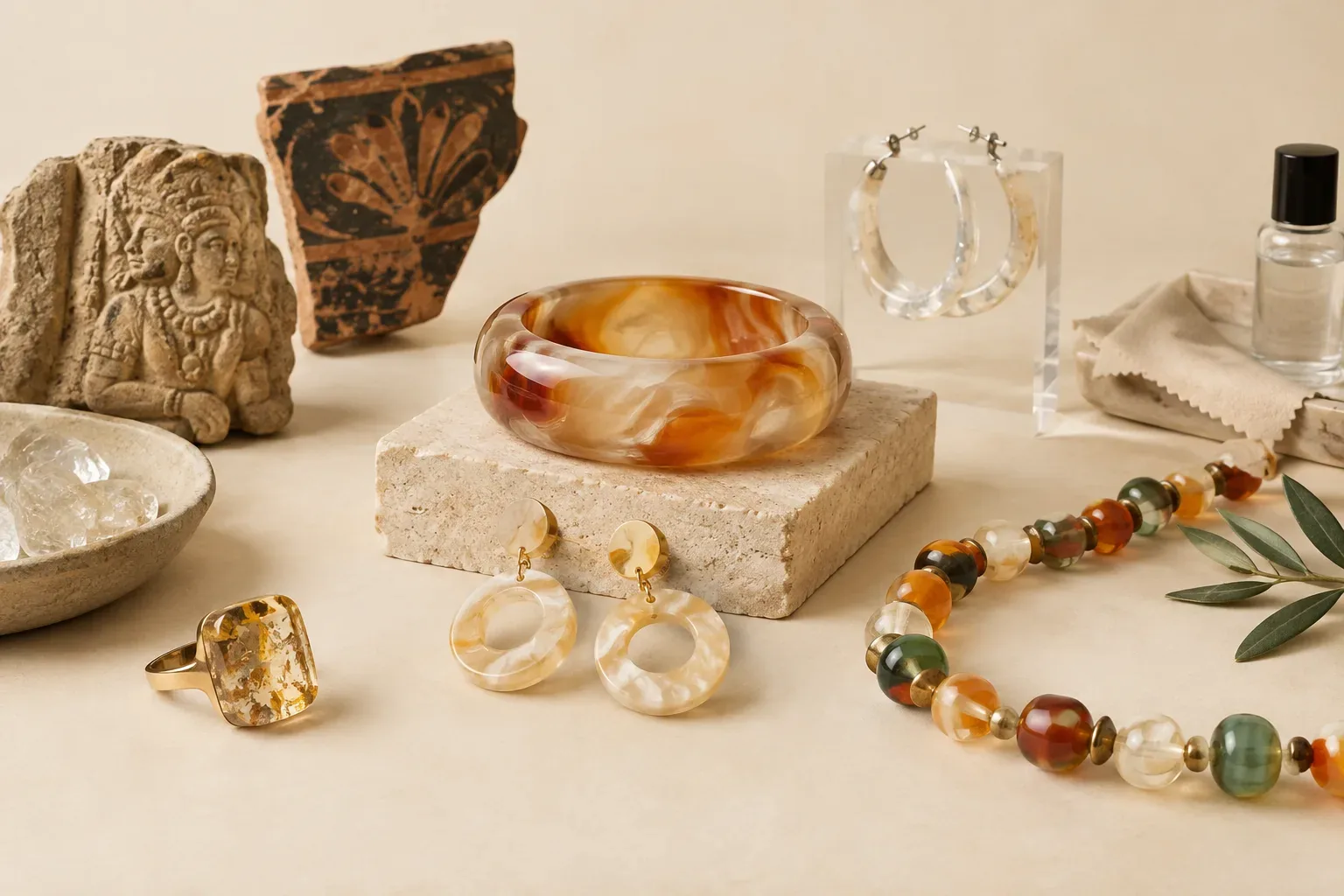
Acrylic is commonly used where designers want bright, stable color, light weight, or a range of molded forms. In fashion jewellery it appears as beads, carved or molded pendants, inlaid panels, lightweight bangles, and as polished cabochons intended to mimic gemstones.
Because acrylic can be cast and dyed easily, it’s often used to reproduce shapes and colors associated with natural materials. The Federal Trade Commission’s guidance about buying gemstones, diamonds, and pearls explains the importance of disclosure when manufacturers or sellers offer treated or imitation materials. That regulatory framework is relevant whenever acrylic is used as an imitation stone: sellers should state whether a piece is plastic, a simulated gem, or a natural stone.
Durability: what to expect in everyday wear
Acrylic’s durability in daily use depends on the piece’s manufacture and the wearer’s activities. Well‑made acrylic pieces with robust fittings can serve well for repeated wear, but acrylic is not immune to surface damage. Scratches, scuffs, and loss of polish are commonly observed forms of wear on plastics. Heat, aggressive solvents, and prolonged sun exposure can also change surface sheen or color over time.
By contrast, many metals show a different set of wear patterns: some metals tarnish or patinate through chemical reaction with air or skin oils, while harder gemstones resist surface scratching but can chip on impact. Treating acrylic as a distinct category — lighter, often less hard than many gemstones, and sensitive to solvents — helps set realistic expectations for longevity.
Practical cleaning and care recommendations
Clean acrylic jewellery gently using mild soap and lukewarm water. Use a soft cloth or a soft toothbrush for crevices, rinse thoroughly, and dry with a lint‑free cloth. Avoid abrasive cleaners, alcohol, acetone, or household solvents that can dull or dissolve acrylic surfaces.
Store acrylic jewelry away from direct sunlight and extreme heat to minimise color fading or warping. Keep pieces separated in soft pouches or compartments to reduce scratching from harder materials. Remove acrylic jewellery before swimming, bathing, or using cosmetics and hairsprays, since chemicals and chlorinated water can affect surface finishing.
When an acrylic piece loses shine, professional restoration is possible for some items, but options depend on the construction and the degree of damage. Light surface scratches can sometimes be reduced with careful, approved polishing, while deep damage or structural breaks may require a jeweller experienced with plastics or replacement of parts.
Selection and gifting guidance
When selecting acrylic jewellery for yourself or as a gift, inspect construction details above all: look for sturdy clasps, well‑set fittings, and secure attachment points. A lightweight pendant with a weak jump ring will fail sooner than a heavier, well‑finished setting.
Ask about materials and disclosure. If a piece uses acrylic to imitate a gemstone, request clear labeling. The Federal Trade Commission’s consumer guidance underscores buyers’ rights to accurate descriptions of gemstone treatments and imitations; sellers should be transparent about whether a stone is natural, treated, or synthetic.
Consider the recipient’s lifestyle. Acrylic is attractive for casual, colorful designs and for people who prefer lightweight jewellery, but it may not suit someone who expects heirloom hardness or who works in environments where items are exposed to solvents, heat, or repeated abrasion.
For meaningful gifts, separate the object’s social or sentimental message from material assumptions. If you are choosing a piece because you associate acrylic with a particular meaning (for example, a youthful aesthetic or a contemporary feel), communicate that intention. Likewise, if longevity is essential to your gift’s symbolism, choose construction and materials that align with that message.
Recording provenance and researching pieces
If provenance matters — for example, for design attribution, collectible value, or personal history — ask the seller for documentation about maker, date, and materials. Museum resources such as the Victoria and Albert Museum’s overviews can help place a piece within wider design trends and social history; their materials on jewellery history are useful starting points for research.
For pieces that mimic gemstones, consult authoritative resources on gemstones and imitations to understand how imitative materials are classified. The Victoria and Albert Museum’s A‑Z of Gemstones provides contextual information about gemstones and can help distinguish natural stones from simulated materials in conversation with sellers.
Final considerations
Acrylic jewelry durability is not a single, fixed property but a set of practical expectations shaped by design, materials, and care. Use documented historical sources such as the Victoria and Albert Museum to understand how plastics became part of jewellery practice, and rely on regulatory guidance such as the Federal Trade Commission’s consumer advice when confronting questions of imitation and disclosure.
Treat modern symbolic meanings as personal or cultural interpretations rather than fixed historical claims. With informed selection, gentle care, and honest disclosure from sellers, acrylic jewellery can be attractive, wearable, and long‑lasting within the limits of the material.
Frequently asked questions
Does acrylic jewelry tarnish like silver or brass?
Acrylic does not tarnish in the same chemical way that some metals do; however, it can show surface wear such as scratches, dulling, or color change. Treat acrylic and metal separately when considering care and longevity.
Can I clean acrylic jewelry with alcohol or household cleaners?
Avoid alcohol, acetone, and aggressive household solvents on acrylic; these can dull or damage the finish. Use mild soap, lukewarm water, and a soft cloth or soft toothbrush for cleaning instead.
Is acrylic used to imitate gemstones, and how can I tell?
Yes, acrylic is sometimes used to mimic gemstones. Ask the seller for clear labeling and documentation. The Federal Trade Commission advises that treated or imitation materials should be disclosed to buyers.
How should I store acrylic jewellery to reduce wear?
Store pieces away from direct sunlight and heat, and keep them separated in soft pouches or compartments to prevent scratching from harder materials.
Can acrylic jewelry be repaired if it gets damaged?
Minor surface wear can sometimes be improved by careful polishing, but deeper damage or structural breaks may require a specialist or replacement parts. The feasibility of repair depends on construction and damage severity.
Is acrylic jewellery appropriate as a meaningful gift?
Acrylic can be an excellent choice for gifts if it matches the recipient’s aesthetic and lifestyle. If you intend the piece to symbolize permanence or heirloom value, choose materials and construction that reflect that intention.
Sources and further reading
- Bedazzled: A History of Jewellery — Victoria and Albert Museum
- An A-Z of Gemstones — Victoria and Albert Museum
- Buying Gemstones, Diamonds, and Pearls — Federal Trade Commission