Meaning at a glance
Axinite is a mineral group whose gem members often show brown, violet, or honey colors and pleochroism; species names, cleavage, and relative rarity affect their use in jewelry and require careful buying and care practices.
Quick answer
Axinite is a mineral group whose gem members often show brown, violet, or honey colors and pleochroism. Species naming, cleavage, rarity, and setting require careful explanation.
What axinite is (geology and gem context)
Axinite refers to a group of closely related minerals rather than a single species. Gem-quality pieces come from particular members of that group and are valued for their color and optical properties. The Gemological Institute of America (GIA) describes how gem varieties are recovered and how their geological contexts affect availability and form, which helps explain why axinite is less common in large, flawless gems than some other gem materials.
Museum resources such as the Smithsonian National Museum of Natural History place axinite in the broader category of minerals used as gems and emphasize that mineral identity, crystal habit, and cleavage all influence whether a specimen becomes a wearable stone or remains a collector piece. Those geological facts, more than a long history of symbolic use, shape how axinite appears in jewelry today.
Historical evidence and cultural use — what the record shows
There is little documented historical evidence tying axinite to specific symbolic or ritual uses in particular cultures. Authoritative museum and gem-education resources focus on the mineral's physical and geological characteristics rather than historical symbolism, which suggests that any traditional cultural meanings are not widely recorded in the mainstream gemological literature preserved by institutions such as the Smithsonian.
Because most modern references to axinite emphasize geology and gem recovery rather than longstanding cultural lore, avoid asserting a single historical meaning for axinite across cultures or periods. The lack of widespread documentary records should be seen as an absence of established, widely recognized cultural symbolism rather than proof that individuals or small communities did not ascribe personal meanings.
Documented history versus modern personal interpretations
Documented historical meanings: reputable institutional sources concentrate on mineralogy and gemology. The Smithsonian and GIA materials used for mainstream education do not present a body of historical symbolic meanings associated with axinite that can be cited reliably across multiple cultures.
Modern personal interpretations: contemporary wearers and designers sometimes assign meanings to axinite based on its color palette and optical properties. For example, because many axinite gems show warm brown, honey, or violet tones, people may describe them as earthy, grounding, or calming. These are personal or stylistic associations and should not be presented as universal or historically documented meanings.
Color, pleochroism, and what to expect visually
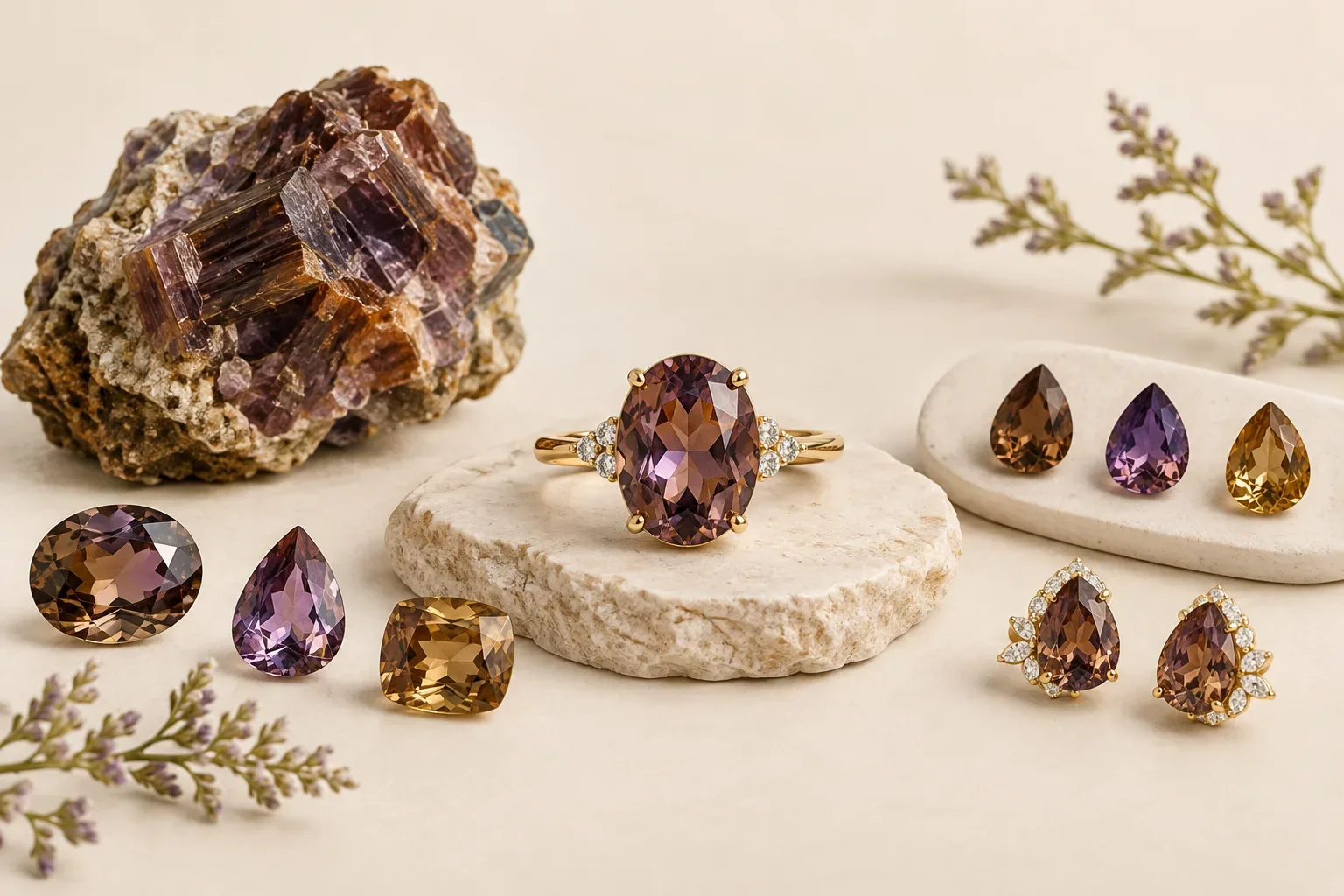
Axinite gems often show a palette of brown, violet, or honey colors; many gem specimens also exhibit pleochroism, meaning the stone can show different colors or intensities from different viewing angles. That trait is intrinsic to how certain axinite species absorb and transmit light.
Pleochroism affects how a finished gem looks in a setting. Faceters orient the stone to present the most desirable face-up color in a finished piece, and designers may choose particular settings and cuts to showcase that preferred color while allowing secondary colors to appear at other angles. When you examine axinite jewelry in person, watch how the color shifts as you tilt the piece; that visual change is part of the gem's appeal.
How axinite appears in jewelry (cuts, settings, and motifs)
Because axinite material is comparatively rare and often shows strong pleochroism, gem cutters and jewelers make deliberate choices about cut, orientation, and setting to maximize color and durability. Cabochons and carefully oriented faceted stones are both common approaches. Cabochons emphasize color and surface luster, while faceting can enhance brilliance and reveal pleochroic shifts.
Cleavage and brittleness in some axinite species require protective settings. Jewelers frequently recommend settings that shield the girdle and edges—such as bezels or partial bezels—rather than delicate exposed prongs for everyday-wear rings. Designers also favor axinite for pendants and earrings where the risk of a hard knock is lower and larger, showpiece stones are easier to accommodate.
Practical buying guidance
Ask the seller for clear information about species identification and any treatments. The Federal Trade Commission (FTC) advises buyers to seek full disclosure about whether a gem is natural, treated, lab-grown, or an imitation, and to require that information in writing where possible. Because axinite comprises a group of species, a reliable seller should be able to say which axinite species or variety you are being offered.
Examine how the cutter oriented the stone to show the preferred color and ask to see the gem from multiple angles to evaluate pleochroism. Confirm return and appraisal policies and seek a reputable independent appraisal or identification if you plan to insure the piece. Given axinite's relative rarity in jewelry-sized material, expect that larger, high-quality stones will carry a premium and sometimes irregular availability.
Gift selection: thoughtful and respectful advice
When gifting axinite, consider the recipient's lifestyle and how they wear jewelry. If the recipient favors everyday rings and leads an active life, choose a design that protects the stone or select axinite for less impact-prone jewelry such as pendants or earrings. Include care instructions and the seller's disclosures about species and treatments so the recipient has clear information about the piece.
Respect personal taste and cultural context when attributing meaning. If the giver wishes to attach a personal sentiment—such as choosing axinite for its warm coloration or for a grounding aesthetic—frame that as a contemporary, personal intention rather than a historically documented symbol. When possible, buy from a seller who provides transparent origin and treatment information and include any paperwork with the gift.
Care and maintenance
Treat axinite with the same caution you would any gem with notable cleavage or fragility. Avoid sharp impacts, and store the stone separately from harder gems to prevent scratches. Clean the gem with a soft cloth and mild soap and water; do not assume that mechanical or high-heat cleaning methods are safe without confirmation from a gemologist or the seller.
Before using an ultrasonic or steam cleaner, ask the seller or an independent professional whether the specific axinite specimen is safe to clean that way. The FTC's guidance on buying gems emphasizes disclosure and transparency about treatments and care recommendations; if a vendor cannot explain safe cleaning or potential vulnerabilities, seek a second opinion.
Final note
Axinite makes an appealing and somewhat uncommon choice for jewelry because of its warm color range and the visual interest created by pleochroism. Because institutional sources focus on mineralogy and recovery rather than a widespread cultural symbolism, treat symbolic meanings as personal or modern designer choices rather than historical facts. Buy from transparent sellers, choose protective settings appropriate to the stone's properties, and provide the recipient with documentation and care guidance.
Frequently asked questions
What is axinite?
Axinite is a group of related minerals that can produce gem-quality material; gem articles emphasize its color and optical properties rather than a single historical symbolism.
What colors does axinite show?
Axinite gem material commonly shows brown, honey, or violet tones; many stones are pleochroic, so their apparent color can change with viewing angle.
What is pleochroism and why does it matter for axinite jewelry?
Pleochroism is the optical effect where a gem shows different colors from different angles; for axinite it means cutters and designers orient the stone to present the most desirable face-up color.
Are there documented historical meanings for axinite?
Mainstream institutional resources focus on mineralogy and provide little documented evidence of widely recognized historical symbolism for axinite, so any symbolic claims should be treated as modern or personal.
How should I choose an axinite piece as a gift?
Consider the recipient's wear habits, ask the seller for species and treatment disclosures in writing, prefer protective settings for active wearers, and include care instructions and any gem documentation with the gift.
How do I care for axinite jewelry?
Handle axinite gently, avoid hard knocks, clean with a soft cloth and mild soap and water, and confirm whether ultrasonic or steam cleaning is safe before using those methods.
How can I be sure the axinite I buy is what the seller says it is?
Request written disclosure about whether the gem is natural, treated, lab-grown, or an imitation, and consider an independent identification or appraisal for higher-value purchases in line with FTC guidance.
Sources and further reading
- Gems Recovered from Sedimentary Rocks — Gemological Institute of America
- Gems and Minerals: Beauties and Building Blocks — Smithsonian National Museum of Natural History
- Buying Gemstones, Diamonds, and Pearls — Federal Trade Commission