Meaning at a glance
Enstatite is a pyroxene mineral that can yield green, brown, or colorless gems; identification, cleavage, rarity, source claims, and care should remain distinct from modern resilience symbolism.
What enstatite is: color and gem basics
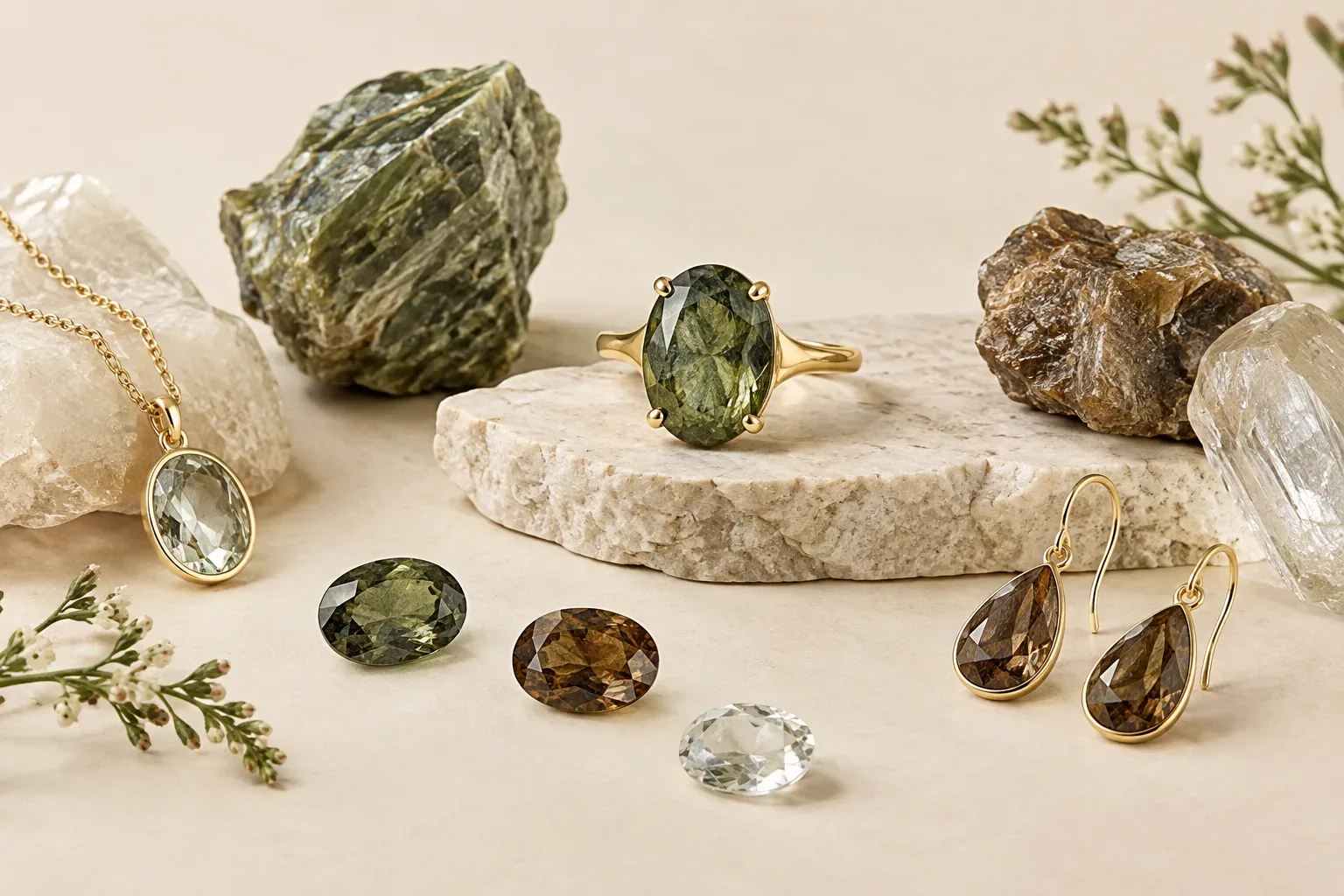
Enstatite belongs to the pyroxene mineral group and can occur in green, brown, or colorless material suitable for cutting and use in jewelry. Gemological reference projects and museum resources describe enstatite alongside other lesser-known gem materials and focus on its mineral identity and how specimens are documented for the gem trade. These sources emphasize mineral features such as color variability and the way specimens are classified within gemological collections rather than assigning cultural meanings to the stone.
Documented historical evidence — what we know and what we do not
Authoritative gem and museum resources that catalogue minerals and gems emphasize physical and gemological information about enstatite but do not provide a body of historic cultural symbolism attached to it. The Smithsonian National Museum of Natural History and professional gem documentation projects focus on the mineral’s properties, identification, and suitability for jewelry rather than describing a tradition of enstatite as a named symbolic gem in specific ancient cultures.
Because these professional sources do not record a continuous or well-documented history of enstatite serving as a culturally meaningful gemstone in the way that, for example, lapis lazuli or jade may be historically documented for particular societies, any assertion that enstatite carried a specific, named symbolism in past cultures would go beyond the available evidence and should be treated with caution.
Separating documented facts from modern interpretation
Documented facts from gemological and museum sources concern the mineralogy, color range, rarity, and the practicalities of cutting and handling enstatite. These facts include that it is a pyroxene and that specimen identification and rarity influence how it is presented in the gem market.
Modern interpretations—such as naming enstatite a stone of resilience or using it as a contemporary emblem of personal qualities—are contemporary, personal, or commercial attributions. Those symbolic uses can be meaningful for the wearer or the giver, but they are not documented historical meanings recorded by the professional bodies and museum sources that catalogue gems and minerals.
How enstatite appears in jewelry
When enstatite is cut for jewelry, its color range determines the visual effect: green and brown stones read differently on the finger, in a pendant, or paired with metal choices. Because the material is less common than mainstream gem materials, enstatite pieces tend to appear in specialist collections or artisan jewelry where the maker emphasizes the stone’s unusual status.
Jewelry designers and setters who work with enstatite typically treat it as a gem that requires careful handling during cutting and setting because pyroxenes can show cleavage planes that influence how the stone is faceted and how it withstands impact. The choice of setting—such as bezel settings that guard edges—or designs that recess the stone slightly will reduce the chance of chipping. These practical design decisions follow from the gem’s physical characteristics as recorded in gemological references.
Practical selection and gifting guidance
If you are selecting enstatite as a purchase or a gift, be explicit about what matters: color, clarity, size, and the way the stone is set. Ask the seller for clear information about whether the piece is natural, treated, lab-grown, or an imitation, and request any available certification or documentation. The Federal Trade Commission advises buyers to seek disclosure about treatments, origin, and whether a stone is natural or lab-grown so buyers can make an informed choice.
Because enstatite is less common than mainstream gemstones, be prepared that documentation may come from specialist gemological labs or from reputable dealers who can show provenance. When gifting, avoid claiming a universal symbolic meaning for the recipient; instead, explain the personal or contemporary meaning you attach to the stone and include practical care instructions and any documentation you received at purchase so the recipient can evaluate provenance and care needs.
Care and maintenance
Care should follow the stone’s physical characteristics. Because enstatite belongs to the pyroxene group and may present cleavage, avoid situations that expose the stone to hard knocks or sudden temperature changes that could stress the material. Clean gently using mild soap and water and a soft brush or cloth, and avoid aggressive mechanical cleaners unless the specific piece has been assessed as safe for ultrasonic or steam cleaning by a qualified gemologist.
Store enstatite jewelry separately from harder gemstones to reduce abrasion and choose protective settings for rings intended for more frequent wear. These precautions reflect general guidance on handling less-common gem materials documented by museum and gemological sources and echo the practical consumer-protection advice about disclosure and care from the Federal Trade Commission.
A respectful approach to meaning and presentation
If you or someone you’re gifting wants to use enstatite to carry symbolic meaning, frame that meaning as contemporary and personal rather than historic or universal. State explicitly when a meaning is a modern attribution or an individual’s view, and provide the recipient with factual information about the stone’s identity, origin claims, and care recommendations so that symbolic value and practical stewardship coexist.
Link the emotional reasons for choosing the stone to the physical facts. For example, pairing a note about why you chose the stone with documentation about source and care helps the recipient appreciate both the personal intent and the practical realities of owning an uncommon gem.
Frequently asked questions
What does enstatite traditionally symbolize?
There is little documented historical record of enstatite serving as a named symbolic stone in past cultures according to museum and professional gem references, so any symbolism you encounter today should be treated as a modern or personal attribution rather than an established historical meaning.
What colors does enstatite come in for jewelry?
Enstatite gemstones are known to occur in green, brown, and colorless material; the exact appearance depends on the individual specimen and how it is cut.
Is enstatite durable enough for everyday wear?
Enstatite is a pyroxene mineral that can show cleavage, which affects how it handles impact; choose protective settings and avoid exposing the stone to rough wear. For specific durability ratings and suitability for daily use, consult a qualified gemologist or the seller’s documentation.
How should I clean and care for enstatite jewelry?
Clean enstatite gently with mild soap and water and a soft brush or cloth, store pieces separately to avoid abrasion, and avoid sudden temperature shocks or harsh mechanical cleaning unless a gemologist confirms it is safe for the particular piece.
How can I be sure an enstatite piece is genuine and fairly described?
Ask the seller for written disclosure about whether the stone is natural, treated, lab-grown, or an imitation and request any available certification or provenance. The Federal Trade Commission advises buyers to seek clear disclosures so they can compare and evaluate offers.
Where can I learn more about enstatite and related gems?
Professional gemological organizations and natural history museums provide reference material on mineral identity, gem suitability, and handling; consult those resources for technical details and consult reputable dealers for specimen-specific information.
Sources and further reading
- Gübelin Gem Project: Danburite–Humite — Gemological Institute of America
- Gems and Minerals: Beauties and Building Blocks — Smithsonian National Museum of Natural History
- Buying Gemstones, Diamonds, and Pearls — Federal Trade Commission