Meaning at a glance
Euclase can range from colorless to blue or green and has perfect cleavage; because it is relatively fragile, laboratory identification, protective settings, and careful cleaning are important practical considerations before attaching any modern symbolic meaning.
What euclase is and how it looks
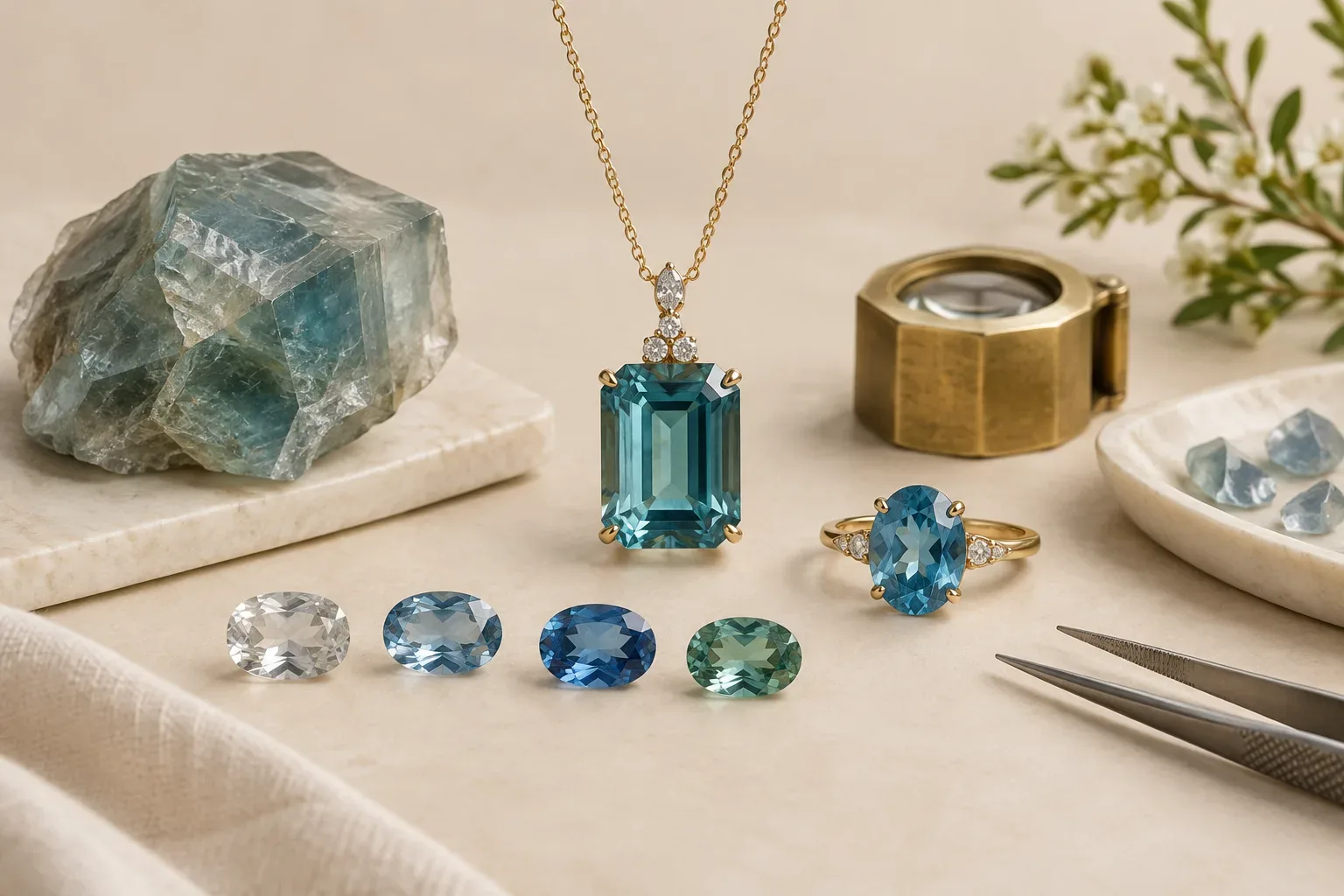
Euclase is a gem-quality mineral known to gemologists and museums as a distinct specimen with attractive transparent crystals. It commonly appears in faceted stones cut for jewelry, most often in clear, pale blue, or greenish tones, though some examples are nearly colorless. Professional collections and reference projects use euclase alongside related gems to study optical and physical properties; for example, the Gemological Institute of America includes euclase among reference specimens in its various-gem projects (Gemological Institute of America).
Documented historical evidence and cultural notes
There is very limited documented historical symbolism tied specifically to euclase in major museum or gemological literature. Institutions that catalog minerals and gems, such as the Smithsonian National Museum of Natural History, treat euclase primarily as a scientific and collecting subject rather than as an artifact with a long, traceable role in a particular culture's symbolic practices (Smithsonian National Museum of Natural History).
Because euclase has never been a mainstream, widely traded gem in the way sapphire, ruby, or emerald were, historical records linking it to an identifiable cultural symbolism are scarce. When euclase does appear in older collections, those references are typically mineralogical or collector-focused rather than evidencing a regional ritual, trade-guild meaning, or religious use that can be precisely assigned to a particular culture or period.
Modern interpretations vs documented meanings
Modern sellers, designers, and wearers sometimes attach personal or marketing meanings to euclase—qualities such as clarity, calm, or honesty are common contemporary metaphors applied to pale-blue stones. These modern personal or commercial attributions are distinct from historical documentation and should be treated as contemporary interpretations rather than longstanding cultural facts.
When you encounter claims that euclase symbolizes a specific virtue across cultures or centuries, ask whether those claims are sourced to historical records or are modern poetic associations. Professional sources that collect and describe euclase focus on physical and gemological properties rather than asserting universal symbolic meanings (Gemological Institute of America; Smithsonian National Museum of Natural History).
How euclase appears in jewelry
In jewelry, euclase is usually cut as a faceted stone to showcase clarity and color. Jewelers commonly use euclase in rings, pendants, and earrings where its transparent pale-blue or colorless appearance can be admired. Because most examples are valued for their clean, bright look, faceted cuts that bring out sparkle are typical.
Designers and bench-setters who work with euclase pay close attention to mounting choices because the mineral has perfect cleavage and is relatively fragile compared with many traditional jewelry gems. Protective settings such as bezels, partial bezels, or designs with strong prongs set back from the stone's edges are frequent. In pieces meant for regular wear, manufacturers and jewelers may recommend styles that shield the stone from blunt knocks and everyday abrasion (Smithsonian National Museum of Natural History).
Laboratory identification and buyer protections
Because euclase can resemble other light-blue gems and because treatments, synthetics, and imitations exist broadly in the market, laboratory identification is a practical step for higher-value stones. Gemological laboratories and professional projects maintain reference specimens and testing protocols to distinguish euclase from look-alikes; buyers seeking certainty should request a written identification for significant purchases (Gemological Institute of America).
U.S. consumer-protection guidance reminds buyers that sellers must disclose relevant facts about gemstones, including whether a stone is natural, laboratory-grown, treated, or an imitation. Before buying, ask the seller for written confirmation of the stone's nature and any treatments. If a seller cannot or will not provide clear, documented answers, treat that as a red flag (Federal Trade Commission).
Selection and gifting guidance — practical and respectful
If you are choosing euclase as a gift, begin by deciding how the recipient will wear the piece. For someone who wears jewelry daily and leads an active lifestyle, select a design that offers physical protection for the stone, such as a bezel-set pendant or lower-profile earrings, rather than a high-prong ring. If the recipient values symbolism, discuss whether they prefer historically documented meanings or personal, contemporary associations; many people appreciate a personalized card explaining why you chose euclase for its color or personal significance.
Respectful gifting also includes transparency: obtain and pass on any lab reports or seller disclosures about whether the euclase is natural, treated, or lab-grown. When budget or durability are concerns, consider alternatives explained in our related guidance on natural, lab-grown, and imitation birthstones. For help choosing a meaningful piece more broadly, see our practical gift guide on how to choose meaningful jewelry.
Care and handling
Euclase's perfect cleavage means it can split or chip if struck sharply, and its relative fragility makes ongoing care important. Handle euclase pieces gently and store them separately from harder gems and metalwork to avoid scratches and impacts. Many jewelers advise protective settings and occasional professional inspections to confirm the stone remains secure and undamaged in its mounting (Smithsonian National Museum of Natural History).
For cleaning, ask the seller or a qualified jeweler what methods they recommend for a particular euclase. Because stones with pronounced cleavage need careful handling, seek gentle cleaning techniques and avoid exposing the jewelry to harsh household chemicals without professional advice. If you are unsure about cleaning or suspected damage, bring the piece to a trusted jeweler for inspection rather than attempting aggressive home remedies.
Short note on value and rarity
Euclase is not as widely traded as many mainstream colored gems, and examples with desirable size, clarity, and color can command collector or design interest. Because the market is more specialist than mainstream, pricing can vary widely depending on provenance, size, and whether a lab report accompanies the stone. For buyers, that variability is another reason to insist on documentation and to work with reputable sellers or gemological laboratories (Gemological Institute of America).
Frequently asked questions
Is euclase a durable choice for everyday jewelry?
Euclase is relatively fragile compared with many mainstream jewelry gems and has perfect cleavage, which makes it vulnerable to chipping or splitting if struck. For everyday wear choose protective settings and consult a jeweler about suitability for rings or bracelets versus pendants or earrings.
Can euclase be mistaken for other blue gems?
Yes. Pale-blue euclase can resemble other light-blue stones. For higher-value purchases, request laboratory identification or a written report from a reputable gem lab to confirm the stone's identity.
Do professional bodies provide reference information on euclase?
Professional gemological projects and museums maintain reference specimens and guidance. The Gemological Institute of America includes euclase-related specimens in its various-gem projects, and institutions such as the Smithsonian discuss gems and minerals in the context of jewelry suitability and collecting.
Should sellers disclose treatments or lab-grown origins for euclase?
Yes. Consumer-protection guidance requires sellers to disclose whether a gemstone is natural, treated, lab-grown, or an imitation. Ask for written documentation and treat missing or evasive information as a warning sign.
How should I clean and store euclase jewelry?
Because euclase is fragile, store it separately from harder gems and metalwork and handle it gently. For cleaning, follow the seller's or jeweler's recommendations and avoid harsh chemicals; when in doubt, have a professional jeweler advise or perform the cleaning.
Is there historic cultural symbolism attached to euclase?
There is little documented historic cultural symbolism specifically tied to euclase in major museum or gemological literature. Contemporary symbolic meanings are usually modern personal or commercial attributions rather than evidence of long-standing cultural use.
Sources and further reading
- Gübelin Gem Project: Danburite–Humite — Gemological Institute of America
- Gems and Minerals: Beauties and Building Blocks — Smithsonian National Museum of Natural History
- Buying Gemstones, Diamonds, and Pearls — Federal Trade Commission