Meaning at a glance
Musgravite is an exceptionally rare member of the taaffeite group. Laboratory identification, provenance, pricing evidence, and careful wear are more important than modern exclusivity symbolism.
What musgravite is: gemology and rarity
Musgravite is a rare mineral closely related to taaffeite and identified by modern gemology laboratories as a distinct specimen within that family. Professional gemology reference projects and institutional collections treat musgravite as a gem material of very limited supply and specialized interest. For example, documentation compiled by the Gemological Institute of America places musgravite among reference specimens used to distinguish similar rare minerals and to support laboratory identification work.
Rarity affects how musgravite is offered and valued. Institutional descriptions of minerals and gems emphasize that some specimens are sought more for scientific and collector reasons than for mass commercial use. The Smithsonian National Museum of Natural History describes the difference between minerals, rocks, and gem-quality specimens in terms of identity, rarity, and suitability for jewelry, and that framework helps explain why musgravite appears mostly in specialist markets rather than large retail catalogs.
Documented historical evidence and cultural context
There is no documented historical tradition of musgravite in premodern cultures preserved in major museum or professional gemology records. Institutional and professional sources focus on the mineral's identification, rarity, and scientific classification rather than on long-standing cultural uses or symbolic systems tied to ancient societies. The absence of historical cultural records in those sources means there is no reliable evidence that musgravite carried established meanings in past cultures as older gemstones like jade or lapis did.
When discussing historical evidence it is important to distinguish documented mineralogical history reported by professional bodies and museums from folklore or modern marketing claims. The Gemological Institute of America and the Smithsonian document mineral identity and rarity; they do not support narratives that assign long-standing cultural symbolism to musgravite because those narratives are not backed by the scientific or museum record.
Documented meanings versus modern personal interpretations
Documented meanings: Professional and museum literature records musgravite as a rare, scientifically interesting gem material. That documented meaning is practical and categorical: musgravite is notable for its scarcity, its relationship to the taaffeite group, and the need for laboratory identification when it appears in the market.
Modern personal interpretations: Contemporary buyers, collectors, and designers often attach individual or marketing-driven symbolism to rare gems like musgravite—ideas such as exclusivity, rarity-as-status, or personal uniqueness. These modern interpretations are personal or commercial choices rather than documented historical meanings. They can be meaningful for gift-giving or self-expression, but they are not universal, and they rest on present-day preferences rather than on a recorded cultural history.
How musgravite appears in jewelry
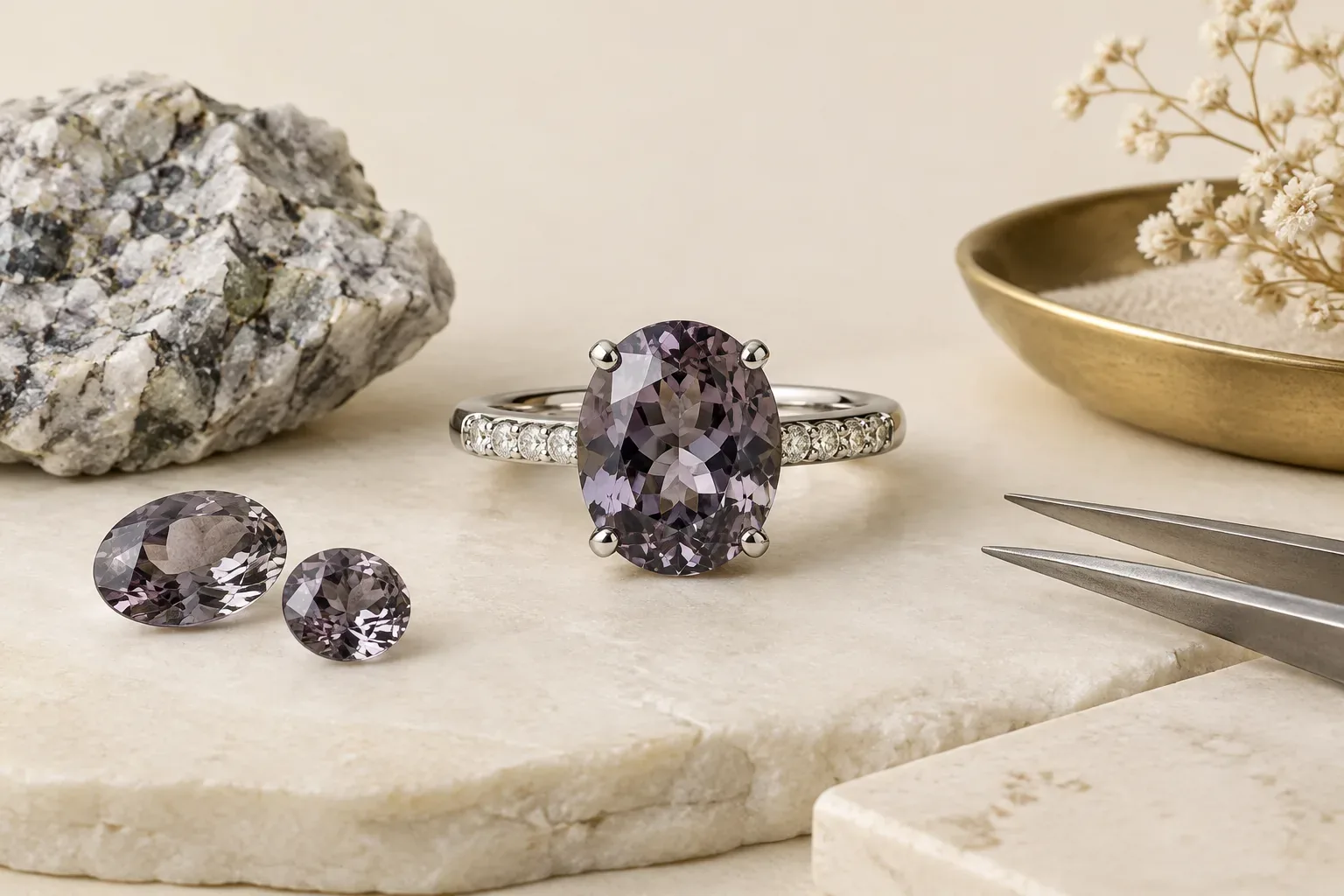
Because musgravite is rare, it most often appears in carefully cut, one-off pieces made for collectors, private commissions, and specialist jewelers rather than in mass-produced designs. Institutions that catalogue gems and minerals note that rare specimens are commonly faceted to display color and clarity for examination and appreciation, and the same practice applies when musgravite is set into jewelry.
Designers who work with musgravite typically choose settings that emphasize protection and visibility: bezel or halo settings, low-profile protective prongs, and mounting choices that reduce exposure to knocks. The Smithsonian’s guidance on gems and minerals explains how suitability for jewelry depends on both the material’s durability and how it is cut and mounted, which is why musgravite pieces tend to be bespoke and conservatively set.
Because facetable musgravite is uncommon, pieces may vary widely in color, cut style, and size. Where a gemstone is small or particularly fragile, it will commonly be used in pendants, earrings, or cluster settings rather than in everyday rings intended for rough wear.
Buying guidance: laboratory reports, provenance, and price evidence
When buying musgravite, prioritize laboratory identification and clear provenance over claims of symbolic exclusivity. The Gemological Institute of America and other professional bodies maintain reference collections and testing protocols precisely because distinguishing rare species and separating look-alikes matters to both value and care.
Follow consumer-protection principles recommended by the Federal Trade Commission. Sellers should disclose whether a stone is natural, treated, lab-grown, or an imitation, and buyers should ask for written confirmation. Obtain an independent gemological report from a recognized laboratory that states species identification, any treatments, and measurements. A reputable lab report reduces the risk of misidentification and supports fair market pricing.
Collect pricing evidence before purchase. Because musgravite is traded infrequently, comparable sale records may be limited. Request recent auction results, dealer invoices, or documented sales for similar-size and similar-quality stones. If such evidence does not exist, treat asking prices with caution and consider purchasing only from well-documented sources or respected specialist dealers.
Care and wear: protecting a rare gem
Treat musgravite as a gem that deserves careful handling. Institutional guidance about gems and minerals emphasizes assessing a material’s suitability for jewelry and designing settings that mitigate risk; for musgravite this usually means protective mountings and occasional rather than everyday wear.
Follow common-sense jewelry care and the FTC’s advice about avoiding misleading treatment disclosure. Avoid harsh chemicals, steam cleaning, and ultrasonic cleaning unless an independent gemological report explicitly states those methods are safe for the specific stone. Clean gently with a soft brush, mild soap, and water, and store musgravite pieces separately from harder stones that could scratch them.
Because the gem’s rarity increases the stakes of accidental loss or damage, insure high-value musgravite jewelry and keep documentation—receipts, lab reports, and photographs—in a secure place.
Practical and respectful selection or gifting guidance
If you are selecting musgravite as a gift, lead with the recipient’s preferences and context rather than presenting rarity as the only value. Explain what the gem is, why you chose it, and provide the gemological documentation with the gift so the recipient understands authenticity, care needs, and value.
Be honest and transparent about provenance, treatment, and insurability when discussing a piece. If the intent is symbolic—celebrating uniqueness, a milestone, or a collector interest—say so, but avoid implying universal cultural meanings that are not documented. For recipients who want wearability, choose settings and designs that limit exposure to wear and tear and that are comfortable for the recipient’s lifestyle.
If budget, durability, or daily wear are primary concerns, consider alternatives or complementary pieces: use musgravite in a pendant or modest ring intended for occasional wear, or pair it with more durable accent stones so the overall piece balances beauty with practicality. For guidance on choosing meaningful jewelry and on care of colored jewelry, see related resources.
Final note
Musgravite’s most defensible meaning in writing and in collections is its rarity and its place within gemological classification. For buyers and gifters today, that scientific and market context should guide decisions: secure laboratory identification, insist on transparent provenance and pricing evidence, and design or select settings that protect the stone. Modern symbolic uses—status, uniqueness, personal rarity metaphors—are valid personal choices but they are contemporary interpretations rather than historical or universal meanings.
Frequently asked questions
What makes musgravite particularly rare?
Musgravite is rare because it is a scarce gem-quality mineral within the taaffeite group and is known mainly from a small number of specimen-quality finds; professional gemology projects and museum records treat it as an uncommon reference and collector material rather than a widely used commercial gem.
How can I verify a musgravite before buying?
Obtain an independent laboratory report from a recognized gemological laboratory that identifies the species, notes any treatments, and lists measurements; the Gemological Institute of America and similar bodies maintain reference procedures for distinguishing rare minerals and the Federal Trade Commission advises buyers to request clear written disclosure.
Is musgravite suitable for everyday rings?
Because musgravite is rare and often offered in carefully set pieces, many jewelers recommend protective settings and occasional wear rather than daily exposure; the Smithsonian’s guidance on gems and minerals emphasizes matching a gem’s durability and setting to its intended use.
How should I clean and store musgravite jewelry?
Clean musgravite gently with mild soap, water, and a soft brush unless an independent report states more aggressive methods are safe; avoid harsh chemicals, ultrasonic and steam cleaning unless a lab confirms safety, and store pieces separately to prevent scratching.
How should I approach pricing and provenance for musgravite?
Request documented sale records, recent auction examples, or dealer invoices for comparable stones, ask for full provenance and treatment disclosure, and treat asking prices cautiously when comparable evidence is scarce; transparent documentation supports fair pricing and insurability.
Sources and further reading
- Gübelin Gem Project: Kornerupine–Natrolite — Gemological Institute of America
- Gems and Minerals: Beauties and Building Blocks — Smithsonian National Museum of Natural History
- Buying Gemstones, Diamonds, and Pearls — Federal Trade Commission