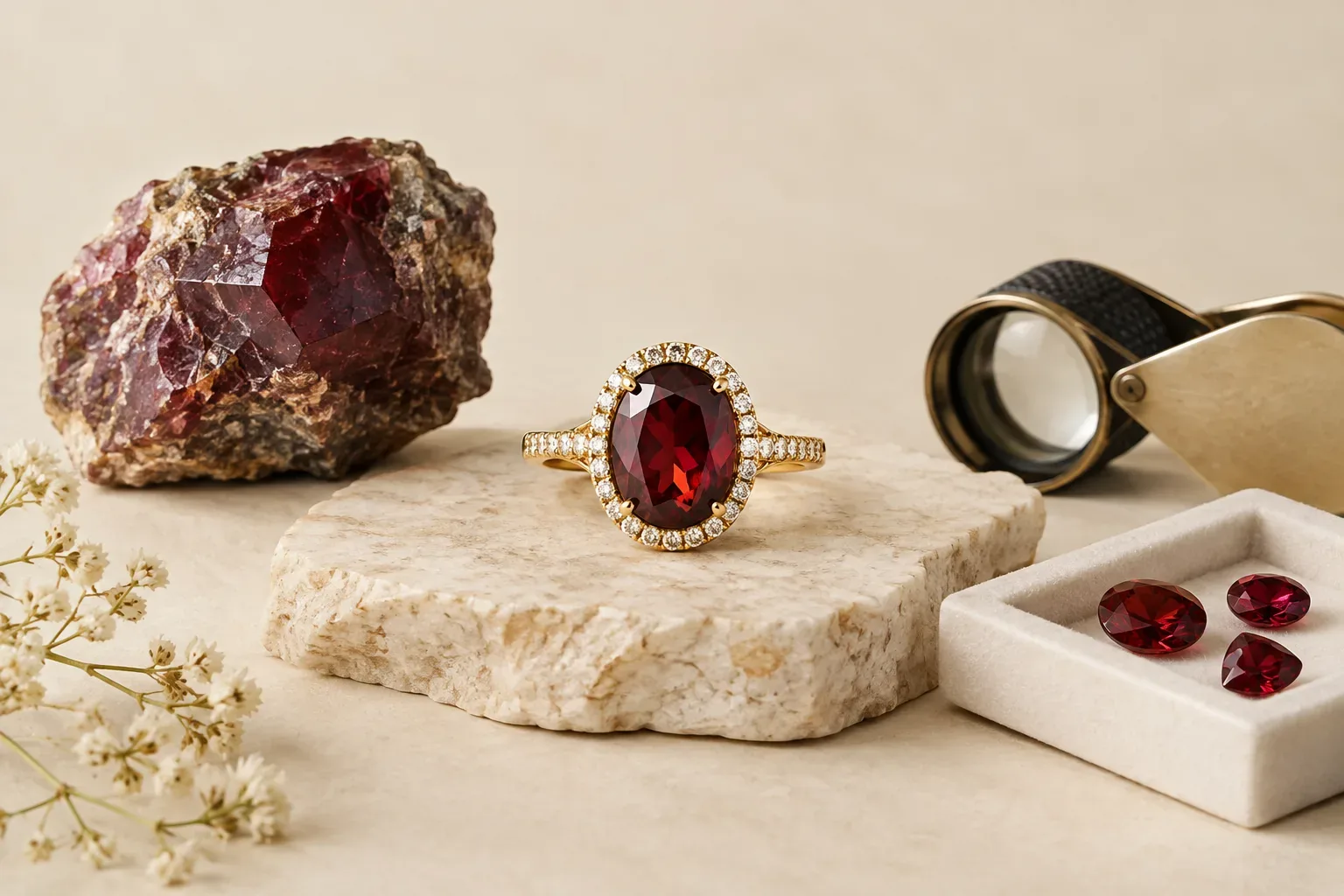
Meaning at a glance
Painite jewelry meaning centers on its geological rarity and collector value: documented from Myanmar with few gem-quality examples, it requires careful provenance, certification, and cautious wear and care.
What the historical and geological record shows
Documented geological and recovery evidence identifies painite as a rare mineral with its most notable occurrences in Myanmar. The Gemological Institute of America (GIA) discusses the mineralogical context in which rare gem varieties like painite are recovered, noting that many gem materials come from a small number of localities and that some gem-quality specimens can be very limited in number.
The Smithsonian National Museum of Natural History places painite within the broader conversation about mineral identity, rarity, and suitability for jewelry, stressing the importance of accurate identification when a mineral is rare or newly recognized by collectors and researchers. Neither the GIA nor the Smithsonian present a long cultural or historical symbolism attached to painite in past societies; rather, they document its geological occurrence and the practical challenges of working with and identifying rare gem materials.
Documented historical meanings versus modern interpretations
There is no well-documented historical symbolism or long-standing cultural meaning for painite in the professional records referenced here. The approved sources focus on geology, recovery, identification, and the challenges posed by rarity, not on historical ritual or cultural uses tied to painite in earlier societies.
Modern symbolic meanings and personal interpretations are therefore contemporary: collectors, jewelers, and wearers today often ascribe value based on rarity, personal milestones, or the story of discovery. Those meanings are individual or community-specific rather than historically documented. Treat modern interpretations as personal or market-driven narratives rather than universal or ancient traditions.
How painite appears in jewelry
Because gem-quality painite is rare, most examples appear in jewelry made for collectors or as bespoke pieces rather than in mass-market designs. Jewelers and lapidaries who work with such rare stones typically prioritize careful cutting to show the stone’s best color and clarity and protective settings that reduce the risk of damage during wear.
The Smithsonian’s guidance on gems and minerals emphasizes selecting appropriate uses for rare or delicate materials; in practice, that means painite often appears in pendants, brooches, or rings where the setting offers some protection. Faceting is common when sufficient clarity and size allow, while smaller or more included stones may be used as accent gems or set as cabochons depending on the material available.
Buying and verification: what to ask for
Because painite is defined largely by its rarity and documented origin, ask sellers for formal identification and provenance documentation. The Gemological Institute of America highlights the importance of identification reports for rare gem varieties; such reports may come from independent gemological laboratories and should describe the stone’s identity, any treatments, and origin statements when available.
The Federal Trade Commission (FTC) recommends that buyers expect clear disclosure for natural versus lab-grown stones, any treatments or enhancements, and the seller’s return policy. With rare gems like painite, insist on written disclosure of any treatments, a full description of the stone’s provenance, and a reasonable return window in case independent examination reveals inconsistencies.
Practical selection and respectful gifting guidance
Select painite jewelry with the recipient’s preferences and lifestyle in mind. Because most painite pieces are unique or nearly unique, choose a design that highlights the stone without assuming the recipient will want to wear it daily. If the recipient prefers low-maintenance pieces, consider a pendant or brooch that is easier to protect compared with a ring subject to knocks.
When gifting a rare stone, include documentation and the story you know about provenance and certification; recipients value transparency. If you are commissioning a custom piece, work with a jeweler experienced in handling rare stones and agree on a protective setting and insurance. If the gift has symbolic intent, make that meaning personal and explicit—modern symbolism is newly created, so explaining why the stone was chosen makes the gesture clearer and more respectful.
Care and long-term stewardship
Because reliable, detailed information about painite’s wear characteristics and treatments is limited in the public record, follow cautious conservation principles recommended for rare gems. The Smithsonian advises treating unusual or rare gem materials with care, selecting settings that minimize exposure to knocks and abrasion and avoiding harsh chemical cleaners.
The FTC’s guidance on gemstone care and disclosure reinforces that buyers should ask whether a stone has been treated and follow any lab or seller recommendations for cleaning. When in doubt, have a qualified jeweler undertake cleaning and maintenance. Insure significant purchases, keep documentation in a safe place, and consider periodic re-evaluation by a gemological laboratory if provenance or identity questions arise.
Practical buying checklist
Before buying painite jewelry, obtain a written identification report from a recognized lab or independent gemologist, confirm any treatment disclosures, request provenance details, examine return policies and warranties, and verify the seller’s reputation or references. Because painite is rare, prices and claims can vary; the GIA’s and Smithsonian’s emphasis on identification and provenance is especially relevant for avoiding misidentification or misleading claims.
If purchasing online, request high-resolution images, a documented policy for examination upon receipt, and clear disclosure about whether the stone is natural, treated, lab-grown, or an imitation. The FTC recommends sellers be transparent about such distinctions; insist on that transparency as part of the purchasing process.
Final considerations
Painite jewelry meaning is, in practice, a combination of geological rarity and modern personal storytelling. The approved professional sources document its scarcity and the responsibilities that come with selling, buying, and caring for rare gem materials. Treat painite pieces as collectible, often bespoke items that merit documentation, careful design choices, and thoughtful stewardship.
When you select or gift painite, center transparency, respect for the recipient’s preferences, and diligent documentation. These practices align with the best-practice guidance in gemology and consumer protection and help preserve both the stone and its personal significance to the wearer.
Frequently asked questions
What is painite and why is it significant?
Painite is a rare borate mineral documented from Myanmar with only a small number of gem-quality specimens; its significance derives from geological rarity and collector interest rather than from a widespread historical cultural meaning.
How can I be sure a painite is genuine?
Obtain a written identification report from a recognized gemological laboratory or an independent gemologist. The Gemological Institute of America recommends formal identification for rare gem varieties, and you should also request full disclosure of any treatments and provenance details.
Are painite gems treated or lab-grown?
Treatments, lab-grown alternatives, and imitations occur across the gem trade. The Federal Trade Commission advises buyers to seek explicit disclosure of whether a stone is natural, lab-grown, treated, or an imitation before purchase.
Is painite suitable for everyday jewelry like engagement rings?
Because gem-quality painite is uncommon and authoritative data on everyday wear characteristics is limited in the public record, many owners and jewelers favor protective settings or pieces intended for occasional wear rather than everyday exposure; choose a setting and use pattern that reflect the recipient’s lifestyle.
How should I care for painite jewelry?
Follow cautious care: avoid harsh chemicals, protect the stone from knocks and abrasion, have maintenance performed by a qualified jeweler, and keep documentation and insurance for valuable pieces. When available, follow any lab or seller care recommendations.
What should I ask a seller before buying a painite piece?
Request a written gem identification report, full disclosure of treatments, provenance information, clear return and warranty policies, high-quality photographs or in-person viewing, and proof of the seller’s reputation or references. Transparency is crucial for rare gems.
Sources and further reading
- Gems Recovered from Sedimentary Rocks — Gemological Institute of America
- Gems and Minerals: Beauties and Building Blocks — Smithsonian National Museum of Natural History
- Buying Gemstones, Diamonds, and Pearls — Federal Trade Commission