Meaning at a glance
Grandidierite is a rare blue‑green mineral whose transparent facetable material is especially uncommon; because of its rarity and geological context, buyers should seek conservative identification, clear disclosure of origin and treatments, and protective settings and care.
Short, direct answer
Grandidierite is a rare blue‑green mineral, with transparent facetable material especially uncommon. Identification, origin claims, treatment disclosure, setting, and care require conservative treatment.
What the scientific evidence says about occurrence and rarity
Modern gemological and museum sources emphasize grandidierite’s geological rarity and the contexts in which it appears. The Gemological Institute of America (GIA) explains that certain colored stones are recovered from unusual sedimentary settings and that transparent, facetable specimens of uncommon minerals are by definition scarce. The Smithsonian National Museum of Natural History likewise treats gems and minerals as components of the earth sciences and highlights that not every attractive mineral is commonly suitable for everyday jewelry due to limited availability and variable physical properties.
Those institutional perspectives mean that grandidierite is generally regarded by professionals as a collector’s gem: fine, transparent material suitable for cutting is infrequent, and most available material is of interest to museums and collectors rather than mass‑market manufacturing. That scarcity affects price, availability, and how the stone is marketed and sold.
Historical evidence and cultural context
The approved scientific sources for this article do not document longstanding cultural symbolism or wide historical use for grandidierite in premodern jewelry traditions. Major museums and gemological bodies treat grandidierite primarily as a mineralogical and gemological subject rather than a cultural artifact with a long, documented set of meanings.
Because the authoritative sources used here focus on geology, gem recovery, and modern gemology, they do not provide evidence that specific cultures assigned traditional symbolic meanings to grandidierite centuries ago. If you are interested in a cultural or folkloric history tied to a specific region or period, that would require primary historical sources or ethnographic research beyond the geological and consumer guidance texts cited here.
Documented historical meanings versus modern personal interpretations
Documented historical meanings: Within the confines of the available professional literature, there is no documented tradition of grandidierite possessing specific symbolic meanings passed down through classical or folk cultures. The Smithsonian and GIA discuss the stone’s physical and occurrence characteristics rather than cultural symbolism, so no firm historical symbolic claims are supported by these sources.
Modern personal interpretations: Collectors, jewelers, and wearers often create contemporary meanings for uncommon gems. Because grandidierite is rare and visually striking, modern interpretations tend to emphasize uniqueness, rarity, and personal distinction. These meanings are subjective and newly attached rather than historically documented, and they vary by individual and cultural context. The distinction is important: such modern meanings are personal or marketing‑driven rather than the product of an established historical tradition.
How grandidierite appears in jewelry
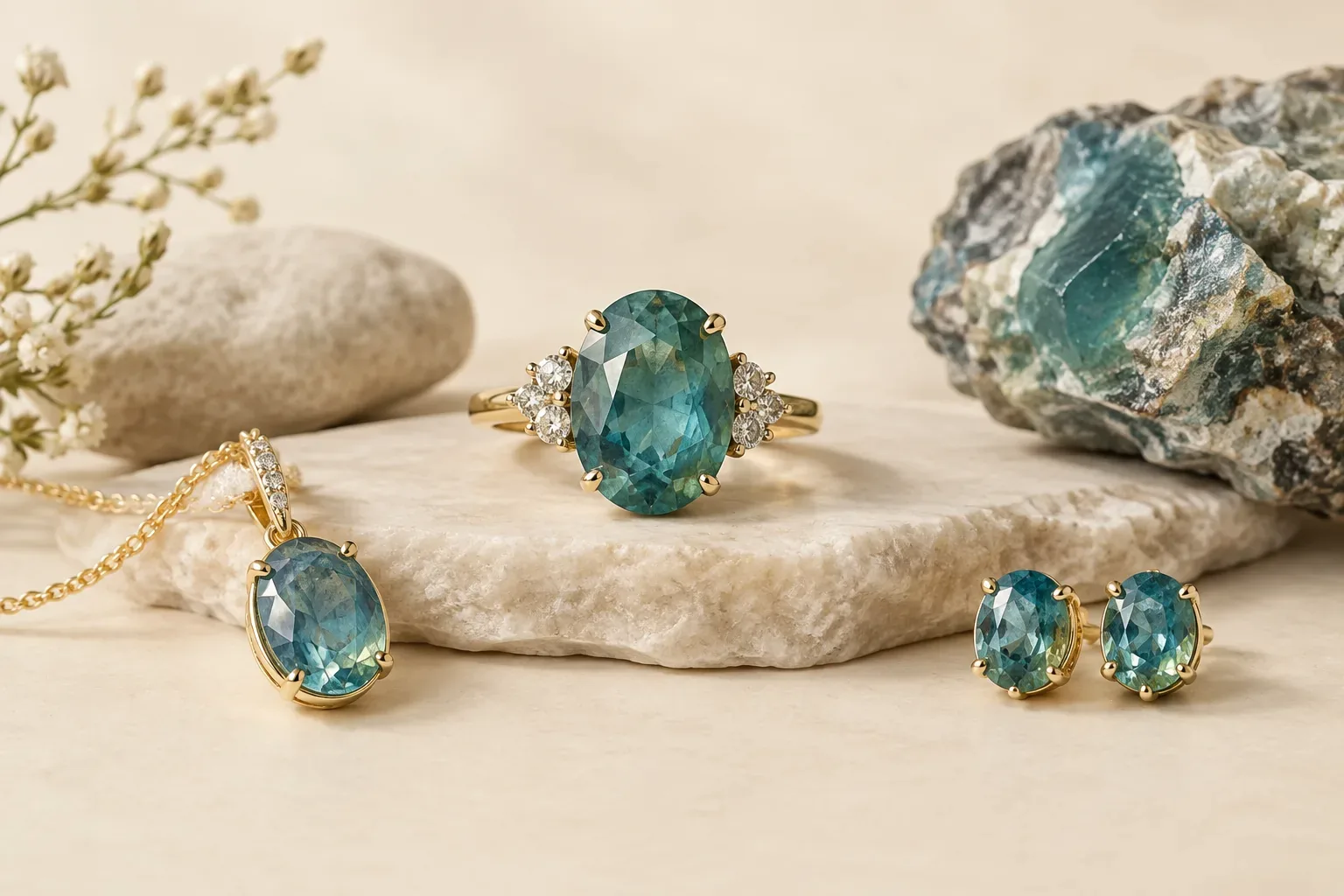
When transparent material is available, it is usually cut and set like other colored gemstones: faceted for rings, pendants, and earrings to show color and clarity. The GIA notes that transparent, facetable examples of rare minerals are uncommon; when they do appear they are often used in bespoke and collector pieces rather than high‑volume production.
Owing to its scarcity, grandidierite is most commonly seen in custom, artisan, or limited‑edition pieces where the maker highlights the stone’s rarity. Jewelers may choose protective settings—such as bezel or halo styles—to secure and showcase small but valuable stones. In some cases, slightly included or less transparent material may be cut as cabochons for pendants and brooches, where color and translucency are emphasized over brilliant faceting.
Practical and respectful selection or gifting guidance
Ask for documented identification and disclosure. The Federal Trade Commission (FTC) advises buyers to request clear information about whether a gem is natural, lab‑grown, imitated, or treated. For a rare stone like grandidierite, insist on written confirmation from a reputable laboratory or a qualified gemological report when possible.
Clarify origin and treatment claims. Origin statements and treatment disclosures affect value. Ask sellers whether the stone has been subjected to heat, diffusion, dye, or other treatments and request written disclosure. The FTC’s consumer guidance recommends explicitly asking about treatments and how they affect care and durability.
Buy from reputable sources and expect provenance. Because fine grandidierite is rare, reputable dealers and auction houses will provide provenance, certificates, or at least transparent sourcing and treatment information. Be cautious with dramatic origin claims unless they are backed by documentation.
Match the choice to the recipient. If you are gifting grandidierite, consider how the recipient will wear the piece. For someone who wears jewelry daily, choose a protective setting and a design that minimizes exposure to knocks and chemicals. For collectors, a loose gem with documentation or a display‑quality mounted piece may be more appropriate. Tie the rarity into the sentiment by explaining why you chose the stone—personal significance matters more than invented historic meanings.
Care, maintenance, and conservatism in use
Given the scarcity of fine material and potential sensitivity of unusual minerals, adopt a conservative approach to care. The FTC guidance on buying gemstones notes that buyers should be informed about any treatments and the care those treatments require. When treatment status is unknown, assume the need for gentle handling and cleaning.
Use protective settings and thoughtful wear. Consider settings that shelter the stone’s edges and pavilion, such as bezels, low crowns, or halo frames. Reserve grandidierite pieces for occasional or careful daily wear rather than rough activity. Store grandidierite pieces separately to avoid scratches or impact from harder gems.
Cleaning and professional maintenance. Clean grandidierite gently with a soft cloth and mild, non‑abrasive soap and water; avoid ultrasonic cleaners and harsh chemicals unless a qualified gemologist confirms those methods are safe for the specific gem and any treatments it has received. Periodic professional checks will ensure prongs, bezels, and mounting remain secure.
Choosing settings and design considerations
Design decisions should balance display and protection. For rare transparent stones, a design that maximizes light return—such as thoughtful faceting and an open pavilion—will showcase color, but open settings expose edges to potential damage. Halo and bezel combinations provide visual emphasis and added security, and low‑profile mounts limit the chance of impact.
Work with experienced jewelers and ask questions. Artisans familiar with rare gems can recommend appropriate metals, prong thickness, and protective design elements. Because supply is limited, consider commissioning bespoke work so the piece’s construction and documentation match the stone’s value and the recipient’s needs.
Final considerations
Grandidierite’s meaning in jewelry today is mainly tied to its rarity and the personal narratives buyers and recipients create. Professional gemological and museum sources treat it as a scarce mineral with occasional gem‑quality occurrences, not as a gemstone with long historical symbolism. That modern, personal meaning—uniqueness, rarity, and bespoke taste—can be powerful in gifting and collecting, but it should be presented honestly and with supporting documentation.
When buying or gifting grandidierite jewelry, prioritize reputable identification, clear treatment and origin disclosure, protective design, and conservative care. Doing so respects both the stone’s geological rarity and the recipient’s desire for a lasting, meaningful piece.
Frequently asked questions
Is grandidierite a common gemstone?
No. Professional gemological and museum sources emphasize that grandidierite is rare, and transparent material suitable for faceting is especially uncommon. Because of that scarcity, it is more often encountered in collectors’ pieces or bespoke jewelry than in mass‑market items.
How do I verify that a grandidierite is genuine?
Ask the seller for a written identification from a reputable gemological laboratory or from a qualified professional. Request disclosure about whether the gem is natural, lab‑grown, imitated, or treated; the Federal Trade Commission recommends obtaining such documentation when buying gemstones.
Are treatments common for grandidierite and do they affect care?
Sellers should disclose any treatments. The FTC’s guidance on buying gemstones underlines that treatment disclosure matters because some treatments affect durability and cleaning recommendations. When in doubt, assume a conservative care routine and consult a gemologist before using aggressive cleaning methods.
What setting is best for grandidierite jewelry?
Choose settings that balance display and protection. Protective options such as bezels, low‑profile mounts, or halo settings can reduce exposure to knocks and help preserve a rare stone, while still showing color and beauty.
How should I clean and store grandidierite jewelry?
Clean gently with a soft cloth and mild soap and water. Avoid ultrasonic cleaners and harsh chemicals unless a qualified professional has confirmed they are safe for the specific stone and any treatments it has received. Store grandidierite pieces separately to avoid abrasion from harder gems.
Sources and further reading
- Gems Recovered from Sedimentary Rocks — Gemological Institute of America
- Gems and Minerals: Beauties and Building Blocks — Smithsonian National Museum of Natural History
- Buying Gemstones, Diamonds, and Pearls — Federal Trade Commission