Meaning at a glance
Kornerupine is a rare gem often showing strong pleochroism; separate its documented gemological identity, documented sources and care from modern symbolic or personal meanings when buying or gifting.
What the historical record actually shows
There is very little well-documented historical symbolism attached to kornerupine in the academic or museum record. Major institutional references treat kornerupine as a mineral and gem species rather than as an historically symbolic object. For basic geological and gem identity, institutions such as the Smithsonian National Museum of Natural History document kornerupine primarily as a rare mineral suitable for study and selective use in jewelry rather than as an object with an established cultural symbolism (Smithsonian National Museum of Natural History).
Modern gemological reporting and reference specimens (for example, in projects and reports by professional bodies) also focus on kornerupine’s optical and crystallographic properties rather than on a recorded history of cultural meanings. This pattern—scientific description rather than ritual or widely recorded symbolic use—means that any widely stated ‘‘traditional’’ meanings for kornerupine should be treated as contemporary or personal attributions rather than as historically documented beliefs (Gemological Institute of America).
Documented gem facts versus modern interpretation
Documented fact: kornerupine is a rare magnesium aluminum borosilicate mineral that gemological authorities examine for identity, inclusions, and optical behavior. Institutions that catalog gems and minerals emphasize physical and optical characteristics and provenance when describing kornerupine specimens (Gemological Institute of America; Smithsonian National Museum of Natural History).
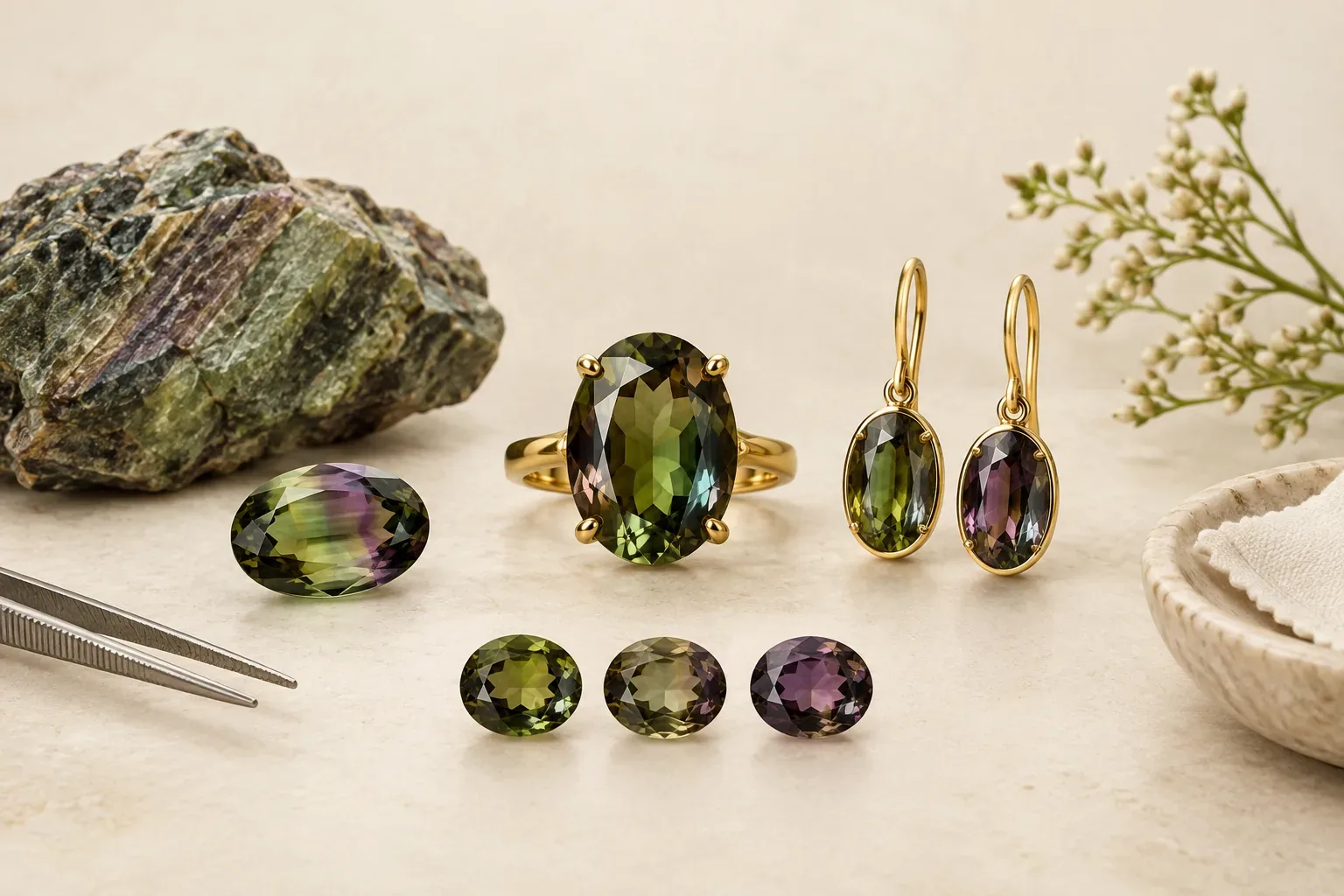
Documented fact: kornerupine can show strong pleochroism—meaning the stone can display different colors when viewed from different crystallographic directions. Gemological laboratories and reference projects note pleochroism as an identification and cutting consideration rather than as a symbolic property (Gemological Institute of America).
Modern interpretation: contemporary jewelers, designers, and wearers sometimes attach personal or spiritual meanings to kornerupine—for example, associating shifting colors with transformation or balance. Those are modern, subjective attributions and not part of a continuous historical tradition; treat them as personal symbolism rather than documented cultural heritage.
Pleochroism: what it is and why it matters in jewelry
Pleochroism is an optical property of some anisotropic gems where the stone absorbs and transmits different wavelengths of light along different crystal axes. For kornerupine, the presence and strength of pleochroism are important technical observations recorded by gemologists and used for identification and for advising on how to cut the stone to best display color (Gemological Institute of America).
For jewelry, pleochroism affects appearance and the best cutting approach. A lapidary can orient a kornerupine to highlight a preferred color face or to allow the stone’s color to shift as it moves. That quality is part of the gem’s appeal for designers who want dynamic color play in rings, pendants, or earrings, but it also means that cutting decisions will influence the final look and value (Gemological Institute of America).
How kornerupine typically appears in jewelry
Because kornerupine is uncommon in the jewelry market, it tends to appear in bespoke or small-run pieces rather than mass-market lines. Jewelers who work with kornerupine usually choose faceting or directional cutting to emphasize color and pleochroic effects, or occasionally a cabochon for certain colors or inclusions that are better displayed with curved surfaces.
Design choices often respond to the gem’s rarity and optical behavior. Settings that protect the stone—such as bezels or prongs with protective shoulders—are preferred for everyday pieces, and open settings that allow viewing from multiple angles are used to showcase pleochroism. Because authoritative museum and scientific sources discuss kornerupine primarily from a mineralogical and gemological perspective, design approaches in the marketplace are driven by appearance, durability considerations, and the preferences of buyers and designers (Smithsonian National Museum of Natural History; Gemological Institute of America).
Practical buying guidance
Ask for documented information. Because kornerupine is rare, request written details about identity and any treatments, as well as a clear statement of origin when available. The Federal Trade Commission emphasizes that sellers should disclose whether a gemstone is natural, lab-grown, treated, or an imitation, and buyers should expect truthful, clear disclosure about treatments and origin (Federal Trade Commission).
Request a reputable lab report for higher-value purchases. A recognized gemological report will list pleochroism observations, inclusions, and any treatments documented by the laboratory. If you care about color direction, ask the lapidary or seller whether the stone was oriented to show a particular hue and whether the report specifies observed pleochroism (Gemological Institute of America).
Consider the recipient’s preferences and lifestyle. Because meaningful jewelry is personal, ask whether the recipient prefers dynamic color changes or a stable single tone. If the person is active with frequent hand use, choose a protective setting and give clear care instructions. If provenance matters to the recipient, prioritize documented sourcing and lab verification.
Be mindful of rarity and price. Rarity makes kornerupine more likely to be offered by specialized dealers or custom jewelers; expect limited availability and correspondingly variable pricing based on quality, size, cut, and documented origin. Because the FTC recommends transparent disclosure, compare seller statements and insist on written confirmations for any claim about natural origin or treatments before completing a purchase (Federal Trade Commission).
Caring for kornerupine jewelry
Follow general jewelry-care best practices and heed any gem-specific advice provided with the stone. Scientific and museum sources that discuss gem suitability advise treating uncommon gems with the same care you would give any delicate or rare stone: protect from hard knocks, abrupt temperature shifts, and harsh household chemicals (Smithsonian National Museum of Natural History).
For cleaning, use gentle methods suitable for delicate colored gemstones: a soft brush, mild soap, and lukewarm water are commonly recommended, and professional cleaning by a jeweler is appropriate for pieces with tight settings. Always verify whether a particular kornerupine specimen has received treatments that affect cleaning recommendations, and follow any special instructions from the seller or lab report (Federal Trade Commission).
For storage, keep kornerupine pieces separate from harder gems that could scratch them and wrapped to minimize exposure to dust and oils. When traveling with kornerupine jewelry, use padded containers and avoid storing items loosely together to prevent contact damage.
Respectful gifting and presentation
When gifting kornerupine, include documented provenance and care notes so the recipient understands both the gem’s rarity and how to care for it. Explain that most cultural meanings attached to kornerupine today are personal or contemporary rather than historically documented, so any symbolic message is your personal sentiment rather than an established tradition.
If the recipient cares about scientific context, consider pairing the gift with a short note that explains pleochroism and how the stone might shift color with movement. If the recipient prefers symbolic meaning, speak from your own intention—why you selected a color, changeability, or rarity—rather than presenting a fabricated historical tradition.
Final considerations
Treat kornerupine primarily as a rare gem with distinctive optical properties: documented gem identity, pleochroism, provenance, and any treatments determine value and care. Contemporary symbolic meanings are valid as personal expressions but should be distinguished from the limited historical record and from documented scientific facts recorded by institutions such as the Gemological Institute of America and the Smithsonian National Museum of Natural History.
For buying and disclosure, rely on clear seller statements and, when appropriate, third-party laboratory documentation. The Federal Trade Commission’s guidance on truthful disclosure is a useful consumer-protection standard to keep in mind when purchasing rare gems.
Frequently asked questions
Does kornerupine really change color?
Kornerupine can show pleochroism, meaning it may display different colors when viewed from different directions; gemological references note this as an identification and cutting consideration (Gemological Institute of America).
Is kornerupine a traditional or historical symbol?
There is little documented historical symbolism for kornerupine in museums or scientific literature; most symbolic meanings attached to the stone today are contemporary or personal rather than historically attested (Smithsonian National Museum of Natural History).
How should I clean and care for kornerupine jewelry?
Use gentle cleaning—mild soap, a soft brush, and lukewarm water—and avoid harsh chemicals, abrupt temperature changes, or knocks; follow any specific care notes provided by the seller or lab report, and consider professional cleaning for set pieces (Smithsonian National Museum of Natural History).
What should I ask the seller before buying kornerupine?
Request written disclosure about whether the stone is natural or treated, any known origin information, and a lab report for higher-value purchases; the Federal Trade Commission emphasizes clear, truthful disclosure about treatments and origin (Federal Trade Commission).
Is kornerupine suitable for everyday jewelry?
Kornerupine appears in jewelry, often in bespoke pieces; suitability depends on the stone’s specific durability and the chosen setting—protective settings and careful wear are commonly recommended, and museum references treat kornerupine as a gem used selectively in jewelry (Smithsonian National Museum of Natural History).
How can I highlight pleochroism when gifting kornerupine?
Choose cuts and settings that allow viewing from multiple angles or that orient the stone to emphasize a preferred color; include a note explaining pleochroism so the recipient understands the stone’s shifting appearance (Gemological Institute of America).
Sources and further reading
- Gübelin Gem Project: Kornerupine–Natrolite — Gemological Institute of America
- Gems and Minerals: Beauties and Building Blocks — Smithsonian National Museum of Natural History
- Buying Gemstones, Diamonds, and Pearls — Federal Trade Commission