Meaning at a glance
This guide helps you match birthdays, graduations, anniversaries, new-family gifts, memorials, and self-purchases to appropriate jewelry formats and practical considerations including sizing, month confirmation, disclosure, delivery, and return policies.
Why birthstones are given and what history actually says
The idea of associating specific gems with times of life has complex roots rather than a single origin. According to the Gemological Institute of America (GIA), some of the earliest links come through ancient Near Eastern and Hebrew material culture and texts that inspired later European traditions. Over centuries those associations shifted and multiplied; lists similar to our modern calendar-based birthstones began to appear in Western sources in the 18th and 19th centuries, and trade groups and gemological bodies helped to standardize month-to-gem assignments in the 20th century, as described by the GIA.
When you read about a 'traditional' or 'modern' birthstone list today, understand that such lists are the product of historical layering and commercial standardization rather than an unbroken single custom. Trade and industry organizations have played a practical role in formalizing which stones are commonly advertised as birthstones; Jewelers of America and organizations like the GIA publish the lists that most retailers follow today. If you want the month-to-stone reference used by many jewelers, see the GIA’s current list of birthstones.
Documented historical meanings versus modern personal interpretations
Documented historical meanings are those explicitly recorded by historians, archaeologists, or professional gemological sources. For example, the GIA records that certain gems were valued in antiquity for color, rarity, and alleged protective qualities in their cultural contexts. Those recorded uses are the evidence base: a gem was prized, traded, or set into certain kinds of jewelry at particular times and places.
Modern personal interpretations—such as 'this stone will bring luck to new parents' or 'this gem symbolizes a specific personality trait'—are contemporary meanings people attach today. These personal or marketing-led interpretations are valid as expressions of individual sentiment, but they are not the same as documented historical belief. Treat modern symbolic claims as subjective or culturally specific rather than universal fact.
How birthstones and related motifs appear in jewelry
Birthstones appear in every common jewelry format: rings, pendants, earrings, bracelets, and brooches. Jewelers design pieces around a stone's color and hardness; the Gemological Institute of America’s guidance on gemstone durability makes clear that cut, setting, and metal choice are integrated decisions. Softer gems are often used in pendants or earrings where they are less exposed to abrasion, while harder stones such as sapphires and diamonds are practical for daily-wear rings.
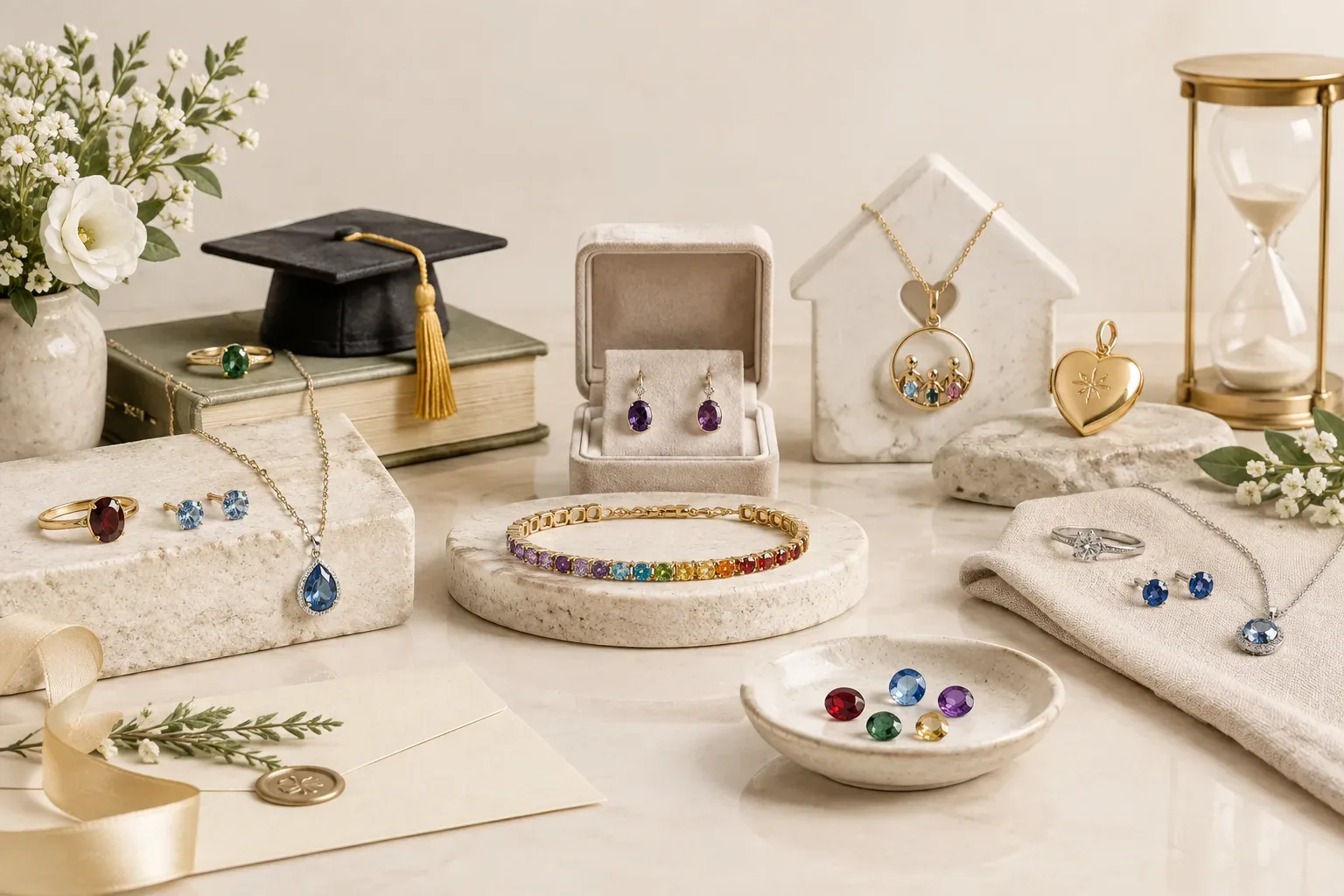
Motifs that reference life events—such as a laurel for achievement, interlocking circles for family, or small lockets for memorial keepsakes—are combined with birthstones to convey occasion-specific meaning. Jewelers often mount smaller birthstones as accent stones in a central motif or arrange multiple birthstones along a chain or band for family-style pieces. Trade guidance from Jewelers of America describes common formats and the reasons certain designs are recommended for gifting circumstances.
Occasion-by-occasion selection guide
Birthdays: For milestone birthdays choose a wearable, appropriately durable format. A birthstone pendant or stud earrings are safe choices for broad tastes and practical daily wear. For an engagement with strong sentimental intent, some people will choose a birthstone ring, but if the ring is meant for everyday use choose a harder stone and a protective setting as recommended by the GIA to minimize wear.
Graduations: Celebrate achievement with clean, classic designs that pair well with professional wardrobes. A single birthstone set in a pendant or a signet-style ring with a small birthstone can read as both personal and mature. Consider metal color that matches the recipient’s usual accessories and choose a setting that protects a stone if the recipient plans frequent wear.
Anniversaries: When gifting for anniversaries, combine the recipient’s birthstone with a style that signals the relationship’s character—timeless settings for long partnerships, or trend-forward designs for younger couples. If the anniversary corresponds to a milestone year with its own traditional gem, you might pair that theme with the birthstone for an extra layer of meaning, but be sure to disclose the stone’s type and origin as part of the gift.
New-family gifts (new parents, adoptions, or baby keepsakes): Family-oriented birthstone jewelry often features small, bezel-set stones grouped on a pendant or bar to represent each family member. For pieces meant to mark a birth, prioritize secure settings and choose stones sized for gentle daily wear or occasional use rather than something fragile. Consider whether the piece will be worn by the parent daily or kept as a keepsake; this will guide both metal and setting choices.
Memorials: Memorial pieces generally emphasize subtlety and durability. Lockets, small pendants, and understated rings that hold a single birthstone or a small cluster are common. Because meanings in memorial contexts are deeply personal, focus on secure construction and on the emotional appropriateness of the style; confirm metal and gemstone choices with the intended wearer or their close family when possible.
Self-purchases: When buying for yourself, prioritize what you'll actually wear. If you want daily wear, choose a hard stone and a protective setting and confirm sizing and comfort. If the piece is intended as a symbolic object stored or worn occasionally, prioritize aesthetics and personal resonance over maximum durability.
Practical buyer checks: sizing, month confirmation, and disclosures
Confirm the correct month before ordering and check the seller’s birthstone list when dates are near month boundaries, because some published lists vary slightly. Use the Gemological Institute of America’s birthstone reference for the widely accepted modern list. When sizing rings, use a recent, accurate measurement taken by a jeweler or the recipient’s existing properly fitting ring; Jewelers of America’s buying guidance recommends professional sizing or adjustable formats if you are unsure.
Ask sellers explicitly about gemstone origin, treatments, and whether stones are natural, lab-grown, or imitation. The Federal Trade Commission requires written disclosure about treatments, lab-grown versus natural gems, and imitations; it is your right to receive clear written information. If a gem’s durability or care needs make it unsuitable for the intended use, discuss alternative settings or stones.
Delivery, returns, and buyer protections
Treat delivery speed as secondary to secure packaging and insured shipping, especially for valuable stones. Confirm return and resizing policies before purchase so you can change fit or exchange a piece if the recipient prefers a different style. Jewelers of America recommends checking a seller’s warranty and after-sale services such as cleaning and inspection.
When purchasing from online retailers, request written gem descriptions and any certifications that accompany diamonds or other high-value stones. The FTC’s guidance emphasizes that sellers must not misrepresent a gem’s origin or treatment; keep all written descriptions and receipts until you are satisfied with the purchase. If a seller refuses basic disclosures or lacks clear return and insurance policies, consider selecting a different retailer.
Design and durability considerations
Match gemstone hardness and toughness to intended wear. The GIA’s guidance on gemstone durability explains how softer stones chip or abrade more easily and why certain settings—such as bezel or halo settings—offer better protection. For a birthstone intended for daily wear, choose a sturdier stone or a protective setting. For occasional-wear pieces, you can select softer but more visually striking gems with appropriate care plans.
Metal selection affects both aesthetics and maintenance. Yellow gold can warm up a colored stone; white gold or platinum will contrast more sharply with cool-toned gems. For family or memorial pieces that are heirloom candidates, select metals and settings that a local jeweler can repair or resize as needed.
Final gifting etiquette and respectful choices
Respect personal and cultural preferences when giving birthstone jewelry. Ask discreetly about style, metal allergies, or religious considerations before purchase when possible. For highly personal contexts like memorials or new-family gifts, a conversation about the type of keepsake desired will reduce the risk of unintentionally choosing something inappropriate.
Label the gift with month and stone information and include any certification or treatment disclosures from the seller. This transparency honors the recipient’s ability to care for and understand the piece and keeps the gift from becoming a source of later confusion.
Frequently asked questions
How do I confirm the correct birthstone for a month?
Consult a trusted reference such as the Gemological Institute of America’s birthstone list and check the seller’s stated list before purchase, especially near month boundaries where lists sometimes vary.
What should I ask a seller about gemstone treatments or origin?
Request written disclosure about whether the gem is natural, lab-grown, or an imitation and ask about any treatments. The Federal Trade Commission requires sellers to disclose such information in writing.
Which birthstones are suitable for everyday wear?
Choose harder and tougher gems or protective settings for daily wear; consult the GIA’s guidance on gemstone durability to match stone hardness and setting style to use and lifestyle.
What if I don’t know the recipient’s ring size?
Opt for a style that can be resized or for adjustable bands, measure an existing ring professionally, or choose non-ring formats like necklaces or earrings when size is uncertain.
How important are return and warranty policies when buying birthstone jewelry?
Very important; verify return, resizing, and warranty terms before purchase so you can exchange or adjust the piece later, and keep all written receipts and gem descriptions.
Sources and further reading
- Birthstones for Each Month — Gemological Institute of America
- Buying Gemstones, Diamonds, and Pearls — Federal Trade Commission
- Jewelry Buying Guides — Jewelers of America
- Gemstone Durability: Design to Display — Gemological Institute of America