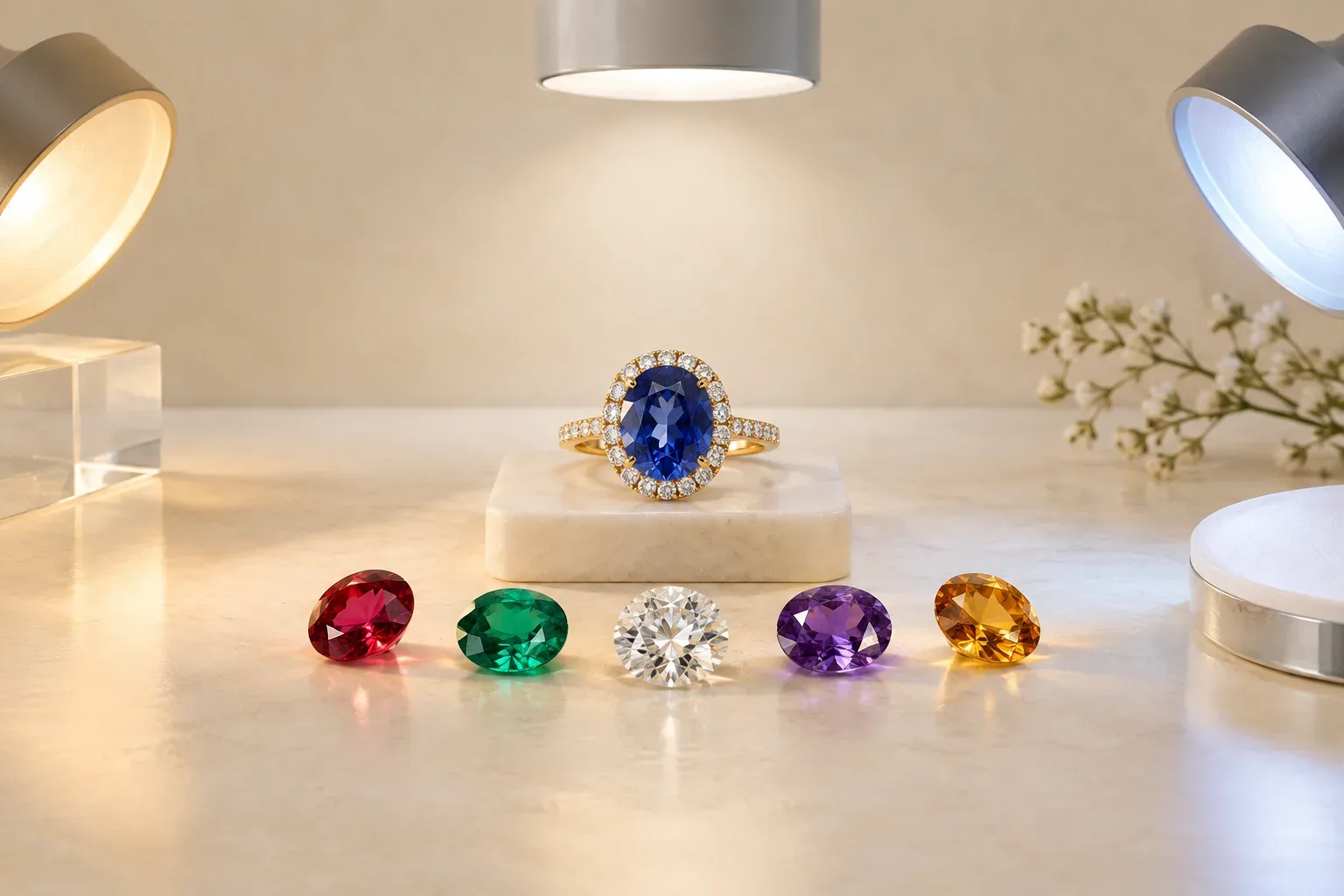
Meaning at a glance
Lighting affects perceived jewelry color through color temperature and rendering, diffusion and directional light, reflections from settings and surroundings, and optical phenomena like pleochroism and alexandrite-style color change; buyers should always compare pieces under more than one realistic light source.
Short answer
Lighting changes jewelry color because different light sources emit different mixtures of wavelengths, some light sources reveal or mask certain internal optical effects, and reflective metals and settings alter what your eye perceives. In plain terms: color temperature and color rendering of the light, how diffused or directional the light is, surface reflections from the setting, and intrinsic gem behavior such as pleochroism or true color change all combine to change what a gem looks like. For this reason, buyers should compare jewelry under more than one realistic light source before deciding.
How light physically changes what you see
Color temperature describes the visual "warmth" or "coolness" of a light source. Warm light (for example, typical incandescent or some LED settings) tends to enhance red and yellow tones, while cool daylight or cool white LEDs emphasize blues. The Gemological Institute of America (GIA) discusses how illumination influences the appearance and photography of gems and jewelry, and why different illuminants produce different visual results.
Color rendering is related but distinct: it measures how accurately a light source reveals colors compared with a reference light. Two lights with the same color temperature can still render colors differently. Gems that have subtle secondary tones or small variations in saturation can appear altered when shown under a light with poor color rendering.
Diffusion and direction matter. Harsh, directional spotlights emphasize surface reflections and contrast, potentially hiding body color or making faceting look harsher. Soft, diffused light reduces glare and can reveal uniformity of color and clarity more accurately. The way light enters a gem, reflects inside, and exits is affected by cut, clarity and the gem’s refractive properties; those interactions change with the angle and quality of illumination.
Metals and surroundings reflect onto a stone. A polished yellow-gold bezel will add warm reflections; a white metal can make colors appear cooler. When a stone sits close to colored clothing, hair or skin, those colors can bounce into the gem and subtly shift perception.
Some gemstones have inherent optical behaviors that respond to light source changes. Pleochroic gems show different colors along different crystal axes when viewed from different angles. Certain rare stones, such as alexandrite, show a pronounced color change between daylight and incandescent light. The GIA explains the difference between true color-change phenomena and pleochroism and why light source is central to observing those effects.
Historical evidence tied to specific gems and periods
Documentation from gemological authorities confirms that certain color phenomena have long been observed and historically prized. The Gemological Institute of America (GIA) records that alexandrite’s dramatic color change was recognized in its early uses and that this effect is associated with specific material properties rather than folklore alone. GIA’s alexandrite description links the stone’s famous appearance change to how it interacts with varying light sources.
Gemological research also shows that appraisal and valuation practices developed as observers learned how cutting, color zoning and pleochroism influence appearance. The GIA’s work on colored gemstone value factors and on interacting factors that affect value documents how historical and modern appraisers consider hue, tone, saturation, color uniformity, color zoning and cut when judging a gem’s appearance and market value. These are documented, technical observations rather than generalized cultural meanings.
Documented historical meanings versus modern personal interpretation
Documented historical meanings exist for some specific gems or jewelry traditions, and gemological literature focuses primarily on optical and material facts rather than symbolic claims. For example, GIA’s technical descriptions and research note when a color-change effect was observed and how it behaves under different lights; those are documented historical observations about the gem itself.
Modern symbolic or personal interpretations—such as assigning a mood or destiny to a color-shifting stone—are contemporary and subjective. Such meanings vary by culture, time and individual preference and are not universal. When considering symbolism, clearly separate what historical records and gemological research demonstrate from personal or cultural interpretations that arose later or vary between groups.
How the motif, gemstone, or tradition appears in jewelry
Designers use gemstone optical behavior deliberately. Color-change stones and strongly pleochroic gems are often set in styles that maximize viewing from multiple angles, such as open-back settings or multi-directional mounts, so the wearer and observer can appreciate shifts in color. A designer may choose white metal to minimize warm reflections on a blue-to-green stone or yellow gold to enrich warm tones in red or orange gems.
Motifs that reference color change or light—such as pieces named for dawn, dusk or northern lights—use gems and cuts that reveal movement in color or light as the wearer moves. Historically documented gem properties inform these designs: jewelers choose stones known for particular optical effects, and modern descriptions from authorities such as GIA help guide both makers and buyers in expectations about how a piece will look under different conditions.
Practical selection and gifting guidance
When choosing jewelry, plan to see the piece under multiple realistic light sources. That means evaluating the item in the retailer’s lighting, in daylight (a north-facing window is a good neutral reference), and under softer indoor lighting that mimics how the recipient will actually wear the piece. The thesis here reflects the interaction of color temperature, color rendering, diffusion and reflections: different lighting reveals different aspects of a gem’s color.
Ask the seller about the light used in store photography and display. The Gemological Institute of America’s guidance on photographing gemstones notes that display and photo lighting choices affect perceived appearance; apply the same caution when you inspect pieces in person. If a stone’s color looks marginal in one light but attractive in another, consider whether the recipient will mainly encounter the preferred light in their daily life.
Request objective documentation for higher-value purchases. For treated gems, lab-grown stones, and significant diamonds, the Federal Trade Commission advises that sellers disclose treatments and origins. Ask for a lab report or certification when appropriate and verify any claims about color change, treatment, or origin. For colored gemstones, ask whether the seller can demonstrate the color behavior under different illuminants.
Check return policies and, for significant gifts, consider a short trial period so the recipient can assess the piece in everyday lighting. If you are buying as a gift and cannot easily show the piece under multiple lights beforehand, choose items whose color is stable across common lighting or pick a setting and metal that complements likely light conditions.
Think about the setting, metal and styling as part of the perceived color. A highly reflective polished band can introduce unwanted warm or cool reflections; matte finishes and bezel settings reduce reflected glare and can make the gem’s body color read more consistently. Consider the wearer’s wardrobe and typical environments when selecting metal and gem combination.
A final note on shopping wisely
Lighting is one of several interacting factors that determine how a gem will look to your eye. Cut, clarity, color zoning, pleochroism, and whether a stone is lab-grown or treated all interact with illumination to produce the final impression. The GIA’s resources on colored gemstone value factors and interacting factors that affect value provide a technical foundation for understanding those interactions.
When you compare a piece in more than one realistic light source—store lighting, daylight, and softer indoor light—you give yourself the best practical sense of how the jewelry will read in daily life. Combine that approach with documentation, disclosure checks, and sensible return protections to make a confident, respectful purchase or gift.
Frequently asked questions
Why does a gem look different in the store than at home?
Stores often use bright, directional or specially tuned lighting that emphasizes sparkle and saturation. Different color temperature and color rendering between store lights and your home lighting will change how hues and secondary tones appear. To get a realistic sense, view the piece in store lighting, in daylight near a north-facing window, and under the kind of indoor light the recipient wears most.
Are color changes in gems always a sign of treatment or fraud?
No. Some stones naturally display color change or pleochroism; alexandrite is a documented example of a natural color-change gem as described by the Gemological Institute of America. However, treatments and enhancements do exist. The Federal Trade Commission advises buyers to seek disclosure of treatments, and reputable sellers can provide lab reports when relevant.
How should I test a stone for true color change?
Compare the stone under at least two different light sources that mimic real-world conditions: daylight and a warmer indoor light. Genuine color-change gems will show a consistent shift in hue between those illuminants. Ask the seller to demonstrate and to provide written documentation when available.
Does metal choice affect how a gemstone’s color appears?
Yes. Reflective metal surfaces and the color of the metal (yellow gold versus white metal) introduce reflected light that can warm or cool the perceived color of a gem. Designers intentionally choose metals to complement or contrast gem colors, and selecting the appropriate setting can improve color stability in everyday environments.
What consumer protections should I ask for when buying color-sensitive jewelry?
Ask about treatment disclosures, request lab reports for high-value stones, verify the store’s return policy or trial period, and confirm how the piece was photographed and displayed. The Federal Trade Commission recommends clear disclosure about treatments, synthetics, and imitations.
Sources and further reading
- Colored Gemstone Value Factors — Gemological Institute of America
- Factors in Colored Stones that Interact to Affect Value — Gemological Institute of America
- How to Photograph Gems and Jewelry — Gemological Institute of America
- Alexandrite Description — Gemological Institute of America
- GIA Diamond Research — Gemological Institute of America
- Buying Gemstones, Diamonds, and Pearls — Federal Trade Commission