Meaning at a glance
Multicolor jewelry meaning depends on how the color is produced—mixed gems, zoning, enamel, glass, or surface effects—and on specific cultural and personal contexts; do not assume a single universal meaning.
Quick answer
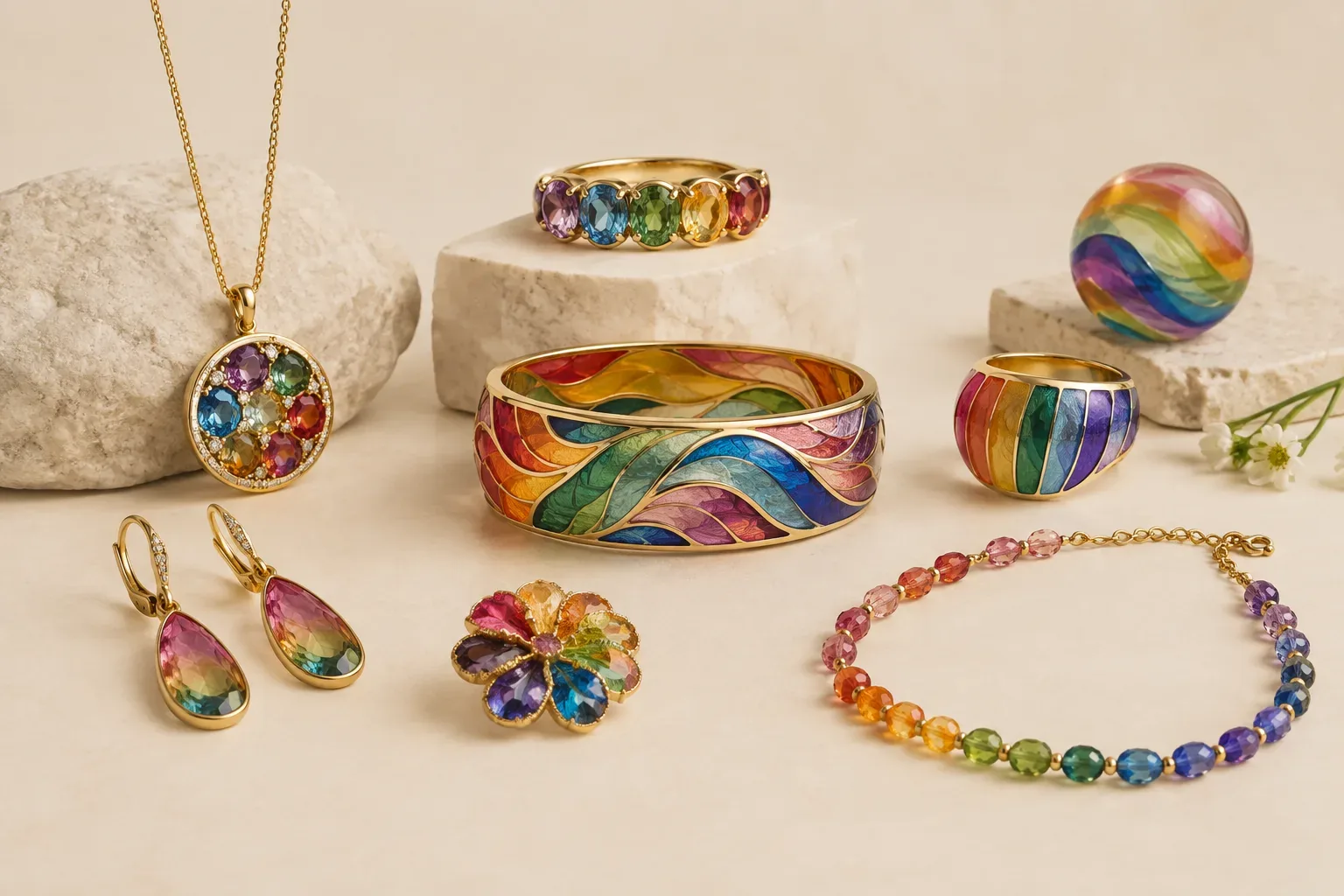
Multicolor jewelry meaning cannot be reduced to one universal symbol. Multicolor pieces arise in several technical ways—by setting different colored gems together, by natural color zoning within a single stone, by enameling or colored glass work, or by surface and optical effects—and each technical origin has different historical uses, values, and cultural contexts. Treat symbolic readings as specific to the maker, wearer, or culture, not as inherent to every multicolored object.
What 'multicolor' means in technical terms
When a jeweler or gemologist describes a piece as multicolor they are describing how color appears, not assigning a single meaning. The colors may come from multiple separate gems set together (for example, a cluster of sapphires, emeralds, and rubies), from a single gem that shows natural color zoning or a color-change phenomenon, from applied color such as vitreous enamel or glass, or from surface effects and treatments that modify appearance. The Gemological Institute of America (GIA) explains that hue, tone, saturation and color uniformity are core value factors for colored gemstones, and that variability in those attributes is one way multiple colors can appear in a single piece (GIA, "Colored Gemstone Value Factors").
Historical evidence and precise cultural references
Material and technical evidence for multicolor jewelry is well documented in museum and gemological research. The Metropolitan Museum of Art has cataloged examples of Islamic jewelry where polychrome enamel and inlaid colored stones are used as part of established decorative traditions; those objects show technical choices about materials and color but do not imply a single symbolic meaning across all Islamic cultures or periods (The Metropolitan Museum of Art, "Islamic Jewelry in The Metropolitan Museum of Art").
Gemological research collected by the GIA records how gem identification, origin and treatments can create or alter multicolor effects in stones, and how those effects have been understood when assessing value and authenticity. The GIA's colored-stone research provides the tools to distinguish natural multicolor causes—such as zoning or pleochroism—from treatments or synthetics that create color (GIA, "GIA Colored Stone Research").
Documented historical meanings versus modern personal interpretations
Where historical meaning is documented, it is generally contextual and local. Curatorial descriptions and technical studies record how makers chose colors and materials for aesthetic, technical, or status-related reasons. For example, museum records often explain that polychrome enamels or richly colored inlays signaled wealth, used available techniques, or followed courtly fashion in a given place and period, rather than carrying one fixed symbolic statement (The Metropolitan Museum of Art).
Modern symbolic readings—such as linking every rainbow-colored piece to universal ideas of hope, inclusivity, or personal expression—are contemporary interpretations rather than universal historical facts. Such interpretations can be meaningful for an individual wearer or a social movement today, but they should be presented as personal or modern cultural meanings, not as intrinsic properties of multicolor materials. The GIA's work reminds readers that the technical origin of color affects how it has been valued and described, which is distinct from symbolic reading (GIA, "Colored Gemstone Value Factors"; "GIA Colored Stone Research").
How multicolor motifs, gemstones, and traditions appear in jewelry
Mixed-gem settings: Designers frequently create multicolor looks by setting several different stones together. This can be literal rainbow arrays or more subtle palettes. Mixed stones allow distinct materials and optical properties to play off each other, and curators note this approach across many periods and regions as an aesthetic choice (The Metropolitan Museum of Art).
Color zoning and pleochroism: Some single gemstones exhibit more than one apparent color due to internal zoning or viewing direction. Gemological study distinguishes these natural phenomena from treatments, and those distinctions matter for both meaning and value. The GIA emphasizes identification of such phenomena when assessing colored stones (GIA, "GIA Colored Stone Research").
Enamel and glass: Enameling, cloisonné, and glass inlay are long-standing techniques for introducing vivid, stable color when either gem material was unavailable or the design called for flat, painted color. The Metropolitan Museum of Art documents use of enamel and colored inlay in Islamic and other decorative traditions as a durable method to achieve polychromy in metalwork and jewelry (The Metropolitan Museum of Art).
Surface effects and treatments: Some multicolor appearances derive from surface coatings, diffusion treatments, or optical phenomena such as iridescence and play-of-color. Gemological literature treats these as materially different from inherent gem color and requires disclosure when assessing identity and value (GIA, "Colored Gemstone Value Factors").
Practical and respectful selection or gifting guidance
Start with the technical origin: Ask whether the multicolor effect is from separate gems, a single stone’s zoning, enamel, glass, or a surface treatment. The origin affects durability, care, and value. For example, enamel requires different care from faceted stones; fusion coatings or diffusion treatments can wear and may require disclosure, so ask the seller about treatment history. The GIA's resources explain why identification and treatment disclosure matter for both value and care (GIA, "GIA Colored Stone Research").
Consider the wearer’s meaning: If you are buying to mark an occasion, ask how the recipient interprets color. Some people choose multicolor pieces for personal symbolism—such as representing different family members, life stages, or a favorite palette—while others prefer historical or technical authenticity. Present symbolic readings as personal or contemporary cultural meanings rather than universal facts.
Respect cultural traditions: If a design or motif is tied to a specific culture—such as historically polychrome techniques documented in museum collections—learn whether the design has contemporary cultural significance and whether the recipient would appreciate or be uncomfortable with that reference. Museum publications, such as the Metropolitan Museum of Art’s catalogues, can help you identify techniques and origins so you can make an informed and respectful choice (The Metropolitan Museum of Art).
Prioritize durability and lifestyle fit: Multicolor can be achieved with soft materials (certain enamels or glass) or with highly durable gems. Match the material to the wearer’s daily life: a person who works with their hands may prefer harder stones and secure settings; enamel and painted surfaces are more vulnerable to abrasion. Gem valuation factors discussed by the GIA—such as color stability and treatment—help guide practical durability choices (GIA, "Colored Gemstone Value Factors").
Verify claims and demand disclosure: For both value and ethical reasons, request identification, treatment disclosure, and provenance when possible. Trusted gemological labs and clear seller documentation reduce surprises. The GIA’s research emphasizes identification and treatment context as essential for responsible buying (GIA, "GIA Colored Stone Research").
Care and long-term thinking
Different color technologies require different care. Enamel can chip if struck, painted surfaces and coatings can wear, and some treated gems may change appearance if exposed to heat or chemicals. For long-term enjoyment, keep documentation about the piece’s materials and any treatments, and consult a reputable jeweler for repairs so that techniques suited to the original materials are used.
When gifting, include a note about what you know: a short card describing whether the colors come from natural stones, a color-change gem, enamel, or a surface treatment makes the object more meaningful and helps the recipient care for it correctly.
Final perspective
Multicolor jewelry is technically diverse and culturally varied. The technical origin of color—mixed gems, zoning, enamel, glass, or surface effects—matters for history, care, valuation, and respectful interpretation. Museum documentation and gemological research provide the best foundation for understanding what a piece is and how it may have been used or valued in its original context, while modern symbolic readings remain valid as personal or cultural choices rather than universal truths.
Frequently asked questions
Does multicolor jewelry always symbolize the rainbow or a single idea?
No. While some contemporary readers use rainbow imagery to express ideas like diversity or hope, multicolor jewelry has many technical origins and cultural histories. Symbolic associations are modern or personal unless specific historical evidence links a design to a particular meaning.
How can I tell whether a piece’s color comes from gems, enamel, or treatments?
Ask the seller for documentation and lab reports when available. Reputable sellers disclose whether color is from natural stones, treated stones, enamel, glass, or surface coatings. Gemological resources, such as those published by the GIA, offer guidance on identifying origins and treatments.
Is enamel less durable than gemstones?
Enamel is generally harder to repair than faceted gemstones and can chip if struck. It can be very durable if properly cared for, but it requires different handling and repair approaches than hard gems; consider the wearer’s lifestyle when choosing enamel-based multicolor pieces.
Should I avoid culturally specific multicolor designs as a gift?
Not necessarily. Research the design’s origin and meaning and consider whether the recipient appreciates cultural references. Museum publications and curatorial notes can help you understand a style’s history so you can give an informed and respectful gift.
Does the GIA recommend asking about treatments?
Yes. The GIA’s colored-stone research emphasizes the importance of identifying treatments and origins, since they affect value, care, and disclosure.
Sources and further reading
- Colored Gemstone Value Factors — Gemological Institute of America
- GIA Colored Stone Research — Gemological Institute of America
- Islamic Jewelry in The Metropolitan Museum of Art — The Metropolitan Museum of Art