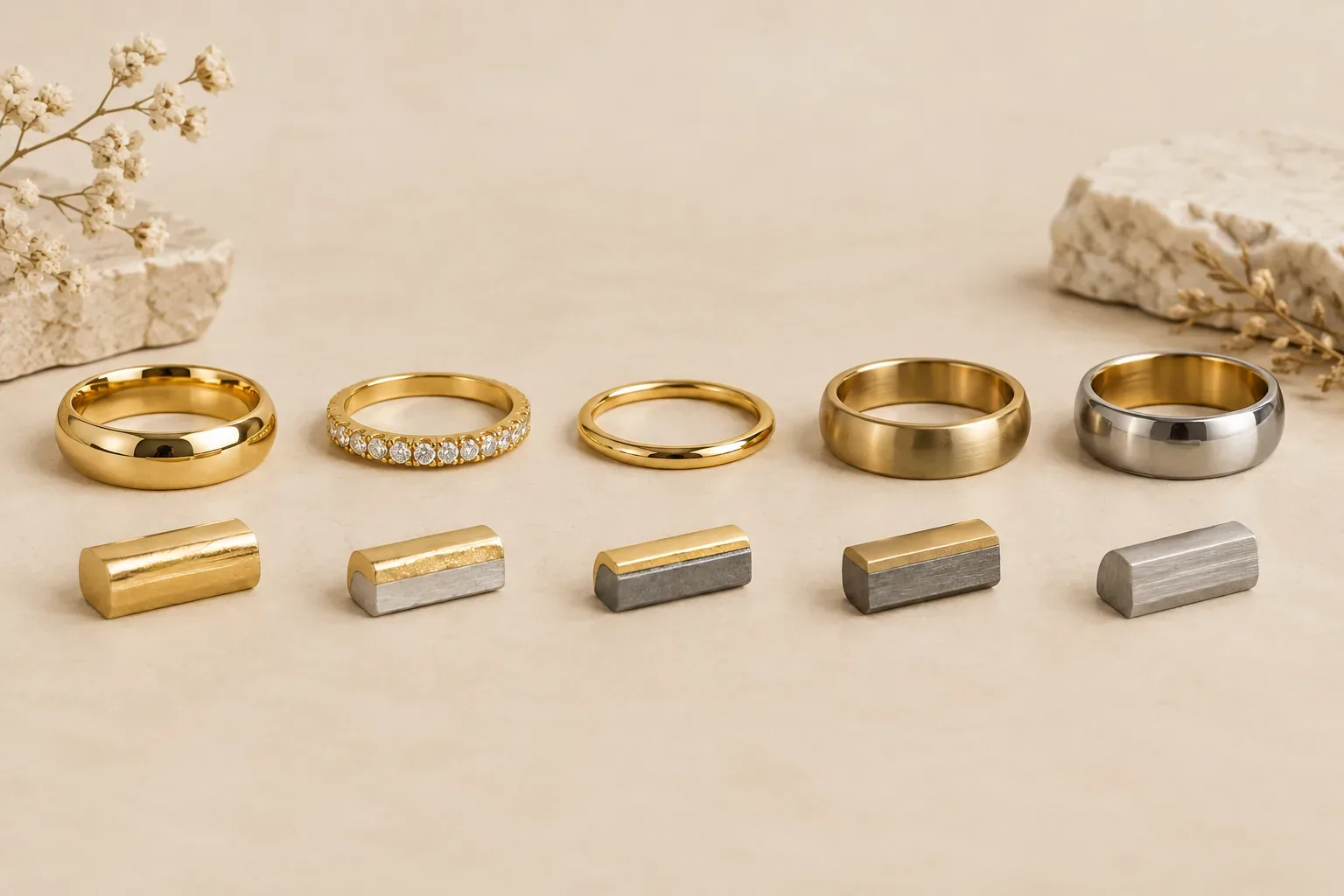
Meaning at a glance
Help readers distinguish solid gold alloys, vermeil, gold plating, PVD coatings, and base-metal color without equating appearance with composition.
Why this distinction matters
Gold-color jewelry can look very similar across very different materials. A warm yellow sheen may come from a solid gold alloy, a thick silver-and-gold vermeil finish, a thin electroplating layer, a durable physical vapor deposition (PVD) coating, or a base metal alloy that is itself colored. Appearance alone does not prove composition; composition determines price, care, permanence, and disclosure obligations.
Documented historical evidence and cultural contexts
Archaeological and museum collections worldwide show that yellow–gold finishes and gold objects have been produced and valued in many distinct cultures. Curators and historians catalogue objects by provenance and technique, and those records form the basis for claims about historical meanings and uses.
When evaluating historical evidence, use the same careful distinctions we use for modern pieces: provenance documentation, scientific compositional analysis, and clear museum or catalogue citation. Professional gemological research institutions emphasize material identification and provenance as the foundation for historical interpretation; treat statements about cultural meaning as interpretations built on those material facts rather than as universal truths.
Different cultures associated gold and goldlike color with different concepts: in many contexts gold signaled status or ritual importance; in other contexts color alone may have been decorative. Because the documentary record varies by region and object, avoid assuming a single meaning across time or place. Use object-level documentation (provenance, lab analysis, catalogue entries) to support any claim about how a particular culture treated gold-color jewelry.
Documented meanings versus modern personal interpretations
Documented meanings are built from primary sources and object analysis: inscriptions, maker’s marks, provenance records, contemporaneous texts, and scientific testing of materials. Those are the bases that let museums and researchers assign meanings or functions to pieces.
Modern personal interpretations are individual or community-based meanings assigned to color or metal today—sentimental value, fashion preference, or symbolic use in contemporary ceremonies. Those modern meanings are valid for the wearer but should not be conflated with historical fact unless supported by historical documentation.
When writing about or gifting gold-color jewelry, be clear which kind of meaning you intend: an historical claim grounded in evidence, or a modern symbolic intention you and the recipient share.
How gold color appears in different materials
Solid gold alloys: Pure gold is too soft for most jewelry, so gold is alloyed with metals such as copper and silver to create 10K, 14K, 18K, and other standards. The alloy and karat (for example, 14K or 18K) affect color and durability. Solid gold will have a hallmark or karat stamp and, when examined by a qualified tester, consistent density and non-magnetic behavior.
Vermeil: Vermeil is sterling silver finished with a relatively thick layer of gold. It combines the underlying silver base (often stamped .925) with a substantial gold coating. Vermeil can look like yellow gold but responds to wear differently: after the gold layer wears, silver will become visible and may darken if exposed.
Gold electroplating: Electroplated pieces have a thin layer of gold applied to a base metal. Thickness varies and is usually much thinner than vermeil; thin plating will reveal base metal quickly in spots of abrasion or along edges. Look for worn edges, color differences near joints, and a lack of a sterling/karat hallmark.
PVD and other coatings: Physical vapor deposition (PVD) and related vacuum-coating technologies deposit a durable, often uniform layer that resists scratching and color change better than traditional electroplating. PVD coatings can mimic gold tones but are not the same as a gold alloy; they will have manufacturer specifications rather than traditional karat hallmarks.
Base-metal gold color: Some base-metal alloys are formulated to have a goldlike hue. These are distinct from gold alloys because they contain little or no gold, and their long-term tarnish behavior and resale value differ from gold-containing metals.
How motifs and gemstones interact with gold color
Design motifs and gemstone choices are affected by metal color. Yellow gold often enhances warm-toned gemstones such as citrine, garnet, and certain sapphires because of hue harmony; GIA’s research on color, hue, tone, and saturation helps explain how human perception links metal color and gemstone color in jewelry design.
Setting style reveals material too: prong and bezel work on solid gold will show consistent metal inside the setting; vermeil and plated settings may expose a different base metal at solder joints or where the setting has been worked. GIA’s guidance on photography and lighting emphasizes that color appearance changes with light source and camera settings, so online pictures may mislead you about the true tone of a metal or gem.
Practical identification steps you can use
Look for hallmarks and stamps. A karat mark (for example 10K, 14K, 18K) or a fineness number (585, 750) indicates a gold alloy; a .925 stamp indicates sterling silver, often a base for vermeil. Absence of a stamp does not prove a piece lacks gold, but hallmarks are an important first clue.
Examine wear patterns. Thin plating often wears at high-contact points and along edges; vermeil, with thicker gold over silver, will wear more slowly but will reveal silver underneath when it does. PVD coatings usually show less start-stop wear but will have manufacturer labeling rather than traditional hallmarks.
Ask for disclosure. The Federal Trade Commission advises sellers to disclose material, treatments, and whether a gemstone is natural, lab-grown, or imitation. Ask the seller to state whether a piece is solid gold, vermeil, plated, PVD, or a base-metal alloy and to provide the thickness of any plating if available.
When in doubt, seek testing. A qualified jeweler or gemological laboratory can perform tests—acid testing, X-ray fluorescence (XRF), and other analyses—to determine composition. For gemstones and colored stones, follow the GIA’s suggestions on identification and reporting treatments before drawing value or meaning conclusions.
Care, durability, and cleaning by material
Solid gold alloys: Generally durable and tolerant of routine wear; cleaning with warm soapy water and a soft brush is safe for most karat gold. Higher karats (18K and above) are softer and may scratch more easily.
Vermeil: Clean gently with a soft cloth and mild soap; avoid abrasive cleaners and ultrasonic cleaners that can strip the gold layer. Store separately to minimize abrasion.
Electroplating: Expect thinner finishes to wear faster; avoid harsh chemicals and abrasion to preserve plating. Replating is possible but requires professional work.
PVD and hard coatings: More resistant to scratches and tarnish but still avoid harsh abrasives and chemical exposure that could damage coatings or the underlying metal.
Selection and gifting guidance (practical and respectful)
Match material to intention. If you want a durable everyday piece with intrinsic metal value, choose a solid-gold alloy and verify the karat stamp and seller disclosure. If you want an affordable look-alike for occasional wear, vermeil or PVD may be appropriate—ask about plating thickness and care requirements.
Respect cultural and personal meanings. Ask recipients whether they prefer particular colors or metals. If the gift is meant to reference a historical or cultural meaning, verify that interpretation with reliable documentation rather than assuming a color alone carries that meaning.
Ask about disclosure and certification. For higher-value gifts, request written confirmation of material and any gemstone treatments. The FTC recommends sellers make treatment and material disclosures; accept only clear, written claims about composition.
Think long term. Consider repairability and resale needs. Solid gold can be resized and repaired more straightforwardly than heavily coated or thin-plated pieces. If longevity matters, favor higher-quality alloys or thicker vermeil and documented PVD specifications.
When to consult a professional
Consult a qualified jeweler or a gemological laboratory when provenance, resale value, or historical attribution matters to you. Professionals use instruments and reference standards to determine composition and treatments; for colored stones, consult GIA-style identification to understand hue, tone, saturation, treatments, and origin context.
If a seller’s claims are unclear or if a piece is presented as high value because of its metal, request documentation such as assay reports, hallmark verification, or lab testing before finalizing a purchase.
Frequently asked questions
How can I tell if a piece is solid gold or just gold-colored?
Check for hallmarks and karat stamps (for example 10K, 14K, 18K or fineness numbers like 585 and 750). Examine wear patterns at edges and joints; thin plating shows base metal at high-wear areas. Ask the seller to disclose material and treatments; the FTC advises clear disclosure of material and treatments. When necessary, have a qualified jeweler or lab perform composition testing such as XRF.
What’s the difference between vermeil and gold plating?
Vermeil is a layer of gold applied over sterling silver, typically thicker than ordinary gold electroplating. Ordinary gold plating is usually applied over base metals and is much thinner. Vermeil often carries a .925 mark for the silver base, whereas plated items may lack such hallmarks.
Is PVD as good as solid gold?
PVD coatings are very durable and resist scratching and tarnish better than thin electroplating, but they do not make the underlying metal gold. PVD is a surface treatment with different repair and resale considerations than solid gold alloys.
How should I clean gold-color jewelry without damaging it?
Solid gold alloys can generally be cleaned with warm soapy water and a soft brush. For vermeil and plated pieces, clean gently and avoid abrasive cleaners, ultrasonic cleaners, and chemical dips that can remove surface gold. For PVD-coated items, avoid harsh abrasives and strong chemicals—follow manufacturer recommendations if available.
Can photography mislead me about gold color?
Yes. Lighting color temperature, camera settings, and diffusion strongly affect how metal and gemstone colors appear in images. GIA guidance on photography explains that images can change perceived hue and tone, so verify color and material claims in person or by written disclosure.
Sources and further reading
- Buying Gemstones, Diamonds, and Pearls — Federal Trade Commission
- Colored Gemstone Value Factors — Gemological Institute of America
- How to Photograph Gems and Jewelry — Gemological Institute of America
- GIA Colored Stone Research — Gemological Institute of America