Meaning at a glance
Modern sterling-silver Viking-style jewelry is best cared for by identifying its materials, minimizing tarnish exposure, cleaning gently, and avoiding aggressive methods on plating, patina, stones, or composite parts.
Know what you have: materials and construction
Before any cleaning or storage routine, identify whether the item is solid sterling (commonly marked 925), a silver-plated base metal, a composite (metal plus glued or soldered parts), or contains organic components such as amber or leather. The Canadian Conservation Institute (CCI) and the Smithsonian Museum Conservation Institute both advise that care routines should begin with clear identification of materials because different components require different treatments.
Many modern pieces sold as "Viking" jewelry combine sterling silver with other materials: applied patina, blackening treatments, plating over base metal, cabochon stones, or stringed beads. A sterling surface will respond differently to cleaning than plating or a chemical patina. When in doubt, ask the maker or retailer for a materials list and any specific care instructions before applying cleaners or polishes.
Historical evidence and cultural context
Archaeological and museum collections show that people in Viking Age Scandinavia (roughly the late 8th to the 11th centuries) used silver in personal adornment, often in forms we recognize today as arm rings, brooches, pendants, beads, and ingots. Institutions such as the Smithsonian Museum Conservation Institute hold and conserve historic silver objects and provide guidance on their preservation in display and storage.
Conservation guidance from the Canadian Conservation Institute and the Smithsonian emphasizes that historic objects and modern reproductions require different approaches: historic objects may have archaeological value, fragile joins, or original surface treatments that are part of the artifact, while modern pieces are often intended for wear and may include modern alloys, adhesives, or plating not found in archaeological examples.
Documented historical meanings versus modern interpretation
Museum records and archaeological reports can document where and how objects were made or found, but they rarely prove a single, universal meaning for a motif. The Canadian Conservation Institute and the Smithsonian note that while certain forms recur in finds labeled "Viking," interpreting symbolic meaning from form alone is speculative unless supported by contemporary textual sources or ritual context.
Modern wearers and makers often attach new meanings to motifs such as runes, hammer shapes, or animal interlace. Those modern personal interpretations are valid as contemporary expressions, but they are separate from what an archaeological object can document. If you prize historical continuity, look for pieces made with transparent provenance or by makers who cite specific museum models rather than generalized ‘‘Viking’’ borrowing.
How motifs, gemstones, and traditions appear in jewelry
When you shop for Viking-style silver jewelry you will encounter a mix of historically inspired forms and modern additions. Common motifs in the marketplace include rune inscriptions, stylized animal interlace, Thor’s hammer shapes, and replicas inspired by brooches or arm rings found in Scandinavian excavations. Museums and conservators describe these forms as part of the visual repertoire preserved in collections rather than proof of fixed meaning.
Gemstones and beads that appear in both historical and modern pieces vary. Period finds in northern Europe often include organic beads such as amber or glass; modern makers may add stones, crystals, or contemporary cabochons for effect. Because organic and porous materials (like amber) and some stones are sensitive to heat, chemicals, and ultrasonic cleaners, care instructions need to reflect those materials explicitly rather than treating every piece as plain silver.
Practical care: storage, daily wear, and tarnish prevention
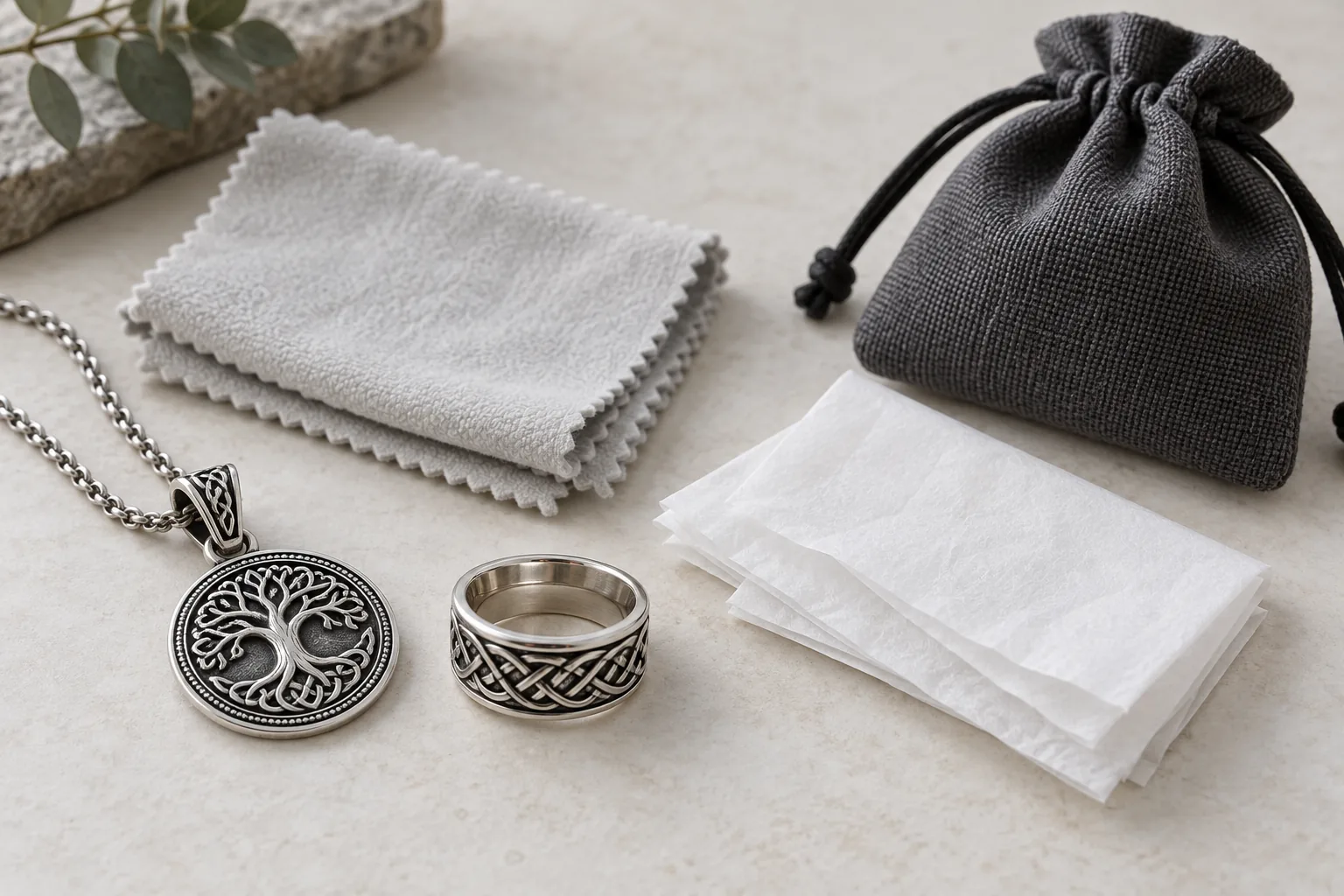
Tarnish on silver is caused by reaction with sulfur-containing compounds in air and other environmental pollutants. The Canadian Conservation Institute explains that controlling exposure is the most effective prevention. Store sterling-silver pieces in a dry, low-sulfur environment away from rubber, painted surfaces, wool, and materials that off-gas sulfur compounds. Use a soft pouch or a sealed box with an anti-tarnish strip for long-term storage.
For daily wear, minimize contact with household chemicals, chlorinated water, perfumes, and lotions, all of which can accelerate discoloration or damage surface treatments. Remove silver jewelry before swimming, heavy cleaning, or rigorous activity that could stress soldered joins or loosen stones. If you prefer to keep a piece on, consider the likelihood that constant exposure will increase the need for careful cleaning or professional maintenance.
Cleaning gently: what to do and what to avoid
When cleaning sterling silver, begin with the mildest approach. Warm water, a drop of pH-neutral soap, and a soft cloth or very soft toothbrush will remove surface grime without damaging gentle patinas or soft stones. Rinse thoroughly and dry immediately with a soft, lint-free cloth to prevent water spots.
Avoid mechanical or abrasive polishing for pieces with intentional darkened details, applied patina, or plating; aggressive polishing can remove those finishes and alter the appearance permanently. The CCI warns that chemical dips and household silver polishes can be too harsh for plated or composite pieces and may leave residues that are difficult to remove. Ultrasonic cleaners can loosen adhesives and fracture certain stones, so do not use them on pieces with glued components, hollow construction, or porous gems.
Patina, plating, and repairs: proceed with caution
Many modern Viking-style pieces use patina or plating to emphasize detail. That finish is often intentional and part of the designer’s aesthetic. If the patina is decorative, removing it with abrasive cleaners will change the look irreversibly. If you are considering replating or aggressive polishing, consult the maker or a professional jeweler who can document current condition and advise on reversible treatment options where possible.
For repairs—tightening a bezel, re-soldering a broken link, or resetting a stone—seek a jeweler experienced with silver and with the particular construction of your piece. If your item is a genuine antique or has archaeological value, contact a conservator rather than a commercial jeweler; the Smithsonian and CCI provide guidance on when artifact conservation is appropriate and how treatment decisions differ from routine jewelry repair.
Routine maintenance and a simple care routine
A practical home care routine includes wiping the piece after wear with a soft cloth, storing it in a dry pouch, and performing a mild soap-and-water clean as needed. For light tarnish on solid sterling, a jeweler’s cloth designed for silver will restore shine; use it sparingly on areas with intentional darkening. Reserve stronger interventions—chemical dips, heavy polishing, or replating—for experienced professionals.
Document any maker’s instructions that came with the piece and include care notes if you give the item as a gift. For pieces with multiple materials, keep separate care notes for each component and err on the side of gentleness if instructions conflict.
Selection and gifting guidance
When selecting or gifting Viking-style silver jewelry, prioritize transparency about materials and construction. Ask whether the item is solid sterling (look for a 925 mark), silver plated, or a mixed-material piece, and whether stones are natural, simulated, or glued. If historical accuracy matters to the recipient, seek makers who provide provenance, museum inspiration, or references to specific finds rather than generic ‘‘Viking’’ styling; the JewelryMeaning guide on choosing historically responsible Viking jewelry is a helpful next read.
Respect cultural context by avoiding claiming universal ancestral meanings for motifs. If the recipient values runic inscriptions or historical symbolism, check resources on rune accuracy and transliteration so any inscription is respectful and accurate. Consider including a care card with practical cleaning and storage advice and an explanation of any finishes that should not be removed.
When to consult a professional conservator
If you own or are offered an object that may be an antique, archaeological find, or has significant provenance, contact a professional conservator before performing any cleaning or repair. The Smithsonian and the Canadian Conservation Institute both advise that treatment decisions for historic objects must balance preservation of original material, documented patina, and the object’s research value.
For modern but complex pieces—such as those with fragile soldered joins, significant stones, or unusual surface treatments—a reputable jeweler experienced in silver conservation can advise on safe polishing, repairs, and whether professional replating is appropriate.
Final notes
Caring for Viking-style silver jewelry is largely a matter of identification, prevention, and gentleness. Use conservative cleaning methods, avoid aggressive products on plated or patinated surfaces, store pieces away from sulfurous materials, and consult specialists when in doubt. Doing so will preserve both the maker’s intended appearance and any historical or sentimental value you attach to the piece.
Frequently asked questions
How often should I clean my sterling Viking-style silver jewelry?
Clean only as needed: wipe your piece after wear with a soft cloth and perform a mild soap-and-water clean when it looks soiled or lightly tarnished. Frequent aggressive polishing can remove intentional patina or plating, so be conservative.
Can I use a commercial silver dip on my Viking-style piece?
Avoid chemical dips for pieces with plating, intentional patina, or fragile stones. Chemical dips can remove finishes and leave residues. Use a jeweler’s cloth or mild soap and water for safer results; consult a professional for heavy tarnish on valuable pieces.
Is ultrasonic cleaning safe for jewelry with stones or glued parts?
No. Ultrasonic cleaners can loosen adhesives, fracture some stones, and damage porous materials. Do not use ultrasonic cleaning on jewelry with glued-in stones, delicate settings, or organic components such as amber or leather.
How should I store Viking-style silver to minimize tarnish?
Store in a dry, low-sulfur environment inside soft pouches or sealed boxes. Keep silver away from rubber, wool, and painted surfaces that off-gas sulfur; consider an anti-tarnish strip if storing long term.
My piece has a dark patina—should I remove it?
If the patina is a deliberate decorative finish, removing it will change the maker’s intended look. Only remove patina if you understand the consequences or after consulting the maker or a conservator.
How can I tell if a piece is solid sterling or plated?
Look for markings such as 925 and ask the seller for material information. If unsure, have the piece tested by a trusted jeweler before using solvents or polishing methods that could harm plated surfaces.
Should I let a professional repair historically inspired or antique pieces?
Yes. For antiques or items with potential historical value, consult a conservator. For modern but complex pieces, choose a jeweler experienced in silver and in the particular construction of your piece.
Sources and further reading
- Silver – Care and Tarnish Removal — Canadian Conservation Institute
- Understanding how silver objects tarnish — Canadian Conservation Institute
- Historical silver: storage, display, and tarnish removal — Smithsonian Museum Conservation Institute