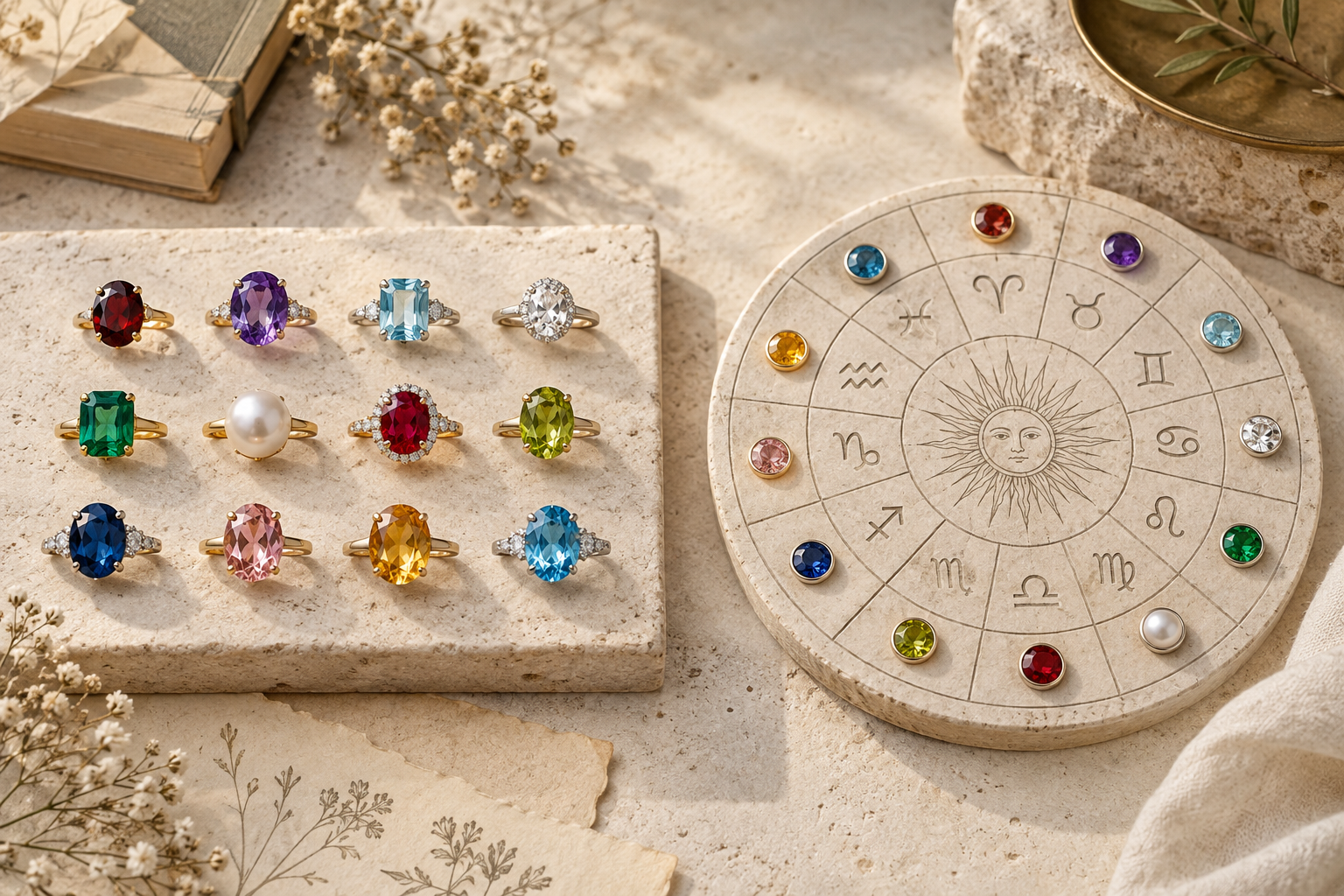
Meaning at a glance
Birthstones are established, month-based lists that have changed over centuries and are used as a social and commercial convention; zodiac stones are modern associations tying particular gems to astrological signs. Both are evolving cultural traditions rather than demonstrations of physical or scientific influence.
Quick answer
Birthstones vs zodiac stones: the short distinction is this. Birthstones are gem lists tied to calendar months that have been standardized in modern times for social and commercial use. Zodiac stones are associations that link gems to astrological signs; many of these links are recent, variable, and often personal or commercial rather than historically consistent. Neither series represents a scientific effect — both are cultural traditions that have evolved over time.
How birthstones developed: documented history
Documented historical work shows that the idea of assigning particular gems to periods of the year has ancient and varied roots. The Gemological Institute of America (GIA) explains that modern birthstone lists reflect a long history of changing practices and that the lists we recognize today have been standardized relatively recently for retail and cultural convenience.
GIA's museum and educational material traces the lineage of birthstone traditions through multiple eras and regions, describing how different societies emphasized particular gems at different times and that what we now call a 'January birthstone' or a 'May birthstone' is the result of centuries of changing custom rather than a single, continuous rule. In short, the month-by-month idea is a composite tradition with documented antecedents and later formalizations.
Where zodiac stones come from: origin and modern associations
Zodiac stones link gemstones to the twelve signs of astrology. Unlike month-based birthstones, many of these associations are modern constructions that blend astrological symbolism, marketing, and individual preference. While astrology as a practice has a long history, the specific lists that tie particular gems to each astrological sign vary widely and are not unified by a single authoritative tradition.
Modern lists connecting gems to zodiac signs often reflect contemporary tastes and commercial trends as much as historical belief. Because these associations are not standardized in the way many modern birthstone lists are, different jewelers or astrologers may recommend different stones for the same sign. Presenting zodiac-stone lists as a flexible, evolving practice is consistent with how these associations are used today.
Documented meanings versus modern personal interpretation
Where history is documented, it is important to distinguish what sources actually say from later personal or popular interpretations. GIA's research documents how birthstone lists have been recorded and adapted through time; those records provide evidence of changing lists, regional differences, and modern standardization. These findings describe how the practice developed but do not attribute objective powers or scientific effects to the gems themselves.
Modern personal meanings — for example, that a particular stone 'brings luck' or 'matches a sign's personality' — are contemporary interpretations or beliefs. They are meaningful to individuals and communities, and they shape how people choose jewelry, but they are not documented as measurable effects in the historical or scientific record. Presenting these modern meanings clearly as personal or cultural beliefs, rather than historical or scientific facts, keeps the distinction transparent and respectful.
How the motif, gemstone, or tradition appears in jewelry
Both birthstones and zodiac stones appear widely in jewelry design, often in different ways. Birthstones are commonly used in single-stone pendants, rings, charm bracelets, and multi-stone family or birthday pieces that represent months. Jewelers frequently create stacked rings or multi-pendant necklaces that allow wearers to combine several birthstones, reflecting family connections or milestones rather than astrological meanings.
Zodiac motifs tend to pair a sign symbol (for example, a glyph or stylized animal) with one or more stones that a buyer or designer associates with that sign. These pieces can be personalized and may include engraved horoscope symbols plus a chosen gem, or they can be purely decorative, using color and cut to express an astrological theme. Jewelers of America describes common jewelry formats and settings that are used to present gemstones attractively and durably, whether the stone is used for birth-month symbolism or astrological association.
In retail practice, both traditions appear in catalogs and displays, sometimes overlapping. A pendant might be marketed as a January birthstone piece and also suggested for people born under Capricorn, because of the calendar overlap between months and zodiac sign dates. Because retailers and designers interpret lists differently, shoppers may find a wide range of styles and combinations.
Practical and respectful guidance for choosing or gifting
Decide what matters to the recipient: whether they value the calendar-month connection, an astrological sign, color, or personal history. Ask whether the recipient prefers historical tradition, astrological meaning, or simply the look of a stone. Some people prize the month-based convention; others identify strongly with their horoscope sign or prefer a gemstone that matches their wardrobe.
Consider durability and daily wear. If you expect the recipient to wear a piece every day, choose a stone and setting suited for frequent wear. Jewelers of America offers guidance on jewelry formats, and the choice of setting and metal affects longevity and maintenance. Lower-hardness gems and certain cuts may need protective settings to avoid scratches or chips if worn constantly.
Be transparent about treatments, origin, and authenticity. The Federal Trade Commission (FTC) advises sellers and buyers that information about treatments, lab-grown stones, and imitations should be disclosed. When buying a birthstone or zodiac piece as a meaningful gift, request clear information from the jeweler about whether a gem is natural, treated, or lab-grown and whether any certifications are available.
Respect cultural and personal significance. Because these traditions carry different meanings for different people, do not assume that a certain stone is appropriate for everyone. If the recipient follows specific cultural or religious views about gemstones or symbols, asking discreetly or choosing a more neutral design can avoid unintended offense. Personalization — an engraved message, a note explaining why you chose the stone, or a choice that relates to a shared memory — often adds more meaning than strict adherence to a list.
Set a budget and consider alternatives. Genuine gemstones vary widely in price. If a traditional birthstone or a preferred zodiac stone is costly, consider smaller accents, alternative stones with similar color, or high-quality lab-grown gems that offer the same appearance at a lower price. The FTC and Jewelers of America both provide general guidance that helps buyers make informed choices without sacrificing aesthetic or sentimental value.
Making an informed purchase
Ask sellers for details about the stone, treatment history, and return policy. The FTC's guidance on buying gemstones and jewelry highlights the importance of disclosure about treatments, lab-grown alternatives, and whether a stone is an imitation. A reputable jeweler should clearly explain whether a gem has been heat-treated, fracture-filled, irradiated, or created in a laboratory, and they should disclose pertinent information in writing when requested.
If you want documentation, ask about certificates and appraisals. For higher-value stones, consider requesting a lab report or appraisal from a recognized authority and confirm the seller's policies on returns and warranties. Jewelers of America provides resources on buying contexts and choices that can help when comparing options. Prioritizing clear communication and documentation helps ensure the gift is both meaningful and soundly purchased.
Where to read more
For a deeper look at the changing history of birthstone traditions, the Gemological Institute of America provides an overview and a museum exhibit that traces how lists developed and shifted over time. For practical buying guidance and disclosure standards related to gemstones, the Federal Trade Commission's consumer guidance and Jewelry Guides provide current information. Jewelers of America offers buying guides that explain formats, settings, and considerations for choosing jewelry as a gift.
If you want to explore birthstones further by month or learn practical ways to choose meaningful jewelry, see our category on Birthstones and our related gift guide for additional tips and examples.
Frequently asked questions
Are birthstones and zodiac stones the same thing?
No. Birthstones are month-based lists that have been standardized in modern times and have a documented history of changing traditions, while zodiac stones tie gems to astrological signs and are often modern, variable associations rather than a single historical practice.
Which should I choose when gifting, the birthstone or a zodiac stone?
Choose based on the recipient's preference: some people value the calendar-month tradition, others prefer an astrological link, and many appreciate color or personal meaning most. If unsure, ask discreetly or choose a neutral or personalized design such as an engraved pendant.
Do gemstones actually have powers tied to months or zodiac signs?
No scientific evidence supports gemstones exerting physical effects tied to months or astrological signs. Historical sources document cultural uses and changing traditions, while modern claims of specific powers are individual beliefs rather than documented scientific fact.
How can I be sure a gemstone is authentic or treated?
Ask the seller for written disclosure about treatments, whether the gem is natural or lab-grown, and for any available certifications. The FTC recommends clear disclosure about treatments, lab-grown gems, and imitations to help buyers make informed choices.
Is it acceptable to combine birthstones and zodiac symbols in one piece?
Yes. Many contemporary designs combine month-based stones and astrological motifs. Because both traditions are cultural and flexible, combining them can be a tasteful way to personalize jewelry—just be mindful of the recipient's beliefs and preferences.
Sources and further reading
- Birthstones — Gemological Institute of America
- Birthstones: Gems Through the Ages — Gemological Institute of America
- Buying Gemstones, Diamonds, and Pearls — Federal Trade Commission
- Jewelry Guides — Federal Trade Commission
- Jewelry Buying Guides — Jewelers of America