Meaning at a glance
Plan names, months, stone order, stone sizes and substitutions, secure settings, engraving details, and how to add stones later—then use simple care, inspection, and disclosure practices to keep the piece meaningful and safe.
Quick answer
If you want a durable, meaningful mother's birthstone piece, start with a planning checklist: confirm the exact names and birth months to include, decide whether stones are placed in chronological birth order or by visual balance, choose stone sizes that suit the design and daily wear, identify acceptable substitutions (color-matched or lab-grown), select secure settings (bezel for active wear, prong for brightness), plan any engraving, and leave space or a plan for future additions. Follow basic care and inspection routines and insist on full disclosure of treatments and origins when you buy.
Historical evidence and which cultures or periods are documented
The idea of associating specific gems with months and people has a long and varied history rather than a single origin. The Gemological Institute of America (GIA) traces a lineage of gem associations that appear in antiquity, through medieval and early modern Europe, and into the 19th–20th century movements that led to modern popular lists. These links are documented as a history of changing traditions rather than a single fixed system.
Because the birthstone concept was standardized in different ways at different times, what later became the contemporary month list reflects choices made in recent centuries rather than an unbroken, universal custom. GIA's discussion of birthstone history emphasizes that the lists and meanings have evolved and been reshaped by cultural trends, immigration, and commercial practices.
Documented historical meanings versus modern personal interpretation
Documented historical meanings are descriptions and uses recorded by historians, jewelers and museums and summarized by institutions such as the GIA. Those records show how certain stones were prized in particular places and periods for attributes like color, rarity, or religious symbolism. These are historical facts about how stones were used and valued in specific contexts.
Modern personal interpretations are how people today assign emotional or family meaning to stones, such as choosing stones to represent each child, using a birthstone to honor a family line, or selecting a color to match a family crest. These contemporary meanings are individual and culturally varied; they are not historical facts and should not be presented as universal. A mother’s attachment to a stone can be entirely personal, and that personal meaning is legitimate even if it is not rooted in documented historical use.
How the motif, gemstone, or tradition appears in jewelry
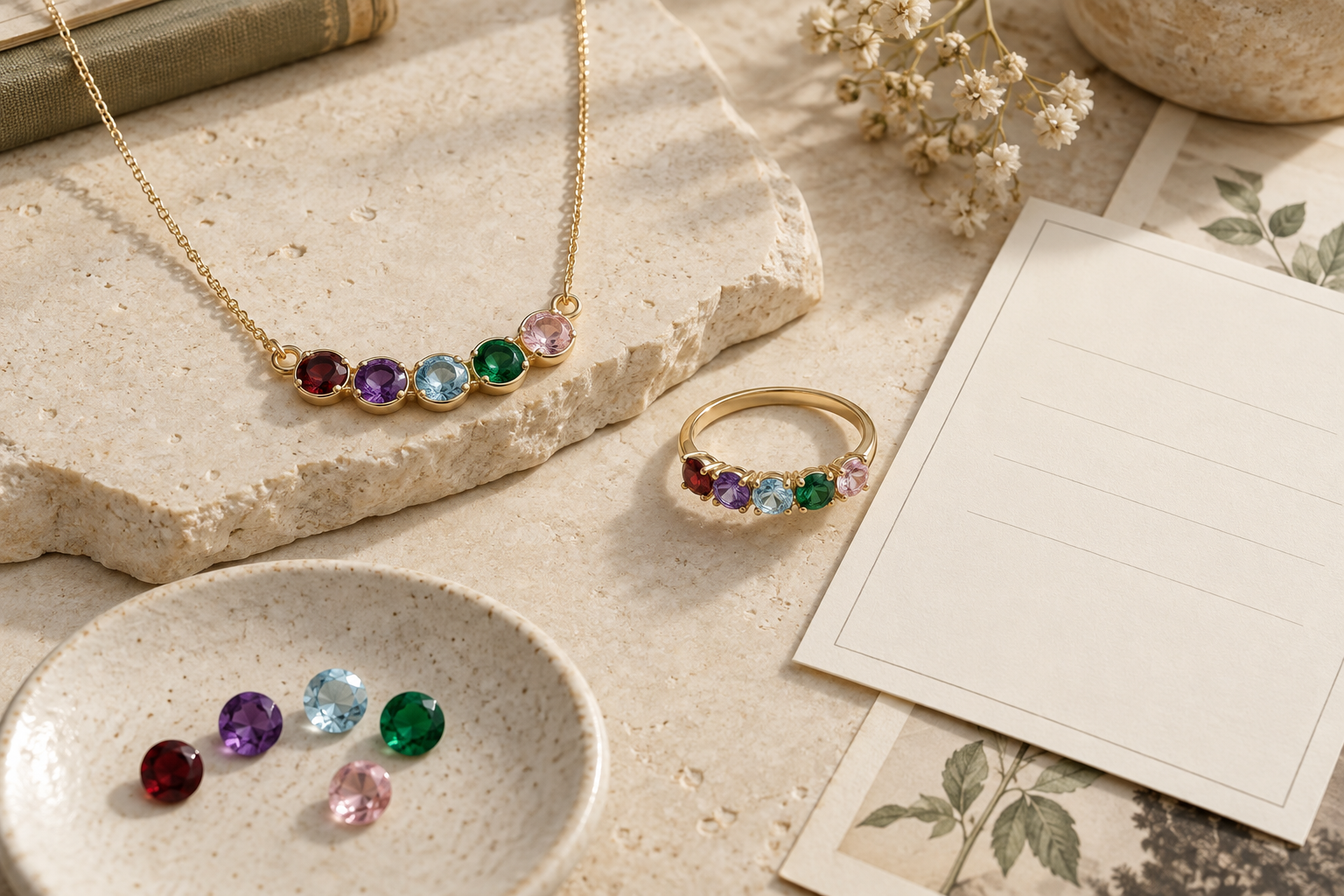
Mother's birthstone jewelry commonly appears as multi-stone necklaces, bar pendants, cluster rings, charm bracelets, and stackable rings or bands that can hold multiple stones. Jewelers design layouts to show a row of small round stones for each child, a cluster with a central birthstone surrounded by smaller stones, or a nameplate engraved and accented with tiny gem accents.
Key jewelry formats and setting choices are driven by wearability and security. According to guidance in jewelry buying materials from Jewelers of America, bezel settings and channel settings are preferred when stones must be protected for daily wear. Prong settings show more of the stone for sparkle but require careful maintenance. These formats influence the overall look: a bezel gives a modern, clean profile while prongs give light and brilliance.
Practical planning checklist (names, months, stone order, size, substitutions, setting, engraving, future additions)
Use this checklist as your planning backbone: first, gather the exact names and confirmed birth months for every person you intend to include. Second, decide on the stone order: will you place stones in chronological birth order, by visual color balance, or by prominence for special family members? Third, choose stone sizes that work with the chosen format—smaller melee for multi-stone bars and bracelets, larger single stones for centerpieces. Fourth, determine acceptable substitutions such as lab-grown stones or color-appropriate alternatives when the traditional gem is too costly or delicate. Fifth, pick the setting type with wear in mind: bezel and channel for security, prong for maximum sparkle, and flush settings for a low profile. Sixth, plan engraving content and placement and confirm character limits with your jeweler. Seventh, leave an explicit plan for future additions—either space on the existing piece or a design that allows adding stones or charms later without remaking the whole item.
How to translate checklist items into design decisions
Names and months determine the stone count and whether you need a compact clustered design or a linear layout. If you have many names, choose a format that allows many small stones rather than a single large stone. If you want a daily-wear piece, prioritize secure settings and durable gems. For example, rubies and sapphires are generally harder and more suitable for rings or bracelets than some softer gems; if you prefer a softer traditional stone for an active-wear piece, consider a protective bezel or accept that it will need more care.
When you consider substitutions, balance appearance and durability. Lab-grown versions of traditional gems can match the color and optical properties of natural stones and are acceptable alternatives for many buyers, but you should ask the seller to clearly disclose whether a stone is lab-grown, treated, or an imitation. The Federal Trade Commission (FTC) advises that consumers should be told when gemstones have been treated, synthetically produced, or are imitations, so ask for written confirmation.
Selection and respectful gifting guidance
Ask whether the recipient wants a public display of family data, such as children’s names or birth months, and whether any cultural or privacy considerations apply. Some mothers prefer an overt family emblem; others prefer subtlety, such as initials, a small birthstone, or an inside engraving. Respect the recipient’s taste and lifestyle: an active mom who gardens or works with her hands may value a low-profile, secure setting over an ornate piece.
Budget and sentiment both matter. If the traditional birthstone is beyond budget, choose a visually similar, durable substitute or a smaller genuine stone paired with accent gems. If a historic or symbolic meaning is important to the gift-giver, explain honestly that meanings vary across cultures and time; if the recipient values the symbolism, consider including a short note explaining your selection.
Buying, disclosure, and documentation
When you purchase, request written documentation that describes whether stones are natural, lab-grown, treated, or simulated and ask for country-of-origin information if available. The Federal Trade Commission's consumer guidance on buying gemstones emphasizes that sellers should disclose treatments, enhancements, and whether stones are synthetic or imitations. Ask for an itemized invoice and, for higher-value pieces, an independent appraisal or gemological report.
Jewelers of America’s buying guides recommend confirming metal type and hallmarking, understanding the warranty and return policy, and checking the jeweler’s recommended maintenance schedule. Keep all receipts, certificates and appraisal documents together in a safe place and consider photographing the finished piece for insurance purposes.
Care, maintenance, and planning for future additions
Routine care preserves the piece and protects stones. Clean jewelry gently as recommended by your jeweler and have prongs and settings inspected periodically so stones remain secure. For everyday wear pieces choose protective settings and harder stones where possible. Jewelers of America's advice includes scheduling professional inspections and cleaning to reduce the risk of loss or damage.
If you plan to add stones later, confirm at purchase that the chosen design and the metal band or mounting will accept additional stones without compromising structural integrity. Ask the jeweler how they will match stone size, cut and color in the future and whether they can reserve matching materials or keep a record of the piece specifications.
Frequently asked questions
How do I choose between natural and lab-grown birthstones?
Choose based on budget, durability, and personal preference. Lab-grown stones can match natural gems in appearance and durability but should be clearly disclosed by the seller. Ask for written information about whether a stone is natural, lab-grown, treated, or simulated, in line with FTC guidance.
What setting is best for a mother's everyday-wear birthstone necklace or ring?
For everyday wear, consider protective settings such as bezels or channels that shield edges, or low-profile flush settings. Prong settings show more of the stone but need regular inspection to keep stones secure. Jewelers of America recommends choosing a setting appropriate to the wearer’s daily activities.
Can I add more stones later if our family grows?
Yes, if you plan ahead. At purchase, confirm with the jeweler that the design and mounting can accept future stones and that records of stone size, cut and color will be kept to help match additions later.
Should I engrave names or dates on mother's birthstone jewelry?
Engraving is a meaningful option, but check the recipient’s preference and the jewel’s available surface area. Ask the jeweler for character limits and font examples, and consider privacy and cultural sensitivities before including full names or dates.
How often should I have the piece inspected and cleaned?
Have the piece professionally inspected at least once a year, or more often if it’s worn daily or exposed to rough activity. Professional cleaning and inspection help ensure prongs and settings remain secure and that any wear is caught early.
What documentation should I get when buying birthstone jewelry?
Obtain an itemized receipt specifying metal, total weight, and whether stones are natural, treated, lab-grown, or simulated. For higher-value items, get an independent appraisal or gemological report and keep all paperwork for insurance.
Are there affordable alternatives if a traditional birthstone is too expensive?
Yes. Consider smaller genuine stones, lab-grown versions, or color-matched alternatives that are more durable or affordable. Discuss visual and durability trade-offs with your jeweler before deciding.
Is it important to disclose stone treatments?
Yes. The FTC expects sellers to disclose treatments, enhancements, or whether a gemstone is synthetic or an imitation. Always ask the seller for full disclosure in writing.
Sources and further reading
- Birthstones — Gemological Institute of America
- Birthstones: Gems Through the Ages — Gemological Institute of America
- Buying Gemstones, Diamonds, and Pearls — Federal Trade Commission
- Jewelry Guides — Federal Trade Commission
- Jewelry Buying Guides — Jewelers of America