Meaning at a glance
Distinguish pearl, moonstone, and alexandrite as three very different June options and compare origin, optical effects, durability, treatment disclosure, and care.
What these three stones are and where they come from
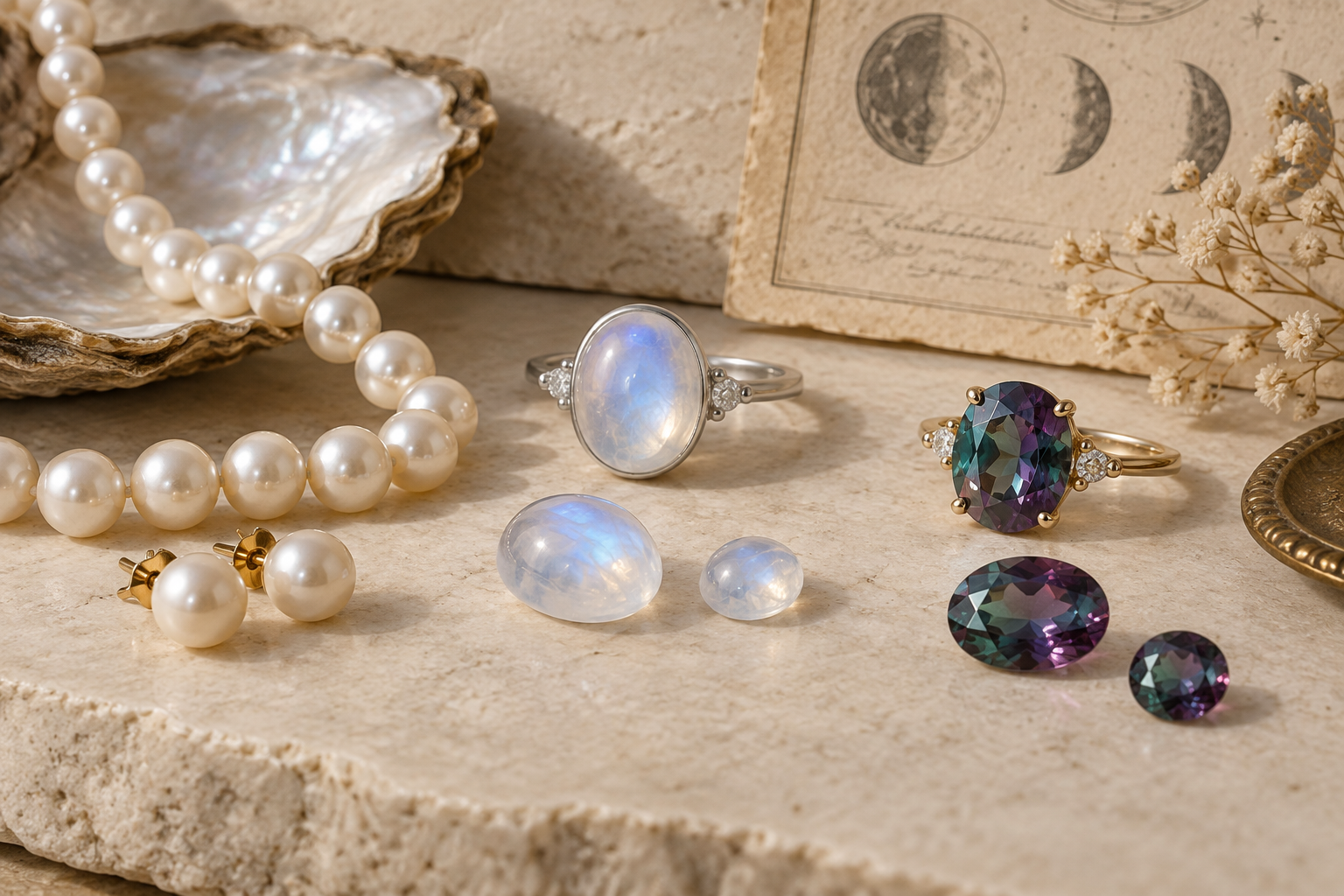
Pearl, moonstone, and alexandrite are botanically and mineralogically unrelated and have very different origins. Pearls are organic gems produced by mollusks; they are formed when layers of nacre accrete around an irritant inside an oyster or freshwater mussel. Moonstone is a variety of feldspar known for a layered structure that produces a soft light effect; it is a mineral (silicate) typically sourced from places such as Sri Lanka, India, and parts of East Africa. Alexandrite is a color-change variety of chrysoberyl, a hard mineral first noted in specimens from the Ural Mountains and later recognized in deposits elsewhere. The Gemological Institute of America (GIA) provides context on these stones’ geological and commercial origins and lists them among options for June in modern month-stone guides.
Documented historical evidence and cultural notes (by source)
The GIA has documented how the concept of assigning specific gems to months and other calendars changed over time; pearls are among the oldest gems used by many cultures and appear frequently in jewelry history records, while moonstone and alexandrite were incorporated into Western jewelry traditions at different times, with moonstone gaining renewed fashion prominence in late 19th and early 20th-century designs and alexandrite becoming notable later as collectors and gem lists expanded. These are historical observations about usage and popularity documented by the GIA rather than claims about universal symbolic meanings.
When discussing specific cultural beliefs or rituals, the GIA’s historical accounts note that meanings attached to gems varied by place and period. Do not assume a single, universal symbolism: what one culture historically attributed to a pearl or moonstone may differ from another culture’s uses and stories, and modern personal interpretations are separate from these documented histories.
Optical effects and gem properties
Optical character is one of the clearest distinctions among the three stones. Pearls show lustre and, when high-quality, a layered nacre surface that creates a soft, sometimes iridescent sheen often called orient. Moonstone’s signature optical phenomenon is adularescence, a billowy, moonlike sheen that appears to move under the surface when the gem is tilted. Alexandrite’s defining optical trait is a dramatic color change: under daylight it can look greenish to bluish-green and under incandescent or warm light it shifts toward red or purplish-red. The GIA describes these optical effects as part of each gem’s identification and appeal.
Hardness and durability also differ widely. Pearls are organic and relatively soft; they scratch and abrade more easily than mineral gemstones and are vulnerable to acids, cosmetics, and perspiration. Moonstone sits in the middle range for common jewelry minerals and can show perfect cleavage in one direction, which affects how it should be set and worn. Alexandrite, as chrysoberyl, is a very hard gem that is suitable for everyday wear when set securely. For specific durability ranges and handling notes, consult the GIA’s guidance on gemstone quality and care.
Treatments, imitations, and the importance of disclosure
Treatment and imitation practices differ between these stones, and sellers must disclose material facts. Pearls may be natural (rare), cultured, dyed, or otherwise treated to improve color and surface. Moonstones are usually sold as natural but may be cut or polished to maximize adularescence; synthetic imitations for some feldspar-lookalikes exist but are less common. Alexandrite is rare and commands high prices for top examples; there are synthetics and color-enhanced lookalikes, and trade descriptions should clarify whether a stone is natural, synthetic, or treated. The U.S. Federal Trade Commission (FTC) requires that sellers disclose treatments, lab-grown origins, and imitations, so buyers should ask sellers for written details and, where appropriate, gemological reports.
How these stones appear in jewelry
Pearls are most often set as strands, single-drop pendants, bezel-set accents, or in small clusters. Designers use pearls’ roundness and soft sheen for classic bridal, formal, and contemporary minimalist pieces. Moonstone is commonly cut en cabochon to show its adularescence and appears in bohemian, artful, and celestial-inspired jewelry. Alexandrite is typically faceted to show its color-change and brilliance and is used in rings, earrings, and fine jewelry where the color-shift effect can be enjoyed in different lighting.
Setting choices respond to each gem’s properties: pearls are usually mounted in ways that avoid direct contact with hard prongs that could chip nacre; moonstones are often protected by bezels or partial bezels because of their cleavage; alexandrite, being hard and durable, is frequently set in prong, bezel, or halo settings like other high-value faceted gems. The GIA’s consumer materials explain these customary setting practices and how they relate to durability.
Selecting and gifting: practical, respectful guidance
Begin by deciding whether durability or symbolic meaning is most important. If the recipient wants an everyday ring, alexandrite’s hardness makes it the most practical June option. For someone who prefers heirloom style or classic necklaces, cultured pearls are a traditional and wearable choice if the wearer avoids rough activities. For aesthetic or mood-driven gifts, moonstone offers distinctive, softer lunar shimmer and suits pendants and earrings.
Ask questions about origin and disclosures. Request written information on whether a pearl is natural or cultured and whether any dyeing or treatments were applied. For alexandrite in particular, insist on a lab report for high-value stones and verify whether the stone is natural or synthetic. The FTC’s consumer guidance recommends clear disclosure for treatments, lab-grown gems, and imitations; a reputable seller will provide transparent answers.
Match setting and metal to both the gem and the recipient’s lifestyle. If gifting a pearl necklace, include care advice about avoiding perfumes and storing pieces flat to reduce strain on the string. If gifting moonstone, prefer protective settings and advise occasional inspection for chips. If gifting alexandrite, choose secure settings and consider insurance or appraisal for valuable pieces.
When attaching symbolic meaning, be respectful and personal. Historical associations—such as pearls’ long history of use noted by the GIA—do not translate into universal beliefs. Ask the recipient whether they prefer traditional symbolism, contemporary personal meanings, or purely aesthetic choices, and frame the gift accordingly. A short note that explains why you selected the stone for them is often more meaningful than assuming a particular symbolic claim.
Care and maintenance, by stone
Pearl care: Because pearls are organic and softer than most gemstones, the GIA recommends storing them separately from harder gems, wiping them gently with a soft cloth after wear to remove oils and cosmetics, and avoiding exposure to acids, hairspray, and perfume. Regular restringing for necklaces that are worn often is standard practice to prevent loss if the string weakens.
Moonstone care: Moonstone should be protected from hard knocks, sudden temperature changes, and abrasive cleaners. The GIA advises gentle cleaning with mild soap and warm water and cautious handling due to potential cleavage planes. Avoid ultrasonic cleaners and steam for moonstone pieces.
Alexandrite care: Alexandrite is durable and suitable for rings and daily wear when properly set. Routine cleaning with warm soapy water and a soft brush is appropriate; the GIA notes that standard gem-care practices apply. For high-value alexandrite, professional cleaning and periodic inspection of the setting are prudent.
Final thoughts
Pearl, moonstone, and alexandrite offer very different looks, origins, and practical considerations. Use the GIA’s guidance to understand historical usage, optical properties, and appropriate care, and consult the FTC’s consumer advice when confirming treatments and disclosure. Match your choice to the wearer’s lifestyle, the desired symbolism (if any), and your budget, and document important details like treatment history and appraisal when buying higher-value pieces.
Frequently asked questions
Are all pearls considered June birthstones?
Pearl is one of the traditional June birthstones in modern lists documented by the GIA; however, pearls can be natural, cultured, dyed, or imitated, so when buying for symbolism or durability you should confirm origin and treatments with the seller.
How do I care for a moonstone necklace?
Treat moonstone gently: clean with warm water and mild soap, avoid ultrasonic and steam cleaners, protect it from hard knocks and rapid temperature shifts, and consider protective bezel settings for pendants.
Is alexandrite a good choice for an everyday ring?
Yes—alexandrite is chrysoberyl, a hard and durable gem suitable for everyday wear if properly set; for expensive stones request a gemological report and consider insurance.
How can I tell if a pearl is real or treated?
Ask the seller for documentation; reputable dealers will disclose whether pearls are natural, cultured, dyed, or otherwise treated. The FTC requires material disclosures for gemstones and pearls, so get written confirmation when possible.
What makes moonstone’s shimmer different from a pearl’s lustre?
Moonstone’s shimmer, called adularescence, results from light scattering within thin alternating layers of feldspar, producing a moving glow; a pearl’s lustre comes from reflected light off layers of nacre and typically appears as a soft sheen or orient rather than a shifting internal glow.
Should I ask for a lab report when buying alexandrite?
For high-value alexandrite it is prudent to request a reputable gem laboratory report that verifies whether the stone is natural, treated, or synthetic and confirms identification and weight, because alexandrite’s rarity makes authentication important.
Sources and further reading
- June Birthstone Guide — Gemological Institute of America
- Birthstones — Gemological Institute of America
- Birthstones: Gems Through the Ages — Gemological Institute of America
- Buying Gemstones, Diamonds, and Pearls — Federal Trade Commission