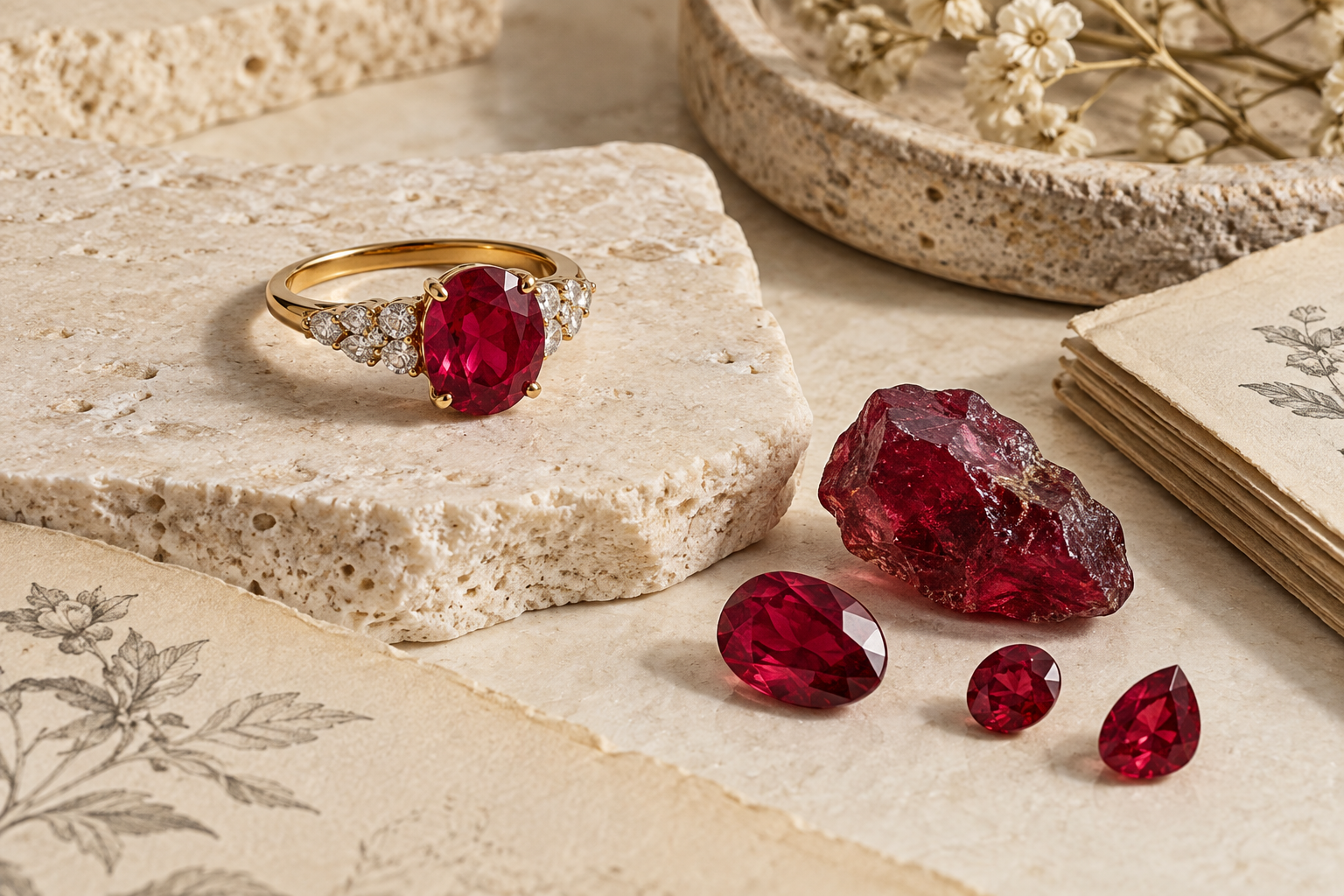
Meaning at a glance
The July birthstone is the ruby, a red variety of corundum colored by chromium; it is durable (Mohs 9), commonly heat-treated, and should be bought with treatment and origin disclosure and cared for with gentle cleaning—historical uses and modern personal symbolism are distinct and documented separately.
Direct answer — concise thesis
The July birthstone meaning centers on the ruby, the red variety of the mineral corundum (aluminum oxide) colored by chromium; its appeal comes from saturated red color combined with high durability (Mohs 9). Practical buying must consider color, clarity, cut, and documented treatments, and care is straightforward but depends on any treatment the stone has received. Historical and symbolic uses appear across many cultures; those historical uses are recorded by museum and gemological sources, while modern personal meanings vary and should be kept clearly distinct from documented history.
Ruby as a gem: identity, color, durability, and treatments
Gemologically, ruby is the red variety of corundum. The red color is caused by chromium impurities in the corundum crystal. The Gemological Institute of America (GIA) describes rubies as corundum and places them in the same mineral species as sapphires, which are corundum of other colors.
Rubies are hard and durable—corundum is rated 9 on the Mohs hardness scale—making ruby suitable for everyday jewelry such as rings and bracelets when set and worn with normal care, a point emphasized in GIA guidance on birthstones and jewelry durability.
Like many natural gemstones, rubies commonly undergo treatments to improve appearance; heating is a common enhancement and other treatments may be used. The Federal Trade Commission (FTC) requires sellers to disclose treatments, the presence of lab-grown material, and the use of imitations, so buyers should request full disclosure and written documentation when purchasing.
What the historical record shows (evidence and cultures)
The use and meaning of red corundum appear repeatedly in the historical record, but the specifics differ by place and period. The GIA’s museum and historical materials document that gemstones matching the appearance of rubies were prized in South and Southeast Asia, notably in regions that include present-day India and Myanmar (historically called Burma), where large, intensely colored stones were collected and traded for centuries.
GIA’s research on birthstones and gemstones through the ages notes that many cultures used red gems as status objects, amulets, and symbols of power. The exact beliefs attached to those stones varied: some societies associated red gems with protection or martial strength, others used them as royal or religious gifts. These are documented cultural practices rather than universal meanings, and the GIA emphasizes the changing assignment of specific gems to months and uses over time.
Documented historical meanings versus modern personal interpretations
Documented historical meanings are the beliefs and uses recorded by historians, museums, and gemological bodies. For rubies, institutions such as the GIA report historical roles as high-status gems, trade goods, and amulets in particular regions and periods. These records show variety: rubies could signify power in one context and protection in another. When we refer to these historical meanings we attribute them to those specific cultures and periods rather than treating them as universal truths.
Modern personal interpretations are different: in contemporary jewelry-writing and popular culture the ruby is often associated with passion, love, vitality, and courage. These symbolic associations are modern, culturally variable, and subjective. They are useful for gifting and personal meaning but should be labeled clearly as modern interpretations rather than as direct continuations of any single historical belief.
How the ruby motif and the stone appear in jewelry
Because ruby is both visually striking and hard, jewelers use it in a wide range of treatments and styles. Rubies appear as center stones in rings, earrings, and pendants, as accent stones to diamonds and other gems, and historically as cabochons in signet- or devotional-type pieces. The intensity of the red color often guides how a stone is used: highly saturated, transparent rubies are typically set as focal stones while darker or more included material is used in clusters, pavé, or beads.
Design motifs referencing ruby’s color and connotations are common. Jewelry designers may use red-themed compositions to evoke warmth or passion, and ruby settings are often chosen to balance color saturation with metal color: yellow gold can warm a ruby’s red, while platinum or white gold offers a cooler, more contemporary contrast. The suitability of ruby for rings and other frequent-wear pieces is supported by its high hardness, but setting style and treatment status should inform the final design choices.
Practical guidance for buying and gifting rubies
Establish what matters most: color saturation, size, clarity, origin, and budget. For many buyers color is paramount; look for an even, saturated red with good tone and faceting that maximizes brilliance. Transparency and fewer visible inclusions raise value, but inclusions can also attest to natural origin. The GIA provides context for how color and clarity fit into appraisal and identification.
Always ask for full treatment disclosure and, when possible, a current report from a reputable gemological laboratory. The FTC requires sellers to disclose treatments, lab-grown gemstones, and imitations, so insist on written confirmation and ask specific questions about whether a ruby has been heated, fracture-filled, diffusion-treated, or created in a laboratory. If provenance or ethical sourcing is important to you, ask the seller about origin documentation and responsible sourcing practices.
When gifting, align the piece with the recipient’s taste and lifestyle: a wearer who uses their hands frequently may prefer a lower-profile setting or a pendant, whereas someone who favors statement pieces might appreciate a larger center ruby. Consider pairing the gift with an explanation that clarifies whether the ruby is natural, treated, or lab-grown so the symbolic intent and the gem’s material facts are both respected.
Care: cleaning, wear, and special considerations for treated stones
For most natural rubies, routine care is straightforward: warm water, mild soap, and a soft brush will remove everyday oils and dirt. Rinse well and pat dry with a soft cloth. Because corundum is hard, it resists scratches, yet it can chip if struck, so avoid impact and store pieces separately or in compartments to prevent contact with other stones.
If a ruby has been treated—especially with fracture filling or other clarity-enhancing treatments—steam or ultrasonic cleaning may be harmful. Before using ultrasonic or steam cleaners, verify treatment status and follow seller or laboratory guidance. The GIA’s consumer and birthstone guidance recommends asking about treatments and care instructions and stresses that treatment status affects both handling and value. The FTC’s guidance reinforces that sellers must disclose such treatments so buyers can follow appropriate care.
Final note on meaning and purchase
When buying a ruby as a July birthstone gift, separate your symbolic intent from the gem’s objective properties. Use historical and cultural meanings as inspiration, but record and communicate the gemological facts—identity (corundum), color origin (chromium), treatment status, and durability—so the recipient knows both what the piece means and what it is.
If you want an in-depth read on symbolism and design choices around ruby jewelry, see our related article on ruby jewelry meaning and our broader birthstones category for context and more gift ideas.
Frequently asked questions
What exactly is the July birthstone?
The July birthstone is ruby, the red variety of the mineral corundum (aluminum oxide) colored by chromium, as documented by the Gemological Institute of America.
Are rubies durable enough for everyday wear?
Yes; corundum ranks 9 on the Mohs hardness scale, so rubies are highly scratch-resistant and appropriate for many everyday jewelry types, though they can still chip if struck.
Do treated rubies have the same meaning as natural ones?
Meaning is personal and cultural. Historically recorded uses are distinct from modern interpretations. Gemologically, treated and natural rubies differ in material history and value, so treatment status should be disclosed and considered separately from symbolic intent.
What should I ask the seller when buying a ruby?
Request written disclosure of any treatments, ask whether the stone is natural, lab-grown, or an imitation, and seek a gemological report from a reputable lab. The FTC requires disclosure of treatments and lab-grown or imitative material.
How do I clean a ruby at home?
Clean most natural rubies with warm soapy water and a soft brush, then rinse and dry. Verify treatment status before using steam or ultrasonic cleaners because some treatments can be damaged by heat or vibration.
Sources and further reading
- July Birthstone Guide — Gemological Institute of America
- Birthstones — Gemological Institute of America
- Birthstones: Gems Through the Ages — Gemological Institute of America
- Buying Gemstones, Diamonds, and Pearls — Federal Trade Commission